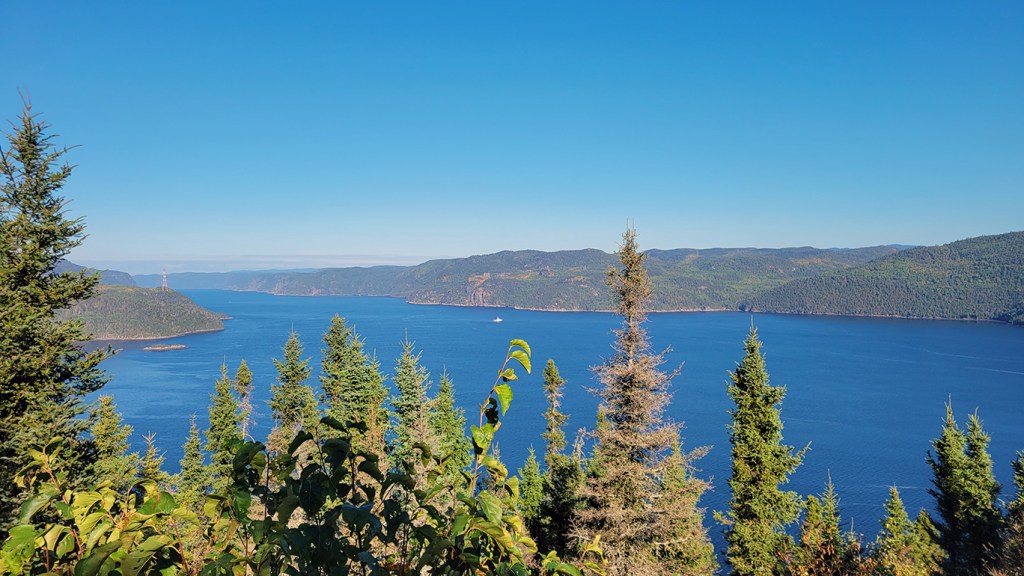
One of the iconic rides of Québec.
Maybe second only to Gaspé, the Saguenay fjord is the ride to do in Quebec. It’s therefore surprising that I’d never gotten around to riding it until this past fall. From Montreal, you need about four days for this tour. Marilyn and I went over our anniversary weekend in late September when the leaves were beginning to turn colour and it was the best time to visit.
It was getting a bit cold for camping, so we decided to leave the tent at home and get rooms at B&B’s, which in these parts are called gites. This trip would take us not only up the Saguenay fjord but also across the top of Lac Saint-Jean and through the beautiful Charlevoix region, known for its popularity with Quebec’s most famous painters. What Algonquin Park is to The Group of Seven, Charlevoix is to Clarence Gagnon, René Richard, Jean-Paul Lemieux, Marc-Aurèle Fortin, Bruno Côté and Claude Le Sauteur, among others. In fact, Charlevoix is so beautiful it was also visited by A. Y. Jackson and Arthur Lismer of The Group of Seven. When Marilyn first visited Quebec from Alberta in 2007, I knew where to take her. (I’m still wondering if she fell in love with me or La Belle Province first.)
The only issue with Saguenay as a destination from Montreal is that you have about 3 1/2 hours of gross highway riding to do before it starts to get interesting around Beaupré, just east of Quebec City. And to make matters worse, within the first 10 minutes of hitting the highway, I knew I had the wrong windscreen on. I have a touring screen and a standard screen, and I’d been experimenting with different set-ups (they are both adjustable) prior to leaving, looking for a solution to the wind noise on the bike. I’ll be writing something about that elusive search for The Holy Grail in an upcoming post, but suffice to say here that the standard screen doesn’t work for touring. Marilyn and I couldn’t even hear each other in our comms because the wind noise at highway speed was so bad. Damn! I’d prepared the bike by changing the tires from a 50/50 (Anakee Wild) to a 70/30 (Shinko 705) but should have swapped the windscreen too.
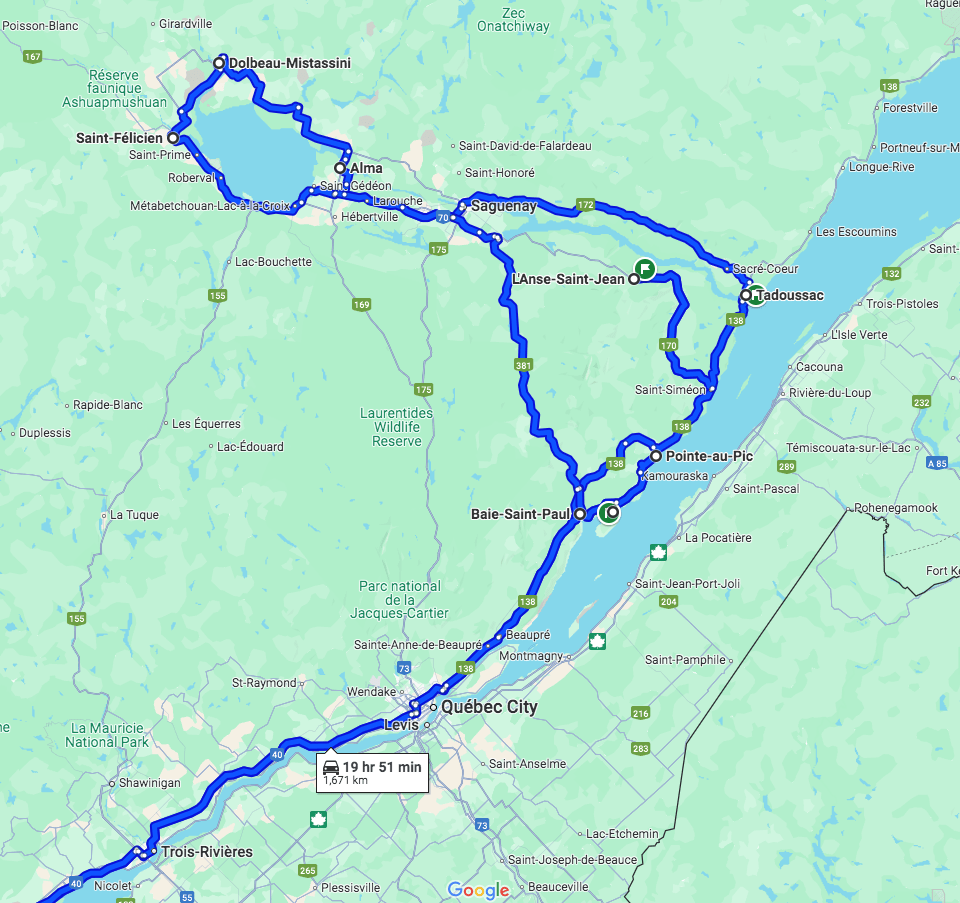
There are several options for touring the Saguenay fjord. Many people head north on the 155 at Trois Rivière up through La Tuque all the way to Lac Saint-Jean and then down the Saguenay River on either the 170 (east side) or the 172 (west side). Others go all the way to Tadoussac, and either cross on the ferry and ride up the river on the 172 or don’t cross and ride up the 170. If you do that, you have a few options for how to come down: the 169 from Alma, the 175 from the town of Saguenay, or the 381 that cuts through the interior. Basically, all roads in this region lead to Lac Saint-Jean, and you have your option of no less than five to choose from on how to get there and back.
We had already driven up the 155 as far as La Tuque a few years ago when we camped at La Mauricie National Park so didn’t want to repeat that, even if it would be on the bike this time. We had a recommendation of an excellent B&B in L’Anse Saint-Jean on the 170 so decided to make that our destination for the first day. And I had a recommendation from someone at the Overland North gathering I attended in Calabogie to not miss the 381, which is smaller and twistier than the other roads. We also wanted to see Tadoussac, so connecting these dots meant riding part-way up the 170 on our first day, then doubling back the next morning to Tadoussac, riding the 172 up to Lac Saint-Jean, and taking the fun 381 back down. It wasn’t the most efficient route, but when does efficiency matter when you’re on a bike?
We blasted past Quebec City and didn’t stop until Sainte-Anne-de-Beaupré, where there is a famous cathedral. When the Pope recently visited Canada, he did a mass there, so if it’s suitable for the Pope, we figured it’s worthy of our presence as well. But we were on a tight schedule and it would have required a significant time commitment to go inside, so we opted instead just to make it a quick rest stop. (We’ve gone inside before and, trust me, it’s beautiful.) We still had a ways to go and had a dinner reservation at our inn in L’Anse Saint-Jean.
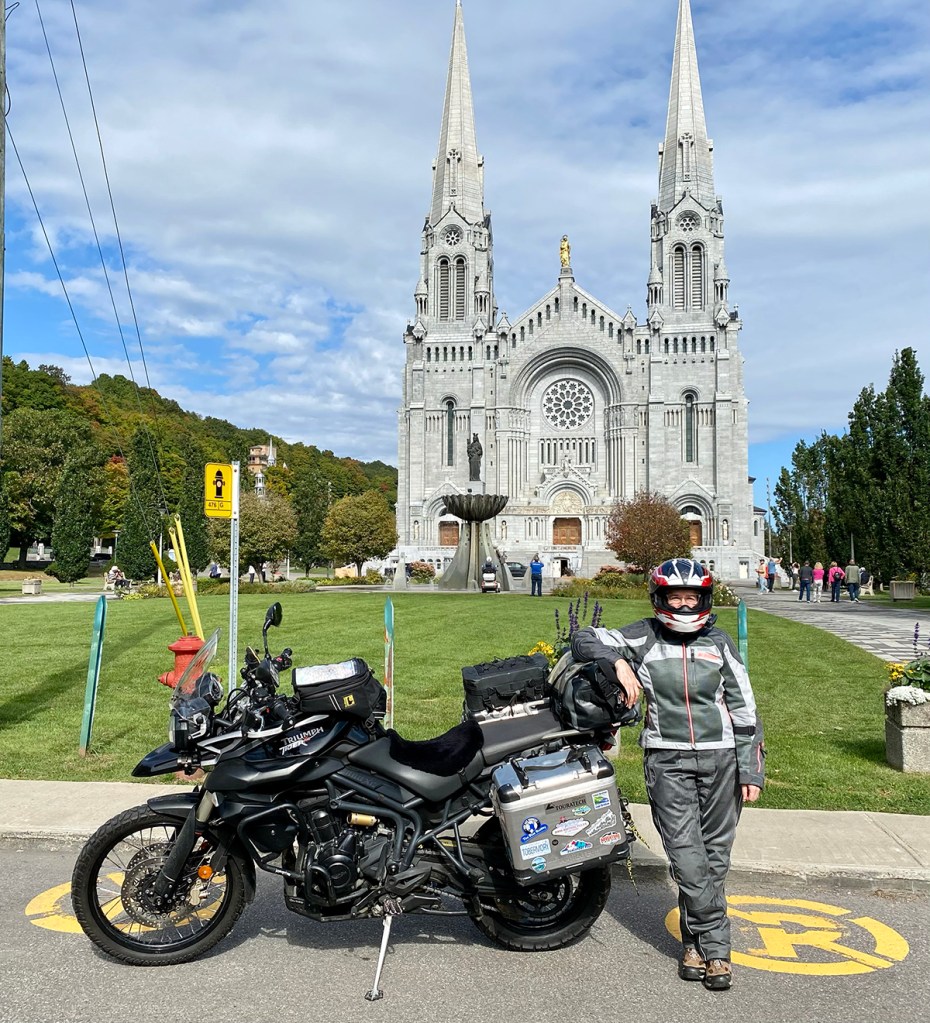
Our true sanctuary is nature and we were eager to get up into the hills of Charlevoix. Shortly after leaving Beaupré, Highway 138 begins to climb, and the geography suddenly takes on a completely different vibe. It’s hilly, pastoral, and there’s open road overlooking the St. Lawrence River with historic houses dotting the roadside.
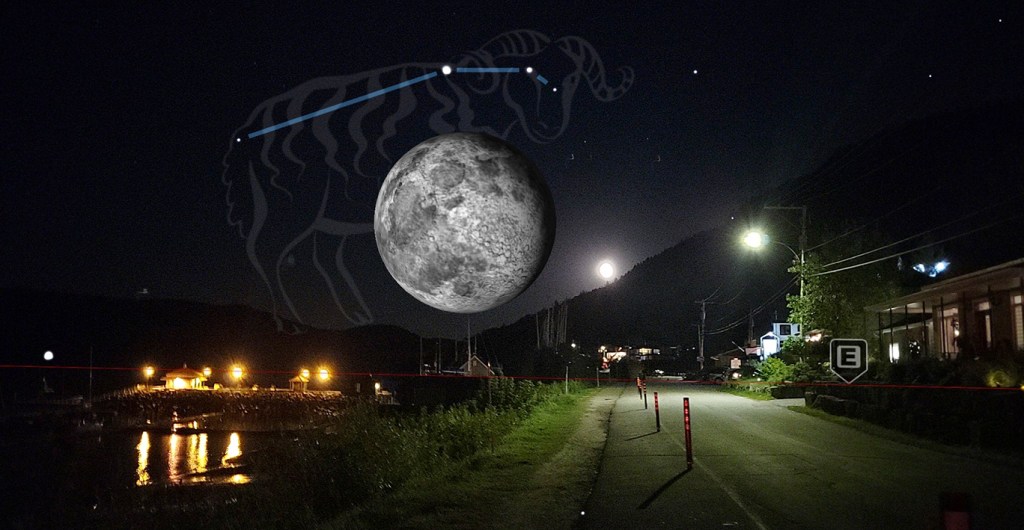
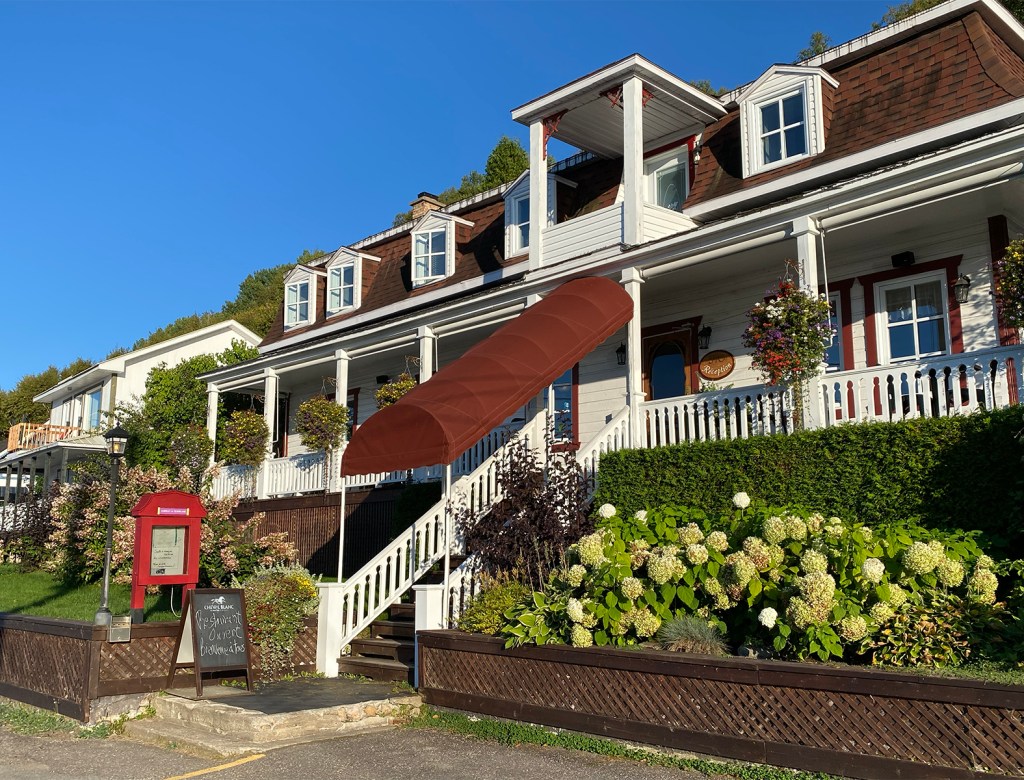
The recommendation from our club captain was a good one! While I didn’t do those rides, my club has stayed a few times at La Fjordeliase and it’s become a favourite. After an exquisite dinner (the scallops are not to be missed), we went for a walk along the shoreline. L’Anse Saint-Jean is magical, and there was a full moon that night!
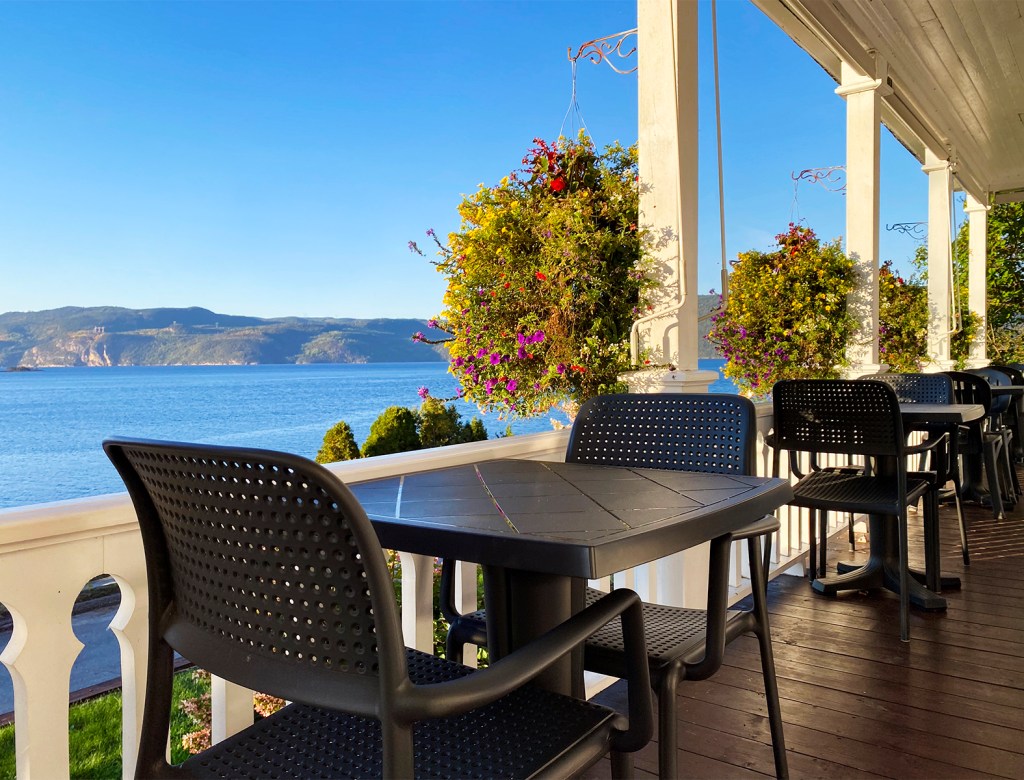
The next morning we hiked the trail behind our inn up to a lookout. It’s about a 2 km hike but all uphill with some steep sections. We were definitely feeling our age but happy we’re still able to do such a hike as the view at the top was worth the effort. (See banner photo above.)
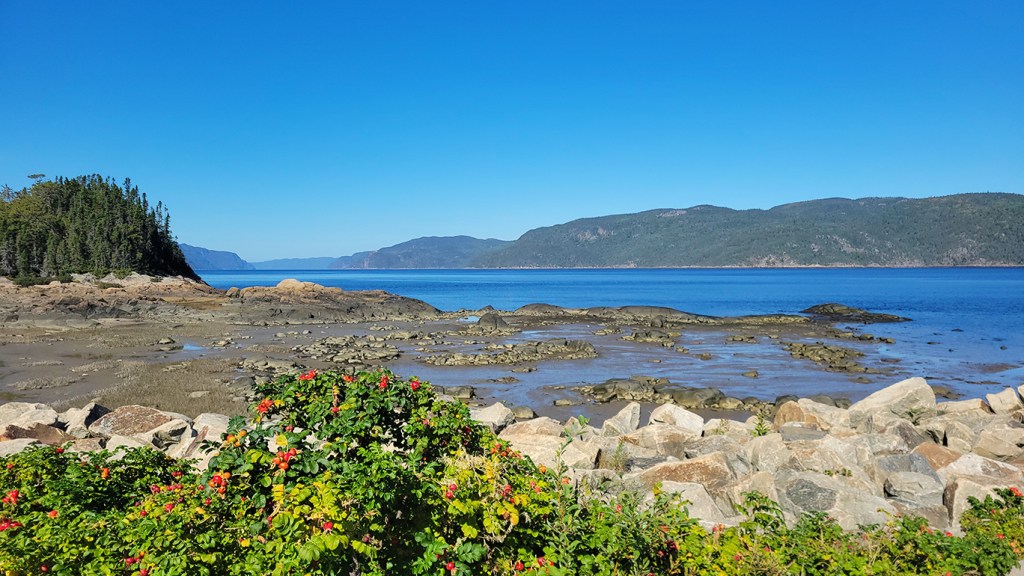
Back at the inn, we took in the shoreline and the view of the fjord one last time, packed up the bike, and headed off, down the 170 toward the 138 again. We didn’t get far before we saw a sign for Petit-Saguenay and a small road heading toward the river. One of the disappointments, I must say, with the tour is the lack of access to the Saguenay River. The major roads are inland and you don’t actually see the river very much. (By contrast, the 155 mentioned above hugs the shore of the Shawinigan River all the way to La Tuque and is more scenic.) But rue du Quai, splitting off from the 170 at the town of Petit-Saguenay, provides a rare opportunity to get down to the river so we took it. I’d heard it’s a special spot, where the Saguenay and Petit-Sageunay rivers meet. Indeed, this inlet provides the longest unobstructed view upriver of the fjord, according to a placard on the wharf.
Back on the 170, we were cruising and taking in the views, and I guess I wasn’t checking my mirrors very often because I was suddenly startled out of my saddle by a sport bike passing me at twice my speed. And another, and another, and on it went, a stream of maybe a dozen sport bikes out for their Saturday morning rip. I guess the police presence in these parts is pretty thin and there’s no track that I’m aware of so if you have a sport bike, these are the roads you use as a track. They were passing other vehicles on the two-lane road like there was no tomorrow, which there wouldn’t be for any who make a mistake. No wonder they have to pay $2000 a year to register their bikes here in Quebec compared to the “paltry” $800 I pay to register my adventure bike. Later we saw them gathered beside the road down at the 138 in Saint-Siméon, clearly taking a breather before turning around and doing it all over again.
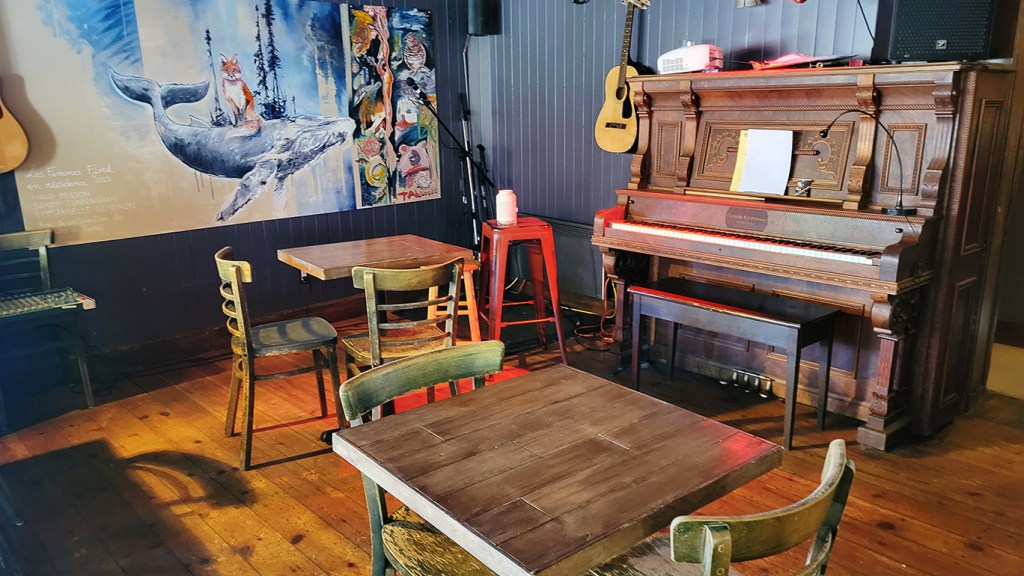
We took the free short ferry and arrived in Tadoussac. I’d passed through Tadoussac a few times before but didn’t remember it being so touristy, which is not my cup of tea. You know you’re in a tourist town when you have to pay for parking, and we rode around quite a while looking for where to leave the bike while streams of tourists blindly criss-crossed the road in front of us. Finally, we found a spot in front of a microbrewery pub that was a little off the main street and had a terrace with a view of the gulf. Nice!
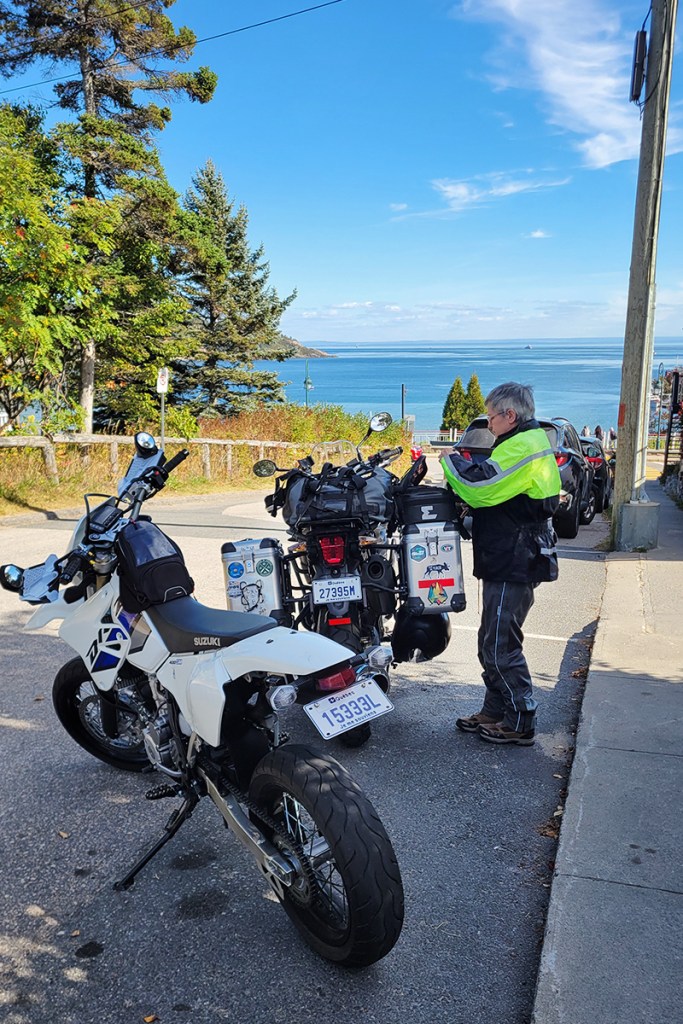
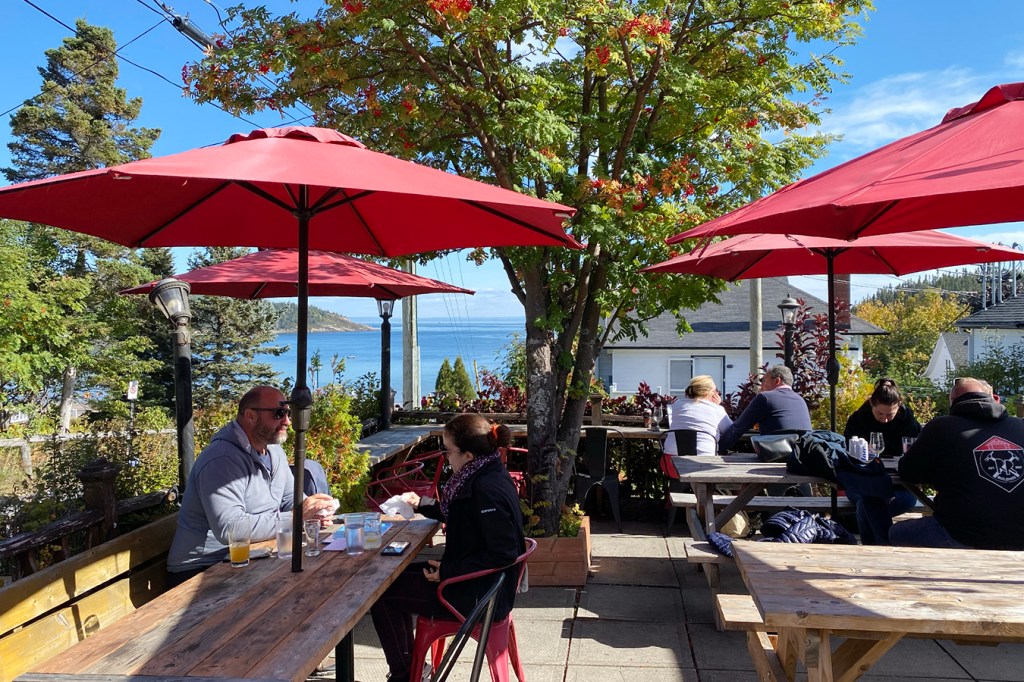
Our next stop after lunch was The Dunes. You will find them just east of Tadoussac. It’s an unexpected area of sandy hills overlooking the river. I wanted to play in the sand but the bike was fully loaded and undersprung, and I was feeling the weight the entire trip as the bike had a tendency to wallow at slow speed. (I changed the spring and serviced the shock once back in Montreal.) Marilyn was digging the place because you can see the different depths of the water from this vantage point, and she took a bunch of photos while I stayed with the bike. I would get my fun on the dirt road shortcut that lead us back to the 138 while Marilyn grumbled into the comms that we should have doubled back on the asphalt.
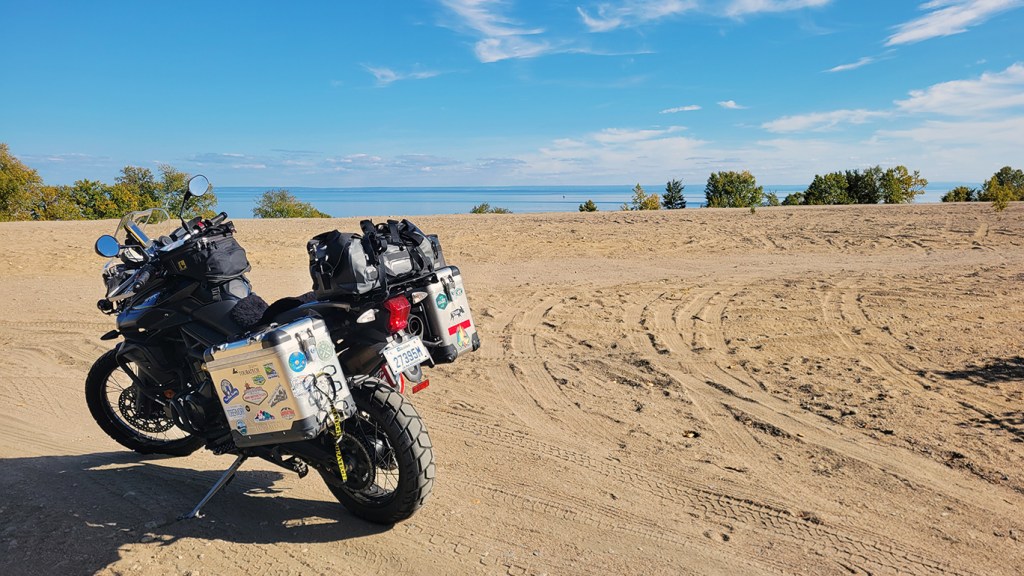
Soon we were heading north on the 172. It’s a fun road, and yeah, the cops are few and far between in this region, but I had speed control riding pillion so had to be good. Since we couldn’t hear each other very well in the comms due to the wind noise, Marilyn and I had developed a system whereby if she wanted me to slow down, she’d tap my left shoulder, and if she wanted me to stop, she’d tap my right. This form of backseat driving worked reasonably well, but unfortunately sometimes the D3O shoulder armour in my jacket worked a little better.
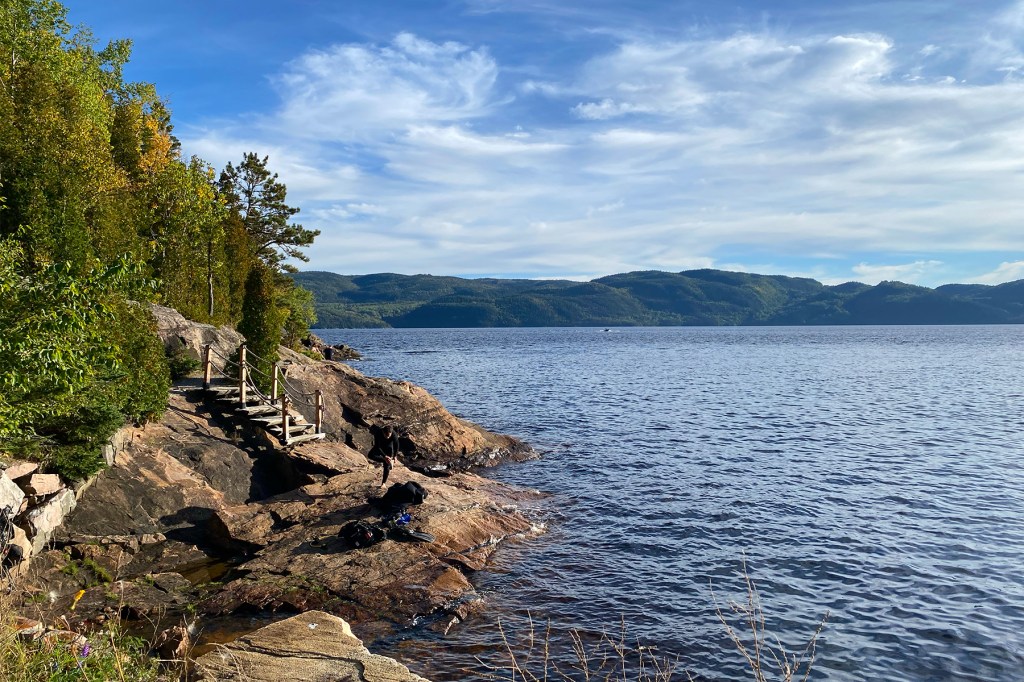
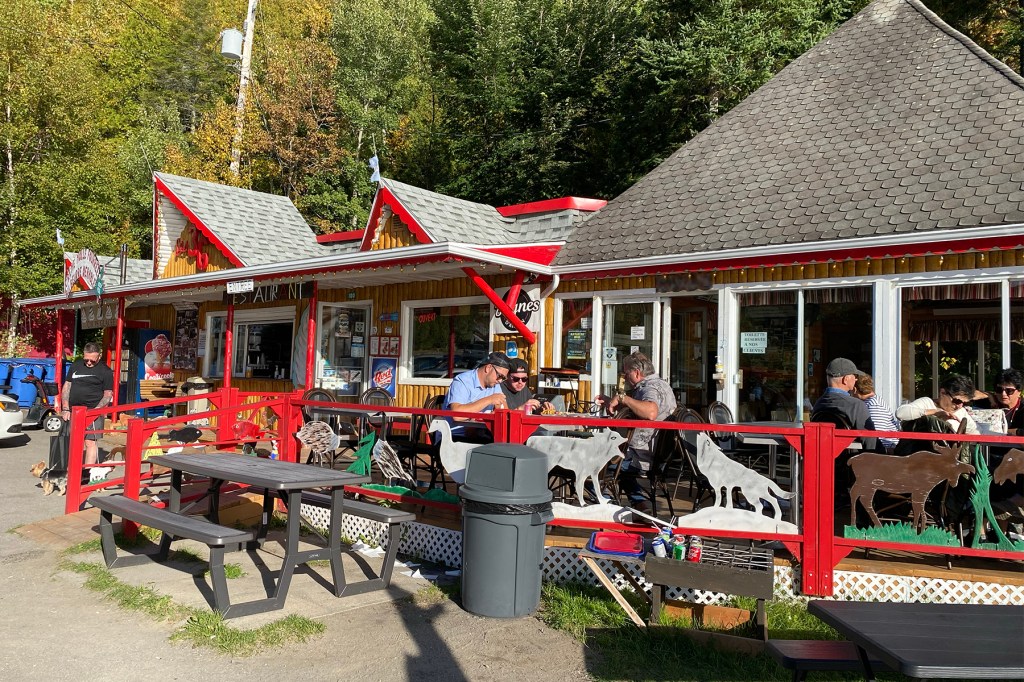
Marilyn had done a little research prior to leaving (somebody has to) and said there was a good rest stop at Sainte-Rose-du-Nord, a pretty little town that has a quay and offers a good view of the river. What L’Anse Saint-Jean provides on the west side of the Saguenay, Sainte-Rose-du-Nord does on the east—access to the river and a view of the fjord. We pulled in mid-afternoon in search of coffee.
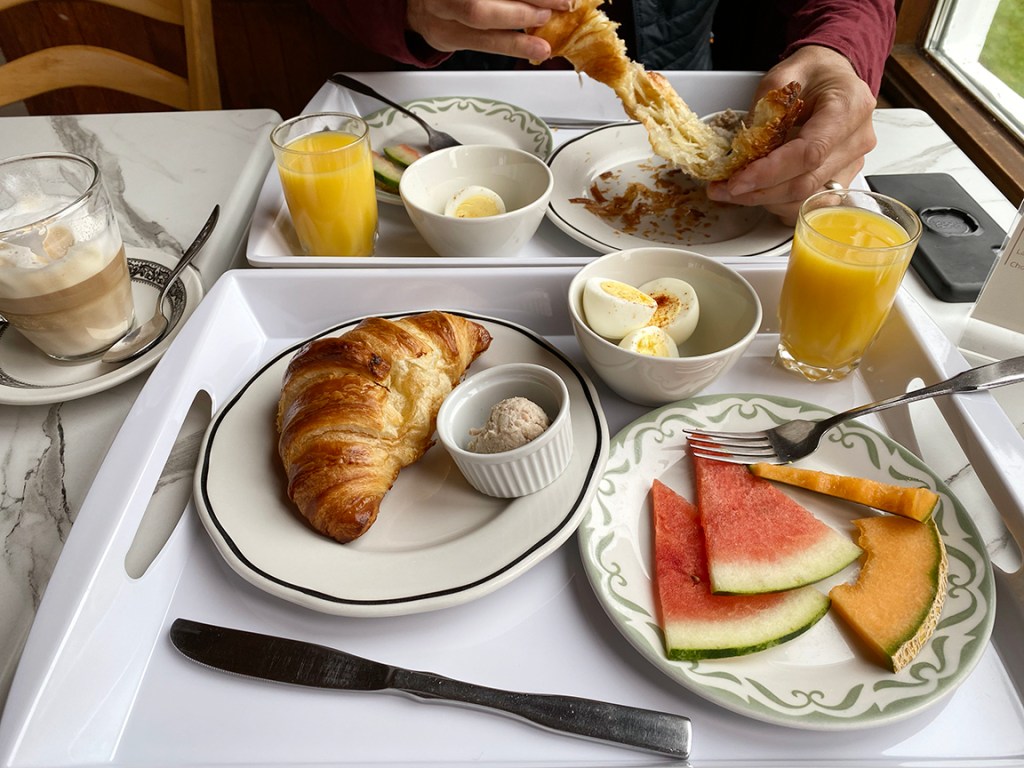
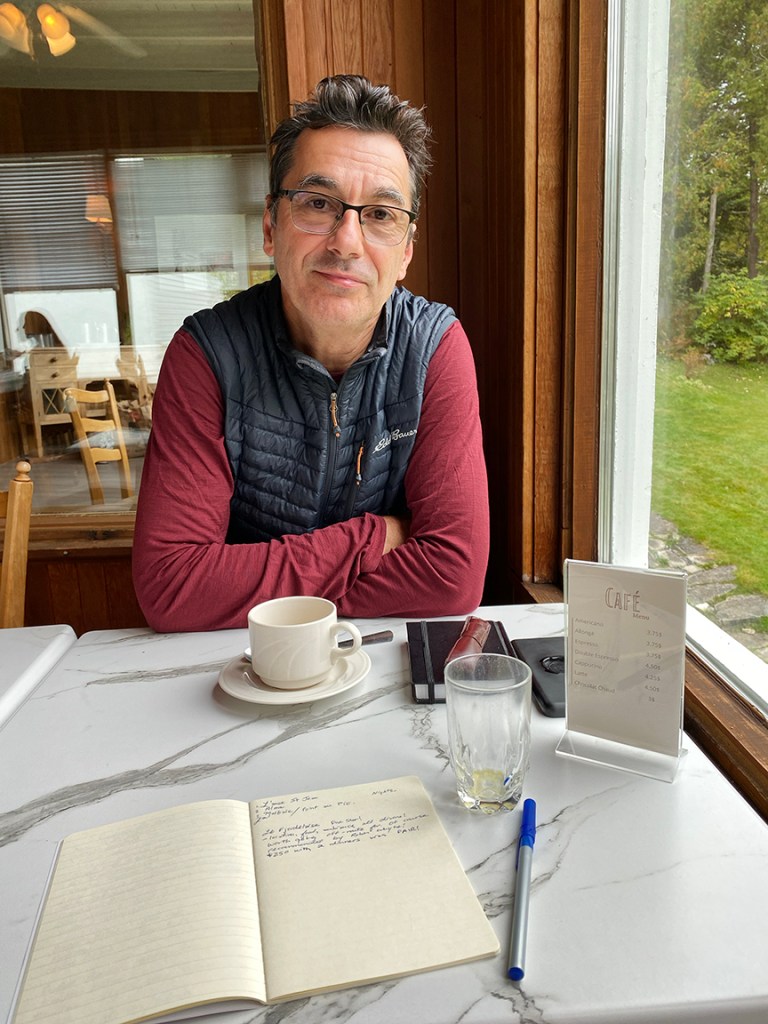
As many of you know, I’m not big on planning a tour before I go. I like the element of spontaneity and the ability to change plans on the fly. However, for this trip, since we were staying at B&B’s, I did take some time before leaving to find some sweet ones. We really, really, enjoyed all three of our gites on this tour. I love staying in an old historic house rather than a modern motel, and I love meeting the owner, finding out about the history of the building and the area, meeting other guests, practising my French, and enjoying the simple but tasteful breakfasts the hosts provide.
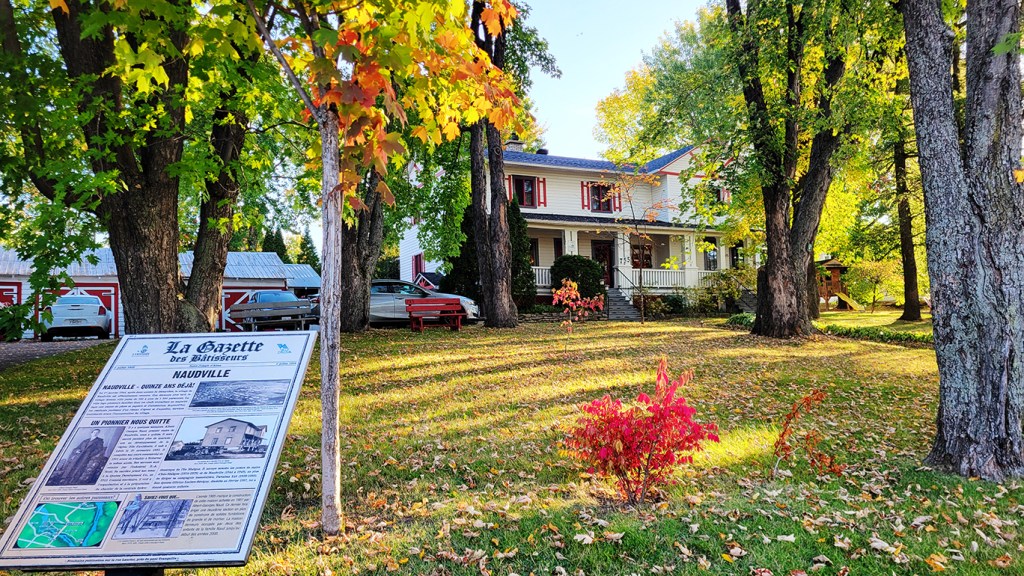
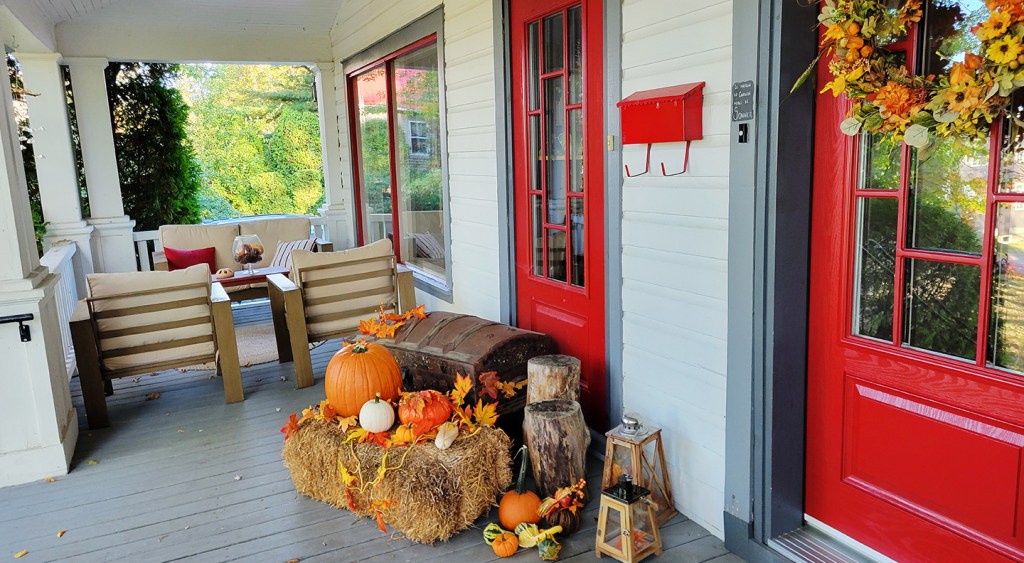
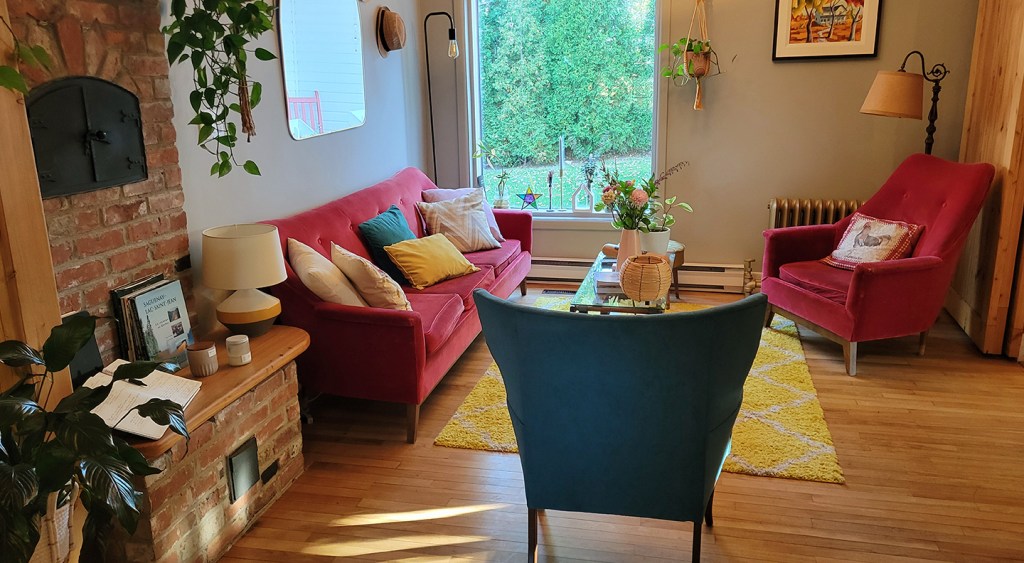
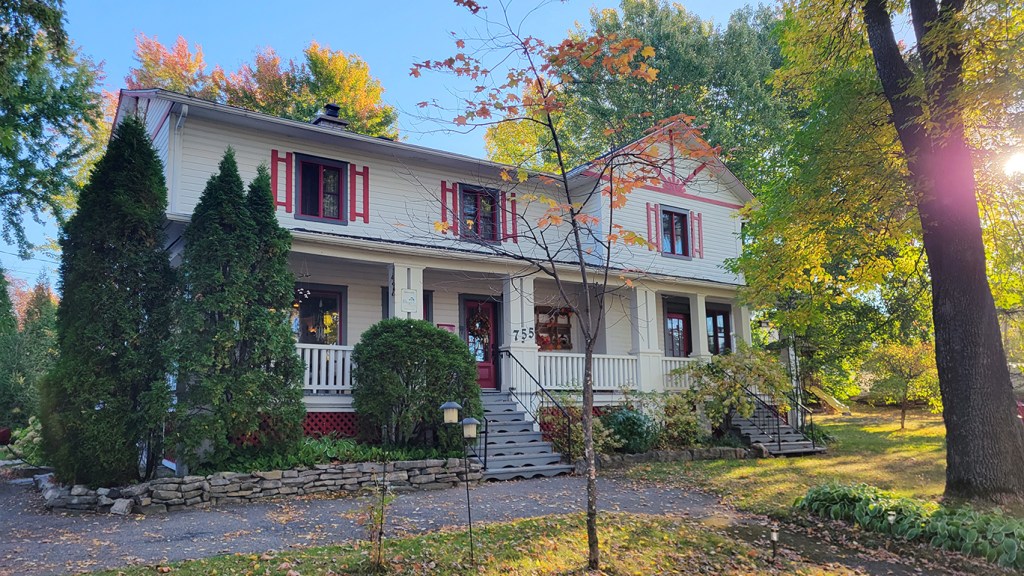
Our house in Alma, the Gite Almatoit, is home to a family and there were black and white photos of the house in winter and the kids playing in the garden. We were told that although the children must take a bus to school, snow days are (unfortunately for the kids) quite rare. After breakfast, I took a stroll around the property and learned from a sign on the lawn that the house was built in 1927 and is named La Maison Naud, after its original owner. Children of the Naud family lived in it until the early 2000s. It was the fall equinox, and our host had prepared this nice display on the front porch to celebrate the season. I’m too anti-social to be a B&B host, but I appreciate people who have decided to go into the hospitality business in order to make it work where they want to live. Maybe for them—I suspect for most—they enjoy the work so it’s a win-win.
The next day took us over the top of Lac Saint-Jean. We headed north on the 169 and pulled off at Pointe-Taillon “National” Park to see the beach and lake. I’m putting national in quotation marks because I’m not a Quebec nationalist and I disagree with Quebec’s nomenclature for its parks, which in any other province would be called provincial parks. You can’t have it both ways: receive billions of dollars in equalization payments from the rest of Canada and then call yourself an independent nation. Or maybe you can, if you are Quebec. As a Quebecer, I feel uncomfortable with this hypocrisy, especially when that nationalism is based on ethnicity, not language, which anyone who has lived here for any length of time will attest.
I’m thinking of Quebec politics now as I write this, and I was thinking of them then as we sat in a Tim Horton’s coffee shop in the heart of separatist Quebec, north of Lac Saint-Jean. It’s pretty much unilingual in these parts, so if you don’t know French, you’ll have to use the point and grunt method to order your donut. My French isn’t great but I can get by, but for all the talk of language in this province you’d think it was the most important issue facing Quebecers. It’s not. Just today I read that one of the major health service providers in the Montreal area has entered creditor protection. Marilyn and I are currently without a doctor, and I’ve been waiting for an MRI for months to diagnose a lump that I discovered last June on my collar bone. This is the state of healthcare in Quebec, and don’t even get me started on the state of education. (I’ve been a teacher since graduating in 1994.) It’s time that the Quebec government stop stoking the fires of nationalism and get its house in order by prioritizing issues like healthcare, education, infrastructure, and social services that have a direct impact on the quality of life for most Quebecers.
I’ve railed against Quebec politics elsewhere in this blog so won’t repeat myself, except to say that Marilyn and I will be leaving the province when I retire in a few years. We have mixed feelings about this because we’ve developed some very close friends here, but speaking for myself, I no longer want to pay another tax dollar to a government that sees me as a second class citizen because I’m not French (note that I didn’t say “speak French,” because I do, however poorly), that doesn’t hold and promote values I can be proud of, and that has its priorities mixed up. It’s time that Quebec as a nation either sh*ts or gets off the pot, to put it crudely. If it’s going to pass legislation that goes against the Canadian Charter of Rights and Freedoms and can only be enacted by using the Notwithstanding Clause, it’s time to leave Canada and stop taking handouts. In 2025-26, Quebec will receive $29.3B in equalization payments, more than all the other provinces and territories combined. Vivre le Québec libre!
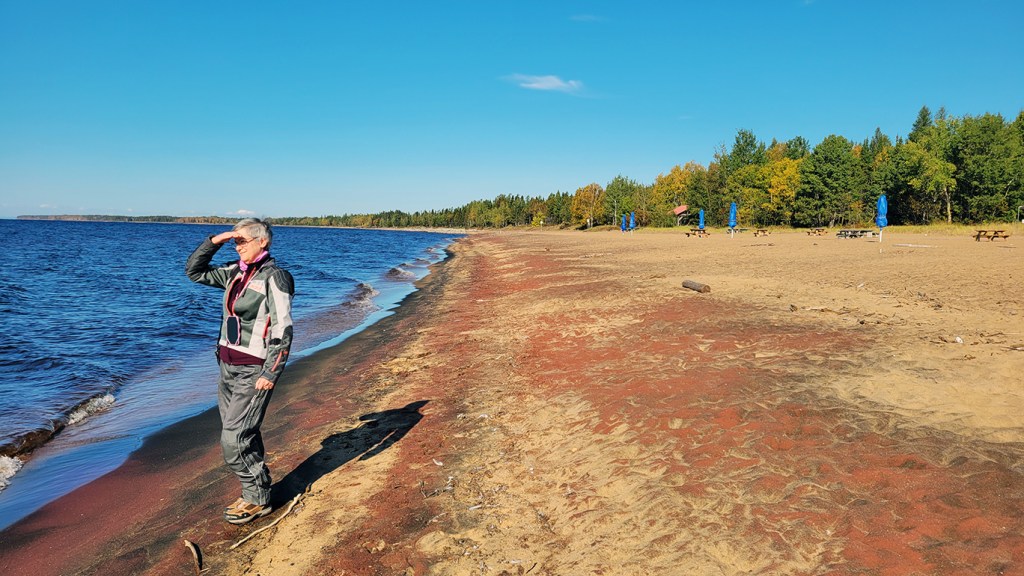
Back at the Tim’s, I had that feeling I got once before, when my son and I stopped in a small town in northern Quebec for dinner after canoe camping. As I listened to the French conversations around me, I wondered what it would be like to be unilingual French, how narrow your window onto the world would be, and how your views and opinions would be shaped exclusively by French media. I understand the fear of losing your language and culture; as a Canadian, I face this everyday living beside The United States which threatens to devour the subtleties of Canadian English and our unique culture. But I’m convinced that forced monolingualism is not the answer for French Quebecers. And besides, as stated by famous Canadian lawyer Julius Grey in a recent talk at my college, no language that is taught in mandatory public education has ever disappeared. If freedom really is in the interest of the Quebec government, it should begin with linguistic freedom. Languages open doors to other cultures, other ideas, and broaden one’s horizons. I wouldn’t be living in Quebec for the past 34 years if I hadn’t done a summer immersion program in Quebec back in 1989 to develop my French. But as I write this, the Legault government is working to restrict access to education in English, leaving the vast majority of Quebecers linguistically and culturally isolated, not to mention vulnerable to media manipulation.
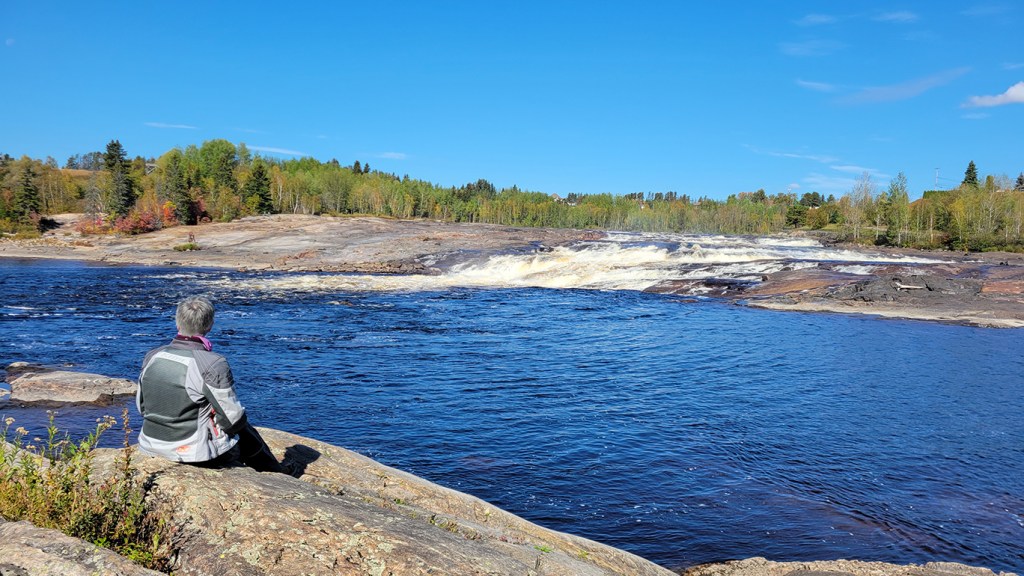
We looped the lake and came back into the town of Saguenay, then picked up the 381 south, the preferred route for motorcyclists. It cuts through dense bush between mountain ranges, separating on the west the Laurentides Wildlife Reserve and on the east Parc national des Hautes-Gorges-de-la-Rivière-Malbaie. There was a lot of tapping on my left shoulder on that ride, all the way into Baie-Saint-Paul.
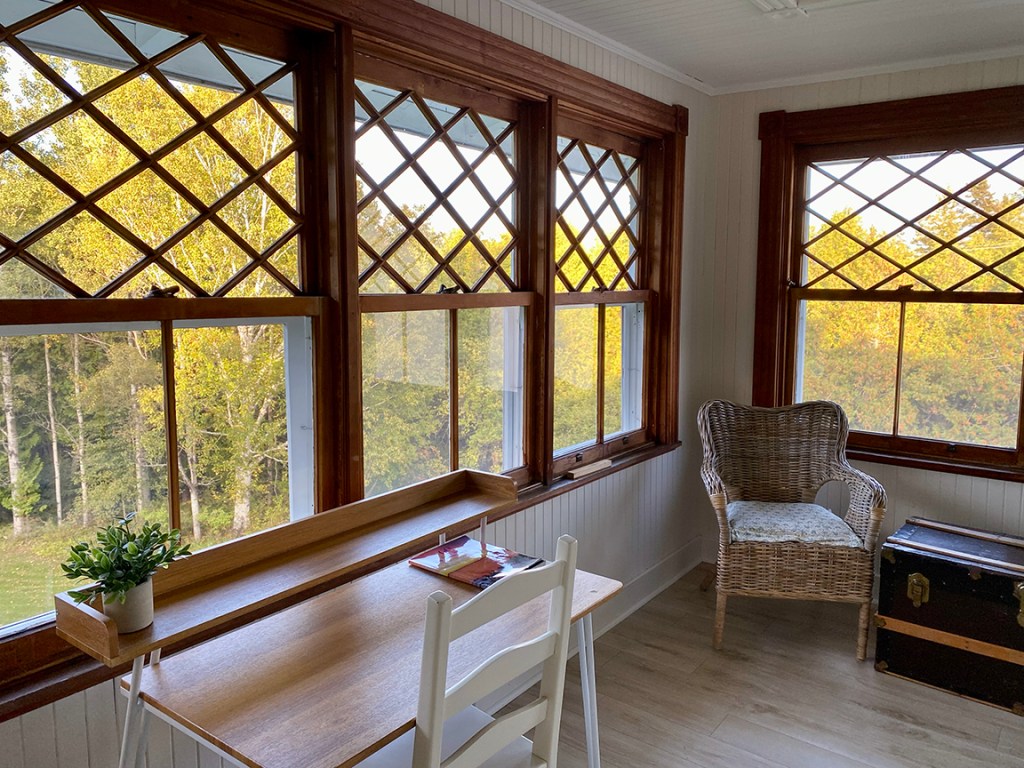
For our third and final night, we had a reservation at Auberge Les Sources in Pointe-au-Pic, just west of La Malbaie. I would say it was my favourite of the three, but they were all my favourite. The room itself was special with a lovely sunroom off of the main room where we could sit and listen to our little bluetooth speaker and journal and drink port. Yes port. Only we enjoyed it a little too much and somebody had to go fetch dinner. Thankfully, we were a stone’s throw from the Fairmont Le Manoir Richelieu which had take out St. Hubert chicken. It wasn’t the swankiest dinner of our trip, but it hit the spot under the circumstances.

After dinner, we decided to walk off the chicken by taking a stroll down to the hotel that overlooks the river. It really is a spectacular building, furnished exquisitely inside with original artwork (including a piece from one of Marilyn’s favourite painters, Michael Smith) and historical photographs and artifacts. The Fairmont hotels are a sort of relic from another era, and this one clearly is kept alive by the adjoining casino, accessible from the hotel by a tunnel. I’m rather morally ambivalent about gambling, but I guess in this instance I’m okay with other people spending their money this way if it’s going to prevent an historic building from being turned into condos. We peered through the glass doors into the carnival lights, bells, and glitter of gambling while a couple of bruisers stood guard outside, ensuring only hotel guests could lose their money.
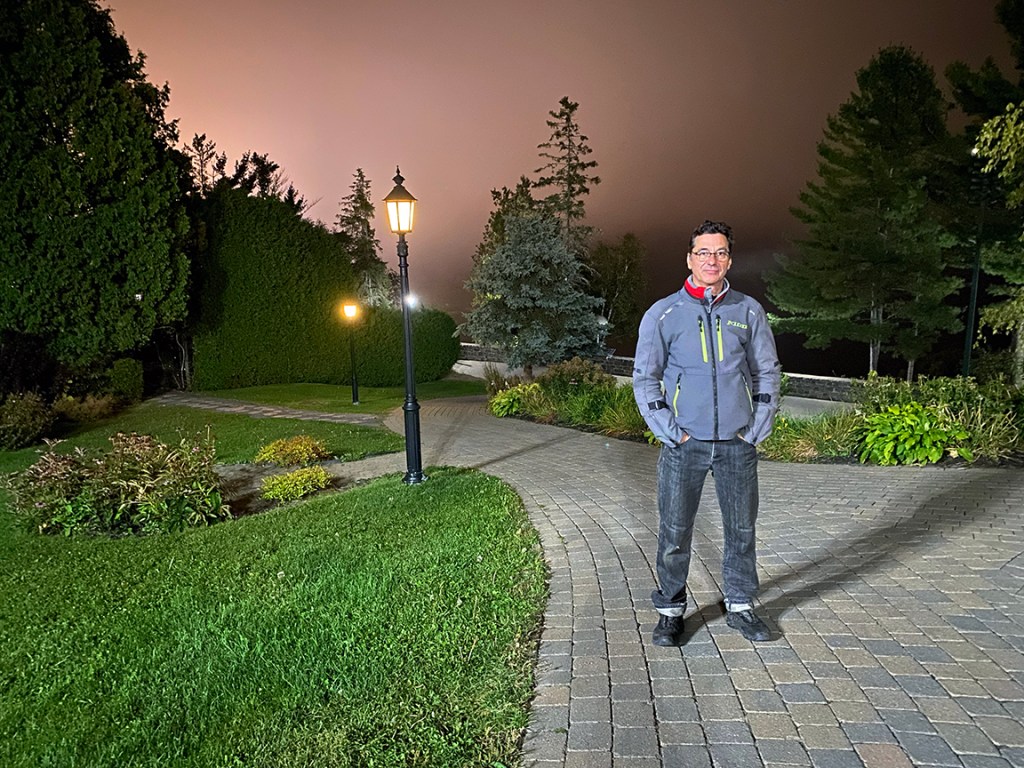
Outside, fog had rolled in. We strolled along the boardwalk overlooking the river, and in the mysterious lighting of the outdoor lamps, with a foghorn sounding in the distance, you could easily imagine being another person 100 years ago.
Our final day would be more of the gross highway riding to get home, but before leaving our beloved Charlevoix, we indulged ourselves by stopping in at Saint-Joseph-de-la-Rive, a quaint village at the base of Les Éboulements, right on the river. The view as you descend is pretty good, and there’s an interesting little artisanal paper store there called Papeterie Saint Gilles, which still makes paper by hand, pressing petals of local wildflowers into the sheets.
This hill is so steep that several years ago a tour bus lost its brakes and crashed off the embankment. I spared Marilyn that story.
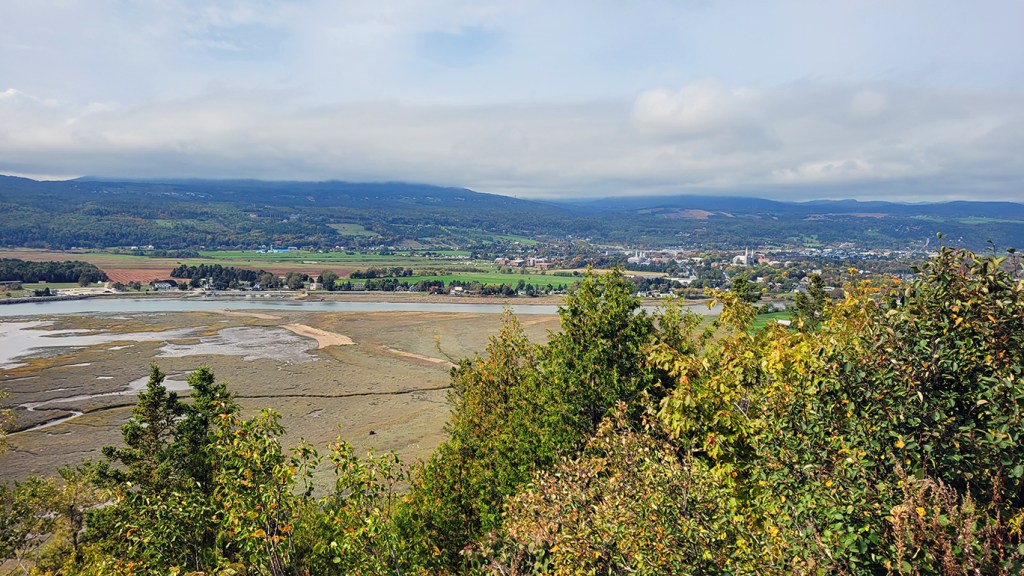
Our original plan was to cross on the ferry from here to Île-aux-Coudres and do a quick loop of the island I’d heard so much about. I’ll go to great lengths to find a good boulangerie. But it was off season and we figured a lot would be closed and we still had the return leg to Montreal to do, so we stayed on the mainland and strolled along another boardwalk, taking a last look at the rolling hills and tide flats of Charlevoix.

Finally, it was time to climb reluctantly onto the bike and start heading home. The tour had been everything we’d hoped it would be. We weren’t able to do a holiday over the past summer, but this little excursion made up for it and cured our travel bug before the bike went into storage for the winter.
The Saguenay fjord has dramatic geography and the roads are windy and fun. Prices are reasonable and everyone we met was friendly and welcoming. Wherever I travel, whether in The United States, across Canada, or into the heart of pure laine Quebec, the people I meet rarely match assumptions based on what I’ve heard in the media. Perhaps that’s the best thing about travel: learning first-hand that people everywhere are essentially the same. I’m glad that I finally did this tour, if only to discover, with my own weak French, that the only thing separating English and French Canadians is language.


well done Kevin.
marc
LikeLike
I’m glad you weren’t offended. I always have my French friends in the back of my mind when I’m being critical of Quebec and its politics.
LikeLike