As I tell my students, sometimes less is more.
This Christmas I ask for only one thing: that my students stop cheating using AI. It gobbles up my time preparing for the meetings and zaps my morale when they deny it all the way through the appeal process.
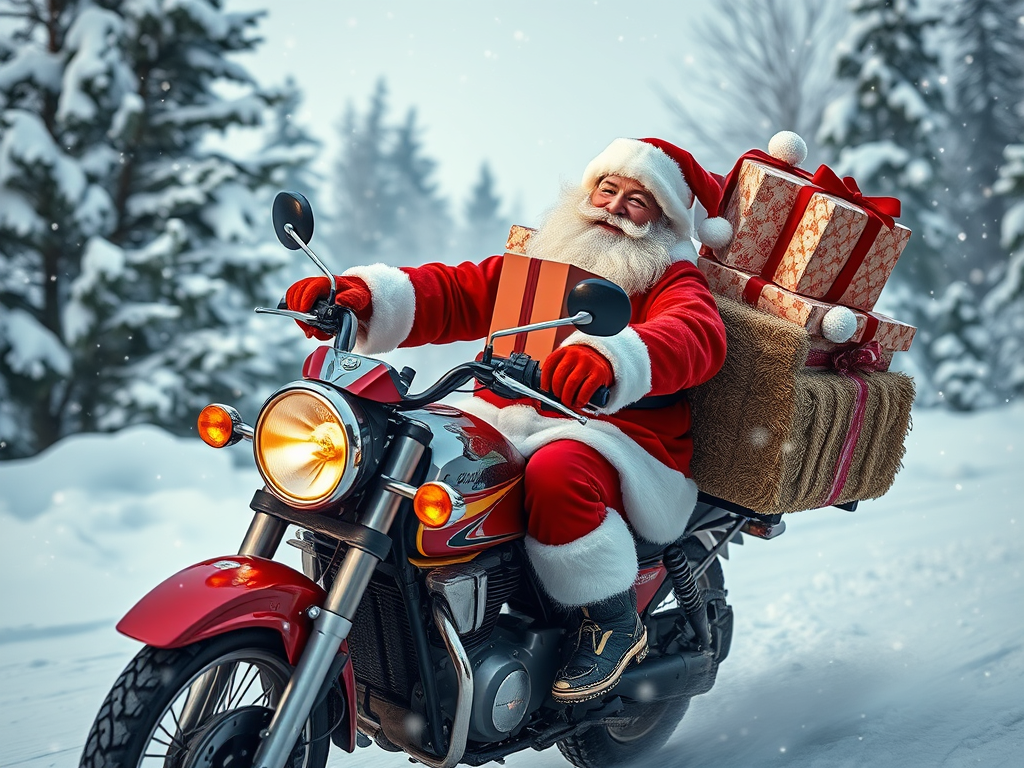
Accordingly, I’ve begun this post with an AI-generated image. Whatever generator WordPress uses apparently doesn’t know what an adventure motorcycle is, just as ChatGPT doesn’t really know how to write an insightful analysis of a short story. In both cases—looking at the photo and the essay—it’s pretty obvious they’re fake. What is that square thing on Santa’s lap? Is it supposed to be a present, and if so, why is it on his lap when he’s got all that room on the . . . hay bale? And somebody needs to tell Santa that Sorels don’t provide much foot protection when he lowsides in the snow.
We live in a world where the real and the natural occupy an increasingly small part of our lives. That’s one of the things I love about adventure riding—its ability to help us get away from civilization and screens and the news (and students) and take in, as the saying goes, The Great Outdoors. This year my wish list does not contain mods and accessories for the bike but mostly camping gear. I want to downsize my gear and be more comfortable around camp.
Cookware
If you read my post on motocamping gear, you’ll know that I use an MSR Dragonfly stove and a Zebra 3L stainless steel Billy pot as my motocamping kitchen. This is the same gear I use canoe-camping, but now I’m ready to go even smaller. When I’m canoe-camping, it’s usually with my son and, uh, we’re in a canoe, where there’s lots of space, and weight is only an issue on the portages, but when I’m adventure touring, I’m usually on my own and less is more, so to speak. Space in the panniers is at a premium, and I feel every extra pound on the bike.
For this reason, I’ve decided to get the 9-piece Odoland Camping Cookware set.

I came upon this little unit via Adam Riemann’s video on his gear. I’ll probably leave the cup and fold-out base at home, and I’ll probably substitute the folding cutlery for real stuff. I’m not that minimalist. (While I’m trying to reduce weight, I won’t be cutting my toothbrush in half anytime soon.) This kit will cut down my cooking gear considerably.
It means switching from liquid fuel to butane, which I never thought I’d do. Liquid fuel has a lot going for it: no canisters to buy or dispose of, the ability to refill at any gas station, and as an emergency supply for the bike. But the Dragonfly is loud and slow. You can get a Dragon Tamer by BernieDawg, but at 82€, that’s almost the price of the stove, and it doesn’t seem to speed it up, just silence it. An 8 oz cylinder fits nicely inside the Odoland pot with room for the burner on top, so it’s very compact. I like Adam’s suggestion of wrapping the canister in a goggle bag to provide some padding. The entire kit is, incredibly, only $38 Canadian, so I hope at that price it isn’t, in the immortal words of my late mom, “cheap and nasty.” ADV touring is hard on gear, so it has to be tough.
Whether I take a separate frypan and plate remains to be decided. Maybe I’ll go hardcore and try to get by just with this.
Ditch the Tent and Mattress
Speaking of hardcore, I’m seriously thinking of switching to a hammock system for sleeping. I was talking to my brother-in-law about a canoe camp he did north of Lake Superior—5 nights using a hammock—and he swears by it now. He strung up a tarp overhead, just in case of rain.
This would allow me to leave behind my tent and mattress, which together weigh 7 lbs. More importantly, my tent doesn’t fit in a side bag, so I have to strap it on top lengthwise or across my tail rack in a duffle bag. I’d love, I say love, to be able to do without a duffle bag up high on the back. (BTW, I’m ditching the tank bag too.) With weight down low in the panniers and only a few small bags with tools and tubes up front, the bike would be a lean mean machine, helping me to do the kind of riding I want to do, especially now that the Tiger’s suspension’s been upgraded. It’s not quite a rackless system, but something resembling it.
I’ve slept in a hammock before and froze my butt off. Okay, it was at Yukon River Campground, so not the best place to try. One of the issues with hammock camping is that the down in your sleeping back gets compressed underneath you, and you don’t have the insulation of a mattress to keep you warm. You can get a hammock quilt and string that up underneath, but they are heavy and bulky, so you lose any savings gained in weight and space.
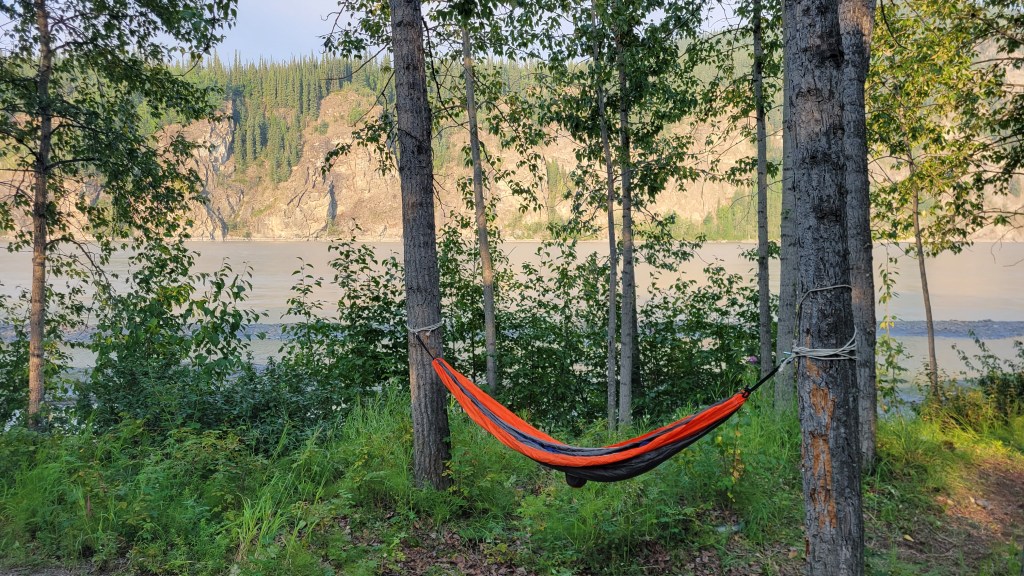
My other concern is that there may not always be two trees to string the hammock. I’ve been at sites before where this was the case, and I’m imagining, say, being out at a campground on the Outer Banks— basically a sand bar on the eastern seaboard of North Carolina—where they’re aren’t any trees. Would I be able to sleep on the ground and string a tarp off the bike in case it rains? What about bugs? Night visits? Privacy? You don’t see any RTW riders using a hammock.
Well, there’s only one way to find out. After some initial research, the SunYear hammock is on my wish list.
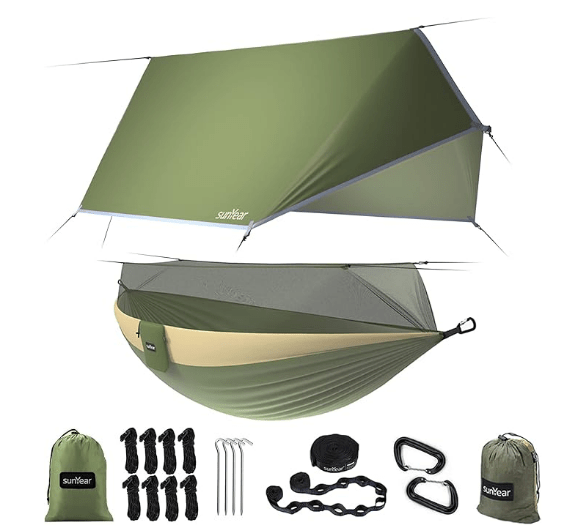
The SunYear is made of parachute nylon, and if someone is trusting it from ten thousand feet, I’ll trust it from 2 or 3. As you can see, it comes complete with a bug net and a tarp. A nice feature is the triangular shape of the tarp for some privacy, not that I care.
But before I go investing in a new set-up that costs about the same as a new tent, I’ll try a shorter trip using my existing hammock and see how it works. Alternatively, I could just buy a separate bug net and tarp if that works out. And for stringing it, I’m thinking I’ll carry a couple of ratcheting straps for bike recovery (a lesson learned from my last trip to Vermont) and they will work just fine to anchor the hammock without damaging the trees.
What do you think? Am I crazy? Have you tried hammock camping? How did you find it? Great recent development in camping gear or latest fad? Leave a comment below.
Shelter
Without a tent, a reliable tarp is all the more essential for rainy days around camp. When Riley and I had rain in Vermont last August, we strung his tarp up over the picnic table and were happy.

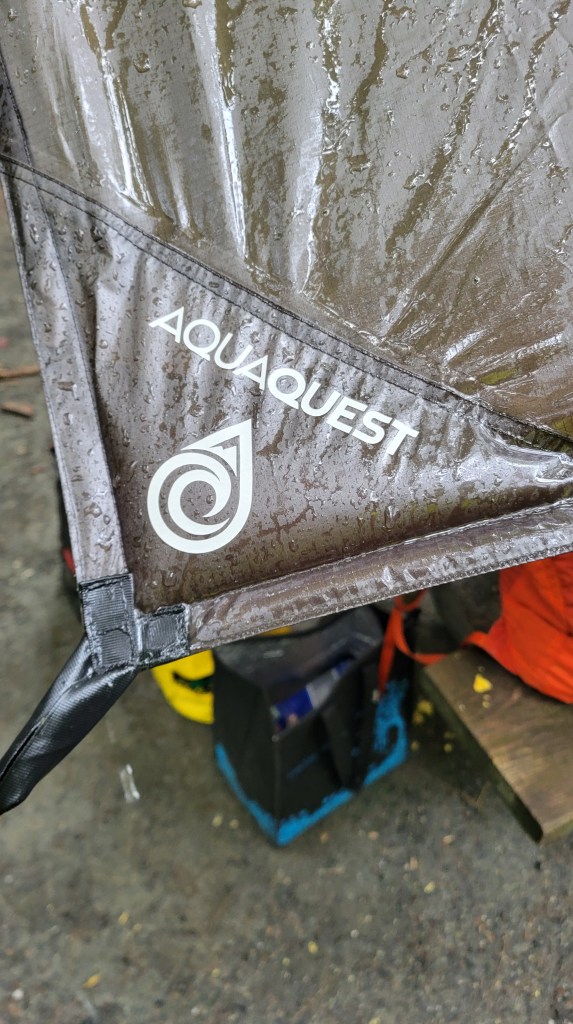
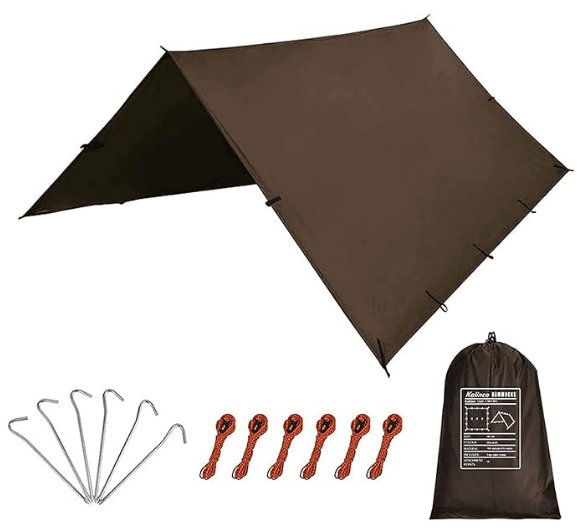
I was so impressed with his tarp that I took a picture of the logo. I later looked it up online and nearly shit my pants. I didn’t know that a tarp can cost $260. I usually get mine from the dollar store. Okay, they smell of plastic off-gassing and are as loud as my Dragonfly stove, so I’m ready to upgrade. When it’s your home away from home, a reliable tarp is worth its weight in gold. A good one will also pack up small.
I haven’t decided on the size yet, but I’ll want something big enough to shelter from driving rain. The only question is: Aquaquest or cheap Chinese rip-off?
A new lid
Two items that never made it off my wish list last year are a new helmet and shorty levers. I’ve had the same Arai Signet-Q since I started riding in 2015. Don’t tell the cops. You’re supposed to change it every 5 years by law. That means I really should either get a new one or move to New Hampshire.
Last year, I was looking at the Arai Tour-X5. Arai make arguably the safest helmets on the market, but as every Harley rider in a skid lid will tell you, safety is over-rated. More importantly, there’s fashion. But seriously, other factors include comfort, weight, ventilation, and a big one for me, wind noise.

Recently I was intrigued by what Chris (Chap in a Cap) at MotoLegends was saying about flip helmets. He argues that modular helmets should be considered the true adventure helmet, and the only reason most ADV riders have a helmet with a peak is for fashion. “Get over yourself,” he says elsewhere.
One thing I didn’t know is that, according to Chris, a flip helmet is the quietest type of helmet, even quieter than a full face. I thought that the hinge system created some wind noise, but perhaps that was just the case with the early modular helmets. It’s not just the absence of the peak that makes it quiet but also because the neck opening is smaller. With a flip helmet, you naturally lift the chin bar to put it on, so the neck opening can be smaller and less wind enters the helmet from underneath.
I’m sold. I have to admit, I’m interested in the idea of having the quietest helmet possible. As some of my readers know, I’m completely deaf in one ear so have to protect what’s left of the other one, and even with earplugs, which I always wear, the wind noise can be loud on the highway with a bad helmet like my LS2 Pioneer.
Champion Helmets, who do the most comprehensive and reliable testing in the industry, in my opinion, put the HJC RPHA-91 not only as the quietest helmet on the market but also the best overall modular helmet of 2025. The Shoei Neotec 3 was a close second. Schuberth helmets don’t fit my intermediate oval noggin, and Arai, well, Michio Arai doesn’t believe in flip helmets. So I think either the HJC RPHA-91 or the Shoei Neotec 3 is in my future.


The HJC is about half the price of the Shoei, but honestly, for something as important as the helmet, it will probably come down to which has the best graphics.
Back to Levers
The other item that never made it off my 2023 Wish List are shorty levers. What I did instead was move the levers perch inward on the handlebar as per another of Reimann’s suggestions, so I was pulling with two fingers but on the end of the OEM levers. This seemed to be the best of both worlds: I could use two fingers but still had the leverage of a full-length lever.
The downside to this set-up, I discovered, is that the front brake master cylinder is part of the lever assembly, and now it’s so far in it’s slightly tipped because the bracket is on the slope of the handlebar. The mirrors are also part of the same unit, so their position is affected. I can see okay, but all things considered, maybe it’s just easier to get shorty levers.
Last year I had the Vortex levers on the wish list. This year, it’s ASV, but don’t be surprised if they, at over $400 a set, are on next year’s list too.
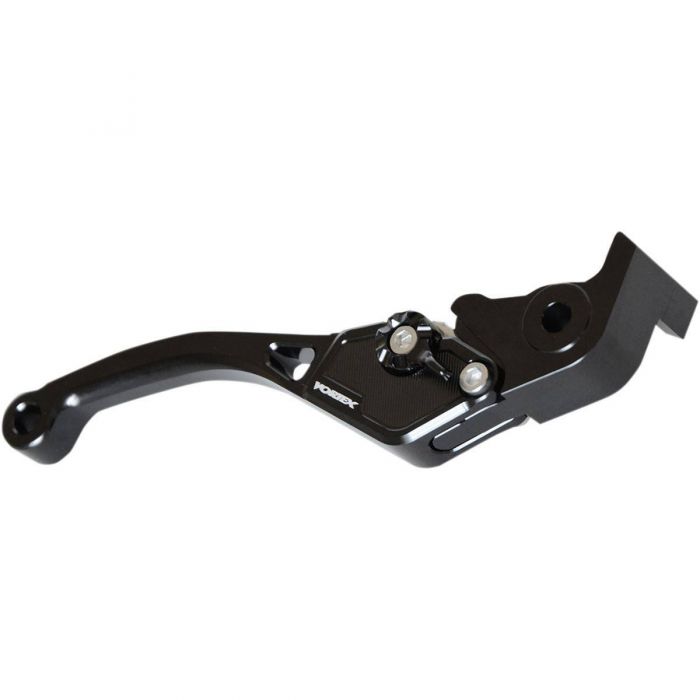

So if you didn’t think I’m crazy for giving up my tent, you probably do now. What can make someone pay that kind of money for levers, especially when you can get cheap Chinese ones on Amazon or eBay for $35? Probably the same thing that would compel someone to pay $260 for a tarp. It’s the quality of the product, and in this world, you usually get what you pay for, despite proclamations of cheapos to the contrary.
Aside from being unbreakable with an unconditional 5-year crash damage guarantee, the ASV levers apparently have excellent feel, if you believe comments on forums. That’s a result of the pivot that has precision-sealed bearings, the only lever on the market for my bike with a bearing pivot. ASV also have a micro-indexing adjuster with 180 increments, so you can literally dial in each lever to your exact preference. The C-series have a matte finish and cost a little more than the polished finish of the F-series.
I really don’t know if I’ll get these, but it’s nice to dream. Isn’t that the purpose of a wish list?
One More Thing
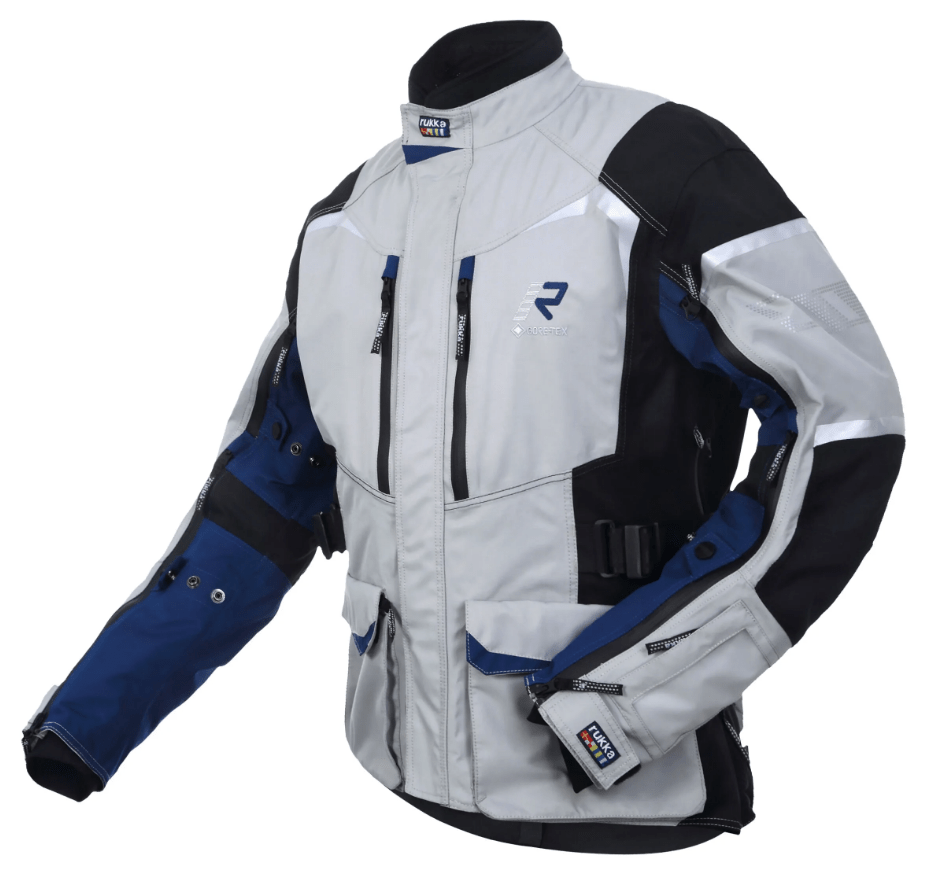
“Oh yeah, one more thing.” That’s what Steve Jobs used to say to introduce the most exciting new Apple product at the very end of his keynotes. I’d love to get a new jacket, one made for cold weather. I’d love to get a Rukka jacket, any Rukka jacket, but preferably one with a down-filled liner. I’m tired of freezing on early- and late-season rides.
My warmest jacket is the one I bought off eBay for $55 US when I started riding. It’s a Joe Rocket with textile front and back and leather arms and shoulders. It’s my warmest jacket because it has a quilted liner. My other two jackets are hot weather: the Klim Marrakesh, which is mesh, and the Traverse, which is a Gore-Tex liner.
Again, the option here is premium or budget-friendly. I’ve been hearing a lot about the MSR Xplorer jacket from Rocky Mountain ADV and it might work with some good heated gear inside.

One of the most viewed posts on this blog is the one on how to make your own heated jacket for under $50, and it’s a good option for commuting. However, the cheap Chinese controller is fragile and doesn’t hold up to the demands of adventure riding. I’ve already broken and fixed it a few times. The other thing I don’t like about the jacket is that it’s a rather thick, puffy jacket, that doesn’t pack well, so it’s either the homemade heated jacket or a wool sweater, but not both, and for around the fire, I’ll take wool any day.
My friend Riley of The Awesome Players posted a video of a late-season ride he did on which he was wearing a Warm and Safe Heated Jacket. He later texted me that he also has the baselayer, and so I looked into it.
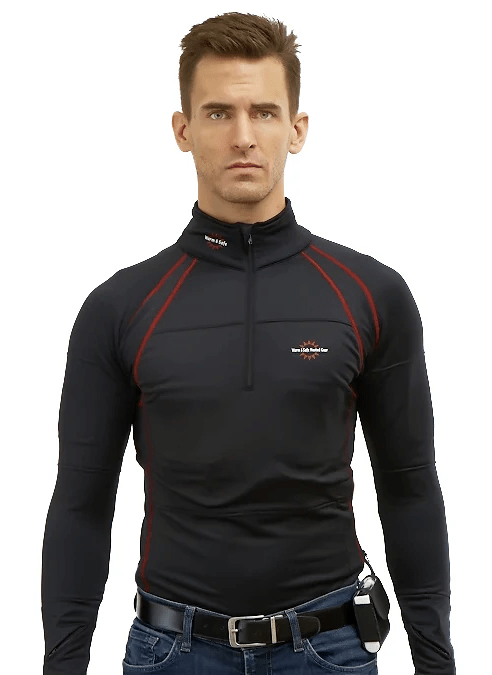
I like the idea of a base layer. It just makes sense to have the heat next to your skin instead of having to penetrate layers of thermal clothing first. Other people like the flexibility of having a light heated layer that you can easily remove if it warms up.
The company has over 25 years of experience and R&D. Each product connects to a heat troller that controls the heat. Instead of just three settings like with the controller on the Chinese-made pads, the W&S troller has a dial, so there’s a lot more variability. Okay, Warm and Safe don’t win the award for the most imaginative naming, but some of their gear also make it onto The List.
Conclusion
Well that list ended up being longer than I anticipated. As the instructor of my motorcycle course said first night, “This sport is harder on your wallet than an ex-wife.” Thankfully, my marriage is still strong, although would be considerably weaker if Santa fulfilled all my wishes.
And as I usually do at the end of these fun Christmas-themed blogs, I have mixed feelings about being so materialistic when wars are continuing in other parts of the world and some people lack heat, food, shelter—the basic materials of life. I don’t feel I can do much or anything about that, but I can help those closer at home in need. This year, Marilyn and I have decided to give a significant donation to a food bank. It will be a drop in the bucket, but it will be our drop, and I hope it provides a little relief to someone in greater need than me. With inflation and current food prices, the need is greater than ever.
The Wish List posts come at the perfect time of year, just after the bike is pulled off the road for four months by law here in Quebec. They help me though the transition to no riding by thinking of the rides being planned for next season and the gear that will make them all the more enjoyable. I’m still planning to do the tour that has been postponed now for two seasons—down the Blue Ridge Parkway into West Virginia, maybe over to the The Outer Banks, and back up via the MABDR and NEBDR.
What are your plans for next season? Drop a comment below and don’t feel they have to be anything as ambitious as mine. I’m always interested in hearing from my readers.
Merry Christmas and Happy Hanukkah to all my readers, and safe riding in 2025.
 650thumper
This is another great article. But I only paid $140 for that tarp a few years ago.
LikeLike
Good to know. I thought I’d have to break the piggy bank.
LikeLike