Let’s Talk About Off-Road Gear

In this post, I describe the off-road gear that’s worked for me.

In an earlier post, I discussed my touring gear. In this one, I’ll cover the gear I use for off-road riding. As before, I’ll move from head to toe.

Helmet

I didn’t want to spend a lot of money on a secondary helmet I use only occasionally, so the LS2 Pioneer was in the right range at about $230. It’s also a long oval, so the right head shape for me. In fact, it might be a bit tight even for me; towards the end of a long day, I wish it were a little wider. But it has excellent ventilation, and this is the helmet I reach for on stinking hot days even for street riding. It has a large eye port that accommodates goggles, a drop-down sun visor, and most importantly, looks really cool!

LS2 Pioneer Quarterback

Upper Body

The foundation, literally, of my off-road gear is the Knox Venture Shirt. I decided to go with a soft compression suit for comfort and safety. I know many will say I should have gotten a roost protector or some hard-shell armour, but for the kind of riding I do, which is not motocross but trail riding, I thought that would be overkill.

The nice thing about the compression suit is that I can wear it under an off-road jersey on really hot days. Also, unlike a jacket, the armour stays in place when you have an off. Because I live about 45 minutes from dirt, I like to wear my jacket to the trail, then swap it for the jersey. This means I need to carry a tail bag or knapsack, but I just don’t feel entirely comfortable riding asphalt without a jacket; it’s like how I don’t feel comfortable driving without a seat belt on.

This product wasn’t available in Canada and I had to order it at Revzilla. It’s since been discontinued but you can still get a similar zip-up armoured shirt from Knox or Bohn. It uses the latest D30 (Knox calls it Microtek) technology in the armour, which is pliable when wearing and stiffens upon impact. I upgraded the back protector to the Dianese Pro G2 because I found the Knox pad did not provide enough ventilation.

Pro-Armor G2

I wear over that either an off-road jersey, as I said, or my Klim Traverse jacket.

Klim Traverse

The Traverse is just a shell, and it doesn’t come with any armour. It’s very light and comfortable, and it has big zipper vents under the arms. It’s Gore-Tex, which makes it a little hot, but I also use it for street riding when there’s risk of rain. And because it’s going to get muddy, it’s got to be black. This is my go-to does-it-all jacket, and I love it!

Lower Body

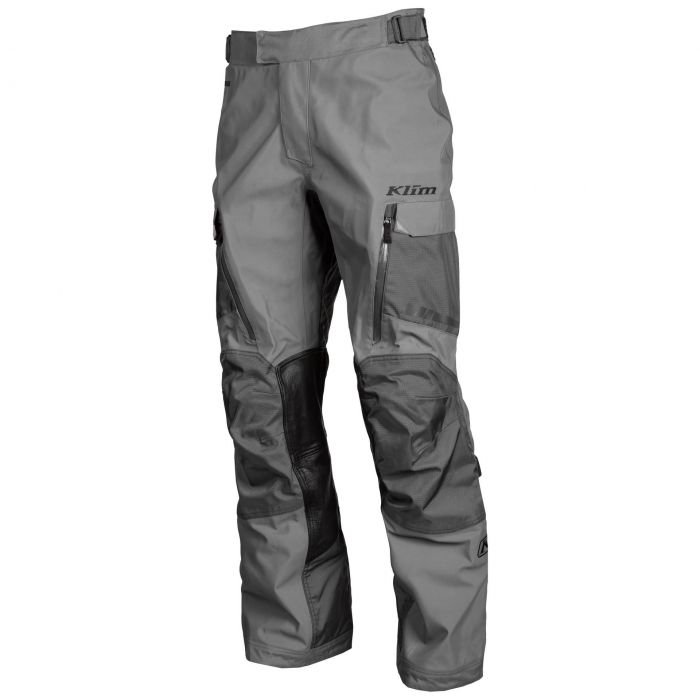
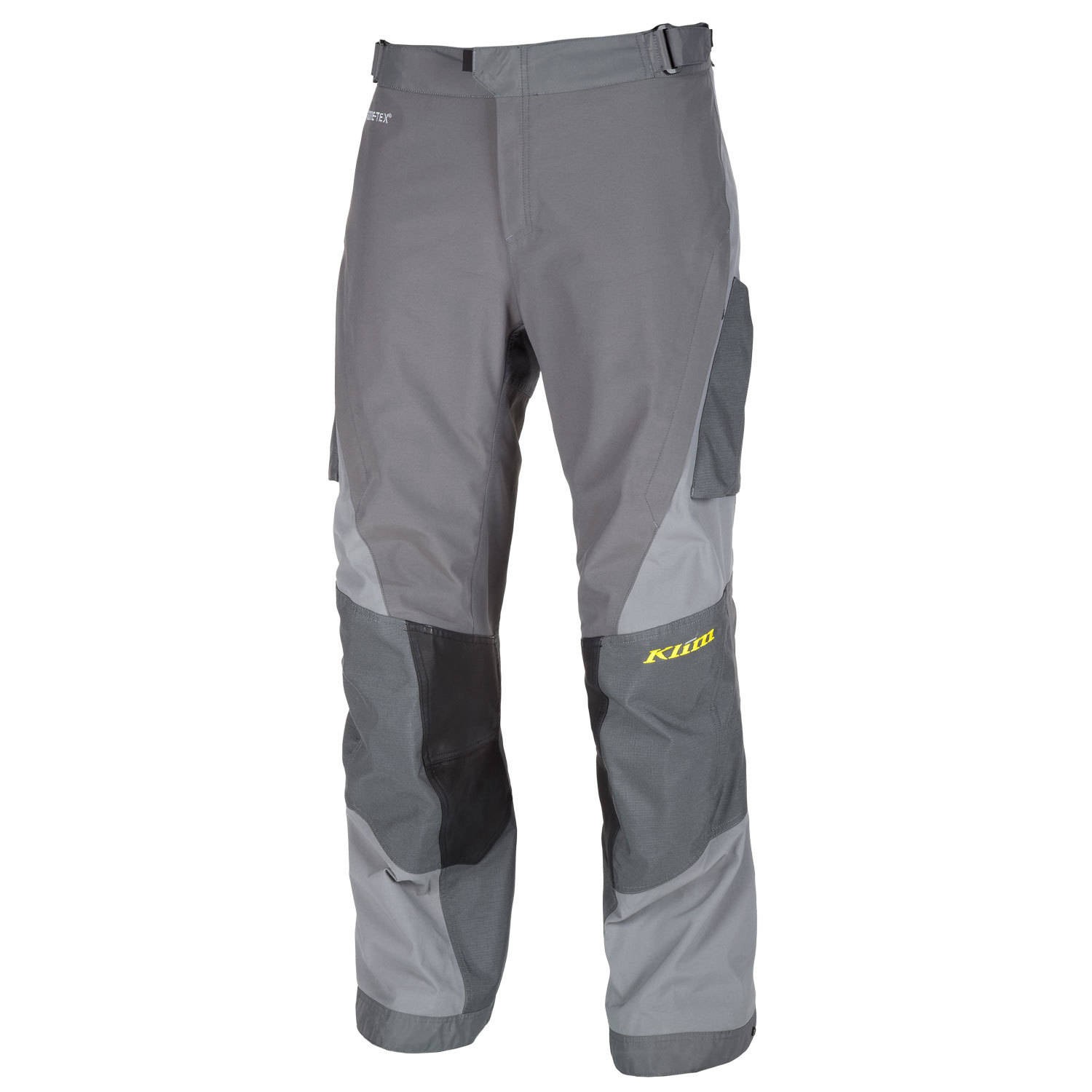
Klim Dakar Over the Boot Pants

For pants, I use the tried and true Klim Dakar pants, over the boot model. These aren’t waterproof, and the first time I toured in them I got caught in a shower and soon learned that. They just aren’t designed for that purpose. Instead, they have a dense, tough mesh that provides some airflow yet resists snags when you’re riding through brambles and thorny branches. There are also elastic accordion panels in key areas that provide a lot of stretch. Big zipper vents front and back enhance airflow, and there are the usual Klim angled zippered pockets for wallet and phone.

If you are going to be doing some serious off-roading—and that involves a lot of movement on the bike—these pants are designed for that. There are also some nice touches like the leather inseams on the lower pant leg where you are gripping the bike. A very durable, ventilated, stretchy pant for off-road riding. And of course, they come with Klim’s D30 armour in hips and knees.

If I’m going to be doing some technical riding, I pull on the Forcefield Sport Tube Knee Armour. Forcefield, like Knox, is also a company dedicated to just armour, so they do it right, and like the Knox shirt, these tubes, although a little uncomfortable, ensure that the armour stays in place when I go down.

Forcefield Sport Tube, the most comfortable knee armour I’ve found.

If I did more off-roading, I’d probably invest the big bucks in some knee braces. I’ve ridden with the Awesome Players Off-Road Club and Mark did some major damage to his knee a few years ago that got me and others thinking about that possibility. So far I’ve been lucky, but there might be knee braces in my future. For now, these knee pads are the best I’ve found. They won’t prevent torsional damage, but they will help with direct impact.

I use my SIDI Adventure 2 boots when off-roading. They are not motocross boots, but have adequate protection should you get a foot caught under the bike.

One piece of armour I’ve recently started using is wrist braces. I broke my thumb off-roading, and I’ve seen a few riding friends break their wrists recently, which got me wondering why riders don’t wear what skateboarders and snowboarders wear to prevent broken wrists. Apparently, it’s the most common snowboarding injury, for obvious reasons; it’s instinctive to put out your hand to break a fall.

Recently I started wearing EVS Wrist Braces. They are comfortable, and once I have them on, I forget I’m wearing them. Honestly. Okay, maybe you have to be off-roading to forget you have them on, but really, they do not encumber your movement on the bike, your grip on the handlebars, or your control of the levers. I had a friend break his wrist in a silly tip over when his hand hit a rock. It doesn’t take much with this fragile part of the body. They say the extremities are the most vulnerable, so if you off-road, consider picking up something like this and avoid losing six weeks of your season.

EVS Wrist Braces

Gloves

I took a tip from The Awesome Players and use a cheap pair of Mechanix gloves bought at Canadian Tire. You generally want a thin leather for the upmost feel on the controls, and mechanic’s gloves provide that dexterity, depending on the weight you choose. They also often have D30 on the back (for when that wrench slips and you were pushing instead of pulling) and are a fraction of the cost of dedicated motorcycle gloves. Go around Father’s Day and you will often see them on sale.

Mechanix Wear M-Pact Gloves. The motorcyclist in me likes these gloves; the English teacher hates the name.

Finally, the only other bit of gear that I use on but particularly off road is my Klim water bladder, or fuel cell, or hydration system, or Camelbak, or whatever you call it. It’s kind of a pain to carry water on your back. It’s heavy and hot, preventing airflow, but I’ve found that on hot days these inconveniences are worth avoiding the two-day headache I get if I don’t drink enough. When you are working hard in the heat, a sip from a water bottle every few hours during a rest stop is not enough. But if it’s cool and I can get away with it, I’ll put a Nalgene bottle of water in one of those canister holders on the back and ride unencumbered.

Klim Fuel Pak

This one is now discontinued and there are tons of others to choose from, including some with room for tools and first aid, if you want to get everything off the bike. Ryan F9 just did a good video comparing some backpacks that he particularly likes, and an upgrade might be in my future if I were to do a lot more off-roading than I currently do.

Summary

So as you can see, I’m pretty much a Klim guy. Their gear is expensive, but I’ve already said, you can get it on sale if you’re willing to watch and wait. I trust the quality of the materials and workmanship and the thought that’s gone into the design. Some will say I’m getting fooled by marketing and there is comparable gear available for a fraction of the cost, and they may be right. But with the fuel pak, for example, Klim’s is unusual in that the seams of the bladder are radio frequency sealed, so you can turn it completely inside-out to clean and dry. It’s for qualities such as that I’m willing to pay a premium price. And when the mouthpiece split and started to leak, Klim sent me a new one. Again, I am not sponsored by Klim; it’s just my go-to brand for gear.

One of the pains with dual sport riding is that you have to buy two sets of gear, one for road and one for off-road. It’s a significant investment up front, and buying all this stuff almost broke my marriage as well as the bank account. But take your time, get a little at a time, prioritizing, and look for discontinued and end-of-season sales. There are sports that are more expensive, I like to remind my wife, and there are more frivolous things to buy than protective gear.

Off-roading is not a dangerous sport. In fact, I got into it because I felt it is a way to challenge myself safely. There’s only so fast you can go on the street before it’s not safe, and the stakes there are a lot higher. Off roading does not involve high speeds—not the trail and dirt-road riding I do—but you can still get hurt playing in low-traction terrain with a 450 lb. bike. Investing in some good gear minimizes the risks and therefore increases the enjoyment of the ride.

This is what I use and have found works for me. What do you use? I’m a gear weenie so I’d love to hear what works for you. Please leave a comment or send me an email. In the next post, I’ll talk about the camping gear I use. If you are interested in moto-camping, click the Follow button and you’ll be notified of new posts.

Let’s Talk About Gear

The first in a series of posts on my riding gear. In this one, I discuss my touring gear.

I’ve had a few queries about the gear I use, usually from someone about to set out on a similar long tour, so I’ll devote a few blogs to the subject. This one is on what I wear when touring. In the next, I’ll talk about my off-roading gear. I’ll then cover my camping gear, and round out the series on navigation apps and other equipment I carry on the bike.

Let’s move from head to toe.

Helmet

The first time I bought a helmet, I had no idea what I was doing so relied on the salesperson. Unfortunately, she put me in the wrong helmet. She would put a helmet on me, wriggle it from side to side, say “Too big,” then put on a smaller one. Eventually she had me in an XS which, yeah, fit side to side, but within half an hour at my first class had created a pressure point that felt like a nail was slowly being driven down though the crown of my skull.

I’m surprised that head shape is not emphasized more than it is. It’s the starting point of finding the right helmet, but rarely talked about in reviews or explicitly mentioned in product descriptions. I have a long-oval-shaped head, so after a little research, I bought an Arai Signet-X as my touring helmet. I know there are cheaper helmets, but when one’s brains are at stake, I don’t mind paying a little more. I need all of what’s left of mine. The Arai brand speaks for itself, but I like that the helmet is Snell rated and comes with a Pinlock visor; I’ve never had any issues with fogging. I replaced the original visor before my big tour with the pro-shade visor, which is great, but I still find myself shading my eyes with my hand when riding directly into low sun. My next helmet will probably be an ADV helmet with a peak like the Aria X4. I know the peak will create wind noise but I suspect it’s worth it for the speeds I usually do.

Arai Signet-X

Helmets are extremely personal, so the only advice I can provide is to get one that feels right for you. Just bear in mind that, according to The Hurt Report, 1/5 of all impacts on a helmet in an accident are on the chin. And if you don’t know if you are a round, intermediate oval, or long oval, ask someone to take a photo of the top of your head. It will narrow your search and potentially save you a mistake like mine.

Neck Brace

A lot of people, even motorcyclists, ask me what that thing is around my neck. The neck brace was designed by Dr. Chris Leatt after he saw one too many riders die or become paralyzed from the neck down. There is a great interview with him on Adventure Rider Radio, if you’re interested in the origins. Otherwise, all you need to do is look at this independent study to be convinced that neck braces make a significant difference in preventing cervical spine injury and even death. It does that by stopping your helmet from rotating beyond what your neck can withstand and by transferring those forces down through your skeletal structure. Once I have it on (and properly fitted), I forget that I’m wearing it; it doesn’t obstruct my head movements at all, such as when I check my blind spot.

What about an air vest, you ask? Doesn’t it do the same? Well, yes and no. According to Dr. Leatt, there is a difference in safety, and I’m not going to try to explain it but will refer you again to the ARR episode in which they cover this subject, also speaking to the head of safety at the Dakar Rally, which recently switched from mandatory neck braces to air vests. (Incidentally, many riders were not happy with the switch.) I’m not going to advocate against air vests. I think if you are wearing either a brace or a vest, you’re ahead of the crowd. I personally decided against a vest because it’s another layer in the heat. And do they all have to be the same colour as piss after you’ve taken your Vitamin B complex?! Let’s have some air vests that look a little more cool, please.

Leatt STX neck brace

I bought the Leatt STX; the wider scapula wings do not conflict with back armour or an aero hump if you’re rockin’ full leathers on track days. Yeah, neck braces are pricey. There’s a lot of R&D that goes into them and I guess they are still a niche market, but like most of my gear, I bought it significantly reduced (like 50% off) once the particular model became discontinued. I now make it part of my everyday gear, even when commuting to work. I’d hate to have some bad luck on the day I leave it sitting at home.

Upper body

After some trial and error, I decided to go with a layering system when touring. For one, I didn’t have $1,500 for a Klim Badlands Pro jacket, and two, it weighs a ton. At first I bought a Klim Traverse jacket and tried that. It’s Gore-Tex, which is great because you don’t have to watch the skies but can ride through rain or shine uninterrupted. But Gore-Tex is hot! Yes, it wicks sweat, but it doesn’t allow much air flow. I was imagining the stifling-hot days of midsummer and decided to buy the best mesh jacket money can buy, and in my opinion, that is the Klim Marrakesh.

Klim Marrakesh

I have to admit, the Marrakesh is nothing to look at. Plain Jane. For some, that might be part of its appeal. Who wants to look like a Transformer character in an action animation? But put one on, and you will not want to wear another jacket again. It is my most comfortable riding jacket. Perhaps it’s my most comfortable jacket, period. That’s because the Marrakesh is all about the fabric: a 1000 denier 4-way-stretch mesh that breathes, stretches, and protects. Just a little hi-viz is all that is needed, and it has D30 armour in shoulders, elbows, and back. Okay, the armour is Level 1, not 2, but I decided to sacrifice a little on safety for the sake of comfort, with the compromise of upgrading the back protector to Level 2. I was very happy that I went with this jacket when I got into the midsummer heat that followed me all the way up to Dawson City.

Okay, it’s not waterproof, so I had to carry a rain outer layer in my tank bag. (Klim says the material is “hydrophobic,” which does not mean afraid of the water but water repellent.) There are plenty of good light rain jackets to choose from and they will all do the trick fairly inexpensively. I bought the Scott Ergonomic Pro DP Rain Jacket. This outer layer was helpful not just in the rain, of which I didn’t get much, but also when I just wanted something to break the wind.

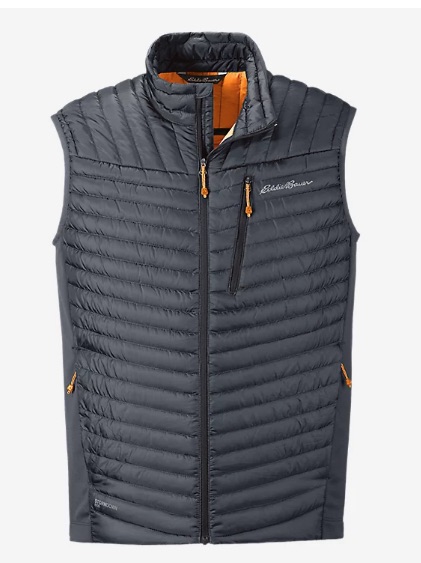
Underneath, I had either a light athletic shirt if it was hot, or a merino wool base layer if it wasn’t. I also kept in my tank bag, or somewhere quick at hand, a good quality (800 fill) down vest. It saved me many times on and off the bike. It packs down into the breast zippered pocket to about the size of a mini football (remember those?) and did just the trick when I needed a little something under the jacket in addition to the merino wool base layer or around camp when the sun went down. Doing without the sleeves meant it packed down smaller, and if you keep the main organs warm, the extremities will be too. The Microtherm 2.0 down vest from Eddie Bauer has become my favourite piece of touring gear.

I had one more layer, if needed—a good quality polar fleece jacket. This also doubled as my pillow at night when folded or rolled. So between the different base layers, the fleece, the vest, and the wind/rain breaker, I had lots of options for the varying conditions; I could ride from single digits to 35C, rain or shine.

Lower Body

I decided to go with Klim Carlsbad pants, which are Gore-Tex, but you don’t get much airflow over the legs anyway, and who enjoys pulling on rain paints by the side of the road? It’s one thing to pull on a rain jacket and another to remove boots or deal with zippers halfway up your legs. The Carlsbad pants do have some decent venting, so when my nether regions feel a little hot, I just stand up on the bike for a few seconds to air them out, so to speak.

Klim Carlsbad pants

One of the reasons I like Klim is that the Gore-Tex is in the outer layer. With other brands, it may be an inner layer, so you may stay dry, but the clothing still gets soaked and, aside from being heavy, may take days to dry out completely. I also like the D30 armor (Level 2) in knees and hips (removable so you can wash the pants periodically), and the little Level 1 tail-bone protector.

Underneath, I wear soccer shorts with a mesh liner. They double as swimming trunks (to borrow vocabulary from my dad’s era), dry quickly, and, ah hem, provide some freedom for the boys. I never needed anything else, but I have worn thermal underwear (i.e. long johns) in early spring and late fall riding here in Canada.

So layering on top, vented Gore-Tex below. It was a good combination that worked for me.

I should add that I’m not sponsored by Klim (I wish!). I just find they make the best gear, and motorcycling is so important to me that I’m willing to pay a premium for their gear. But as I’ve said above, I never buy full price. I spend part of the off season researching and window shopping, and when the item I want goes on clearance, I pounce.

Boots

Like the pants, I went with Gore-Tex boots that I could ride in rain or shine. No dorky-looking overboots, no plastic bags inside the boots, no waterproof socks—just a really good pair of Gore-Tex adventure boots. For me, that is the SIDI Adventure 2 boots. These are amazing, and not just because they look so cool! (When I first showed them to my son, he said, “Dad, these are Batman boots.”)

SIDI Adventure 2 Gore-Tex Boots

Adventure riding is all about compromises, and a good quality adventure boot like these offers a balance of protection and comfort. I’ve had the bike come down on my foot in an off-roading off and literally walked away from it, and I’ve climbed mountains and walked for miles around town in relative comfort because they are hinged. I know some will say only a motocross boot provides adequate protection, but for touring, you need something you can walk in. You also need something with a good tread in case you have to push your bike out of mud. The buckle system of SIDI boots is unparalleled in the industry. If you have a particularly wide foot, you might want to look at the Alpinestar ADV boots; I know Lyndon Poskitt recently switched from SIDI to Alpinestar Toucans because he found his feet were a little cramped in the SIDIs. Like the helmet, boots are all about fitment, so not gear to buy online.

The SIDI Adventure 2’s are a premium item but will probably be the first and last pair I’ll ever buy; you can get the sole on these replaced by your local cobbler when they wear out.

Socks

While we are down here, let’s quickly talk about socks. I wore one pair pretty much the entire tour. They are actually not motorcycle gear, per se, but athletic compression socks from The Running Room here in Canada. Compression helps with blood circulation over those long days, and the height (over the calf) prevents chafing at the top of the boot. They are also anti-bacterial and wicking. There’s no point in wearing a Gore-Tex boot over a nylon sock.

For cold or wet weather, I have a pair of Pearly’s Knee-High Possum Socks. Possum, you ask? Yes, Pearly’s has managed to turn road-kill into a business. Each strand of possum fur apparently is hollow inside, creating a dead-air space that is unmatched for insulation and warmth with the exception of caribou hide, which shares the same property. If that were not enough, Pearly’s has woven it with merino wool, resulting in a wool that is pretty special. They are also a premium item and it took me a few years to pull the trigger on these babies, but there’s nothing more comfortable or warm for cold-weather riding.

Gloves

Finally, let’s move to the other extremity. It may surprise you, but I went minimalist with my gloves: only one pair for the entire tour. If a pair of deerskin gloves is good enough for Pirsig, who writes about them in Zen and the Art of Motorcycle Maintenance, they’re good enough for me. I have a pair of BMW Gore-Tex insulated gauntlet gloves for cold weather riding, and a short pair of Five Stunt gloves for summer riding, but for the Epic Adventure Tour, I took only a pair of Aerostitch Touchscreen Elkskin Ropers.

Aerostitch Elkskin Ropers

Why? Mostly for comfort. Like the Marrakesh jacket, once you put these on, you will know why. They are super soft and super comfortable, yet provide sufficient abrasion protection in an off. I have heated grips so rarely need an insulated glove, especially for summer touring, and Elkskin, unlike cowhide, can get wet without drying hard. In fact, on a hot day, if you wet them and wear them riding, they will shrink as they dry and mold to the shape of your hands on the grips. Neat.

Aerostitch do a good job with these gloves, still handmade in The USA. There’s touchscreen thread sewn into the thumb and fingertips of the first two fingers, and a visor squeegie on the thumb. They may feel a little bulky compared to the thin leather of other gloves, but the dexterity they provide is adequate for touring, and I suspect they will last for years and years. In fact, like wine and some women, they are one of those items that gets better with age.

Conclusion

Adventure touring requires that you be ready for all kinds of weather yet minimalist because you’ve only got so much room on the bike. This is what has worked for me. What are your preferences? Did I miss something? Let me know in a comment below what your favourite piece of touring gear is and why. I’m always ready to learn, and we Canadians need something to keep us occupied during the long off season.

Ride Safe

Don’t believe everything you hear: there’s a way you can ride safely.

If there’s one motorcycle expression I hate it’s “ride safe,” and not because I’m an English teacher. I know the sentiment expressed is of concern, just as I know the expression is grammatically incorrect, but I also know the risks every time I pull on my helmet and throw a leg over the saddle. Saying “ride safe” to a motorcyclist is like saying “Hey, you know you’re working on a no-hitter?” to a pitcher sometime around the bottom of the seventh. Don’t think he or she isn’t aware of it, and drawing attention to this fact is not really helping.

I delayed my dream of riding a motorcycle for decades because someone told me it’s irresponsible to ride if you’re a parent of young children. When I started riding, in my first year, I overheard a club member say, “It’s not a matter of when but how bad.” He was recounting an accident of another club member and it scared the s**t out of me. I resisted watching YouTube crashes for as long as my curiosity would let me. And when I politely tried explaining to a colleague who had expressed a similar dream of riding how he might be able to do it safely, he wrote me later, half-jokingly, “My wife says I’m not allowed to talk to you anymore about getting a motorcycle.”

Riding is not as dangerous you might think, provided you follow a few basic principles.

Trust me: we are aware of the risks. We face them in one form or another, whether in personal experience (“Phew! That was close.”) or public perception (“donorcycle,” and in Quebec, “mortocycle, ha ha). But I’m going to go out on a limb here and say that riding is not as dangerous you might think, provided you follow a few basic principles. I’m not going to argue that it’s as safe as driving a car, because it clearly isn’t, and stats don’t lie, despite what Mark Twain says. But if you do it the right way, you can minimize the risk significantly, lowering it to a reasonable probable return on investment instead of willed denial of your mortality.

As I see it, there are five key factors to staying alive.

1. Start the right way: do a good training course.

Riding is a skill, and like any skill, you can learn it either through trial and error or through some guided instruction. I say this is one you probably want to learn using the latter. I wish I’d taken a few classes at a pro shop before I took up golfing in my early teens; it would have saved me a lot of frustration and some fairways a few nasty divots. Surprisingly, or maybe not surprisingly, Quebec is the exception in Canada by making a certified skills course mandatory. I haven’t researched the licensing requirements of the various U.S. states, but if I know anything about the founding principles of that country, I suspect the term “mandatory” does not appear very often in their licensing documentation. This is such a shame because I learnt a ton from my skills course. It consisted of 6 hours of theory and 26 hours of practice, including 16 hours closed track and 10 hours guided road practice.

Doing a skills course apparently gains you the equivalent of about two years of riding experience.

We learnt everything from the correct way to get on and off the bike to throttle control, clutch control, counter-balancing, counter-steering, target fixation, emergency avoidance, emergency braking . . . everything except for how to wheelie, unless you forgot to lean forward when practicing emergency accelerating. And yes, we learnt, inevitably, how to pick up the bike correctly without damaging your back. By the time I did my road test, I was a pretty confident rider with a solid foundation in the basic skills with some developing muscle memory. Doing a course like this apparently gains you the equivalent of about two years of riding experience and, more importantly, gets you safely through that critical newbie period when the majority of accidents occur. It should be mandatory everywhere, and not taking one voluntarily is just stupid.

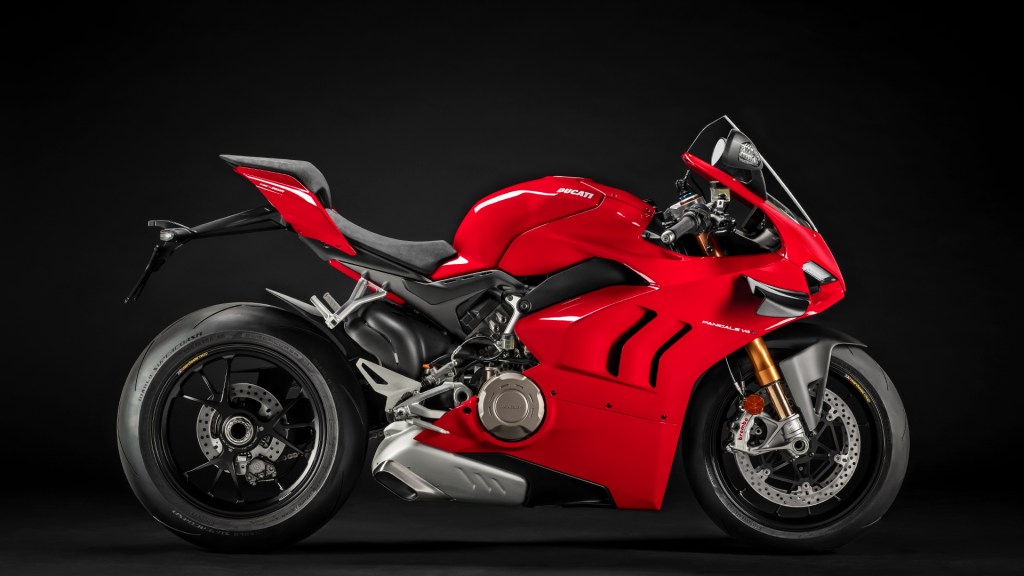
The 2021 Ducati Panigale

2. Choose the right bike

If you look at the mortality statistics, most deaths are young men. And if you are a young man and look at a Ducati Panigale and don’t feel a tingle of excitement in your nether-regions, see your doctor. Young men are looking for power these days and will find it in action movies, guns, games, or engines. Now imagine it’s 150 years ago, before the invention of automobiles, and Junior is about to learn how to drive the family wagon. He nervously climbs up onto the platform and takes the reins in trembling hands. Ahead of him are 214 horses harnessed together stretching up over the hill into the neighbouring farm. Does that make sense? The Panigale’s V4 delivers 214 hp at 13,000 rpm and 12.6 kgm of torque. That’s a lot of power to control your first time out.

I suggest starting on a bike no bigger than 650cc in size. Smaller is even better. There’s nothing wrong with a fun little 250 for your first few years of riding.

In Europe and some provinces in Canada, you have to start on a small bike and work up to a big one. For example, in the EU, if you are under 18 years old, you must start with an A1 license that allows you to ride a bike with up to 14.75 ponies. That’s a scooter, moped, or a “real” motorcycle up to approximately 125cc in size, so basically a sewing machine on wheels. (The size of the engine is less crucial than the power to weight ratio, but we’ll stick with cc numbers for simplicity’s sake.) If you are 18, you can start with an A2 Restricted license and a bike in the 250 to 500cc range. After two years, you can graduate to a full A1 license with no power restrictions. It’s a little more complicated than how I’ve summarized, but the essential idea is that you start on a small bike and after a certain amount of experience can ride a more powerful bike. This makes a lot of sense to me since it’s the weight and power that you have to learn how to control.

So if you are shopping for your first bike, despite the licensing in your region, do you really want to start on a litre bike? Don’t listen to the argument that you will “outgrow” a smaller bike. That’s the point: don’t die. I suggest starting on a bike no bigger than 650cc in size. Smaller is even better. There’s nothing wrong with a fun little 250 for your first few years of riding. In A Christmas Story, Ralphie finally gets his Red Ryder BB gun, but we suspect the story would have a different ending if it were an automatic rifle under the tree.

3. Ride with a club, at least for your first year

I’ve written about the benefits of club riding already. A key one is that you will be riding with experienced riders who know how fast to take a corner, how to adjust their riding in rain or after dark, when to take a break, and generally how to stay safe. It’s Darwin’s theory of natural selection in practice, only what is passed on here is not DNA but sound advice gained from lived experience. Again, here in Quebec, for your first 11 months of riding under a probationary license, you have to go out with “an escort.” (Pro Tip: if you are a married man, be sure to explain to your wife than an escort in this context is someone who has had a full license for at least two years.) A few years ago, the Quebec government scrapped this requirement, changing instead to the stipulation that beginners can ride only between sunrise and sunset. I guess that experiment didn’t go well because they’ve brought it back, much to the chagrin of newbies.

If you are starting to ride, go find a club to ride with. If you are a club that doesn’t accept newbies, shame on you.

When I started riding at the ripe old age of 52, I didn’t have any friends who rode, but I was fortunate to find a local club that accepts learners. It allowed me to ride that first season, putting in over 10,000 kilometers and gaining crucial muscle memory. According to the Hurt Report, the most comprehensive study yet on motorcycle fatalities, over half of accidents that occur happen within the first five months of riding, so my club got me through the most critical period of learning. Club riding is safe also because group riding is more visible to drivers than a solo motorcyclist. The most common type of accident is a car turning left in front of a bike at an intersection because the driver didn’t see the motorcycle. Ryan F9 has done an interesting video explaining the physiological reasons for this blindness. One can forgive the oversight of a single headlamp, but if you missed the dozen motorcycles coming at you through the intersection, put your phone away when driving.

There is some informal coaching that occurs off the bikes too, and as an added benefit, you develop friendships that last well beyond the probationary period (of your license, that is). So if you are starting to ride, go find a club to ride with. If you are a club that doesn’t accept newbies, shame on you.

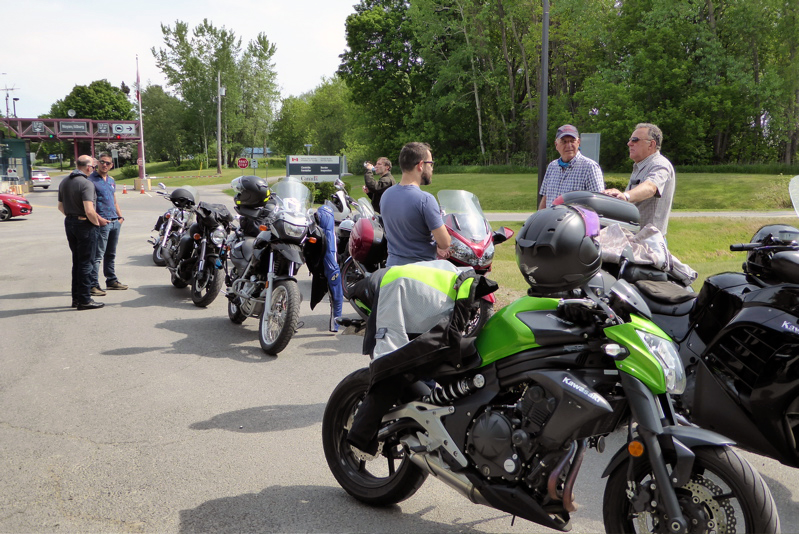
At the Manic-5 dam on a club ride

4. Get the gear

Quick quiz: of the riders pictured above, which catch your eye first? Duh! I like what Clinton Smout says about this: it’s not loud pipes that save lives but loud colours. Don’t want to appear nerdy? I get it. It doesn’t take much to catch the eye. That’s why I’m wearing that single armband over my black jacket (far right, so to speak). You don’t need your jacket to be the equivalent of leaning on the horn when a little “beep-beep” will do to get attention.

Want to wear that classic black leather jacket? Go ahead, but consider some colour in your helmet. Want to wear a black helmet too? Get some auxiliary lighting to increase your visibility. A single headlight can get lost amid the many lights on the road today, but if you can arrange your aux lighting to form a triangle with your headlight, that will significantly increase your chances of being seen. Don’t want to get aux lighting because it cramps your style? At least flash your high-beam as you approach an intersection if you are not sure that driver turning left has seen you. When the majority of multi-vehicle accidents are caused by not being seen, anything you can do to increase your visibility will help.

According to data collected by Dietmar Otte and cited in Proficient Motorcycling (Hough 38), as much as one-third of impacts on the helmet are on the chin bar, so a full-face helmet provides significantly more protection than an open-face helmet, and significantly more protection than, uh, no helmet at all. New Hampshire is one of three states without a motorcycle helmet law, which might explain why their license plates read “Live Free or Die.” Perhaps they should say “Live Free and Die.” Seriously, I don’t want to sound preachy about any of this. What you wear on the bike is entirely your decision, but if you want to ride as safely as possible, get a good helmet, preferably a full-face with a Snell rating, which is the highest rating for safety.

When the majority of multi-vehicle accidents are caused by not being seen, anything you can do to increase your visibility will help.

Now that you’ve protected your head, you might consider protecting the next most vulnerable part of your body—your neck. Last year I started wearing a neck brace. It sits on my shoulders and obstructs the helmet on impact from being pushed beyond the limits of my neck. An independent study found that a neck brace significantly reduces the probability of serious neck trauma. It’s comfortable and once I put it on, I forget that it’s there. I’m confident that, in time, neck braces will become as common and perhaps even as required as helmets. If you want the ultimate protection, consider an air vest. This technology is developing rapidly today in terms of improved algorithms, ease of use, and cost. I suspect that they, too, will become the norm, as air bags have become required in all automobiles since 1998.

This is a big topic and I don’t want to loose sight of the forest for the trees. Let’s just say that there is a lot of excellent protective gear available today, incredible stuff like D30 that wasn’t around even a decade ago. A jacket and pants with good abrasion resistance, CE2 rated armor, a back protector, boots, and gloves complete your kit and are an important part of minimizing risk.

5. Have the right attitude

I’ve been driving a car for close to 40 years and have never had even a fender-bender. There’s more to this boast than skill. It’s mostly a product of awareness of my environment and the ability to anticipate problems before they occur. It’s also not pushing my limits in any dangerous way; you have to save a little buffer, say 15%, for the unexpected. Sometimes it’s listening to my body when it gets tired, and sometimes it’s listening to my gut when it knows I’m heading into danger. My dad used to say that his stomach tells him when he’s speeding before his eyes and the speedometer do. And sometimes it’s a faculty that can only be called intuition if not luck. Once he raced off towards Portsmouth, enjoying the speed, when some voice inside told him to take it easy, so he checked his speed. A little further down the road around a blind corner a pile of dirt had been dropped on the road, probably from a farmer’s cart. That would have been real trouble. Mulder and Scully never investigated any of this paranormal phenomena, but they would have made pretty safe motorcyclists, I imagine.

I know a guy who uses a mantra to get in the right frame of mind as he gets ready to ride. As he pulls on his helmet, he thinks to himself, “Everyone wants to kill me.” That’s pretty good, albeit a bit negative. I like to think of my helmet as an invisibility cloak, like Harry Potter’s. And that makes me think of my son.

My wife did a little riding with me this past summer. I don’t push it with her on the back, not only because of the, eh hem, extra weight that affects the bike’s dynamics, but also because I figure a pillion is already nervous; there’s no need to ride like an idiot to impress. And after one such easy ride, she said—referring to the whole safety thing—”I get it,” by which she meant it’s only as dangerous as you want to make it. You are in complete control of your risk. I’m not saying you can eliminate all risk—there’s always bad luck—but how much risk you want to take on a given day is literally in the palm of your (right) hand.

I know a guy who uses a mantra to get in the right frame of mind as he gets ready to ride. As he pulls on his helmet, he thinks to himself, “Everyone wants to kill me.”

There are books written on motorcycle safety, and websites and YouTube channels devoted to the technical details of the subject. But to simplify it all, there’s a clear pathway to entering the sport safely: do a course, get the right bike, join a club, buy the gear, and adopt the right attitude. I no longer believe that a crash is inevitable, although risk is certainly a part of riding that we have to manage.

Ironically, I’ve never written a post about safety, although it’s the first thing that comes to most people’s minds when you say you ride. “Isn’t that dangerous?” they ask. Yes, but then so is taking a dump. Think of Elvis. I was really good when I was young at postponing immediate gratification. I was a good boy and buckled down to put myself through university, then I postponed responsibly to raise a child. I oriented my life toward the big golden pot of retirement at the center of the cartoon maze. But when you get into your 50s, you begin to see friends, neighbours, acquaintances, perhaps even family who sadly never make it to the golden years. There’s risk in not doing what your heart desires too, whatever that may be.

So if you’ve always wanted to ride, don’t let your mind talk you out of what your heart is saying. Go ahead and get a bike, but do it right. Ride safe, yes, but more importantly, ride smart. I mean, smartly.

Have I missed something essential to staying safe? Please comment, follow, and share (not because I get any more money—the site is not monetized—but because I like an audience).

Trip Planning: Early Decisions

Photo credit: Amazon.ca

I’m between semesters of my teaching work so have been taking this extra time to do some initial planning for the big tour next summer. I’ll be sharing a series of posts about this process. Here’s the first one on some of the initial decisions I’ve made.

The Route

My wife, Marilyn, will be joining me for some of this trip but how much is yet to be determined. The initial plan is that I will ride out to Calgary, Alberta, where we have some friends and family, and meet Marilyn there. We have some friends in southern British Columbia, the next stop, and then we’ll end up on Vancouver Island. After exploring the island, we will cross the US border to more family in Washington State. I’d love to visit Yellowstone National Park, which is fairly close, and to ride Beartooth Pass, one of the top roads in the U.S. I also want to ride the Pacific Coast Highway through Big Sur down to San Francisco.

Part of my reason for heading south is so that when I head back east across The United States, I’ll be riding through Yosemite National Park, Nevada, Utah, and Colorado, and will be able to see the Sierras as well as those iconic southwestern states and mountain passes. If I keep a fairly straight trajectory, I’ll end up close to The Tail of the Dragon and The Blue Ridge Parkway, iconic rides and bucket list items of mine. Time permitting, I’d like to get out all the way out to the east coast to the Outer Banks, NC, where I have fond childhood memories of family vacations. It’s all rather sketchy at this point, but that’s it, in a nutshell: west across Canada, south down the Pacific coast, and east across The United States before heading north back up to Montreal. A rough and dirty GoogleMaps calculation puts the entire trip at around 12,000 kilometers, or 7,500 miles. It will likely be considerably longer, though, as I plan to explore attractions along the way that will pull me off a direct route.

While I will have some fixed destinations, I want to keep my itinerary flexible and spontaneous. For accommodations, I’ll be camping, and wild camping when possible, which allows for this flexibility. I will cook as much of my own food as I can, extending my budget. It will be a challenge but also part of the fun. This is what adventure riding is all about.

Dirt or Pavement?

One big early decision is how much dirt to ride? I’m thinking this will be primarily on pavement, simply because of the miles to cover, sticking to secondary highways because, well, the super slab is not much fun. But I feel I must get off the pavement through those iconic southwestern states like Nevada, Utah!, and Colorado, even though I’ll be riding solo and am just an intermediate rider. In fact, although I’ll be pushing myself out of my comfort zone, I’d love to put in a few weeks of more technical riding and come back a lot more proficient and confident in the dirt. I just have to do it safely, or as safely as one can.

I’ve been watching YouTube videos of guys doing BDRs (Backcountry Discovery Routes) and the TAT (Trans America Trail) through those states, trying to access how technical these routes are. Bigby is designed for curving secondary highways and light off-roading, and I have to respect the limitations of my bike as well as my abilities. These are big decisions with a lot at stake, and I can’t let ego or bravado get the better of me. On the other hand . . . how can I cross Utah without riding sections of the Moab desert? And I’d be a fool to not get off the asphalt into the wilderness for some of those Colorado mountain passes.

Photo credit: lizhoffmaster

I’m going to order Butler maps for NV, UT, and CO. They show the BDR routes and contain a lot of good information about which sections are easy. I’m also reading ride reports on the ADVRider forum, an excellent resource for exactly this sort of thing. Why not learn from others who have already done it? What I suspect will end up happening is I’ll ride the easier sections of dirt and jump out onto the asphalt as needed.

Tire Choice

How do you have a smooth, comfortable tire for those thousands of kilometers of pavement and still be able to ride the sand and mud that I will encounter off road? Well, you don’t. There really isn’t any unicorn tire that can do it all. Initially, I was sure I would do this trip on the Michelin Anakee Adventure tire. Its smooth profile, dual compound structure (i.e. hard rubber down the middle for longevity, soft rubber on the sidewalls for grip in the corners), and tread pattern would make it a perfect tire for 80% of this trip. But I’ll need something more aggressive for that planned off-roading. I could swap the tire early (I calculate I’ll hit dirt at around 7,000 K on the Anakees), or I could go with a 50/50 tire for the whole trip and suffer some comfort on pavement. Another option is swap out the Anakees for an aggressive off-road knobby, which will mean another switch unless I want to ride Tail of the Dragon and the Blue Ridge Parkway on knobbies, which I don’t. Currently, I’m leaning toward the reliable Heidenau K60 Scouts, a 50/50 tire that should be able to do the entire 12,000 kilometers with some manageable sacrifices on both pavement and dirt. Another option I’m considering is switching to Shinko 804/805 tires, a 60/40 that is pretty beefy for off-roading and surprisingly smooth on the road. They are only good for about 6,000 K but that should be enough to get me home. I’m open to suggestions, so feel free to leave a comment.

Navigation

In the limited amount of touring I’ve done so far on the bike, I’ve learned that navigation is huge. I struggled in the past with charging issues and roaming charges, even just safely navigating the phone while riding. I think I’ve solved these issues. I followed a thread on ADVRider and bought a Kyocera military grade phone cheap off eBay. It’s locked, but that doesn’t matter because I’ll be using this phone exclusively offline (no SIM card installed) for navigation using maps downloaded to the SD card. This also avoids roaming charges while I’m in The States.

I’ve solved the charging issue by using a magnetic phone cable and gluing the adapter into the port with silicone, making a waterproof seal. (The phone is waterproof but won’t charge if the port detects moisture.) I’ve also purchased the Carpe-Iter Controller, a great little device that mounts on the handlebar and can be operated with my thumb. It works using Bluetooth and has a toggle switch for navigating and selecting apps, and two push-buttons for zooming in and out in maps. It was a little pricey, but will avoid that dangerous dicking around with the phone while one-handed riding. I use OsmAnd primarily and run Drive Mode Dashboard to turn my phone into a dashboard. Drive Mode with the controller is a very nice combination which I hope will make navigation a lot easier and safer.

The only other issue I’ve been having with navigation is that my Ram X-Grip phone holder presses on the buttons on the sides of the Kyocera phone. I think I’ve solved that one by getting the Ram Quick Grip phone holder, which allows you to position the retaining clips to avoid pressing on those buttons.

Gear

One concern I have about this trip is that I’ll be riding in extreme temperatures, from 40C deserts to snowy mountain passes. It’s not like I can turn on A/C or heat in the cabin, so I have to be prepared with the right gear since comfort is part of riding safety. And of course I need my gear to be waterproof.

So far, my go-to touring jacket has been the Klim Traverse. It’s a Gore-Tex shell which I layer with a Knox Venture Shirt underneath. The problem with the Traverse is that it’s hot! Yeah, it’s waterproof, which is great; I don’t have to stop and put on a rain jacket but can just keep riding all day long rain or shine. But Gore-Tex does not flow much air, and the jacket is also black. I imagined dying in some of those really hot days mid-summer in the southwest.

The Klim Marrakesh Jacket. Photo credit: Fort Nine

I decided to buy a Klim Marrakesh jacket. It’s a mesh jacket so will vent a ton of air, but it’s also 1000D Cordura, so unlike most mesh jackets, will hold up in a slide. It has 4-way stretch so is, without argument, the most comfortable jacket on the market. Anyone who puts one on—I dare you—will not want to wear another motorcycle jacket again. I’m going to be wearing this for two months straight, so comfort is important. It’s not waterproof but water resistant, so I bought a Scott Ergonomic Pro DP rain jacket, and I’ll add a down-filled vest underneath and even my fleece sweater if necessary. In other words, I’ve decided to go the layering route, instead of one-jacket-does-all. I’ll be using my Klim Carlsbag pants, which are great. I don’t care that they are Gore-Tex because your legs don’t get a lot of air-flow anyways. And no one likes pulling rain paints on over your boots by the side of the road.

Bike Prep

I’ve had to break the piggy bank for this stuff and my marriage stock is a little low at the moment. But I’m riding an older bike, so what I save on the bike I spend on gear. (That’s my argument, and I’m sticking to it.) I’ve been a little concerned about the amount of oil the engine is losing lately and pondering what I can do about it. As far as I can figure, it’s either losing the oil through the seals or burning it in the cylinder.

It’s a 2006, so it’s possible the seals are worn. My buddy Phil has the same bike but a little older, and he says his engine “sweats” oil at high revs. Yeah, the pressure in the crankcase at high revs might be forcing some oil past those old seals. A little research has uncovered an oil additive called AT-205. It contains a polymer that will restore the plasticity to aged seals that are dried, shrunken, or just worn out. Of course I want to be sure it’s safe for the engine, but user reviews are good and it’s endorsed by Scotty Kilmer. I don’t want to keep this in my engine for long and don’t need to. It apparently works in about 5 hours of driving/riding, so I’ve bought some and will add it sometime in the spring and change my oil soon afterwards. I’m hoping this quick fix will bring my engine back to good health.

If the oil is getting past the rings and being burnt in the cylinder, I’ll just use a cheap heavier weight oil, one that is readily available at Canadian Tire since I’ll literally be burning through a lot of it over the 12,000 kilometers. Castrol 20W/50 motorcycle oil sells for $6.99 at Canadian Tire. My old bike runs better on a dino oil anyways, and it was when I switched to a semi-synthetic 10W/40 that I started losing oil. Coincidence?

So that is the prep so far: a rough sketch of the route, some gear purchases, and some problem-solving of an old engine. Now I just need Covid to go away.

I’ll be posting a walk-around of the bike soon, showing the modifications I’ve made over the years to customize it for my riding, so watch for that. My son is helping me with a video, which I will post to YouTube and write a short post containing the link.

Please Like, Comment, and Follow if you are interested in following me on this adventure.

20-20


Kevin_cropHindsight may be 20-20 but nobody can predict the future. This Covid-19 has thrown us all for a loop, and we still don’t know how the story will end. It’s hard to make plans for the summer when everything is so up in the air, but I am a Gen-Xer. We grew up with the threat of nuclear war hanging over our heads and still managed to make it to school each day, even hold a few tentative plans for the near future. A little pandemic isn’t going to stop me planning the riding season set to begin.
mushroom

Obviously, much of this is pending how the pandemic plays out, so I’ve made some educated guesses. The regions are starting to open now and the stores and schools will be in a few weeks. It looks like we will be starting to loosen social distancing restrictions in the near future, although I think everyone is going to be wary of close proximity in confined spaces for some time to come.

For that reason, I think most of my riding this summer will be either solo or with a few riding buddies, cognizant of minimizing contact and risk. I’m okay with that. Riding is already a pretty solitary activity even when shared. I love solo touring, but as I said in my last post, I love club riding too. Here are my tentative plans for this summer amid this weird year so far.

Touring

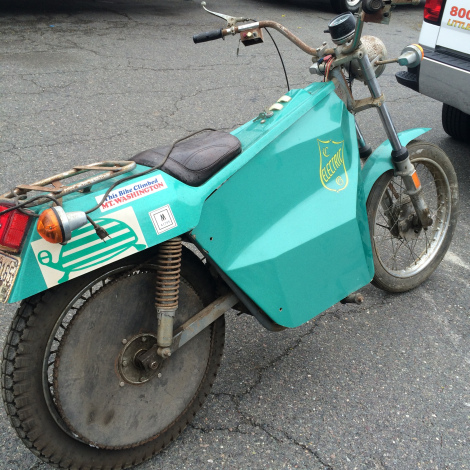
The first little tour I’m going to do is down into Vermont and New Hampshire for a few nights once the border re-opens. Last year I rode the Puppy Dog Route on my own in June and it was just the thing to recenter after being stretched out of shape by 100 students, each wanting a piece of me. This year I will try the Hamster Ride, which is the same sort of thing as Puppy Dog but in New Hampshire instead of Vermont. It’s a series of dirt roads traversing a good part of the state up to the Canadian Border. I love dirt roads, state parks, the White Mountains, the Green Mountains, and the secondary highways of the northeastern states. I think Bigby and I will attempt Mount Washington while passing nearby, but I won’t be putting any “This bike climbed Mount Washington” sticker on my pannier. That’s boasting. Besides, it makes you question the reliability of any vehicle that feels the need to advertise the accomplishment.

MtWashington

Photo Credit: Ted Dillard

I don’t have any other small tours planned, but Marilyn and I will be doing some day trips together. To beat cabin fever, we’ve done a few rides along the river these past few weeks. We go in the late afternoon and it’s a slow, easy ride west as the sun sparkles off the water. Marilyn says she thinks she’s caught the motorcycle bug. The other day while doing some routine maintenance on the bike, I noticed my rear brake pads were finished, so I’m waiting on new pads to arrive in the mail. Now she’s asking, “When are those pads arriving because I want to go for another ride?” Finally, she might be getting the appeal, and as long as we don’t get caught in a rainstorm, I think I’ll be able to cultivate that interest into a simmering passion. We will pack day lunches and head off on our own small adventures.

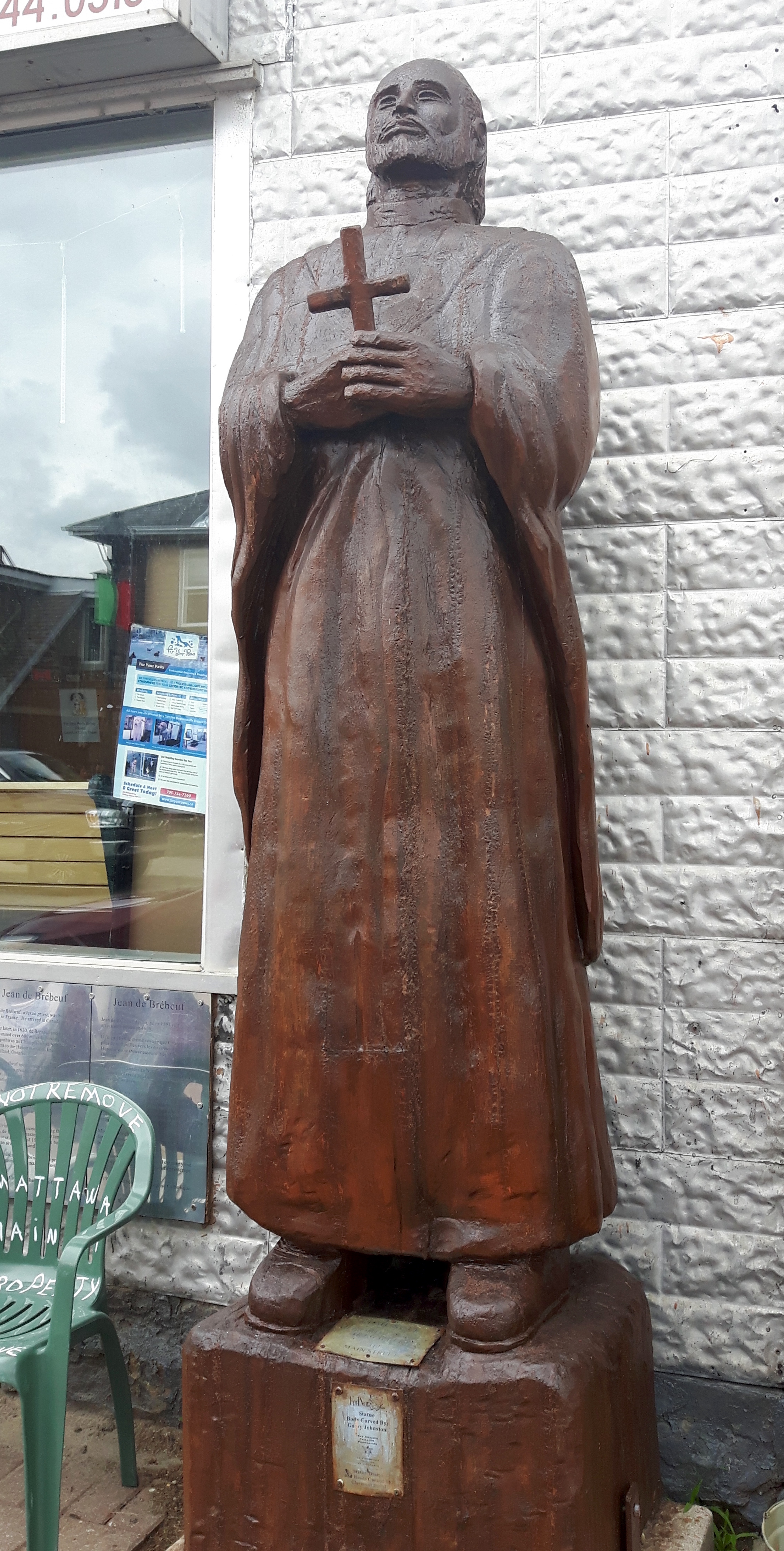
But The Big One, the tour I’m most looking forward to, is the cross-country one I’ve wanted to do since I was 19. I thought it might be this summer, but then our dog got sick, so it was put on hold; then sadly our dog died, so the possibility was back on; but then Covid hit, so now I’m not sure. But all going well, I’ll be heading across Canada sometime in July. I’ll head up toward Ottawa on Highway 417 which turns into the 17 after Ottawa, then I’ll just keep going, westward, through Chalk River, Mattawa, North Bay, Sudbury, Thunder Bay, and just keep going, as far as Bigby will take me. I’ve never driven across the country, so this is going to be a real discovery for me of the country I grew up in and call home.

Priest Carving copy

Mattawa, ON., Gateway to the West

The plan is to meet Marilyn somewhere out west (she will fly) and we’ll visit her sister-in-law in Washington State. I may be tempted to ride a portion of Highway 101, the Pacific Coast Highway, while I’m close, and that’s why I want to do this in July, although the heat will be worst then; I want to have the flexibility that no fixed deadline provides, and I have to be back to work in August. Then I’m going to come back through The United States, checking out their national parks. I’ve never seen the midwest, or The Grand Canyon, or Yosemite, or much of The States to be honest. So I’ll be discovering that country too, camping all along the way.

I’m considering doing some of this on dirt, either some BDR sections (Backcountry Discovery Routes) or a part of the TAT (Trans America Trail). There’s a lot to plan, but now that my work is done, I have the time to start.

Club Riding

I won’t be going on any tours with the club like I did last year, but I’ll do some day rides in the Montreal area. These are easy rides of 350 km/day or so into the surrounding regions with a few forays across the border. See my last post on the benefits of club riding. This year will be muted by social distancing, but motorcyclists are used to managing risk.

I’ve decided to lead a couple of dirt rides for the club. We are primarily an asphalt club but there are now a few members with ADV or ADV-styled bikes and even some cruisers who aren’t afraid of dirt. Often on club rides, I’d see an interesting dirt road leading off into the woods and I’d be dying to go exploring. I’m betting there are a few others who feel the same. Ideally, I’d like to offer these as an optional portion of a larger club ride, with a plan to meet the group for lunch. I’m going to call these 50/50 rides (50% road, 50% dirt). With my new Cardo PacTalk comm unit, club riding will be a whole new experience for me this year.

Group_ride_1web

Off-Roading

I cannot tell a lie. What I am most looking forward to this season is developing my off-road skills. It’s been a few years now since I took some beginner courses to get me started and I’m ready to take my skills to the next level. I’ve purchased Chris Birch’s Say No to Slow set of instructional videos on Vimeo and have been watching them while I wait for the brake pads to arrive. I can’t wait to get out there and try some of what Chris is saying.

Why pay for something that is free on YouTube, you ask? In a previous post, I listed some of my favourite online teaching channels, and I still think those are excellent resources. But Chris goes into a lot more detail than most of those, and more importantly, he covers the boring fundamentals that those channels can’t afford or choose not to cover, and that’s what I need. Yeah, everybody wants to learn how to wheelie and drift (but not at the same time!), but I’m more interested in things like bike set-up, foot placement, body positioning, and cornering in the dirt, which are covered in the video series. I was surprised that the entire set of 12 videos is under $50 Canadian. I don’t have any affiliation with the production team. I just know good pedagogy when I see it and what I need now most is guided self-practice.

There is a sandpit just over the border in Ontario I practice at, and a network of trails and Class 4 roads not much further starting in Hawkesbury. My bike has a new rear shock—one capable of some serious dirt—and Ricor Intiminator valves in the front forks,  so the suspension has just been upgraded to dirt-worthy. It’s got good crash protection, as do I with my new Leatt STX neck brace. We’re ready.

stx_front_web_zoom_1

The STX is for street and adventure riding. The wider scapula wings do not conflict with your back protector and you do not need integrated body armour.

Are you ready? It’s been a crappy spring for weather but the double-digits are just around the corner. Is your bike ready? I’ll be writing an article for my new paying gig, Riders Plus, on how to get started maintaining your bike. So get your tools out and let’s change the coolant, the brake fluid, the oil, check your tire pressures, and get ready for a new season. It is the best of times, it is the worst of times. Riding makes everything a whole lot better, especially when shared in the company of friends. If you want to escape the bad news for a day or more, there’s nothing quite like a fast motorcycle to help you do it.

Bike2020

Bigby, ready for the 2020 season.

How to Survive the Off-Season

20200207_150331

As I write this, 40 cm of snow is descending on my home city of Montreal, Canada. My place of work is closed. In these parts, we call this phenomenon a Snow Day, and while you know in the back of your mind you’ll have to make up this missed work at a later time, for the moment it doesn’t matter. You have an unexpected day off!

Now what to do with your “free day”? Snow days for motorcyclists, however enjoyable, seem to accentuate what is already a painful time of the year. The bike is in storage for four months, leaving you counting the days toward spring and The Big Melt. You’ve got four months to fill and now you can’t even use work as a distraction. Well, here are some of my favourite ways to get through a snow day and the winter months.

Window Shop Online for Gear

My son likes to make fun of me because I’m always researching my next gear purchase. Gotta Get the Gear! I could walk into a store in the spring and buy everything I need for the new season, but what fun would there be in that? Half the fun is researching, and the other half is prowling for the too-good-to-be-true discontinued clearance-sale last-item deal in your size! (Fringe benefits of being abnormally slim is that the Small is often the last to go.)

Follow Someone Around the World

Can’t take the bike out for a spin? No problem. You can follow someone around the world online or in print. Currently I’m following Itchy Boots as Noraly makes her way solo up through South America towards Alaska. I’ve also recently discovered Ewen and Charlie’s YouTube channel where you can re-watch Long Way Round, Long Way Down, Race to Dakar, and By Any Means—all free. Thanks guys! But my favourite series is Races to Places with Lyndon Poskitt. Lyndon and Basil Bike tour around the world—but here’s the catch—they race in an international cross-country race on every continent. Hence Races to Places. Lyndon races in the Mongolian Rally, the Dakar, Roof of Africa, Baja 1000, and others, filming everything himself. It’s a huge commitment but he’s developed a huge online following. After 9 seasons and some 230,000 kilometres, the series has just wrapped up. You don’t have to watch all 9. Jump in anywhere; they’re all good. There are many, many more adventure riders spanning the globe and through the power of GoPro and YouTube, we can vicariously ride along. Martin Heidegger never anticipated this when he was so critical of technology. 

If old technology is more your thing, how about the book that started the adventure riding industry, Jupiter’s Travels? Or Lone Rider: the First British Woman to Motorcycle Around the World by Elspeth Beard? Also on my reading list is Motorcycle Messengers: Tales From the Road By Writers Who Ride, edited by Jeremy Kroeker. As more people today are travelling the world by motorcycle and then writing about it, a genre called motorcycle journalism is emerging. If you are shut in, a good book about riding can help pass the time.

Watch the Dakar (Again)

January means the Dakar, a 10,000 kilometre race over 12 days, the equivalent of riding from Alaska to Florida in two weeks. It’s the most difficult, gruelling, and therefore prestigious off-road race in the world. This year the race moved to Saudi Arabia and there was some criticism about that, but the racing is always good no matter where it is. Watch race summaries of each of the 12 stages or just sit back and watch the Best of Bikes compilation.

Watch Team Races to Places in the Eco Africa 2020 Rally.

One series I especially enjoyed this winter was Lyndon Poskitt’s team Races to Places compete in the Africa Eco Rally Race 2020. The race covers the same terrain as the original Paris-Dakar race, across northern Africa, ending on the west coast in Dakar. This was Lyndon’s next brain child after completing his round-the-world adventure in Races to Places. He put together a team of five riders for the race and brought along his dad and others as mechanics and support crew and a media crew as well, liberating him from doing all the filming and editing. In the first few episodes, we watch Lyndon build the bikes from the frame up (KTM 450 Rallys), introduce the team, organize the gear, and ship everything over to Africa. Then the racing begins. Every episode includes both race footage and life at the bivouac, and I find this series provides a better, more complete idea of rally racing than the professional Dakar footage. Well done Lyndon! Oh yeah, and there’s a dramatic conclusion. If you’re into rally racing, you can’t miss this 17-part series.

Learn New Skills

Sports psychologists claim that visualizing technique has the same physiological effects as actually doing it. That’s all the excuse I need to spend more time online watching motorcycle videos. But unlike the above, there are plenty of schools willing to offer rider tips and technical training for free. Clinton Smout of SMART Riding Adventures has an excellent series of instructional videos, as does Bret Tkacs at Mototrek. I also really like Brake Magazine’s Mini Tip Monday, where you can learn frivolous but impressive skills like how to do a donut, or spin turn, or get on and off your bike like pro. If those still leave you craving more instruction, why not get it from The Man himself, Graham Jarvis? Here are 5 Techniques to Improve Your Hard Enduro Skills. Even if you ride a big adventure bike like me or any other bike, these techniques will improve your riding.

Plan Your Next Adventure

Okay, leaving aside YouTube for the moment, another thing you can do during the winter months is plan your next adventure or tour. I plan to travel across Canada this summer, coming back through The United States. That’s a minimum of 10,000 kilometres, so I’d better get planning! I’m actually a pretty minimal planner, choosing to keep an open schedule and camp where convenient, but I don’t want to be riding past historic landmarks unawares. So I bought National Geographic’s National Historic Sites of Canada and am perusing it. I also have to decide if I’m going to do any of the Trans Canada Adventure Trail, Trans America Trail, or any Backcountry Discovery Routes while travelling. I’d like to, but because I’ll be solo, I need to get a sense of the difficulty of specific sections and routes. Fortunately, there is a lot of information online about these dirt options. But all trip planning begins and ends with GoogleMaps and Tripadvisor. So start getting excited about your next big trip by scouting your route, finding accommodations, restaurants, and not-to-be-missed landmarks. And if you’re not going on a big tour, you can at least scout your local area for those hidden gems.

Peruse Bike Forums

Speaking of trip planning, perhaps no better resource for adventure riders is ADVRider, including its hugely popular forum. I went looking for info on how many inmates (i.e. registered users) are on that forum and found nothing. But a list of registered users is 9342 pages long and each page contains 40 users, so that means there are 373,680 users! Wow! No doubt this reflects the popularity of the site and the ADV market. There’s a lot of good info there including forums on trip planning, ride reports, GPS & navigation, bike-specific maintenance forums, something titled Face Plant (I can only imagine what that’s about), and a personal favourite of mine, the Toolkit Thread. Everyone’s searching for that must-have, elusive tool, and it seems a matter of personal pride to many that they can whittle their entire toolkit down to fit inside a used pack of chewing gum. The other forum I practically live on during winter is f650.com. You may recognize the similarity in the name of that forum and this blog and that is not a coincidence. The Chain Gang, as it’s affectionately known, is a forum dedicated to owners of the BMW 650 bikes in their many iterations—Classic, Funduro, Dakar, and mine, the GS. Any mechanical issue I have, I go there first. Heck, sometimes I read about other people’s problems so I’m prepared for when that happens to me. Finding and reading a bike-specific forum devoted to your bike will alert you to the weaknesses of your machine and help prepare you for when you need to do that roadside repair.

Listen to Motorcycle Podcasts

Like YouTube and user forums, there’s a variety of motorcycle podcasts and you can find one that fits the kind of riding you like to do. One of my favourites is Adventure Rider Radio. Host Jim Martin and producer Elizabeth Martin do an excellent job putting together a weekly show that covers adventure stories, technical tips, industry developments, and more. But you don’t have to wait for a snow day to listen to a podcast. I use a podcast app on my phone that allows me to download the episode to my SD card and listen to it anywhere. I’ve found I can’t read on the bus after a day at work so a podcast is just the thing to zone out during my commute. 

Work on Your Bike

Of course, if you have a heated garage, you can always do some work on your bike. Heck, I don’t have a heated garage and still do work on the bike. Last weekend I spent some time in the shed removing the rear shock, replacing an engine mount, replacing the starter motor O-ring, and torquing my crankcase bolts. The temperature had risen to a balmy -8 Celsius (18 Fahrenheit) so I took the opportunity to do this work and be ready to ride come spring. I’ll be back out there as soon as my new shock is ready to install. A riding buddy repainted his entire bike last year, and another had the engine rebored and did other major mods, including repainting. If you are one of the lucky ones to have a heated garage, now is the time to do that maintenance and thumb your nose at the rest of us.

IMG_5313

Stay warm and carry on.

Write a Blog

Yes, you knew this was coming. Another way you can spend a snow day is by writing a blog post. 650thumper gives me the opportunity to revisit my motorcycle adventures, and when I heard that the college is closed, my first thought was that I’d like to spend my “free day” thinking and writing about the freedom of motorcycling.

How do you survive the off season? Let us know in the comments section below.

The Wish List, 2019

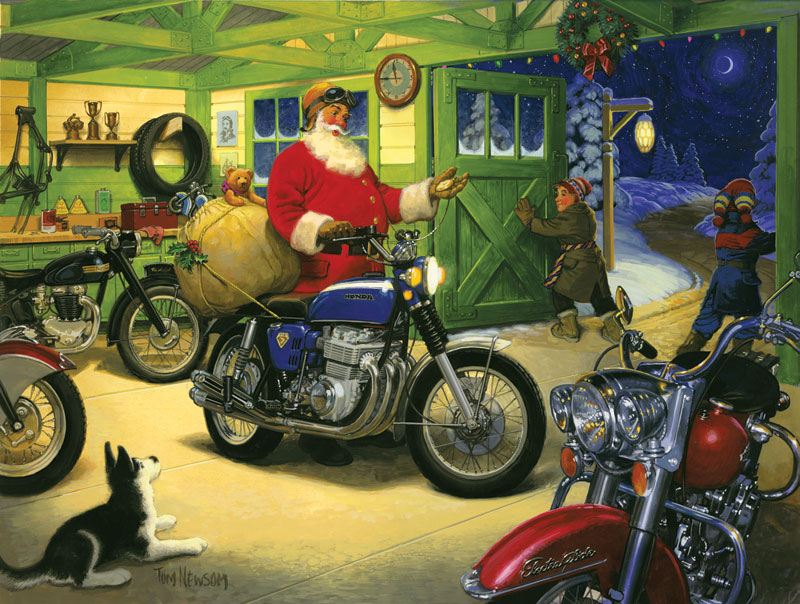
Biker Santa

It’s that time of the year again, when we reflect on the year that’s been and plan for the year ahead. This year I upgraded my training by attending two remise en formes, discovered Vermont’s wonderful dirt roads, travelled up the Gulf of the Saint Lawrence almost into Labrador, and wrote a handful of articles for northernontario.travel. I was so busy travelling, I didn’t do a lot of club riding, although I did lead two day rides: one to Ottawa for the Tulip Festival, and one to Smuggler’s Notch in Vermont.

Next year I want to start to introduce what I’m calling hybrid rides to our club. Those are rides where a group splits off from the main group and rides some dirt and then meets up with the gang later for lunch. I’ve been thinking about this for a while now but just have to figure out the logistics. I know there are some club members with ADV or ADV-style bikes who are interested in riding some easy dirt roads.

I want to do more challenging trail riding to improve my off-road skills, and it might finally be time to head across the country, completing that teenage dream of seeing Canada from a motorcycle. But more on that later. Right now I’m thinking of the goodies I’m asking Santa for to make my riding next year safer and more enjoyable. Here is the Wish List, 2019.

Stadium Suspensions PR1 Rear Shock

My rear shock now has over 90,000 kilometres on it and has never been serviced.  Imagine, that oil in there is 13 years old! Also, the stock shock on my bike is okay for road riding, but it’s too soft for any serious off-roading. The spring is also too soft; when I’m fully loaded, I’m sitting 2 cm under the recommended sag. I could try to have it serviced and replace the spring, but the combined cost would be almost as much as a new shock. I think it’s time to upgrade.

I’ve been talking with Stadium Suspensions in Beloeil, Quebec, just south of Montreal, where I live. They specialize in ATV, MX, and off-road suspensions. The nice thing about going with a company like this is that they can customize the shock to your weight and riding style. They have three models, and since I’m neither a beginner nor a pro, I’m going to buy the mid-priced unit, the PR1.

Stadium

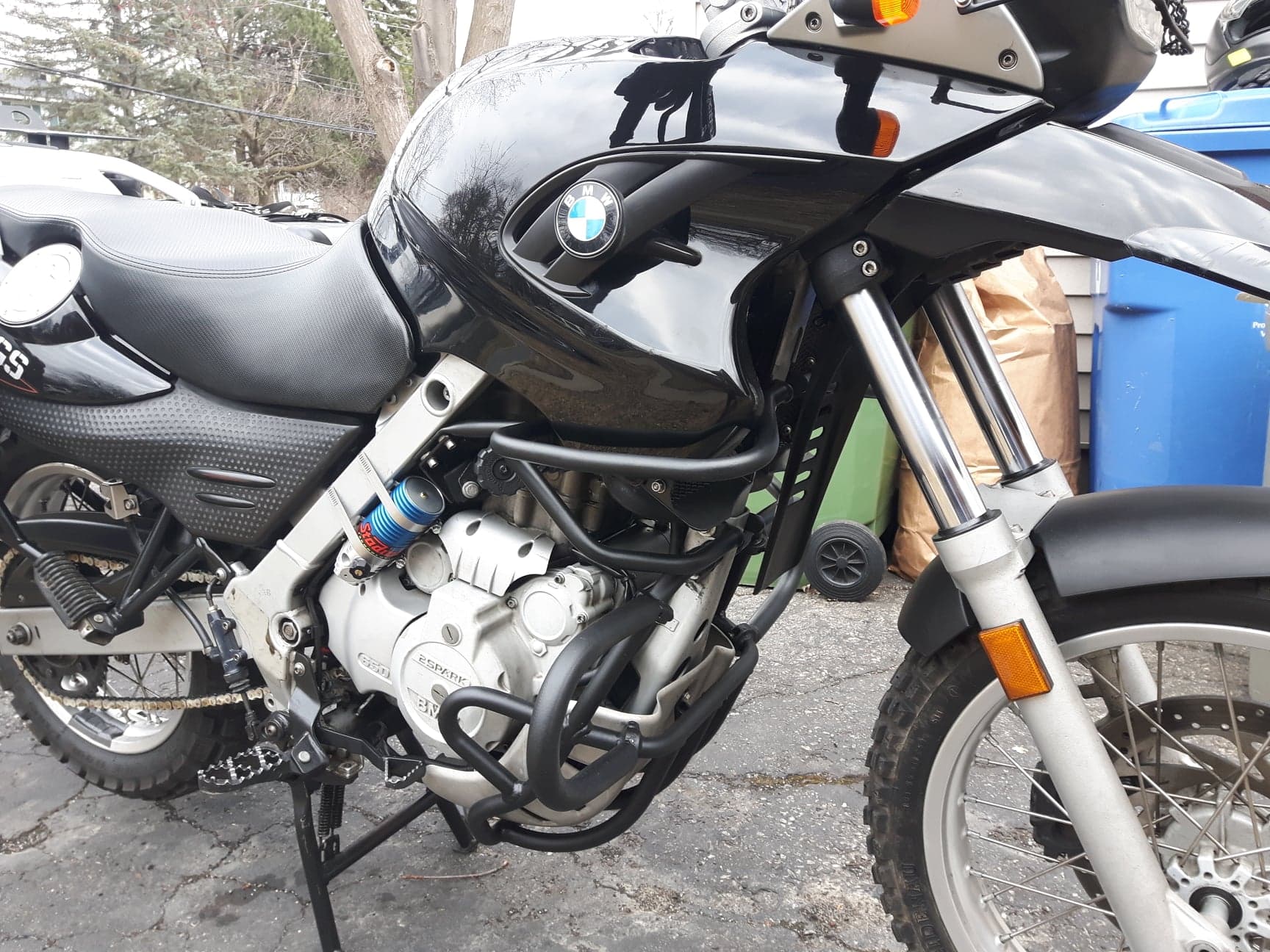
You can see that this shock is an upgrade from my stock one because the PR1 has a remote nitrogen reservoir. On mine, the nitrogen is in the same compartment as the oil, which is fine for street riding, but once you get off road and the shock is working hard for extended periods of time, the oil heats up and mixes with the gas and froths and you start to lose your compression. Separating it is the answer; the best shocks are designed with a remote reservoir.

Other features of the shock include:

  • Spring preload adjustable
  • Rebound damping adjustable
  • Compression damping adjustable
  • Thermostatic system
  • Velocity Reaction Damping System (VRDS)
  • Bladder system reservoir
  • Length adjustable (+/- 10 mm)
  • Piggyback Reservoir, 360 degree angle adjustable
  • Magnum reservoir optional
  • Tool free compression knobs optional
  • Individually custom build for rider/application
  • Fully serviceable/repairable/convertible
  • Gold, red or blue, anodised reservoir
  • Progressive or linear springs

The other nice thing about Stadium is that they can build into the new shock my existing preload adjuster. I really like the ability to adjust the preload with the turn of a knob—no tools necessary—so I’m sold. With my new Ricor Intiminator fork valves in the front and this baby at the back, I’m going to be flying!

Protection

Speaking of which, I’m getting up to speeds now off-roading at which I really should be wearing a neck protector. A neck protector prevents your head from rotating beyond a certain degree, saving your neck in a fall. I don’t want to end up a quadriplegic, thank you very much. I don’t have a specific one chosen yet, but Leatt are a major manufacturer. Again, I don’t need the pro version (5.5) so I’ll probably go for the 3.5.

gpx_neckbraces_35__0000_leatt_neckbrace_gpx_3.5_wht_front_1020003950

In fact, I believe these are kind of a custom fit item since they are semi-restrictive, so I’ll probably just try a number of them on at a store with my helmet on and see which feels best.

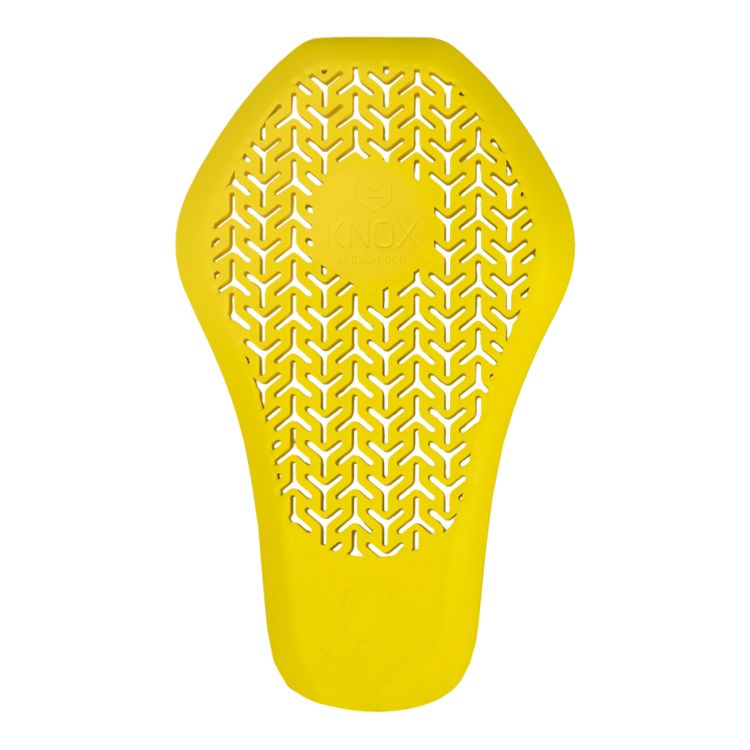
The other piece of protective gear I’ll pick up is a new back protector. I love my Knox Venture Shirt but the pack protector is cheap EPS and prevents air-flow. On those really hot days, it results in an uncomfortable wet back and has led me to not wanting to wear my protective gear. Knox have a better one which, as you can see, allows air circulation. It’s D30 so will provide better protection too. Neither do I want to be a paraplegic.

knox_microlock_back_protector_upgrade_part114_750x750

Auxiliary Lighting

I’ve been thinking of getting aux lighting for years, ever since I had a run-in with some roadkill coming home late one night from New Hampshire. Sure, you can get the cheapo made-in-China generic knockoff version at Amazon for $40, but they break easily and don’t stand up to the beating of off-roading. Everyone I know who’s bought cheap has had issues soon after. There’s also the quality of the LED light; it’s apparently not just a question of the number of lumens but the optics technology involved to reflect those lumens where you want them. If I’m going across the country, some auxiliary lighting will help get me there.

I’m pretty sure I’ve had Denali D4s on a previous wish list, but I think I’m going to go with the Cyclops Long Range Auxiliary Lights. I’m very happy with the Cyclops LED lamp I put in my headlight. In fact, it’s been one of the best upgrades I’ve ever done on the bike. It occurred to me the other day that Cyclops also make auxiliary lighting, so I’ll stay with the tried and true. Cyclops lights might be a little cheaper than Denalis and have a number of features that make them a compelling choice. I like also the smaller size on my little bike.

Cyclops

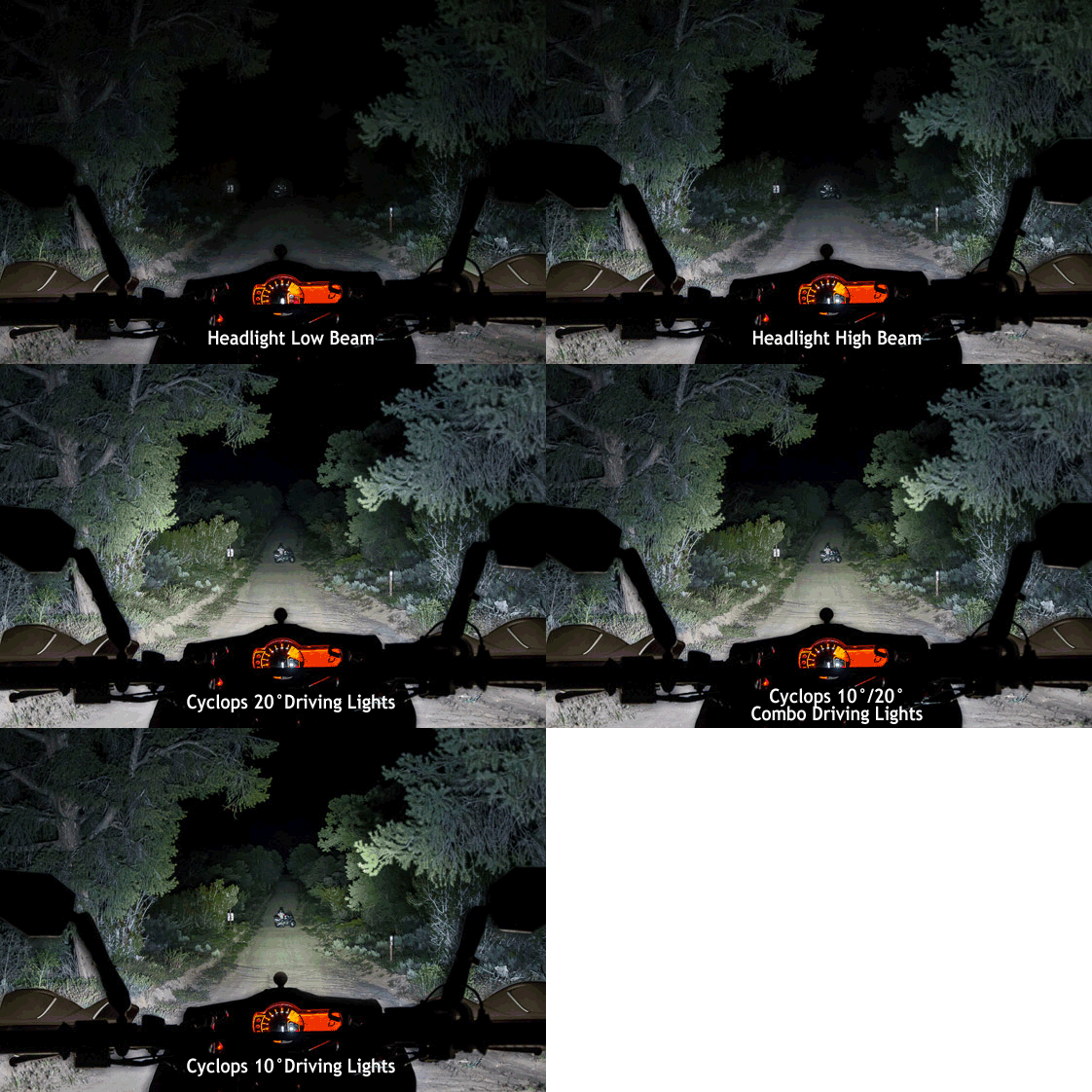
The Long Range lights stand up to their name by projecting a whopping 883 feet down the trail. They come in either a 10˚ or 20˚ arc, and a popular set-up is to put a 20˚ unit on the right and a 10˚ unit on the left. This arrangement will give good illumination of the side of the road while still penetrating those 883 down the road.

But of course it’s not just about seeing things but also being seen. Studies have shown that oncoming drivers sometimes mistake that single headlight for a double in the distance and turn in front of you. Having that triangle configuration makes you a lot more visible day and night.

One very nice feature of these lights is the ability to wire them directly into your headlight switch and program them. You set the intensity you want for low-beam driving lights so you aren’t blinding oncoming drivers. Then, when you flick on your high beams, you get full intensity. The plug-and-play wiring harness makes installation easy.

Got you curious about how good these are? Here’s a sequence of comparative photos provided by ADVPulse.

distance-sequence

Cardo Packtalk

Cardo

I’ve been of two-minds about communications systems. One of the things I like about riding is the solitude. Even when you are riding in a group, you are alone with your thoughts, as Ted Bishop aptly describes in Riding With Rilke:

When I first put on a full-face helmet, I have a moment of claustrophobia. I can hear only my own breathing and I feel like one of those old-time deep-sea divers. . . . When you hit the starter, your breath merges with the sound of the bike, and once you’re on the highway, the sound moves behind you, becoming a dull roar that merges with the wind noise, finally disappearing from consciousness altogether.

Even if you ride without a helmet, you ride in a cocoon of white noise. You get smells from the roadside, and you feel the coolness in the dips and the heat off a rock face, but you don’t get sound. On a bike, you feel both exposed and insulated. Try putting in earplugs: the world changes, you feel like a spacewalker. What I like best about motorcycle touring is that even if you have companions you can’t talk to them until the rest stop, when you’ll compare highlights of the ride. You may be right beside them, but you’re alone. It is an inward experience. Like reading.

Riding a motorcycle is one of the few occasions in my life to be in the moment. It’s just me and the sensations of the bike and the beauty of the surrounding environment. Why would I want to pollute that silence with people nattering in my ear?

Maybe I’m just anti-social. Maybe I’m a purist, or a rebel, or all three at different times. I’ve heard the argument about comm systems increasing safety, but my response is if you need to rely on others to stay safe, you shouldn’t be riding. On the big club tour I did last summer, I was the only rider without a comm device. Did I feel left out? Not really, except when I went to talk to someone at a rest or gas stop and that person gestured to say “I can’t hear you because someone else is talking to me in my helmet.” Yeah, ironically, comm systems can alienate people too.

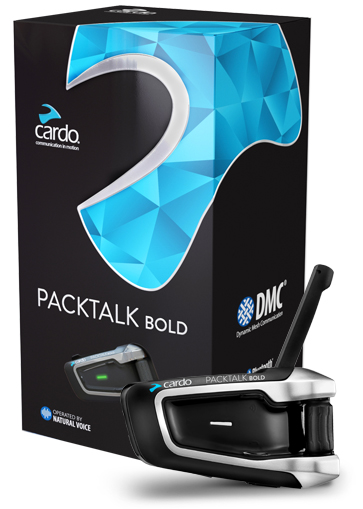
But I’ve decided to join the club, so to speak, and get one, and I have to say it’s mostly for the ability to hear voice commands from my GPS, to hear incoming texts and send out voice-activated replies, and to answer and initiate phone calls while riding. But I’ll admit it will occasionally be nice to communicate with others in a group, especially if I’m leading. And of course there is always the option to mute the nattering when desired.

Club members are very happy with the Cardo Packtalk, mostly for its mesh technology which makes connecting (and reconnecting) large numbers of riders fairly easy. I had the opportunity to try one during a club ride and found the sound quality good. And while I didn’t have the opportunity to test the connectivity to my phone, other club members have said that the person you are talking to on the phone cannot tell you are riding a motorcycle, so the mic must work very well at cutting out ambient noise. My feeling is that this purchase is going to be the most significant change in my riding experience.

Pearly’s Possum Socks

Pearlys

Last but not least, I’m asking Santa for socks in my stocking. I heard about Pearly’s Possum Socks on Adventure Rider Radio. The host Jim Martin raves about them. Socks, you say? You want Santa to bring you socks? Well these are not just any kind of socks. They are a blend of merino wool, which I’ve raved about elsewhere, and possum fibres, which are hollow and therefore super warm since each fibre has a built-in dead-air space. (I wonder how vegan motorcyclists manage?) They are apparently also very soft. A little nylon to strengthen everything up and you have a premium sock that is warm, breathable, comfortable, durable, and anti-bacterial in a compression fit to aid circulation and to help avoid muscle fatigue.

At a premium price. With extra S&H to Canada and the currency conversion, these socks come to over $100 a pair! Gulp. I’ve balked a click away from purchasing them a few times, which is why I’m asking Santa to bring me some instead.

* * *

I always feel very First World, or is that now Developed World?, in making these lists. I’ve worked hard my entire life to achieve a certain level of material comfort, but I’m also aware of the opportunity I have here in Canada and the lack of opportunity less fortunate have elsewhere. And being year-end, I always end these lists by expressing gratitude for what can’t be bought: my health, my wife, and my son. I’m also pretty fortunate to have so many friends, a community of riders and others who help give life meaning and value.

We don’t have to look far to see those who are alone and without basic material comforts. And neither did Saint Nicholas, who gave his inheritance to the poor and became the patron saint of sailors, repentant thieves, prostitutes, children, and students, among others. His charity lives on amid the advertising and commercial hype of Christmas as long as we continue to look.

Happy holidays, and safe riding in 2020.

Make Your Own Heated Jacket For Under $50

20190322_101423.jpg

The riding season is just around the corner, and remembering those cold early- and late-season rides last year, I decided to get some heated gear during the off season. But a heated jacket can easily run over $200, so I decided to try making my own.

I started by buying the heating pads on eBay for a grand total of $7.39 (all amounts mentioned are Canadian), including shipping and handling. I don’t know how a company can make something, anything, and ship it halfway around the world for that cost, and I probably don’t want to know. The shipping is slow, by boat, so allow several weeks. Still, at that price, I’m not going to hold it against the seller.

You can get them in configurations of 7 small pads or 3 large pads. For the sake of simplicity, I went with the latter. 20190322_100526I figured I’d place one pad horizontally across my upper back to heat my lungs (similar to a chamois in quality winter coats), and two lower, vertically over my kidneys. I’m no biologist, but I remember my Grade 6 teacher saying that if you protect the essential organs, the extremities will be fine.
These pads are 5V and draw 8.5 W—enough to keep me warm but not so much as to tax my electrical system. (I can power this from a battery pack in the inner pocket or plug into my bike using an Optimate USB adapter.) Optimate

This plugs directly into an SAE lead from the battery (for my battery tender) and will handle the conversion from 12V to 5. I’m not including this in the cost of the jacket because I already had it to charge my phone.

I then bought an inexpensive jacket from Mark’s Work Sweatshop (here in Quebec, called L’Équipeur). I was fortunate to find the one pictured above on the liquidation rack for $35. You want it fairly snug since it’s going under your riding jacket and close to your body without dead air space—a known insulator (Grade 6 Physics). Wallfart and Wieners are other good places to try for a cheap vest or jacket. If you get one with a quilted back, your sewing won’t show as much.

The final item was some material to cover the pads once sewn in. I didn’t want to open up the jacket and sew the pads inside the lining for two reasons. First, that would have been a lot of work, and second, I wanted all the quilted insulating material on the “outside” of the pads. So I decided to sew them on the inside of the jacket and cover them with material, and the cheapest material I could think of is a section of a thin, athletic T-shirt I bought from Goodwill for $5.

20190322_101503

I started by pinning the pads in the jacket where I want them.

20190322_102505

I then dug out the sewing machine my mother gave me (God rest her soul) and threaded it with black thread. I can’t help you with the sewing part of this job except to say two contradictory things: a) it’s not as difficult as you may think, and b) read the manual and struggle through your first project; it gets easier. I think of sewing like typing: an essential skill that will pay dividends many times over in the future.

Anyway, you have to be careful when sewing because you don’t want to hit any of the thin wire in or connecting the pads and break it, ruining your pads. Fortunately, the company provides a good inch of sewing material as border.

Once the pads were sewn in, I cut the shirt, pinned it over top, and chalked my sewing line so, again, I wouldn’t accidentally hit any wires. Make sure all wires are tucked inside. You have to leave a gap in sewing the new lining for the cord to exit the lining.

20190322_114150

You can see on the right where I’ve placed two pins horizontally. That’s my marker to stop sewing, and where the cord exits. All was going well until I sewed one of the sleeves to the jacket (Doh!). How to use a stitch-ripper is another essential skill.

After sewing all the way around (minus the port), I cut the excess material away. This is the finished product.

20190330_235327

My jacket has the added feature of an inside pocket with a headphone port. I threaded the USB plug through so I can use a battery pack in the pocket when I’m off the bike. The pads have three settings: high, medium, and low. There’s also a timer setting to shut off automatically after 30 minutes.

20190322_112345

I’ve tested the jacket using a battery pack and it works great! I might not be quite ready to mass produce these, but I’m ready for those cold April rides.

Total cost: Jacket $35 + pads $7 + T-shirt $5 = $47


The Wish List, 2018

Moto Santa

If I’m going to get my wish list to Santa before Christmas, I’d better send it now. This year has been a tough one for a few reasons, but mostly because my mom died in the fall. That threw everything off, including my blog writing. I just didn’t have the appetite to write, or ride, or do any of my other interests. But the midwinter holiday and the turn of the new year is as good an opportunity as any to turn the corner and start to look forward to the warmer weather and the chance to ride again. Here are a few things I’d like to get for the 2019 season.

But first, let’s take a look at what didn’t make it off my wish list last year.

  • Upper crash bars: check
  • Inline fuel filter: check
  • Flexible front flashers: check
  • Chain-breaker: check
  • Wheel lug/tire iron wrench: check
  • New front tire: check
  • Body armour: check (not Leat but Knox)

So the only two items that didn’t make it off my 2017 wish list were the Garmin Montana GPS, for the second year running, and the Sea-to-Summit mattress.

Garmin Montana 650

The GPS is a must this year; I can’t put it off anymore. As you know if you read my last post, I actually suffered a breakdown on my tour this summer from using a phone GPS. The port on the phone is just not built to withstand the demands of off-road riding—the vibrations, the moisture, the drain on the battery. I ended up jeopardizing my bike’s battery which led to the breakdown. And if you’re doing any serious off-roading, you’re often going to be outside of cell service. This is a fairly big-ticket item so I’ve been avoiding it, but fortunately, I’ve been doing some writing for Ontario Tourism and the money earned from that writing will offset the cost this year.

There is a new 680, but the 650 will be more than enough for my purposes and maybe I’ll get a deal on a discontinued model. I’m so tired of trying to use GoogleMaps to plan my rides! It works okay to get you there but you don’t have much choice in the route (just “avoid motorways,” “avoid toll roads,” and “avoid ferries.”) I’m looking forward to being able to use BaseCamp to plan rides on my computer and import tracks to the GPS. It’s also going to open up a whole new world of off-road track sharing through forums. The Montana is the most popular off-road GPS on the market, with topographical maps, the ability to geocache photos, dual map capability, a micro SD card slot, and many more features that I’ll probably never use. Best of all, it’s rugged.

A Lithium Battery

Shorai

Shorai LFX14L5-BS12

I’ve also decided it’s time to retire my old wet cell battery. I actually got two when I bought the bike. One died about a year ago, and the second is now getting weak. The battery on my bike is known to lose fluid because it’s right next to the upper oil tank, so it gets hot. Also, you have to remove all the plastics on the bike to check and to maintain the battery, so a low maintenance battery would be a huge benefit. I’ve decided to try a lithium battery. I heard about them on Adventure Rider Radio but had concerns about using a lithium battery in a cold climate like Canada’s. However, I’ve heard on forums that it shouldn’t be a problem. You just turn the electrics on for a minute or two to let the battery warm up before hitting the starter. I won’t have to worry about this one boiling dry, as my current one did outside of Mattawa, and an added huge benefit is that it’s much lighter than a wet battery. It’s the easiest way to shed several pounds up high on my bike.

Ricor Intiminator Fork Valves

Intiminators

41mm Ricor Intiminator Valves

This past year, I lost the preload adjuster on the rear shock. I think what happened was the new Holan upper crash bars install too close to the adjuster. The bars use the same mounting point, and I think the adjuster threads got strained from the tip-overs and eventually stripped. I was lucky to find a generous soul willing to swap me his adjuster for mine, but in doing some research on this item, I discovered that many riders find the suspension on my f650GS too soft, especially for off-roading. I’m not a big guy, so I don’t find the rear too soft, but the front end does dive under braking, and for the past while I’ve had a clunking noise coming from the forks on certain types of bumps. I was going to rebuild the forks this summer, replacing the bushings, so I’ve decided to install some Ricor Intiminators at the same time to firm up the front end. They don’t look like much, but these babies have something called Inertia Active Technology. Developed over a twenty year span, this technology can distinguish between chassis motion (fork dive) and wheel motion (bumps in the road). It allows the wheel to move and stay in contact with the road but doesn’t allow the forks to compress when front brake is applied. How, you ask? You’ll have to read the details of the technology at their site. The bottom line is that you get a cushy ride on the road without the fork dive under braking, and better handling off road. According to many comments on user forums, the suspension on my bike is its greatest weakness, so I’m looking forward to improving the front end.

K & N Air Filter

KandN

This one is kind of a no-brainer, which makes me wonder what took me so long to make the switch from paper to cloth air filters. Okay, I do remember reading up on foam filters when I first got the bike, but what I read was that the OEM paper filter protects better than foam. And that is true, partially. Dry foam filters have holes upwards of 90 microns in size, too big to stop sand, which can penetrate your engine and do nasty stuff to it. But an oiled foam filter will protect your engine just fine, and most dirt bikes and off-road bikes like KTMs use oiled foam filters. However, too much oil results in loss of power because not enough air is getting in to mix with the fuel. Recently I discovered the K & N cloth filter which protects as well as OEM but is reusable like foam. It’s also zero maintenance (no oil to administer) and is reusable; just clean in soapy water, rinse, and dry each year. Sounds like the best option for me. Goodbye disposable paper filters.

Klim Carlsbad Pants

carlsbad-pants-grey-30

Santa came a little early this year with some Klim Carlsbad pants for me, so this one is not officially on my wish list. I love my Klim Dakar pants; nothing is more flexible and durable for off-road riding than the Dakars. But they are not waterproof. That’s just not the way they are designed. They are designed to pull through overhanging thorny brush without tearing, and to allow maximum airflow when it’s not, so not waterproof and not for adventure touring. I’ve been desiring a Gore-Tex pant that will keep me cool in the heat and dry in the storms. No stopping under bridges to pull on rain gear, no trying to anticipate weather—just ride rain or shine and remove guessing from your day. I saw these on sale 43% off their regular price about a month ago and jumped before Fort Nine sold out of my size.

Steel-Braided Brake Lines

Single Front Line

Last year I accidentally damaged my rear brake line while fixing my rear shock. I’ve decided I might as well take the opportunity to upgrade to steel lines which are better for off-roading anyway. Galfer lines are made in the USA, are model specific, and have teflon inner coating to avoid deterioration. There are even colour options for both the line and mounting hardware. I’ve already got new front and rear disc pads waiting to be installed, so I’ll be doing a complete brake rebuild in the spring.

That’s it. A suspension upgrade, a lithium battery, and (finally!) a motorcycle GPS top my wish list for this year. But like last year and every year, my main wish is continued health. A friend of mine is currently battling brain cancer and wasn’t able to ride last year. He’s recently had a setback and will be spending Christmas in the hospital. I’m thinking of him a lot and would gladly forego all these goodies and more for his health, but unfortunately there are no deals like that available in life. You have to count your blessings, and bless each day you have to live. However messed up this world is, experiencing all it has to offer is and always will be the most wonderful gift of all.

Merry Christmas and happy holidays to you and yours.

The Lumberjack Trail

20180728_112555

Voyageur Days. Mattawa, ON

What’s your ideal ride? For some, it’s a winding road like Tail of the Dragon; for others, it’s a single-track or ATV trail cutting through dense forest. Mine is some combination of both—a winding dirt road with some technical sections that challenge, like hill-climbs, mud, even the occasional water crossing. That’s what I was looking for when I decided to do some off-roading in Northern Ontario this summer.

I enjoyed looping Georgian Bay with my wife, and I enjoyed the rest stop in Kipawa, Quebec, at a cottage. I enjoyed the ride up to Moonbeam, albeit in the rain. But what I had really been looking forward to is a full day in the dirt, and this was the day I could finally do it.

The violent rainstorm of the night before had subsided by the time I crawled out of my tent. After my breakfast of champions, porridge, I geared up and headed to the park gate. I figured the attendant would be familiar with the area and able to direct me to the trailhead of The Lumberjack Trail, a 26 km. loop from Moonbeam to Kapuskasing I’d found online at an interactive trip planner.

Lumberjack Trail

Lumberjack Kapuskasing-Moonbeam Loop

I rode down to the gate, pulled a U-turn and parked. When I entered the kiosk, the young lady was staring into her phone. Our conversation went something like this:

Me: “Good morning. Do you know where I could pick up The Lumberjack Trail?”

Teenaged attendant: (looks up from phone) “The what?”

Me: “The Lumberjack Trail. It’s an off-road trail that goes from here to Kapuskasing. I saw it online.”

Teenaged attendant: (goes back to phone) “Ok Google, what’s The Lumberjack Trail?”

Me: “You don’t know it?”

Attendant: “There’s a lot of trails around here. Basically it’s the only thing to do. Me and my friends go on them on the weekends.”

Me: “Oh, so you ride off-road too?”

Attendant: “No we go in cars. Anything.”

Me: “Well, it’s supposed to go right past here.”

Attendant: “There’s a really pretty one. It’s a . . . a pépinière. Oh, how do you call it in English? Ok Google . . .”

Me: “A nursery.”

Attendant: “Yes. There are a lot of pine trees. But I don’t know how to find it. Try the Tourist Information.”

So off I rode, back to the flying saucer, pondering whether I should ask for directions to the Lumberjack Trail, the Pépinière Trail, the Nursery Trail, or a pine grove?

Once there, I was quickly directed to the trailhead. It turns out that you follow Nursery Road and it takes you straight there.

Nursury Trailhead

This looked promising

A short ways in, the trail became sandy and I found the pine trees.

Pepiniere Trail_web

The Nursery Trail

It was open and easy, but with sand and some small hills to make it a Goldilocks level of difficulty. Unfortunately, it ended too soon. I arrived at a T-junction to a gravel road. Knowing that left leads back to the main road, I turned right and found myself on an open, flat, fairly straight dirt road. Silt Road

The surroundings were pretty enough, but the riding was not very challenging. I was a bit disappointed. It was too easy. It’s actually hard to find a trail with just the right amount of challenge for your particular skill level, and where the Nursery Trail had at least some sand, this road was dry and hard-packed. I was bombing along in third gear, not even standing, thinking “This is too easy” when I hit a section still wet from the rainstorm the previous night. Everything suddenly went sideways—literally. A truck or larger vehicle of some kind had come through before me and left tire grooves. I started to lose the back end, went sideways, got cross-rutted, whiskey throttled towards the trees, and went down high-side, hard. It was my hardest fall yet.

My first thought as I lay on the ground was, “Well, the gear worked.” I had invested earlier in the season in some excellent protection specifically for off-roading. My Knox Venture Shirt, Forcefield Limb Tubes, and Klim D30 hip pads all did their job. I got up without even a bruise. My second thought was for the bike. If there was something broken, it was going to be difficult to get it out. I noticed that the folding levers I had also invested in had done their job. The clutch lever was folded up, saving the lever from breaking off. I lifted the bike and took a look. Nothing was broken or cracked; the crash bars had done their job too. There were some new scratches on the windscreen and front cowling near the headlamp, but nothing more. Oh well, new honour badges, I thought.

My concern now was getting the bike back on the road. I was lucky: if I’d gone a few feet further I might have lost it into a ditch and then would have needed a winch to get it out.

P1030223

Once I lifted the bike, I realized it was going to be difficult to get it back onto the road.

The front end was partially into the ditch and it would take some rocking and cursing to get it back a few feet to where I could carefully walk it back onto the road, making sure the front tire didn’t slide down.

I looked back at my skid marks and played amateur accident inspector.

P1030222

You can see where it all went wrong.

I tried to ride on but the silty dirt, when wet, is like glue and gums up the tires instantly. It was like riding on ball bearings, or rather, trying to ride on ball bearings.

P1030224

Slow-going in the wet silt

The ride now certainly wasn’t too easy. I basically had to do the Harley waddle, foot by foot, hoping it would get drier. I tried riding along the edge of the road in the long grass, thinking the grass would provide some grip, but the problem then was that I couldn’t see what I was riding over or where the ditch was. I dropped the bike a second time and began to wonder how I was going to get out of there. Would it be like this all the way to Kapuskasing?!

Then I had an idea: I knew that in sand you put your weight to the back to unweight the front tire. This helps prevent the front from washing out, which is when you go down. Maybe the same technique applied to all low-traction terrain, including mud. I tried and it worked! The front tire didn’t wash out as easily, even, to my surprise, climbed up out of some small ruts when needed. I had stumbled upon a new off-road skill.

When the road dried out, I was able to sit down, but kept my butt well back, over the rear tire. It all suddenly made sense why those Dakar riders always sit so far back. Now I was able to go at a better pace. The rest of the road wasn’t as wet as that section and, although open and straight, turned out to be just challenging enough. I stopped a few times when I saw some interesting paw prints.

Bear Prints_web

Bear prints. I also saw wolf and hare tracks.

When I felt I was past the worst of it, I stopped for lunch and took in the surrounding wetlands.

Lumberjack Wetlands_web

Wetlands north of René Brunelle Provincial Park

I popped out in Kapuskasing next to the Shell station on Highway 11. Although there was a sense of incompletion in only doing one half of the loop, I decided that was enough excitement for one day and headed into town to find the LCBO and something to enjoy back at camp. I wanted to explore the town a bit and was glad I did. Kapuskasing has an iconic ring of Canadiana to it.

I had the impression that it was bigger than it is, but there isn’t much in these parts that is big. These one-industry towns in the north are built on mining or forestry and are pretty remote. I rode through the town centre, which is a roundabout, and landed at the train station, the heart of all Canadian towns.

P1030264Surrounding the station were archival photos of the town and area, and I discovered that Kapuskasing had been the site of an internment camp during WWI. Primarily Ukrainian immigrants were shamefully sent there to work in a government-run experimental farm studying the viability of farming on clay. Later in the war it was a POW camp.

Kap plaque_F

A plaque outside the train station commemorates the Kapuskasing Internment Camp, 1914-1920

I love Canada and am a proud Canadian, but every nation has its dirty little secrets hidden in untaught history classes. Currently in Quebec, some teachers have expressed serious concern that the role of minorities is overlooked in the current history curriculum. I believe that a little less Upper and Lower Canada and the harmonious relationship with Indigenous Peoples, and a little more on the Indian Residential Schools (IRS), the internment camps of law-abiding citizens during both world wars, and the not-so-quiet actions of the FLQ in the 70’s would go a long way toward real truth and reconciliation among its diverse peoples.

I left the station and rode to the City Hall, then parked and walked out to a gazebo overlooking the river and mill. I came across this plaque about the Garden City and Model Town, and it occurred to me how much promise and hope there must have been in Kapuskasing at one time.

Garden City

Maybe Kapuskasing is iconic. It could be symbolic of how the country seemed when Europeans began settling here—pristine, pure, wild—like the blank page awaiting our best intentions. But intentions are just a start. The real work happens after the first draft, when we see all our mistakes and how we can make it so much better.