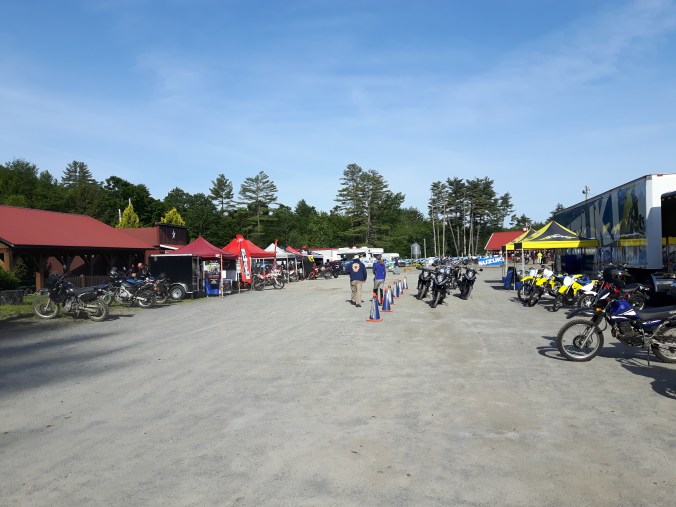
DirtDaze 2018

20180609_080408

There’s a particular look my wife has when I’ve been talking about bikes too long (i.e. about 5 minutes). It’s the same sort of look I suspect one has when looking at the boss’s baby photos, or when listening to the minutia of someone’s genealogy: a look of polite indifference. Then I know it’s time to change the topic. One thing among many that I like about DirtDaze is that it’s bikes! bikes! bikes! all weekend long. You talk about bikes at breakfast. You ride bikes during the day. You talk about bikes at dinner. You ride bikes again in the evening. And you talk about bikes at the bonfire. If you’ve got the jones for bikes, you can get your fix at DirtDaze.

This year was my second time down at Lake Luzerne. You can read about my first experience here. This year I was going with a lowered windscreen and, more importantly, knobby tires, so Bigby was more off-road ready. I had also since done an off road course and been practising my skills, so I was especially looking forward to the weekend. I had the bike packed and literally left from the college when the last essay was graded. DirtDaze is my conditioned stimulus for the beginning of summer and time to relax and have fun. I whooped into my helmet as I headed down the 15 Thursday evening toward the border.

That morning, with the bike fully loaded, I had looked at my headlight as the bike warmed up. That doesn’t look right, I thought. It was very dim. But I was already late for work so climbed on and rode away. Thinking about it later that morning, I realized the headlamp was burnt out. Oh well, I thought, all my riding is during the day . . . I thought. In fact, taking the 9 instead of the interstate resulted in me riding the final 45 minutes or so in the dark. Fortunately, I had a high beam or I never would have made it into camp. The Painted Pony Ranch, which hosts the rally, is on a back road with no streetlights, and even if I’d managed to find the ranch I surely would have run over somebody’s tent while finding a spot to pitch my own. My apologies to all those drivers I blinded with high beams. It was an auspicious start to the weekend.

After my tent was up and prepped, I wandered up to the bonfire and sat down beside some folks from the Rochester area. They invited me to ride with them the next day, and since DirtDaze is all about community and group rides, I took them up on their offer. If someone’s willing to lead, I’ll surely follow. So the next morning, James, Cody, Nick, Carlos, and I headed off on a ride with James leading; he had some rides from previous years saved on his GPS. Our first stop was a trail that had a mix of sand and mud leading to a challenging rocky hill climb. Almost all of us made it to the top. Or some of us almost made it to the top. Let me say that all of us made it . . . almost to the top. Little did I know this hill climb would be literally and figuratively the high point of my weekend.

Shortly after we descended and started riding on asphalt again, disaster struck in the worst possible way. No, I didn’t crash and die. Worse: my temperature light came on and the bike overheated. If you’ve read my previous post, you’ll know that I’ve been having a lot of trouble with my cooling system. I feared the worst, but we started with the simplest and easiest. We tightened all the hoses and started the bike again. The temp light came on. We bled the system and started the bike. The temp light came on. We took the thermostat out and started the bike. The temp light came on. Finally, we took the water pump cover off and I spun the impeller freely with my finger; the impeller was not engaged with the drive gear. I couldn’t believe my eyes: it was another stripped gear, and in the worst possible place!

Carlos got on his phone. MaxBMW in New Hampshire could ship the part overnight to the Painted Pony Ranch. James gave me a tow back to camp. By dinner, I already had two offers for a lift back to Burlington and one to Plattsburgh. Marilyn could get a trailer down there to bring me and Bigby across the border. There was hope and help, but I was pretty discouraged.

That evening I phoned my wife. She said afterwards that she’d never heard me so down. In truth, I was considering selling Bigby, but don’t tell her that. It would have broken my heart, but if she’s not reliable, I can’t trust her to take me where I plan to go. I wandered through the campsite, looking at the different bikes, thinking of what my next one might be. I was considering the Kawasaki KLR, the ubiquitous adventure bike that’s built like a tank and hasn’t changed in over 30 years. In fact, Christian Dutcher, the DirtDaze Director, lent me his KLR Friday afternoon when he heard mine was out for the count. I liked it a lot. If I couldn’t afford an Africa Twin (and who am I kidding . . . I can’t afford one), then a used KLR would definitely be an option. Someone at the bonfire was singing the praises of Suzuki. Any Japanese bike, for that matter, would be more reliable and cheaper to run and maintain than a BMW. I went to bed dreading the next day. If I got the bike running again, I would cut my weekend short and limp home, then take the bike into BMW and pay through the nose for them to figure out why the pump keeps failing.

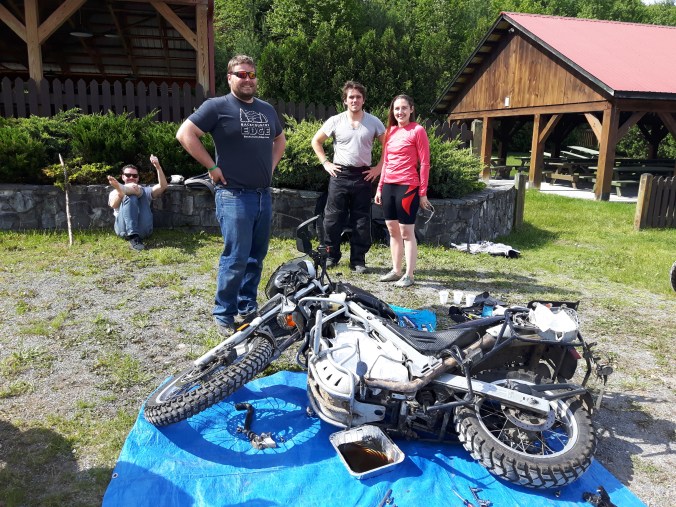
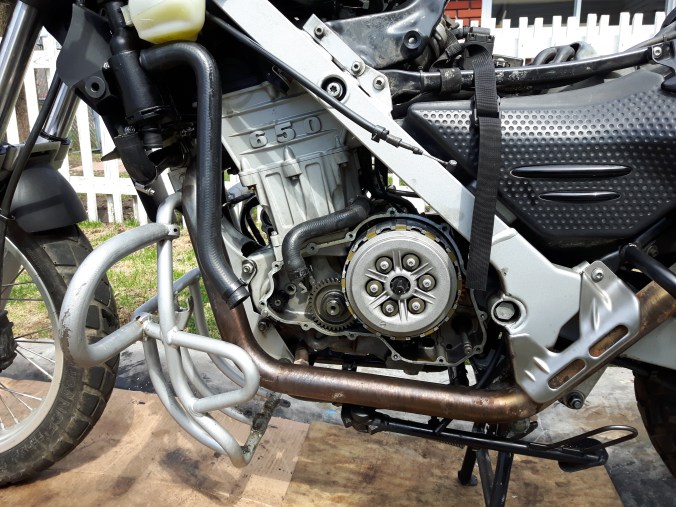
The next morning, James, Nick and I started taking the bike apart. We laid it on its side to minimize how much oil we would lose. Here, my previous experience with the job was helpful and we had the clutch cover off in no time. I expected to find a stripped gear, was surprised to find it intact but spinning freely on the spindle. The cross-pin that engages the gear had come out! It seems that I had never completely seated the gear when I installed it in May. It had engaged sufficiently to ride to work several times and even do some light off roading in Quebec, but that rocky hill climb must have dislodged things. I was relieved to know that the failure was all mine, not a design flaw or chronic problem with the bike. In the parlance of my students, “My bad!”

20180609_093943

James in foreground, Nick and Cody, Danny in back. The clutch is covered with paper towel to prevent milkweed falling into it.

The rest of the day was spent mostly waiting for my shipment with the new gear. I struck up a conversation with Danny from Montreal. Danny had injured his ankle unfortunately early in the weekend and was laid up. We made plans to do some off roading in Quebec once his ankle heals. I also wandered over to the Beta tent and tried a trials bike, which was very interesting. But my mind was really only on one thing: fixing my bike and getting back to Montreal.

Finally, at 3 o’clock, the part arrived. This time we took the new gear and, rather than tap it onto the cross-pin using a hammer and socket, as I had done, James pressed it on with his thumbs. (The bike being on its side facilitated this.) There was an audible snap as it clicked into place, and we were all confident it was on properly this time. Then it was just a matter of putting the bike back together and refilling the fluids. MaxBMW had shipped a litre of oil and I filled the rad with water. I ran the bike and the temperature light did NOT come on. I gave it a ride around the area to be sure. A few adjustments to the clutch cable and shifter and Bigby was good as new. What a relief!

I asked the boys what their favourite beer is, then bought 3 6s which we proceeded to kill at the bonfire on the final night. Sometime into my fourth, or was it my fifth, beer it occurred to me the gear came out not in the worst possible place but the best. If you’re going to suffer a breakdown, it’s best to do it on a ride with two mechanical engineers and within a community of riders who have each other’s back. I know I kind of ruined the morning for these people who had invited a stranger onto their ride, but they stuck with me to the end, even helping with the repairs. I have to thank Carlos for finding the part, James and Nick for their mechanical help, Cody for her patience and understanding, Christian for lending me his bike so I didn’t lose a day, Ken for his offer of a lift back to the border, and the lady at the gate the entire weekend (I didn’t even catch her name, to my embarrassment), who watched all day for the FedEx truck and even reimbursed me for the guided ride I missed.

And that’s really what DirtDaze is all about. It’s an off-road rally, but at its heart is a community of riders that could serve as a model for all communities: good people, having fun, helping those in need. The riding is pretty good too.

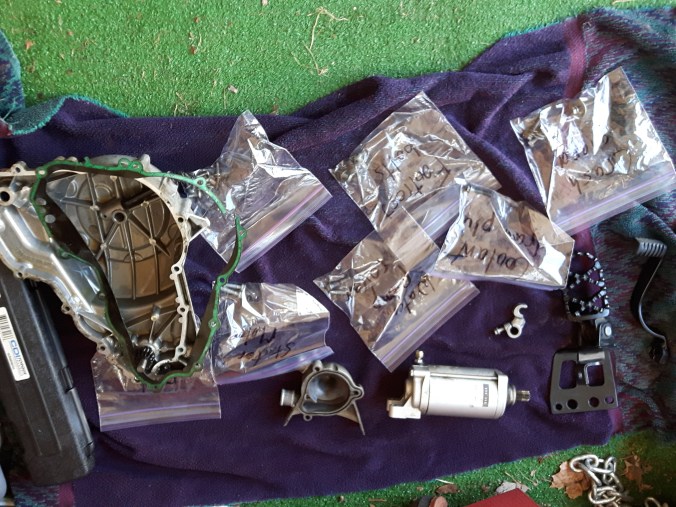
20180609_143737

Double, Double Toil and Trouble

20180502_105955

People sometimes ask me, “Where did you learn how to fix your bike?” I answer, “I didn’t. I’m still learning.” Being a DIY guy is a never-ending process. But the start is usually the same: an oil change. The first thing I did with my 650GS is change the oil and coolant, and because we live in the YouTube era, I lucked out and found a great how-to video by Kirk of the BMW Motorrad Club of Northern Illinois doing this very service on my exact bike! I love Haynes Manuals, but there’s nothing like seeing someone do it “in person.”

From there, I changed my brake pads. Brakes! you say. Don’t you want to get those done by a professional? I know, there’s an emotional component to brakes, but the fact is, they’re really not that complicated—a disc squeezed between two asbestos-lined pads.  When time came (40K) for valve adjustment, I did a bunch of research and plunged in. Each time I start a job I don’t know where I’m going but I figure it out along the way. As the American poet Theodore Roethke says, “I learn by going where I have to go.” And each time I go, I learn more about my bike.

Sometimes the journey is made longer because you don’t know what the cause of your troubles is. All you’ve got are the symptoms. In those cases, your diagnosis is easily half the work. Now if you are an experienced mechanic, you’ve seen it all and you can make an educated guess and save yourself a lot of time. Or you have a machine that costs the equivalent of my monthly wage and does the diagnosis for you. But if you’re a DIY guy on a budget, and this is the first time you’ve experienced these symptoms, you’ve only got the Fault Finding section of your service manual, the brain hive of a good user forum, and your intuition. Using these three tools in the right combination is the most useful wrench in your toolkit.

So when my bike overheated last fall after a little tip-over in sand, spewing boiling coolant out the overflow reservoir, I packed my bags and stepped out for a new journey, one that would prove to be especially long.

I don’t know how the editors of service manuals order the list of probable causes to certain problems. Do they list them in order of most probable to least, cheapest and simplest to expensive and complicated, or some combination of both? Since I’m on a tight budget, I tipped the scales toward cheapest fix first. Top of my list, then, were things like coolant level low, radiator pressure cap defective, thermostat stuck open or closed. So I started there, specifically with the thermostat. I took it out and tested it, sticking it in a pot of water on the stove with a thermometer. It opened just fine at the temp it was supposed to but didn’t close once the water cooled. Hmm . . . Could this be the problem? So off I went to BMW for a new thermostat. At $65, it’s got to be one of the cheapest parts on this bike, so I was hopeful I’d found the problem.

I put the new thermostat in and rode one block and the temp light came on. Damn!

Next I focused on the fan. Was it running when the bike overheated? I couldn’t remember so I texted my riding buddy. He couldn’t remember hearing it running either. Maybe there’s a problem with my fan, then? I connected it directly to the battery. It worked. Good, I guess. Maybe the sensor that turns on the fan is defective? My neighbours must have been wondering what I was doing with my camping stove out on the driveway beside the bike, but I had taken the sensor out of the engine block and was heating it in a pot of water, as I did with the thermostat on the stove. The fan did not turn on. So off I went to BMW for a new sensor. I was confident I’d found the problem.

I put the new sensor in, started the bike and ran it up to temp. The fan turned on. Great! Then I rode one block and the temp light came on. Damn!

Turns out the sensor works by pressure as well as temperature, so heating it alone would not trip it. On the plus side, the fan was turning on, so I knew that system at least was working properly.

The most recent time the temp light came on I noticed some coolant dripping from the bottom corner of the radiator. I surrendered to what I was dreading and denying: the radiator must be leaking. At $600 for a new one, this brings us to the point in the journey where I decide to stick the bike into winter storage early and avoid the problem, at least until spring.

It’s been a pretty brutal winter here in Montreal. Finally spring came, I bought the new rad, installed it, rode one block and the temp light came on. Damn! Double damn!

I’m not going to say the rad wasn’t broken, because I think it was. It was bent from the tip-over and clearly leaking, or so my wallet says. So my problem is . . . shall we say, multifaceted. I little sleuthing on my favourite forum uncovered that the water pump on my bike tends to go at around 50-60,000 kilometres. My bike now has 63,000. I knew this before buying the rad, but because it’s quite an involved process to get to the pump, and because the rad was leaking, I thought it was a long-shot that the pump would go at the same time as the rad. But go it did. When I finally got the pump apart, which involved taking the clutch cover off, the gear that drives the impeller was stripped.

Believe it or not, I was actually happy to see this, for at least then I knew what the cause of my problem was.

How was I to know that both the radiator and the pump were broken? And the pump issue seems to be unrelated to the tip-over. There’s been an effort on the forum to try to get to the bottom of what’s causing the stripped gears but there doesn’t seem to be any consistency. For some guys, it happens out of the blue with no apparent cause; for others, it’s after a drop. My guess is that the impeller shaft gets worn and starts to wobble. Sometimes this results in the seals leaking, sometimes the gears stripping. At any rate, it seems to be the Achilles heel of this bike. Now I know.

With the bike back together again and all fluids replaced, I rode off and the temp light did not come on. Now I’m ready for another season and my journey can be of the real kind.

I enjoy working on the bike, or any kind of manual work, actually. Okay, sometimes there are frustrations, like when I couldn’t figure out how to get the clutch cover off with the oil return line in the way. But that too is just a matter of knowledge. I struggled for a while, then went on the forum and read that some guys loosen the exhaust manifold bolts just enough to drop the exhaust pipe out of the way. I’m looking forward to the time when I know this bike so well that the troubleshooting part will be a no-brainer and I’ll know the route before starting a job. Until then, patience and persistence are my travelling companions. 20180422_145248

Blemishes or Character Marks?

“I want a poem I can grow old in,” writes Eavan Boland at the start of her essay “The Politics of Eroticism.” She goes on to explain that she wants a poetry in which she is subjected to the effects of time, not an object frozen in time. You might not think that’s very erotic, but that’s not her point. Her point is that she wants poetry that celebrates real women, creatures of time, not illusory women, sprung from the imaginations of male writers.

Why am I thinking of this now? Because my mistress has a wrinkle and I’m not sure whether I want her to get cosmetic surgery. I’m speaking of my bike, of course. Last year, as a result of a few offs in mud, one of the side panels got scratched. This was before I bought my upper crash bars. Now that I’m about to install them, I thought maybe I’d do a little bodywork first to make her good as new. I posted a query on my forum requesting tips. I’ve done bodywork on an old car with aluminum panels before but never worked with plastic. Someone replied with a lot of information for me, but someone else wrote “I kind of like my ‘character marks’  . . . makes it look like I actually use my bike in places other than Tim’s or Buckie’s.” That got me thinking. Are scratches blemishes or “character marks?”

I know a club member who sold his bike because it had a scratch and got a new one. Why he didn’t just get the scratch fixed I don’t know. Perhaps he was ready for a change anyway. But for some riders, the bike’s pristine appearance is an important part of the experience of riding. They spend hours polishing it on weekends, prepping for the club ride. I’m thinking also of the Americade parade I witnessed en route to an off-road rally last June, when all the Harley’s were lined up at the side of the road on display. I get it: the aesthetics of machines. I’ll be one of the first to admit that each bike has a personality, and a good engineer will take into consideration form and function.

On the other hand, aside from “character marks,” I’ve heard scratches referred to as “honour badges.” What’s so honourable about dropping your bike, you ask? I guess, the theory goes, that if you aren’t dropping it once in a while, you aren’t riding it hard enough. You aren’t pushing your limits. There’s growing derision for folks who buy a big 1200GS with luggage, maybe spend $2,000 on a Klim Badlands suit, but never venture off the asphalt. Posers. I’m not knocking anyone who doesn’t want to ride off-road, just those who don’t but buy an off-road bike and gear. And if you’re going to go off road, you’re going to drop the bike. Maybe not if you’re only doing dirt roads, but once you get into mud or trail riding, sooner or later, some rut or rock or lapse of concentration is going to get the better of you. And your bike. There’s just no avoiding it indefinitely.

So why not embrace it? If you ride around fearing a little mishap that might blemish your Precious, you’re not going to have much fun. And you did buy the bike to have fun, right? To ride it, take it places you can’t take other bikes, challenge yourself with a rocky hill climb or water crossing, try some single-track, where tree branches or underbrush might jut out onto the trail, slide the back end around a corner, and yes, show off your mud-splatter and scratches at the local coffee shop.

It’s the first beautiful day of the year here in Montreal. Hard to believe we had freezing rain a week ago. It feels like the unofficial start of the season. Enjoy your ride, whatever kind of ride you do.


The BMW f650GS. It’s not just a starter bike.

P1000195

2006 BMW f650 GS twin spark. 

The BMW thumper is an iconic bike with a huge following for good reason. 

I’ve been reluctant to do a bike review of Bigby. For one, I still consider myself a novice. In fact, aside from a few bikes at my training school, Bigby is the only bike I’ve ever ridden, so I don’t have much to compare it to. Doing a review, I thought, would inevitably lead to the faulty comparison, a logical fallacy I warn my students to avoid. (i.e. “Gets your clothes cleaner!” Ugh, cleaner than what?) Second, I’m still learning about the bike. Although I’ve owned it for almost three years, I’m still finding my way around the engine and mechanics and still discovering its potential. Passing judgment now would be like bailing out of a relationship after the second date. It would be, in the literal sense of the word, prejudice.

So why have I decided to do it? Well, after watching a lot of reviews online, I’ve come to realize that most are not very good, so the bar is set pretty low. They are usually more product descriptions than reviews, and Ryan at Fort Nine has blown the whistle on the nepotism of corporate reviews, how they are always positive because the big bike companies offer a lot of treats to the reviewers, like paid vacations in exotic locations. And those reviewers ride the bike for, what, a day, a couple of days, max, so at least I can say that after three years with Bigby, I know more about this bike than they ever will. So with my concerns made explicit, let’s jump in.

* * *

The three things I like the most about the f650GS are three things I noticed within the first five minutes of riding it: ergonomics, suspension, and balance. Okay maybe you don’t need to have ridden a bike for long before you discover its essence. Let’s look at each in turn and then move on to other stuff.

Ergonomics: At the school, we’d learnt on cruisers—Suzuki Boulevards and Honda Shadows. The ergonomics of the GS are very different. Being a dual-sport bike, it’s capable of going off road, and you need the pegs beneath you in order to stand. This placement also results in your weight being distributed evenly between the seat and pegs, with knees bent at roughly 90 degrees. It’s the ideal sitting position and how every office chair should be set up, thus making the GS also a very capable touring bike. The dual-sport, according to its name, involves compromise, but there’s no compromise when it comes to ergonomics: the GS provides the perfect sitting position, and the capability to stand when you leave the asphalt.

The other thing I like about the ergonomics is that you can flat foot this bike. The standard seat height is 30.9 inches, so super low. This is confidence inspiring once you take it off road; I know I can easily dab a foot if needed. In fact, since I am rather long-legged, the seat was a bit too low; my knees were bent more than 90 degrees and I felt a bit cramped after several hours in the saddle. So when I upgraded my seat (more on this later), I went for the high version to allow a bit more room, and that has made all the difference. If you are long-limbed, you might want to look at the Dakar version, which has a 34.3 inch seat height, or swap the saddle for a taller one. Despite these issues in my lower half, I haven’t had to add bar risers, and when I stand, the grips fall perfectly to where I need them, maintaining my standing posture.

Suspension: As I rode off on my first ride, the second thing I noticed was the suspension. This bike is smoooth, at least compared to those cruisers. And what better place to test a bike’s suspension than Montreal roads! Of course it makes sense that a dual-sport bike would have very capable suspension; it’s designed to be able to handle some pretty bumpy terrain. But just before I went for my riding test, I hired a private instructor for a class. He rode behind me and commented on things he saw. Now here is someone who has a lot of experience with bikes and has seen a wide variety from behind. Ironically, the first thing he remarked when we first stopped had nothing to do with my riding but how impressed he was with the rear suspension of my bike. “I wish you could see what I see from behind,” he said. “It’s amazing!”

In fact, I’ve wondered if the suspension is a little mushy. I’ve only bottomed out a few times while off-roading, and the front end dives a bit under hard braking. I’ve considered upgrading the suspension, but frankly, at only 140 lbs, I’m actually underweight for this bike. Front suspension travel is 170 mm and rear is 165 mm.  Since ideal SAG is roughly 30% of total travel, SAG for the 650GS is 49.5 mm.. Even with the pre-load completely backed off, all of my 140 lbs is putting a little more than 45 mm on the suspension. Which brings me to another plus of this bike: the pre-load adjuster. Okay, it’s not electronically controlled like the new Beemer’s, but the ability to adjust with the turn of a knob when you are two-up or have gear on the back is a nice feature.

Balance: The thing I like most about the 650GS is its balance. This is accomplished mainly due to the gas tank being under the seat instead of high on the bike where it normally is. Where this is most noticeable is in how the bike corners. At the school, we were taught to countersteer to initiate a turn and to accelerate at the end to straighten up, and this was necessary with those cruisers. But I quickly discovered that on the GS you can manage an entire sweeping curve simply by leaning in and out. It’s hard to describe, but the bike feels like it straightens up itself with the subtlest weight shift.

The balance also shows when riding at slow speed, like in parking lots or technical sections off road. I’ll challenge anyone to a slow race any day! The bike is easy to move around by hand and to turn in tight spaces. With a little practice, I was riding figure-eights full lock. You can add all the accessories you like to a bike, but getting the balance right is something that happens at the design stage. BMW got it right on this one, which is why I was surprised to hear that they’ve moved the tank to the traditional location in the hump on the 2018 750s and 850s.

* * *

The engine is a Rotax, 652 cc single-cylinder, water-cooled, DOHC with twin spark plugs and four valves. It provides 50 HP @ 6,500 rpm and 44 lb/ft torque @ 5000 rpm. What these numbers mean is that it’s not the gutsiest engine. I’m up for a slow race but I won’t be challenging anyone to a drag soon. When I did my research, I kept hearing how this bike is a good beginner bike. There’s not a lot of power to manage, and you don’t have to worry about losing the back end by getting on the throttle too hard. On the other hand, it’s got lots of torque down low in the first two gears for hill climbs off road, and still some roll on in 5th gear at 120 km/hr. I’ve never maxed it out, but I’ve had it up to 140 km/hr and that’s fast enough for my purposes. And since we’re talking about gearing, 3rd and 4th are wide enough to enable me to navigate a twisty piece of road pretty much in one gear, depending on the type of road: roll off going into a corner, roll on coming out.

Single-cylinder engines have their advantages and disadvantages. One advantage is this wide gearing. My dad often talks about how he loved this aspect of his 350 Matchless. In heavy traffic, you can stay in 2nd and just ease the clutch back out when traffic picks up again. He once road his brother’s parallel twin and said it was horrible in stop-and-go traffic; you had to work twice as hard to prevent the engine from bogging. I suspect it’s this same quality that allows you to maintain your gear through a twisty section of road with slight variations in speed.

Another advantage of singles, I’ve recently discovered in this article in Cycle World, is that they offer a kind of traction control. As Kevin Cameron argues, “no other design produces such forgiving power delivery under conditions of compromised traction without elaborate software.” This is due to the millisecond duration of the exhaust stroke with big-bore engines, when there is relatively little power delivered to the tire, allowing it to regain traction if it begins to break loose. It’s like anti-lock brakes, the theory goes, but in reverse. Compare that to the constant power delivery of multi-cylinder engines, which makes managing power and traction more challenging.

A disadvantage of single-cylinders is the vibration. The Rotax engine is about a smooth as a single comes, I’ve heard, but it can still make your throttle hand go numb, especially if it’s cold, so you might want to invest in a throttle assist or throttle lock. I have the Kaoko and it works great. Unfortunately, the Rox Anti-Vibration Risers don’t fit my particular bike due to the configuration of the triple-clamp, but then I’ve heard those can make the steering mushy, which can be unnerving when riding off road. And it might be my imagination, but it seems that there are less vibrations when using the BMW oil. It certainly seems that the engine runs quieter and smoother, perhaps not surprising given that BMW design and test the oil specifically for their engines. Speaking of oil, the Rotax engines do not burn oil. Ever. Don’t believe me, go ask the inmates at The Chain Gang, a user forum devoted to the BMW 650s.

On the other hand, it’s a major pain in the ass to do an oil change on this bike. Because the engine uses a dry sump system, there’s an oil tank on the left side of the hump where a gas tank normally would be (an airbox is on the right side), so draining the oil involves removing the left body panel and draining that holding tank, plus draining the pan by removing the sump plug at the very bottom of the engine. If you have a bash plate, as I do, you have to remove that too, which, if it’s attached to the crash cage . . . and so on, until you’ve stripped the bike halfway down. Or you can drill a hole in your bash plate as I did, which makes that job a lot easier. You’re still going to get some oil on the plate, and you’re going to get some on the engine when you remove the oil filter due to its recessed placement, so just have plenty of shop towels on hand.

My 2006 650GS does not have rider modes and sophisticated electronics. It doesn’t even have anti-lock brakes. At first I was concerned about this and it was almost a deal-breaker for this newbie. But I spoke to a few experienced riders and they all agreed: better to learn how to control traction and perform emergency braking using proper technique than rely on electronics. Since I’m rather a purist in most things, I understand that. If you learn to emergency brake by grabbing a handful of brake lever and letting ABS do its thing, you aren’t going to develop the feel needed to control sliding in off-road situations. And not having all that sophisticated electronics makes the bike easier to maintain.

The 650GS is fuel-injected so there is an ECU. A 911 diagnostic code reader is available to help you troubleshoot the electronics, but it’s expensive. One advantage of fuel injected bikes is that there is no choke to deal with, and the ECU adjusts the fuel-air mixture according to altitude, meaning you can literally scale any mountain without having to change the jets of a carburetor or risk running your engine hot. The downside is that the throttle can be a little choppy so easy on the roll-off.

Two areas where the 650GS is lacking are the saddle and the windscreen. The saddle is hard and slopes downward, so you always feel like the boys are jammed up against the airbox. If you plan on using your GS for long day trips, you’ll want to upgrade the saddle. There are many aftermarket models available, including BMW’s own Comfort Seat, but I decided to go with Seat Concepts which, for about $250 CAF, they will send you the foam and cover and you reupholster it yourself using your original seat pan. I’ve done a blog on this job so won’t repeat myself here.

One issue with this era GS is the windscreen. The OEM screen is so small it barely covers the instrument dash. There are many aftermarket screens available, but finding the right one is a difficult matter of trial and error. The windscreen issues on this bike are well documented, and if you have sadistic leanings, just search at f650.com for aftermarket windscreens, sit back, and enjoy. The reading is almost as entertaining as a good oil thread. In my own experience, the bike came with a 19″ National Cycle touring windscreen, which was a bit high for off roading and was directing loud air buffeting directly onto my helmet. I swapped it for a 15″ but that too was loud, so I added a wind deflector and that solved the buffeting but I thought ruined the bike’s aesthetic, so I ultimately landed on a 12″ sport screen by National Cycle that protects my torso but keeps my helmet in clean air. The problem is the shape of the front cowling that the screen screws into. It angles the screen too much directly toward the rider’s helmet, instead of the recent bikes that have the screen more upright. The quietest screen on the aftermarket is the Madstad screen. It has an adjustable bracket that attaches to the cowling, allowing you to adjust the angle of the screen. It also has that crucial gap at the bottom of the screen, preventing a low pressure area that causes the buffeting developing behind the screen. Unfortunately, it’s a little pricey, but the real deal-breaker for me is that Madstad use acrylic, and acrylic screens don’t stand up to the abuse of off-road riding. National Cycle screens are polycarbonate.

Aesthetics: I love the aesthetics of this bike! Even ugly babies are adored by their parents, but sometimes I’ll look at a more modern luxury touring bike with the engine completely covered in plastic and I’m glad my bike has its guts hanging out like a proper bike. And I like that it has spoked wheels, which are stronger for off roading and have a more traditional look. Someone once said to me, “I love your old-fashioned bike.” Hmm . . . I hadn’t thought of it as old-fashioned but didn’t mind the comment. There definitely is a raw, real motorcycle quality to the bike, yet has refinements like heated grips and the quality control and reliability you’d expect from BMW. It is the ultimate hybrid dual-sport: part dirt bike, part luxury tourer.

In conclusion: The f650GS is a confidence-inspiring little bike that is perfect for not only beginners but also anyone who prefers a smaller, lighter bike. There’s a movement these days toward smaller bikes, with many people looking at the big adventure bikes with derision for their impracticality off road. I say it really depends on the type of riding you want to do and where you plan to take the bike. Due to its size and weight, the 650GS can go some places that the larger bikes can’t, but the cost is in vibration and rpms at speed on a highway. If you’ve got large areas to traverse but want the capacity to go on dirt roads when needed, then yeah, go for the big 1200GS that is so popular. But if you’ve got time and want to explore deeper into those remote areas, then the 650GS is an excellent choice. I plan on keeping mine as long as possible.

* * *

Pros:

Ergonomics for dirt and touring; smooth suspension; very well balanced; reliable Rotax engine; sufficient hp and torque for light off-roading; fuel injected intake has automatic temperature and altitude adjustment; classic aesthetics

Cons:

Cost (upfront and maintenance; even parts are expensive for DIYs); saddle is hard and uncomfortable; windscreen is useless, hard to find a good aftermarket replacement; engine can be vibey; only 5 gears

* * *

Modifications:

With the help of my son, I’ve created two walkaround videos describing the modifications I’ve done to the bike for dirt riding and street riding. 


Walkaround Mods for Dirt
Walkaround Mods for Street

How’d I do with my first review? Please comment and click the Follow button if you liked this post.

The Mother of Invention

Last fall while practising some off road skills, I broke my radiator. I was working on power slides using two cones and riding hard in a figure eight. In a power slide, you brake slide into the corner, then at the apex crack the throttle, break the rear end loose, and slide the back end around as you accelerate out of the corner. In one attempt, I must have angled the bike too much or not cracked the throttle enough (you’re aiming for the right combination of both) because the bike just plopped down on its side. It was already at a steep angle and didn’t fall far, and onto sand, no less, so I didn’t think much of it. But a few minutes later the temperature light came on and the bike overheated. At over $600 for a new radiator and no used ones available on eBay, I decided to put the bike into storage early and deal with it in the spring.

This gave me a whole winter to think about what happened. Was it just bad luck? I decided to buy some upper crash bars to protect the faring and radiator in the future. I have lower crash bars and even some makeshift ones that I’ve had welded onto those, extending out past the pegs and which I thought would be wide enough to protect the upper part of the bike in a fall. But this happened on sand, not asphalt, so they simply sunk into the sand and didn’t stop the impact on the radiator. Ironically, if the bike had fallen on asphalt, I’d be $600 richer. So yeah, bad luck. But I also got to thinking about the Dakar riders and how they dump their bikes all the time on sand and don’t end up with busted radiators. What saves their rads on impact and not mine?

Two winters ago, I was considering a trip to Blanc Sablan, QC, which would have required riding the Trans-Labrador Highway. It’s 1,500 kilometres of gravel road, and without cell service (only satellite phones placed periodically along the highway) and logging trucks barreling past you, it’s imprudent to be without a radiator guard. One errant stone thrown or kicked up into the fragile fins of the rad and you are stranded in the middle of . . . not nowhere, but Labrador, and that’s not good. So I  installed a radiator guard.

From the beginning, I wasn’t entirely happy with it. For one, it required removal of the OEM (Original Equipment Manufacturer) shrouds to install. One look at the shrouds and you can see they’re designed to funnel air into the radiator as well as offer some protection from flying stones. In addition to concerns about adequate cooling, the guards (there are two, one for each side) are also a little flimsy. They are thin aluminum, designed to be light, but because the body panels snap into grommets on the guards (or, originally, the shrouds), they serve another important purpose in supporting the structural integrity of the bike.

Looking at the guard that came off my bike, I could see that it had buckled upon impact.

And this is after some initial straightening. My guess is that the body panel bent the guard and the weight of the bike torqued the radiator. (The leak is in a bottom corner.) It might even be that the guard was shoved into the radiator upon impact because some of the fins are damaged. The OEM shrouds, although plastic, are stronger and might have prevented the damage. Ironically, it’s quite possible that my radiator guard led to my radiator breaking! The lesson here is beware of altering OEM parts on your bike. Sometimes those German engineers know what they are doing. And these bikes, all bikes today, are thoroughly tested before going on the market. Swap out OEM parts for aftermarket ones with prudence!

So I decided to go back to using the OEM shrouds. I wasn’t completely happy because my new radiator would still be vulnerable. The only other major manufacturer of guards for my bike also requires that you remove the shrouds. I therefore had no choice but to try making my own, some that would fit inside the openings of the shrouds.

When I was a kid and was working on my bicycle (or some other project) and needed something very specific, I’d just walk around in my parents’ basement until I found it. I’d have a vague idea in mind of what I needed, and since my parents’ basement was filled with stuff of all kinds, it was just a matter of time before something that would do just the trick presented itself. Walking through a home renovation warehouse is a similar experience. You don’t know exactly where to find what you envisage or even what section it might be in, but keep walking. In my case, I found my new radiator guards in the eavestroughing section.

I started with some aluminium grill that goes in your gutters to keep leaves out. It was cheap and perfect width and even pre-painted black. Most importantly, the openings were the right size—not so big as to let small stones through but big enough to allow sufficient airflow. It was also strong enough to withstand the shake, rattle, and (unfortunately) roll of off-roading. stretched aluminum

Then I carefully measured the openings of the shrouds. MeasuringI used some cardboard and created templates that I could fit into the openings. They were basically squares but with the edges folded about 1/4″. I would use those edges to fix the grill to the shroud, but more on that later. I had to cut the corners so when folded they became like a box (or half a box). One opening on each side was a little tricky because one side of the square is not straight but has a jog. Carefully measuring and fiddling is necessary, but better to do this with cardboard before cutting into your grill.templates

When I had the four templates, I held each up to the grill and cut using tin-snips. CuttingThis is a little messy and you have to vacuum carefully afterwards to collect all the sharp bits of discarded metal. I then held the template against the cut metal and used my Workmate, my vice, and some blunt-nosed pliers to fold and shape the guards.Folding I offered each into its opening and tweaked. FittingThis requires patience, but if you follow your templates as a guide, which you know fit well, you’ll eventually get there. Use the tin-snips or pointed-nose pliers to trim off or bend in sharp edges that can scrape the plastic as you fit them. If you do scratch the plastic a bit, use some Back to Black or Armour All to lessen the visibility of the scratch.

Finally, I wrapped each edge with electrical tape to give it a finished look and prevent the sharp edges from scratching with vibration. TapingFortunately, those clever German engineers had the foresight to drill two holes in the opposite side from the mounting points, probably with something like this in mind. When the guards are done, you can fix them into the shrouds using the mounting screws on the inside and either zip ties or 1/2″ 10-24 machine screws and washers on the outside. I decided to go with the screws just to be sure everything stays put.

Here’s the finished product. I’m happy that I’ll get the cooling effect of the OEM shrouds plus protection for my new (expensive!) rad.Finished covers

These guards are particular to my bike and unless you have a 650GS you’re going to be facing a different situation. Maybe there is a good guard or any other add-on for your bike on the market. But if there isn’t, or if you’re not entirely happy with the product or the price, don’t overlook the option of making it yourself. With a little ingenuity, time, and patience, you can sometimes do better and save yourself some money in the process.

The Wave

moto-wave

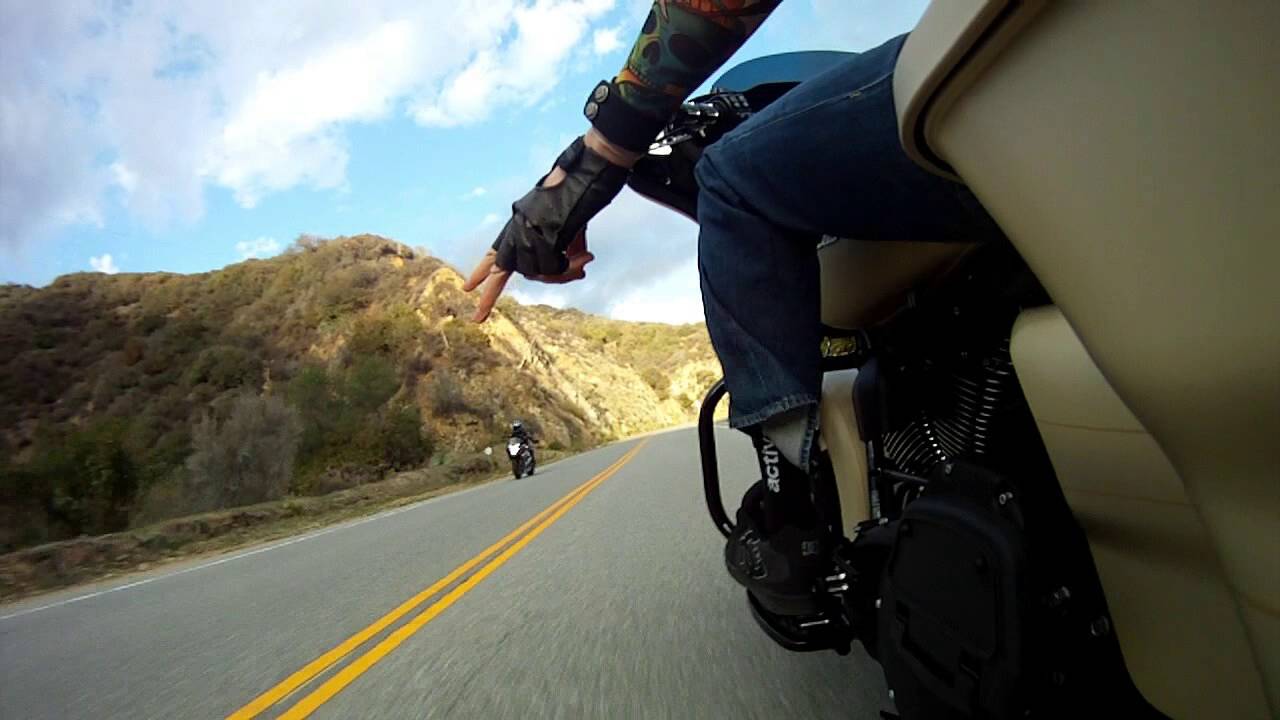
A few years ago there was clickbait circulating on Facebook with a photo like the above and the comment “‘Like’ if you know what this means.” It occurred to me then that the wave, and all it represents for bikers, may not be universally known. I guess if you don’t ride, you wouldn’t know. It’s not like bikers wave to drivers, because they don’t. They wave to other motorcyclists they pass on the road.

I imagine this goes back to the earliest days of motorcycling when motorcycles were less popular, and therefore more rare on the road, than they are today. I imagine in the early 20th Century you could ride for quite a while before you passed another biker, so the wave was like a happy greeting to a rare bird. And I imagine that even today, despite the growth in numbers of motorcycles on the road, there is still a vestige of that sentiment in the wave, an acknowledgment of a kindred spirit and political ally.

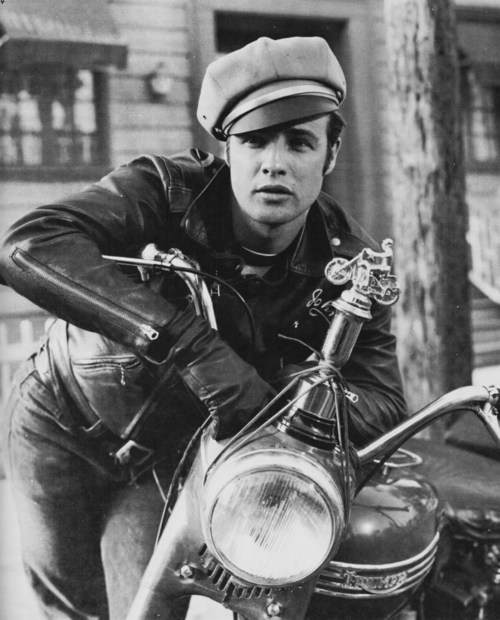
Marlon BrandoBikers have always been on the periphery of society, seen as rebels. It’s not surprising that some of the most iconic images of rebelliousness include a motorcycle. I’m thinking of James Dean in Rebel Without a Cause, or am I confusing that iconic photo of Dean on his bike with Marlon Brando on his in On the Waterfront? In both cases, there was a rebel, a leather jacket, and a motorcycle. It’s clearly this image that the folks at Harley Davidson have exploited as the focus of their hugely successful marketing campaign. And it’s this image that the weekend warriors embrace as they head out to Timmies (or Starbucks) on a Saturday afternoon.

And so part of the meaning of the wave is in solidarity with a set of values and a lifestyle, a “Fuck the man!” attitude that sometimes gets us into trouble with the boys in blue. For this reason, motorcyclists stop to help other motorcyclists when nobody else will. Yeah, when we’re out on the margins, we’ve only got each other for support when in need. The wave is an acknowledgment of that “brotherhood,” although more and more women are riding these days, so we need another term for that pact.

Ironically, if a biker doesn’t wave, chances are he or she is on a Harley. We all know who I’m talking about here. Once in a while, you’ll pass someone who not only doesn’t wave but also doesn’t even look at you. Arms outstretched on the monkey bars, bare arms with tatts covering every inch, half helmet on, they blow past you without even a glance as if to say, “Fuck you! I’m on my Harley.” I guess they’re so on the margin they don’t even want to associate with the rest of us rebels. But I know that real Harley riders wave, and will stop to inquire if I need help, and have, as I have for them. Only a RUB (Rich Urban Biker) is too cool to wave.

The first time I tried to wave I almost got pulled off my bike. Archimedes may have discovered air resistance in the 2nd Century BC, but it took me a near accident to figure out that you can’t just stick your hand out palm open at highway speed unprepared. For that reason, most riders will do a discreet little wave down by their leg near the faring, rarely open-palmed but a few fingers only, to reduce drag. It’s also cooler. You don’t want to be the happy puppy, a little too enthusiastic in your greeting.

But I’ve seen some pretty interesting variations. One guy put his arm out, bent 90 degrees at the elbow like a right turn signal with his fist clenched. “Yeah! Fuck’n eh! Power to ya’ buddy!” it seemed to say. Some guys of course give the peace sign, which is fitting if you’re on a cruiser like a Harley, or any other cruiser, for that matter, where the name of the style of bike itself and ergonomics seem to suggest, “Lay back, smoke a dube, chill out, and don’t worry about anything. World peace is coming.” One guy gave the thumbs up in his wave. With the prevalence of that gesture online today, I think he could do with a more personalized wave, but who am I to say?

The coolest wave I ever saw was in Parc Mauricie during a club ride. Someone came smoking around a tight corner on a sport bike going the other way, easily doing double the speed limit and hanging it over the double line, one hand on the handlebar as he gave us a wave. Not that I’m advocating that kind of riding, but it was pretty cool. The coolest wave I’ve ever done was on a hairpin turn on the Cabot Trail. I wasn’t going twice the speed limit; in fact, I wasn’t going fast at all, but it was that time in the day when you’ve been riding for some time and everything is clicking and you feel really comfortable on the bike. Just then, at the apex of a switchback, just when I was getting on the throttle with the bike leaned over about as much as I’ve ever leaned it, another bike passed me the other way. So I gave him a wave. It was, after all, the Cabot Trail.

But there are times when I’m confused about whether to wave. Last year as I rode down to an Americade rally, the incidence of bikes on the road increased as I approached Lake George, to the point where I just realized, “This is stupid. I’m not waving anymore. We’re in the majority here.” And sometimes I find myself starting to wave to a scooter and catch myself. Do they get included in our club? What about cyclists? Both have two wheels, like motorcycles; but would I be watering the coolness wine in waving to them? Not that I have anything against scooters or bicycles!

Nah. I don’t think I should. They’ve got their own community to wave to, like when I run and wave to other runners going the opposite way. We can’t wave to everyone, despite desiring world peace. Maybe one day there will not be any need for the wave, like John Lennon sang in “Imagine.” Until then, I’ll continue to say hello to any other human being who risks the beauty of living for the thrill of riding.


Montreal Moto Show 2018

GoldWing_Header

It’s no coincidence that the Montreal Moto Show falls at the end of February. The sky has been overcast for months, there’s still a mound of snow 8’ high on your front lawn (and dirty, brownish-grey snow everywhere else) and, despite your magical thinking, wearing your spring jacket without gloves is not bringing any warmer weather. To add insult to injury, potholes begin to emerge on the still half-frozen streets, making driving treacherous. In short, if you’re a motorcyclist, the February blues still have a good grip on you, and any light at the end of the winter tunnel comes from the LED Christmas lights you still haven’t taken down.

So just walking around a showroom with our moto-buddies is therapeutic. It gets you over the hump and into March, which is really just a month away from the month when we can start to get our bikes out. Some people go to the show with chequebook in hand, ready to buy a bike, and the ample salespeople who circulate around the bikes know this. One guy at Honda I spoke with said, when I expressed an interest in the Africa Twin, that he could knock $500 off the price this weekend only. That’s $500 I could put towards the divorce lawyer, I replied, if I came home with a new bike. But it’s still nice to dream, touch the bikes, heck, sit on them and imagine what you would do if you had an extra $13,000 floating around.

This year I went looking for gear, having still to get some body armor to complete my off-road ensemble. But I had in mind also the possibility that my son might be in the market sometime in the not-too-distant future. He’s talked about doing the course this summer, and the Quebec government is dropping the stupid regulation for learners to ride accompanied, so in theory he could be on the road this summer. That’s a thought that brings mixed feelings for me, as any parent can imagine. I’m trying to steer him away from the street and onto the dirt, at least for now. There are so many crappy drivers in Quebec, especially downtown Montreal, where he lives, that unless you have a lot of experience with defensive driving, you’re going inevitably to have an accident, and better to have it in a cage than on a bike. The first time someone drifts into your lane, or starts backing into you, or cuts you off, or turns left in front of you, you’re going to be surprised and incredulous and angry and quite possibly injured, God-forbid seriously. So my preference, if I have any say in the matter, is that he ride off-road with me and on-road in a car. But I digress. We are at the Moto Show considering which bike to get.

He’s always been attracted to naked bikes. Yeah, they’re nice, fun, practical, fast. But they can’t go to Purdue Bay, and an adventure bike is not much different from a naked, right? Both have reduced fairings; both have a small windscreen; both have an upright position; both come in a starter 650cc size; both look really cool to attract the chicks, which is important when you’re 23. Oh yeah, and both get good mileage, because you want that when you’re two-up on a student budget. But first dad gets to look at his dream bike, the Africa Twin. AfricaTwin1I’ve always said I love my little thumper, but if it’s done one thing for me it’s to get the off-road hook sunk deep. My first two years of riding have been a slow gravitation toward off-roading simply because the challenge and possibilities are endless. It’s also pretty exhilarating when you slide out the back end going around a corner on a gravel road, or charge up a rocky hill climb, or feel the bike slide around beneath you through some mud. The Africa Twin is the off-roader’s adventure bike. I sat on the Triumph Tiger 1200 and you know what? I wouldn’t want to be taking that beast off-road. Tiger_1200I imagine the BMW 1200 is the same. There’s just no room for error with all the weight. And don’t try to tell me you don’t feel the weight because it’s so nicely balanced. The first time you and the bike get kicked sideways off a large rock that rolls away from under you, you’ll feel the weight, all 580 lbs. of it as you lift it up. The Africa Twin, on the other hand, is 507 lbs., a full 73 lbs. lighter thanks to it’s smaller 999cc engine—more than enough to get you to the Timmies of your choice. But where the Africa Twin really shows its off-road colours is with the wheel size: 21” front and 18” rear. Compare that to 19” front and 17” rear in the R1200GSA and you know why the ground clearance is 9.8” compared to 8.5”. As far as I’m concerned, the 12000GSA is the bike for long adventures in remote areas, but I wouldn’t want to take it anywhere more remote than a dirt road. The 800GS is the true BMW adventure bike.f800GS

But back to the Africa Twin for a moment. The graphics on it will attract a few chicks to dad, too. While I’m intrigued by the dual-clutch system and have heard it significantly improves your ability (since you don’t have to think about gearing and can devote you’re entire attention to other stuff), once I sat on it and tried to imagine that left lever as anything but a clutch lever, I knew I could never do it. Besides, I’ve read, as good as the dual-clutch system is, it falters in certain scenarios. And then there’s the traditional argument that half the fun is controlling the power transmission from the engine. I still prefer to drive the snot out of my wife’s old manual Corolla than cruise in my less-old automatic Saturn.

While we were at Honda, we checked out the 250 Rally. 250RallyOnly 250cc., you say? This easily does 120 km/hr. on the highway and tops out at 140, but if you’re riding a 250 you probably aren’t riding the highway anyway. Only as much as necessary. You can put a tail rack on this baby, some soft panniers, and hit the Trans-Am Trail, or The Great Trail in Canada, for that matter. 250Rally_backThis little bike is a dirt-bike on steroids, capable of adventure too if you’re not in a hurry. And at only 235 lbs., it would be a fun and safe starter bike. The other option at Honda is the “adventure styled” CB500X. CB500XWith cast wheels and a lowish ground clearance, this is clearly a street bike. But with the Rally-Raid Products additions, including larger, spoked wheels and a new rear shock with an extra 2” of travel and adjustable damping, you can create a kind of “Africa Twin Lite.” The final option if you’re interested in a small displacement adventure bike from Honda is the XR650L. I’ve just discovered this bike online at Cycle World, but unfortunately they didn’t have any at the show.

Three other bikes they didn’t have, much to my disappointment, where the new BMW 750GS, the 850GS, and the new for 2018 Royal Enfield Himalayan. The new Beamers get an extra 50cc, the old 800 clearly feeling the market pinch of the Africa Twin. They’ve both been completely redesigned with the chain on the other side and a repositioning of the gas tank, although one of the things I love about my 650GS is the low centre of gravity with the tank under the seat. The new models move it to the traditional location in the hump. I guess they needed the room down low for that extra 50cc. I also didn’t see the 310GS, which would have been a contender. Come on BMW; get your sh*t together! The 310 has been out for over a year and the GS was supposed to follow a few months later. But then again, here in Canada, we always get treated second to our big brother south of the 49th parallel.

What did impress me at BMW is the R nineT. I remember the first time I saw one in the showroom on my way to the parts counter. It literally stopped me in my tracks. I’ve never been much interested in poser bikes, but if I were going to allow myself one, this would be it. BMW nailed the styling on this bike, especially the Scrambler with the gunmetal tank and brown leather saddle. RnineT_ScramblerBut then the silver, brushed metal tank is pretty cool too, harkening back to those old Norton tanks. RnineT_pureOr the one with black and gold highlights. RnineTBut my favourite, if we are posing, is the Racer with the retro colours and bubble cockpit. This would definitely turn some heads.


The cafe racer craze is still alive and well, according to BMW. Speaking of poser bikes, don’t get me started on the Triumph Bobber. BobberIt tries too hard. The whole secret of a poser bike is getting one that looks great but not too great, if you know what I mean. It’s a sign of desperation. Perhaps that’s why I’ve never been drawn to Harley Davidson, and you’ll notice there are no photos here of them. The only photos I took at the Harley display was of the entire display, complete with rock music, large-screen video, lots of leather, and Harley chicks in skimpy skirts. They are clearly selling a lifestyle. It’s a sight to behold. But if I were forced to chose another bike, less practical than my adventure bike, but that looks great, I’d be more inclined to go with something like the Triumph T100 or the Street Twin. Classic, classy, and modern, all in one package. Triumph_T100Triumph should be applauded for bringing back these classic bikes but seamlessly incorporating all the benefits of modern technology. And they get it right with the analog display, round headlight, and fork gaiters.

Next we headed over to Kawasaki and looked at the iconic KLR. If there’s one bike that epitomizes the starter adventure market it’s the KLR. Having said that, I’ll add that Bill Dutcher, founder of Americade and 50-year veteran of riding, was on a KLR when he lead our group at the Dirt Daze Rally last June. Okay, he’d geared it up, but still found it plenty capable for his needs, and he is no slow-poke, as I discovered. Gabriel sat on the KLR and immediately realized why it has been so popular over many years. KLRThe ergonomics are perfect and the seat is wide and comfy. Unlike BMW, Kawasaki have designed their way out of the comfort saddle aftermarket, to their credit. They know their clientele. Then he looked at the price: a little over $7,000. Compare that to the “comparable” 750GS at almost $11,000. That’s about $4,000 more, a lot of money when you are a student. Okay, the 310R, wherever it is, is $6,450, but has half the power and cast rather than spoke wheels. I’d take the KLR any day, but God-forbid not that ugly Camo version. What were they thinking? Are we in Maine? The only serious consideration with the KLR is the charging system, which is weak. So put some of that leftover 4G’s into a relay and be cognizant of how many accessories you add.

While there, we had to cruise past the H2R because, well, it’s the H2R.


I’m not going to own this beast in this lifetime, not if I want to live a little longer, but one sure can marvel at the aesthetics of speed. Speaking of which, then we wandered back over to BMW to compare the track-only HP4. HP4Designed by a small, very specialized team, the bike is BMW’s pure-bred racer, and here was one of only 750 made. No wonder we were not allowed to sit on it. Back down on earth, we looped back around to Honda to look at the new Gold Wing.


The Gold Wing has been the, well, gold-standard superslab touring bike for a long time, but some of the guys in my club have said Honda has become complacent and the market has dwindled. The 2018 model is a massive redesign and meant to address that. But Honda wanted to get this right, so it’s been working on this for over four years instead of the usual two and a half year timeframe for new motorcycles at Honda. This is a slimmer, trimmer, lighter, and faster Gold Wing with a radically new front suspension and optional 7-speed DCT tranny. Don’t ask me about the new suspension because, even after reading about it in the latest Cycle World, I still can’t visualize it. All I know is that it involves an A-frame that pivots outward instead of the telescopic forks that compress downward. Apparently it’s silky smooth, even smoother, if that is possible, than a “normal” luxury touring bike. It also apparently prevents the front diving in braking that is found with telescopic suspension; instead, the front wheel travels perfectly up and down over bumps.

The engine and the rider have moved forward about an inch and a half, and since the rider is now closer to the fairing, the fairing can be smaller. According to Honda, the new fairing produces 11 percent less drag, which is significant because from what I know about the Gold Wing, its liability is that it’s a parachute in high winds. A buddy of mine got hit with a cross wind on his and was pushed all the way across the road onto the opposite shoulder. In fact, if there hadn’t by chance been a lookout there to pull off to, he would have been in trouble. His guardian angel was looking out for him that day. And less drag means more fuel efficiency, a full 20% better. Transmission is tweaked with a higher top-gear ratio enabling 2,500 rpm at 75 mph. By comparison, my thumper hits 5,500 rpm at that speed, or over twice the rpm’s. Of course I’m comparing apples and oranges, but it’s clear that the new Gold Wing is meant to traverse large distances comfortably. To Honda’s credit, the engine isn’t bigger, which bucks the trend. Why do all upgrades have to involve more power? They focused instead on rideability, producing a luxury tourer that, according to reviews, is flickable and fun. And yes, borrowing from it’s adventure bike market, Honda has offered a 7-speed dual-clutch option for a true luxury experience.

Finally, we headed over to the custom bikes. Here are a few favourites. customs

There was also an R90, beautifully restored. I love these old bikes and can see myself one day doing some restoration, although I have a lot to learn first.R90

And then there was this thing which, although not my cup of tea (see above re. trying too hard), I have to admit was pretty impressive in its craftsmanship.


We also checked out the Slingshot and a Timbersled, or Timbersled-inspired accessory.


Canadian winters are long, and it sure would be fun to be able to ride through those months. I don’t know if I would bother while living in Montreal. I’d have to trailer the bike to the mountains. But I can see perhaps getting one of these when I retire to the BC interior at the base of The Rockies. Yeah, dirt bike in the summer, Timbersled in the winter. No more February blues.

What bike are you excited about this year? What would you get if you traded up?

The season is just around the corner and I’ll be posting again more frequently, so click Follow if you’re interested in motorcycles, off-roading, adventure touring, gear, and other riding-related stuff.

The Wish List, 2017

santa_motoIt’s that time of the year again, when we get to dream big with empty wallets. In an ideal world, one where either Santa exists or bank accounts are bottomless, what would you get to prepare for next year’s riding season? Here’s what I’ve been hankering for.

Let me say at outset that there are already a few goodies either arrived or en route for my BMW f650GS. I busted my rad in a stupid tip-over in sand so figure I should have listened to my intuition and bought those upper crash bars earlier in the season. I’ve looked at them all and, given that I’ve already got lower engine protection with my BMW engine guard (the cage), the only ones that would fit are by Touratech or by Holan. TT have only one anchor point at the front, so the bar is kind of floating and kind of useless. Fortunately, Holan make one that anchor front and back, and their customer service is excellent. After a lot of back and forth, I managed to negotiate a slow, cheaper shipping option from Poland, where they are made. Holan_bar

It’s those upper two bars that are currently somewhere over the Atlantic. They fix onto the centre spine and at the back on the frame by the preload adjuster. They will protect the fragile radiator and the faring without getting in the way of my leg position.

The other thing I got is an inline fuel filter. My bike’s filter is supposed to be changed every 40,000 kilometres, but since the filter and the fuel regulator are one unit, it costs over $200 to change. So I’m adding a Golan (no connection to Holan) Inline Peak Fuel Filter ahead of the OEM filter, which should mean I never have to change the expensive unit.

golan_peak_flow_mini_fuel_filter_750x750

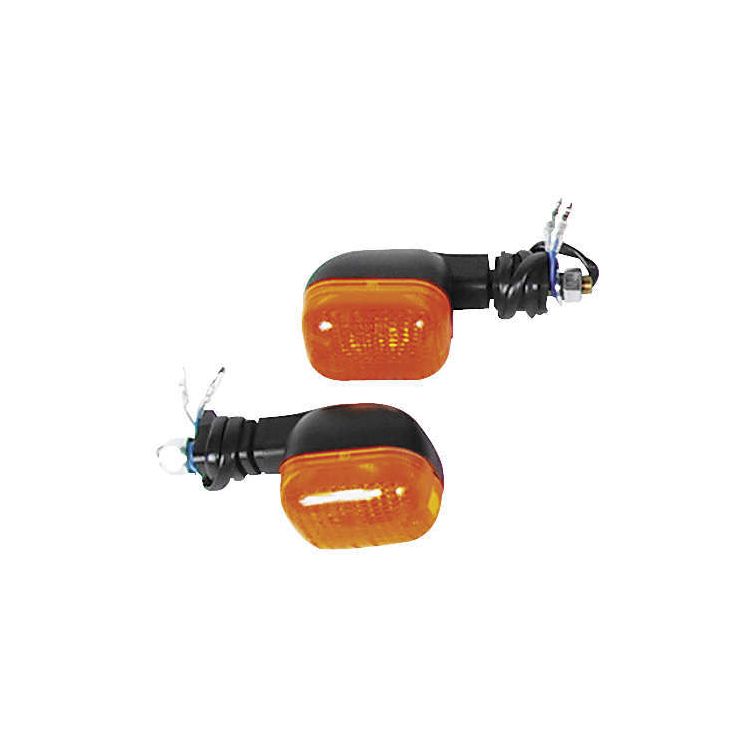
Mine is the mini on the far right.  It’s not available in Canada so I had to order from Revzilla, and whenever I do that, I add a little something else to make the shipping worthwhile. In this case, it was a pair of Baja Designs turn signals. flashers

Seems whenever I drop the bike, those front flashers get the worst of it, and I’ve already glued them back together a few times, but they still look a little worse for wear. The Baja signals have a flexible stalk, which makes a lot of sense. And being designed for the Baja Rally, they are built tough. They look the same as OEM, but should stand up better when I and the bike do not.

I’m also building a more comprehensive travel took kit based on a great thread at ADVRider.com. I won’t bore you will every item, but just say I’m gathering sufficient tools to fix just about anything on my bike in the field. I figure if I’m going to ride to remote regions, I have to be able to fix pretty much anything that might break. The tools actually is the easy part; the tricky bit is deciding what spare parts to bring along. You can’t bring a spare of everything!

tire-wrenchSo I’ve already bought this wheel lug wrench/tire iron in one. It’s light enough to carry everywhere but is good to 90 ft/lbs. T-handles, steel-reinforced epoxy putty, a tow strap, etc. — I love tools!

chain kit

The one item that was a little out of my budget so went on the wish list is the Motion Pro Light Weight Chain Breaker and Chain Press Tool.

When your bike is chain-driven, like I said, you have to be ready for anything that can happen in the bush.

Okay, tools aside, I need a 50/50 tire on the front. I’m still riding a Metzler Tourance, which is fine for dirt roads but not for too much more. I’ll get and mount Heidenau K60 k60-scout-dual-sport-front-tireScout on the front to match the back, and this will allow me to GO ANYWHERE! Yes, I’m that confident that once I get this tire, no more tip-overs in mud and sand. Nature in all its awesome power and trickery will bow down before me and my machine.

Next up is some body armour. I know, I know: what happened to Nature bowing. Well, I may win the war, but that’s not to say the trail won’t win a few battles along the way. My new Klim Tourance jacket that I bought for off-roading is just a shell and comes with no padding. That suited me perfectly because I decided I’d rather get full-on armour for those spills, something like the Leat Body Protector, than the wimpy pads that are in most motorcycle jackets. Leat Body Protector

The nice thing about this option is you can wear it under a motorcycling jersey on those really hot days. That should complete my off-road gear necessities. I now have boots, Klim Dakar pants, the Tourance jacket, a LS2 Pioneer helmet, goggles, and gloves.

Montana

The other fairly big ticket item I need is a good, dedicated motorcyle GPS, or as they call them in Europe, a navsat. I’ve been making do with a combination of Google Maps on my phone while in Canada and an old car (i.e. non-waterproof) GPS while in The States, but neither is perfect. I’ve tried apps but none work reliably, and lord knows, navigation is an important part of any ride. The one on my wish list is the Garmin Montana, a unit designed specifically for off-road use. 

As you can see, it includes topographical maps, a glove-friendly colour touchscreen, access to both GPS and Glonass satellite fixing, HD camera (with the capability of taking geotagged pictures), a smartcard port, Basecamp, geocaching, wireless capability . . . it’s got it all and is the GPS of choice by most adv riders. It’s also got a price tag to match these capabilities, so I’m going to have to be extra good for Santa to spring for this baby.

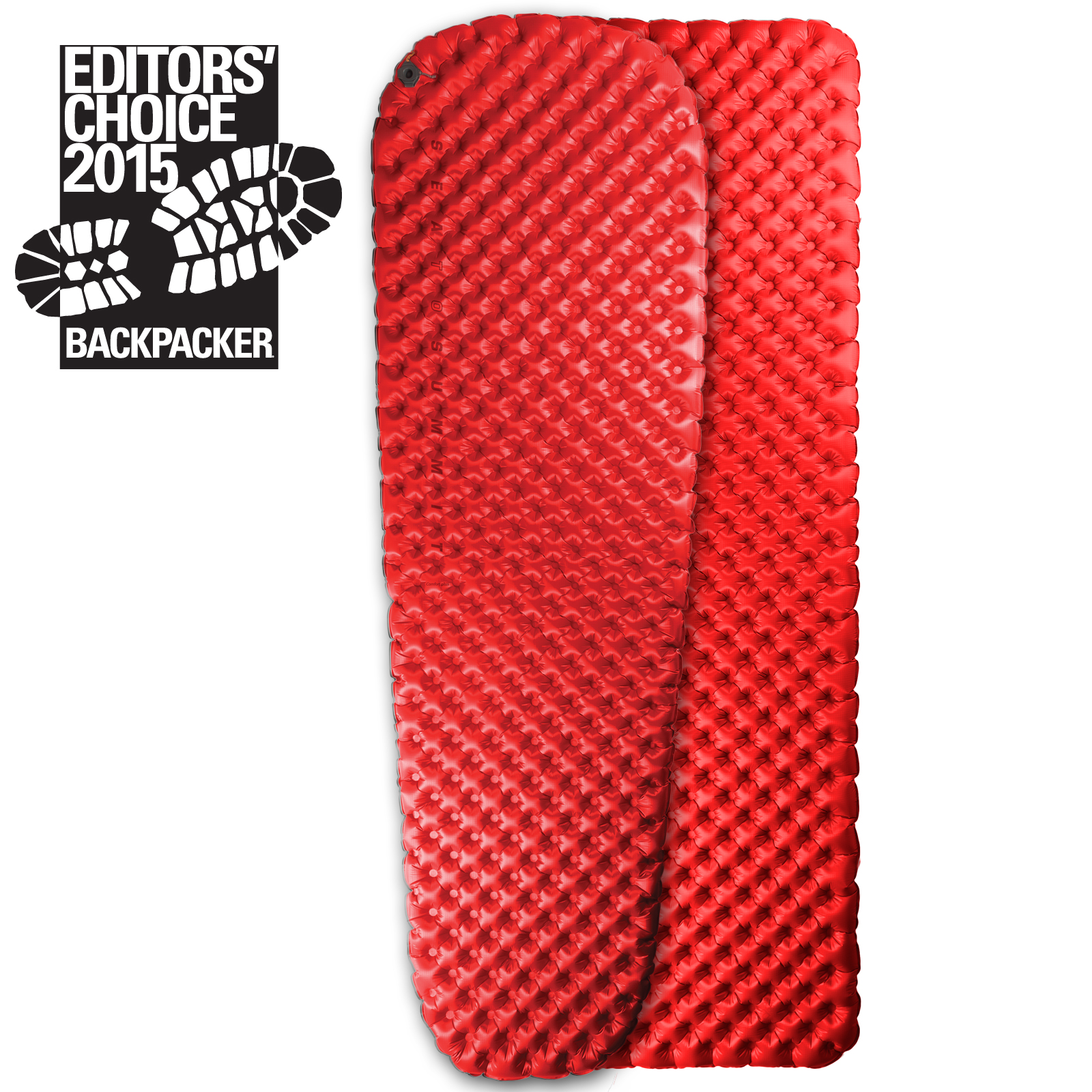
seatosummitAnd really, that’s about “all” I need. One luxury item is a Sea to Summit mattress, something that was on my wish list last year too. Yeah, my Thermarest is pretty good and at the end of a long, hot day of riding, a bed of nails feels pretty good. But eventually, for the long tours, this premium outdoor mattress would be pretty nice. This insulated mattress has a dual layer construction, allowing you to inflate the top layer to comfort and the bottom layer to even out uneven ground. That jagged tooth of a rock under back will feel like a pea, and the whole thing weighs less than 1 pound 12 ounces and packs up to 5″ x 9″. And as I’ve said before, when you’re roughing it and saving money on accommodation costs, why not have the best camping mattress money can buy?

So that’s my list: some tools, a new front tire, a better GPS, and some body protection. But the main thing I wish for is another year of health and safe riding. That is all that anyone can ask for, and with God’s grace, receive if one is so lucky.

Got a few items on your wish list? Don’t be shy. Stick them in a comment and maybe there’ll be a few things there we haven’t heard of.

Merry Christmas to you and yours and safe riding in 2018.


Setting Goals

GOAL-SETTING

It’s that time of the year again, when the bike goes under the cover for the winter. For me, this moment is like New Year’s Eve,  the end of one period of time and the start of another. I’m talking about the motorcycling season here in Canada but it’s comparable to, perhaps for bikers more significant than, the calendar year. And so I find myself reflecting back on the season, assessing whether I achieved my goals, and setting new ones for 2018.

Do you set goals for your riding? For some, it might be simply to get out more. For others (or the delusional), it might be to win the Men’s Senior TT, the Paris-Dakar rally, or MotoGP. A goal can be a particular destination or the decision to be a better rider, correcting some bad habits that have crept into your riding. If you ride recreationally in a club, a successful season might be determined by the number of new friends you have, or how much money you’ve raised for certain charities. And sometimes the goals can be physical, like trading up your bike or getting some needed gear or accessories.

I’m a very goal-oriented person, not just with my riding but with pretty much everything I do. I’m not obsessed with achieving my goals to the point of taking the fun out of recreation, and I’d hate to be judged as taking myself too seriously. But I hate doing things half-assed, and I like to have a clear idea of where I’m going. Goals help me with both. They push me to do a particular skill to the best of my ability and they help prevent me from directing my time and energy aimlessly.

Much of what I’ve learned about goal-setting comes from the field of sports psychology, but it’s applicable to any activity, including career goals. If you’re new to goal setting, here’s a primer on setting effective goals. We use the acronym SMART.

Specific: Make sure your goals are clearly defined. Don’t just say “I’d like to get out on the bike more,” but “I’d like to ride at least once a week.” While “I’d like to improve my riding” is an admirable goal, “I’m going to complete this specific advanced skills course” is a more effective one. Make your destination specific and you’ll avoid aimless riding.

Measurable: How will you know if you’ve achieved your goal? If you can’t measure your success, you’ll never know if you’ve achieved it. This goes hand-in-hand with having specific rather than vague goals. You need a clear target to know if you’ve hit it. More importantly, you need to know how close you are to achieving it. Some people say the M stands for Motivational because having a measurable goal helps you stay motivated. Improving my fitness is not a measurable goal; running 5 K in under 25 minutes is.

Achievable: You want your goals to challenge you but be within your reach. You’re not going to go from beginner to expert in one year, from a learner’s permit to the Paris-Dakar in one season. If your goals are too easy, you’ll get an inflated ego and over-confident, and if they’re too hard, you’ll lose your motivation. This is perhaps the most difficult part of goal-setting because it requires you to be honest with yourself about your current abilities and your potential.

Reasonable: Even if a goal is achievable, it doesn’t necessarily follow that it’s reasonable. I could quit my job tomorrow and ride to Tierra del Fuego if I wanted to, but it wouldn’t be the best thing for my finances or my marriage. Setting reasonable goals means considering not only capability but also common sense. My wife is very understanding and supportive of my endeavours, but finances and summer vacation time are limited, so I have to be reasonable about the commitments I make. A reasonable goal is one that fits in nicely with the rest of your life.

Time-Related: You have to set deadlines for when you’re supposed to have achieved your goals. As with defining your goals, be clear and specific—not “sometime in the near future” but “by the end of next season.” And you should have long-term, midterm, and short-term goals. For your long-term goals, think big. (Hey, dreaming is free!) You’ve got lots of time to achieve them. Midterm goals should be directly related to achieving the long-term goals, and similarly with short-term goals. You’re creating the stepping stones that will get you to your ultimate dream, breaking what seems now like an overwhelming goal down into manageable and achievable ones. Midterm goals keep you on course and motivated; short-term goals help you act today toward that ultimate prize. And while all this might seem a bit fixated on that final destination, keep in mind that, like riding, it’s the journey that matters most, not the arrival. Enjoy the process, or should I say progress?

Some books also talk about the importance of making your goals public. “The more people who are aware of your goals, the more people who will be there to support you and hold you accountable along the way” (Sports Psychology for Dummies 11). So . . . here are my goals for the 2017 and 2018 seasons.

In 2017, I decided to focus on developing off-road skills that would enable me to ride to some places not accessible otherwise. Toward that end, I had gear to buy, accessories to add, and courses to complete.

Here were my goals for 2017:

  • To buy off-road gear. This meant boots, pants, jacket, and helmet. I achieved this goal, and thank God it’s done because my pocketbook and marriage would not survive another season of expenses like this one.
  • To make my bike off-road ready. I added some crash bars, lowered the windscreen, added off-road pegs, and changed to a 50/50 tire when the back tire was finished.
  • To take a full-day class at S.M.A.R.T. Riding Adventures in Barrie. I accomplished that. I also took a 2-hour beginner class with Jimmy Lewis as bonus. These two activities did more toward improving my riding than anything else I did this summer.
  • To do a long solo tour. As you know if you’ve been following these blogs, I accomplished this with my ride to Cape Breton. My original goal of Blanc-Sablon was not reasonable, and I’m glad I changed it to something where the predominant surface is asphalt and help is relatively near in case of an emergency.
  • To do a lot of off-roading practice. I did some, but I broke my radiator and cut my season short by about a month. I’d say that goal was not accomplished but, overall, I had a successful season.

My goals for 2018:

  • To finish making my bike off-road ready. I have some upper crash bars (currently in the mail from Poland) to add and will swap the Tourance front tire with a matching K60 Scout.
  • To join an off-road club named Moto Trail Aventure, the largest off-road club in Quebec, and participate in as many of their rallies as possible. (This will have the added benefit of improving my French since it seems this club, unlike the WIMC, is predominantly French.)
  • To buy an annual membership to FQMHR (Fédération Québécoise des Motos Hors Route), which gains me access to a large network of trails. I’ll be doing most of my riding on these trails to gain the practice missed this summer. The idea is to reinforce what I learned this summer and develop muscle memory.
  • To participate in the 2018 La Classique, an off-road rally held each spring here in Quebec. I’ll probably start with the beginner rally.
  • To return to DirtDaze Adventure Bike Rally at Lake Luzerne, NY.
  • To lead at least one or two rides again with my street club. I already have one destination in mind—a large collection of vintage bikes in Maine.
  • And another solo tour. I’ve discovered I love solo touring. I loved every minute of my tour through NS this summer and would love to repeat again next summer. But somewhere new. I very well may be going back to the Maritimes in a car with my wife next summer, so I’m not sure what I’ll be able to afford to do on the bike, but I can’t imagine a summer without some kind of a trip. It really depends on how things shape up. Like I said, most of my riding next summer will be on Quebec trails, so whatever trip I take will be a bonus. Stay tuned.

My long-term goals? Okay, since we’re on the topic, I have a few big ones, all tours.

  • To ride across Canada. This has been a goal of mine since I was a teenager. Once I hit the west coast, I could go north to Deadhorse or south down the Pacific Coast Highway to Baja, then across to New Orleans and up through the Blue Ridge Mountains.
  • Another destination is South America. I’m not sure if I’d ride through Mexico because I’ve heard it’s very dangerous or ship my bike partway.
  • Okay, and since we’re dreaming big, I’d love to do some riding in Africa. These big trips might have to wait for my retirement, but all the off-road riding I’m doing now is toward being able to handle these terrains.

So what are your goals for next year? Make them public and bring yourself a step closer to realizing them.

I’ll be going into my usual winter hiatus with the blogs, but will post when inspiration strikes.

My Favourite Motovlogs

I didn’t know what a vlog was before I started riding. As a writer, I was more interested in blogs, and YouTube was a place where you could see your dear friend’s child act in the school play, a compilation of the sexiest ice-bucket challenges, or the footy game you missed last weekend (if you were willing to follow the sketchy link). Then GoPro entered the market and it changed everything. Suddenly you could get a rider’s-eye view in HD with sound that didn’t seem like the guy was riding underwater, or through Hurricane Katrina, or both. Companies also woke up to the idea of advertising for free under the guise of providing product reviews, and a generation of unemployed video editors found work. The video blog, or vlog, was born.

Perhaps I’m already thinking of those long winter months when the bike is up on a jack in the shed with a 40 watt bulb pointed at it. If you’re like me, product reviews midwinter is like a balm to a wind-chapped itch to ride, and a helmet-cam is the closest thing there is to throwing a leg over said motorcycle stored in the shed. I spend a lot of time during the winter on YouTube, learning stuff, buying stuff, or planning on buying stuff once spring hits. In prep for those regrettably not too distant months ahead, here are my favourite motorcycle vlogs and YouTube channels. Enjoy!

Because I subscribe to the free (i.e. cheap) version of WordPress, I can’t embed videos. You’ll have to click on each hyperlink to have a sample vlog open in a separate tab.

Weekly Rides With Rueben was my entrance into not only vlogging but also motorcyling in general. Before I even had my full licence, I went searching one day for tips for newbies, and after a few scattered hits, I stumbled upon Reuben’s vlogs. Reuben (I don’t know his last name) worked for Competition Accessories in North Carolina, and they decided his vlogs would be a good way to generate traffic to the store, I guess. A new video was uploaded every Wednesday and together they were, as he says at the beginning of each video, “a random collection of motorcycle adventures, life on two wheels, and product reviews.” If that sounds eerily familiar, I guess Reuben’s videos heavily influenced my thinking about this blog. Topics covered included riding in the rain, riding at night, avoiding obstacles, and preparing for fall riding, for examples. Then his store started partnering with a nearby dealership and he started doing bike reviews. Reuben also did product reviews from the store in front of the camera, but I think he was more comfortable behind the camera. He never seemed at a loss for words, and was articulate and knowledgeable. I learnt a lot from Reuben over his 74 posts. The posts abruptly stopped without notice because, as rumour has it, the store was bought out. A new guy from another location took over, but it was never the same. Hope you’re doing well, Reuben!

The ancient Roman poet Horace wrote that poetry should both “delight and instruct.” The same could be said for a good vlog, so while I might find it “delightful” to watch Rosie Gabrielle ride through Oman or Ottawa, if I want to learn how to ride, I go where the experienced riders are. Sorry Rosie! Zack and Ari, co-editors at Motorcyclist Magazine, have been riding together for a long time! (Like, since childhood.) They are good riders. In fact, I’ve watched Ari break a track record on a KTM 390, and Zack is no slouch either. Just watch his MC Commute, where he rides a different bike to work each day and gives a review en route. Their show On Two Wheels (again, a rip off from yours truly) is a lot of fun with their humour keeping things light but rarely stupid, and always the bikes are front and centre. One of my favourite episodes is the one on the BMW GS, yeah, the bike that opened up the adventure touring market and spawned my f650GS. But even more than On Two Wheels, I love MC Garage, where Ari walks us through some simple maintenance of our bikes. I have a lot of respect for people who are both good riders and good mechanics. I’ve used some of Ari’s tips to fix not only my bike but also my car. I think Horace would agree that instruction for a hungry audience is also a delight.

If Ari and Zack are good riders, Lyndon Poskitt is a great rider! How great? Dakar great. Podium finisher in Baja great. And he knows his way around a bike too. In fact, he built his bike from the frame up. In Races to Places, Lyndon travels around the world, stopping at various rally races like the Mongolian Rally, The Baja Rally, and of course the Dakar, to try his luck and skill. His key sponsor, Adventure Spec, put together the vlogs of his adventures. Production quality is high, which is especially impressive since Lyndon does all his own filming. I’ve done enough adventure riding to know that when times get tough, the last thing you want to do is stop for a photo (or cutaway, or take 20 minutes to set up a 20 second shot), but Lyndon is committed loyally to his project and followers. I’ve also learnt a lot about different countries vicariously from Lyndon. I’ve followed him across eastern Europe, down into Asia, and now over to Australia. I’ve really been enjoying this series, now starting its 7th season. I’m trying to savour them because I’m almost entirely caught up and will soon have to wait for each new episode.

If you are more into street riding, or rather street racing, you want to check out Lockk9 TT Racing’s channel. Nobody does video editing as well as this guy. I can’t get enough of this video: great editing, great music, not bad riding. It’s a shot of adrenaline on a cold mid-winter morning to get you out the door and to your job.

For product reviews, I go to two sources: Fort Nine and Revzilla. I love Fort Nine because the reviews are thorough and I know that whatever RyanF9 talks about I can get from this Canadian-based online store without the hassle of cross-border issues. I bought my 50/50 tire based on his rave review of the K60 Scout (i.e. “I’m not even going to say this is my favourite pick of the video because the K60 is my favourite tire on the motorcycling market right now”). He’s knowledgeable and funny, and tells it like he sees it, which is not always the case with product reviews. Usually they end up being positive, pointing out only the merits of a certain product. In fact, many so-called “reviews” are really just product descriptions, with very little if any evaluative comments thrown in. Ryan also does pretty good vlogs. In his vlog about how to legally ride off road in Canada (his split infinitive, not mine), I found out about Chemin Scotch north of Hawksbury, and checked it out, and had a blast. In a recent vlog, he talks about having a degree in Art History (Art History!) which really is evidence that what you study in school doesn’t have to be what you do in life. And no one does bike reviews like Fort Nine. They are creative works of art. Apparently Ryan writes the scripts and some guy named Steve handles the editing. Just check out this review for example, in rhyme, of the new BMW 310R. I’m so old I can’t say exactly what he’s parodying, but I think it’s hip hop videos. In another, he says he’s heading back west to BC to start a new chapter with Fort Nine. I hope that includes more vlogs.

For more in-depth product reviews, I go to Revzilla. I don’t know what Anthony drinks in the mornings but I know I want some. A 19′ review of the Klim Badlands jacket? Really? He strips that bad boy down inside and out. Meanwhile, world population has increased by 4,750 by the time he’s done. It’s thorough! How much do Klim pay him to represent their product? How long does it take him to learn all the details of that jacket? Because of the currency conversion and cross border brokerage (motorcycle gear is duty-free, however), Revzilla is not always the cheapest option for me, but I never buy a product without checking out the Revzilla review and user reviews there. Thanks guys! And just to show my appreciation, sometimes I do buy there and have it shipped to Burlington and ride down to pick it up. I especially like their Gear Guides, where they compare a number of select products in the same review. You can salivate all winter long, and drop Christmas hints to loved ones by sharing, or create a wish list of your own for when you’re stinking rich.

I’ve saved the best for last, but I’m going to cheat because it’s not even a vlog. It’s a podcast, but I’m including it because I’ve probably learnt more about the adventure touring experience from Adventure Rider Radio than from any other single source. Yeah, the show caters to adventure riders, but host Jim Martin is always careful not to exclude other types of riders and riding, and much of the information is relevant to motorcycling in general. I’ve learnt everything from the esoteric (e.g. the nitty gritty of motorcycle chains) to the mundane (how to prepare tasty meals in camp, or first aid). One of my favourite things to do during the winter is run a hot bath and listen to ARR on my iPad while I soak away the chills. I’m always keen to learn new skills, especially if it’s from the comfort of a hot bath, and one of my favourite segments is the rider skills segment with Bret Tkacs of PSSOR. The show functions on a donation and sponsor basis and it’s pretty impressive that Jim and his wife churn out a show every week. I’ve been meaning to send a token of my appreciation, and will, because while the show is obviously a labour of love, these kinds of shows don’t survive if not supported by those who enjoy and profit from them.

There are a few others I cruise past from time to time, but I’ll stop there. Drop a comment about your favourite motovlog or channel and I’ll check it out. Or let me know what you think of some of these. Happy fall riding, while it lasts.