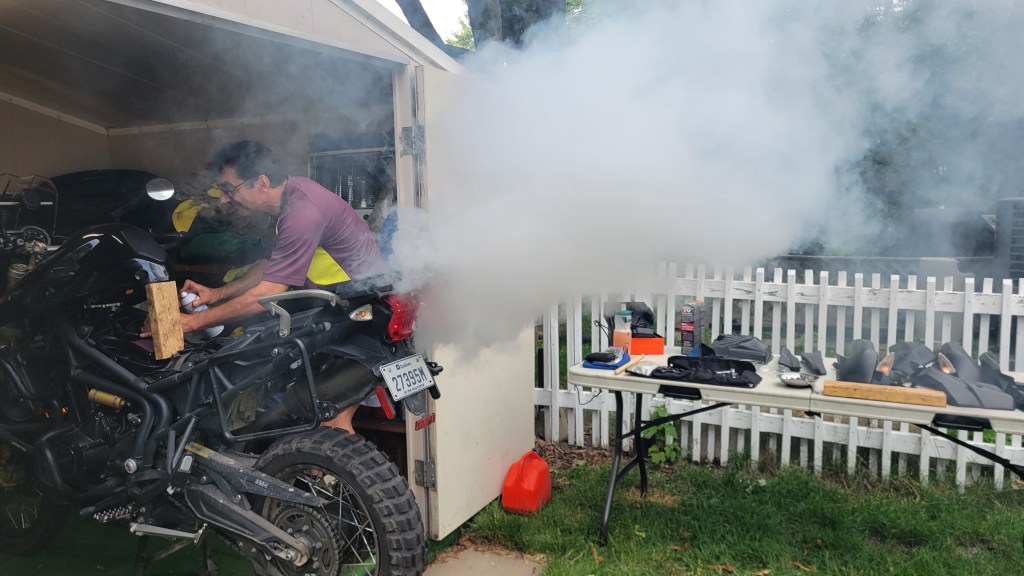
I used Seafoam to reduce the carbon build-up on my intake valves.
Last year when I had my trouble in the bush, I noticed a significant amount of carbon build-up inside the throttle bodies of my Triumph Tiger 800XC. My buddy and I were troubleshooting why the bike wouldn’t start, and we thought there might be water in the engine. Peering down into the throttle bodies, we could see something glistening inside. Was it water? We even dipped down there twisted pieces of paper to see if they came up wet. But in the end, with the use of a camera, we determined that what was sparkling was carbon.
This was mildly alarming. My BMW 650GS had absolutely no carbon build-up, and I hadn’t noticed it earlier when working on the Tiger. It prompted me to do my overdue valve adjustment, and as some of you know, all my exhaust valves were tight. I don’t know if that led to the carbon build-up, or how normal such build-up is in an engine. I’d heard of the Seafoam heat soak treatment and, being a little housebound at the moment and looking for a project with the bike, I decided to give it a try.
Preparation
Needless to say, the first thing you have to do is get down to the throttle bodies. For me, that means removing a lot of body panels, lifting the gas tank, and removing the airbox cover. You’ll need to keep all sensors plugged in or you’ll elicit an error code in the ECU, so that might involve unscrewing the sensor rather than unplugging it. If you have any vacuum hoses off, you’ll need to plug them with something of similar diameter.

If you haven’t already done so, you’ll need to buy two cans of Seafoam—one of the SF-16 Motor Treatment and one of the SS-14 Cleaner and Lube Spray. (The latter comes with a tube applicator.)
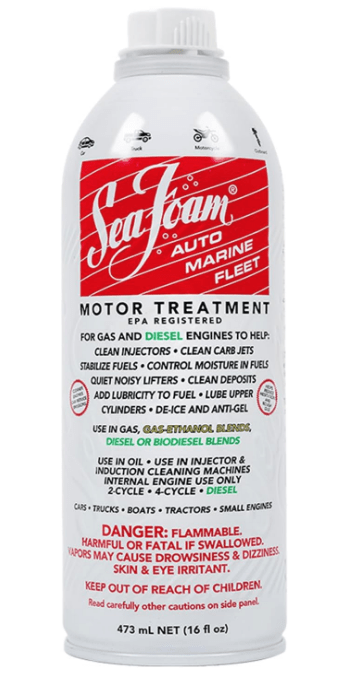

Now you are ready to start the process.
Application
Start by adding the full can of Motor Treatment into your fuel tank.
Start your bike and let it warm up to operating temperature. I waited until I heard my fan kick in so I knew it was good and hot.
Bring your engine up an extra 1000 rpm beyond its normal idle and start spraying the Seafoam Top Engine Cleaner into the throttle bodies. You might need a helper to do this or, as I did, you could use a throttle lock to hold the engine just above idle. For a car, you would insert the tube where the air intake boot attaches to the throttle body, but because my bike doesn’t have a boot, I sprayed directly into each throttle body, alternating every 15-20 seconds and trying to spray an even amount into each. It’s normal to hear the rpm drop slightly as you spray, and you will see a plume of white smoke come out the exhaust. Be sure to do this in a well ventilated area!

When the can is completely empty, turn off the bike and let the Seafoam heat soak for 10-15 minutes. Then restart your engine and give it a few good revs. You should see some white smoke still come out. When you get the bike all buttoned up again, go for a “spirited” ride (i.e. give it the ol’ Italian tune-up). The motor treatment you put in the tank will continue to remove loosened carbon and clean the injectors.
Conclusion
So by now you must be wondering if it did anything. Here are some before and after shots using my scope.


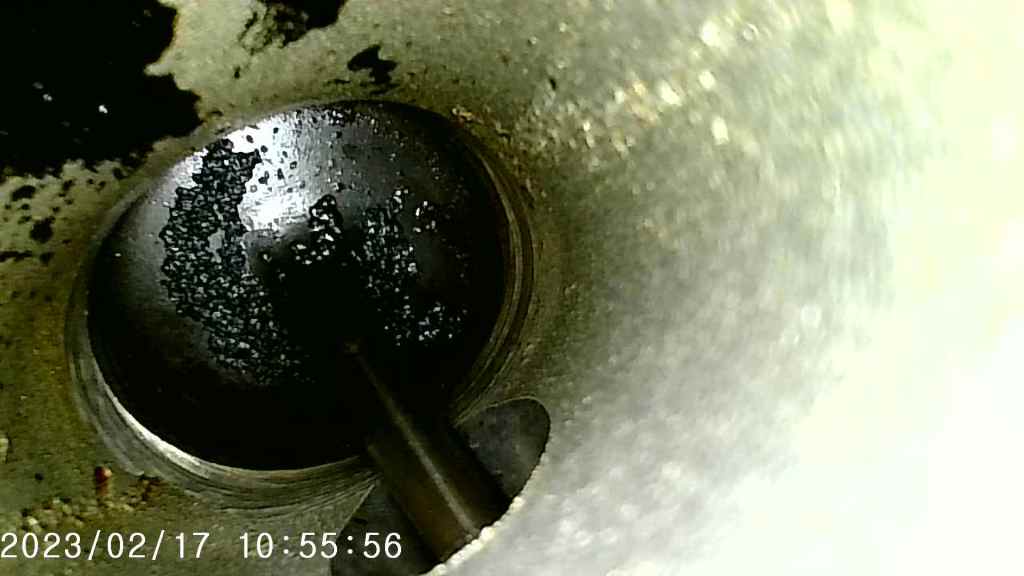


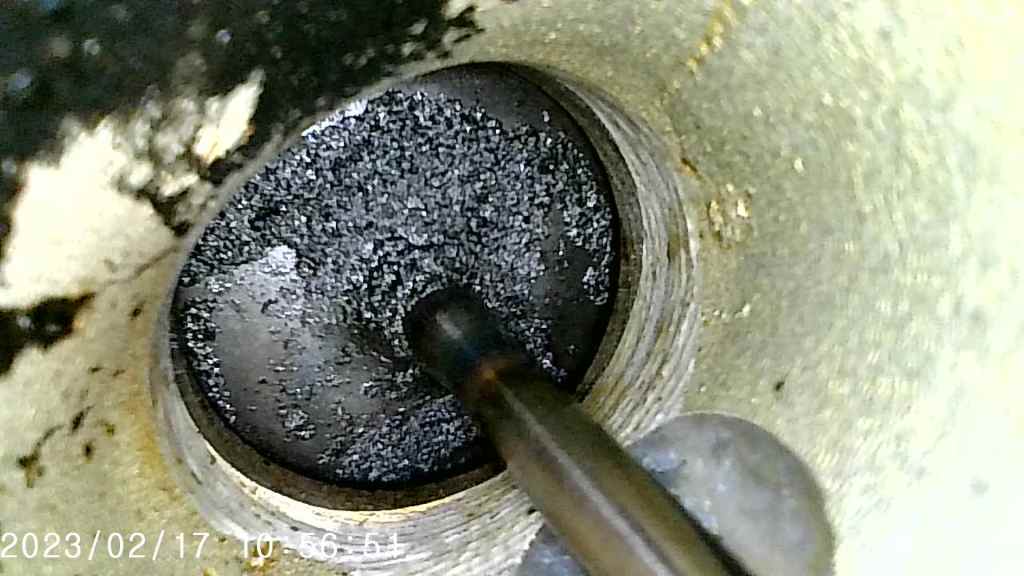
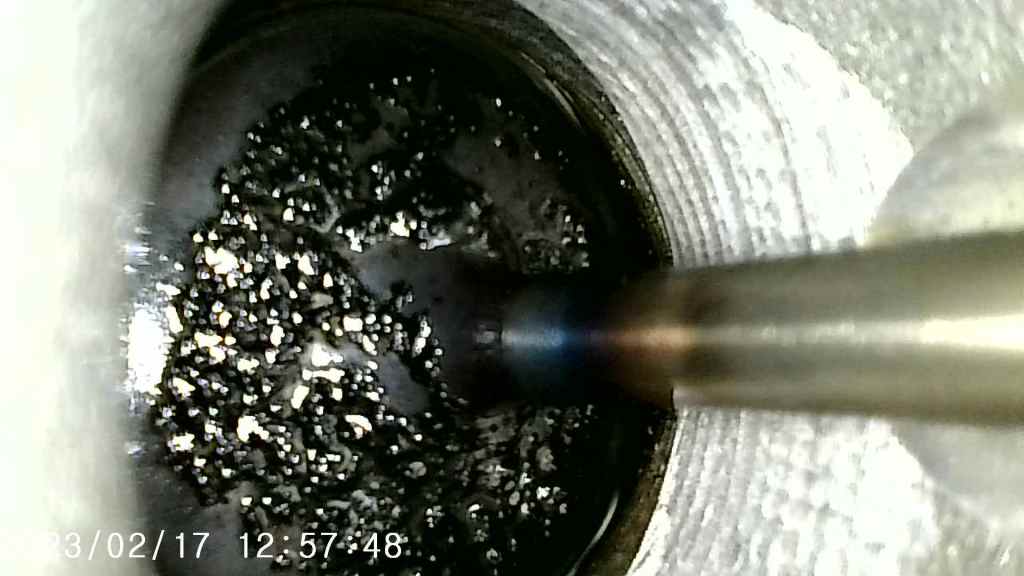


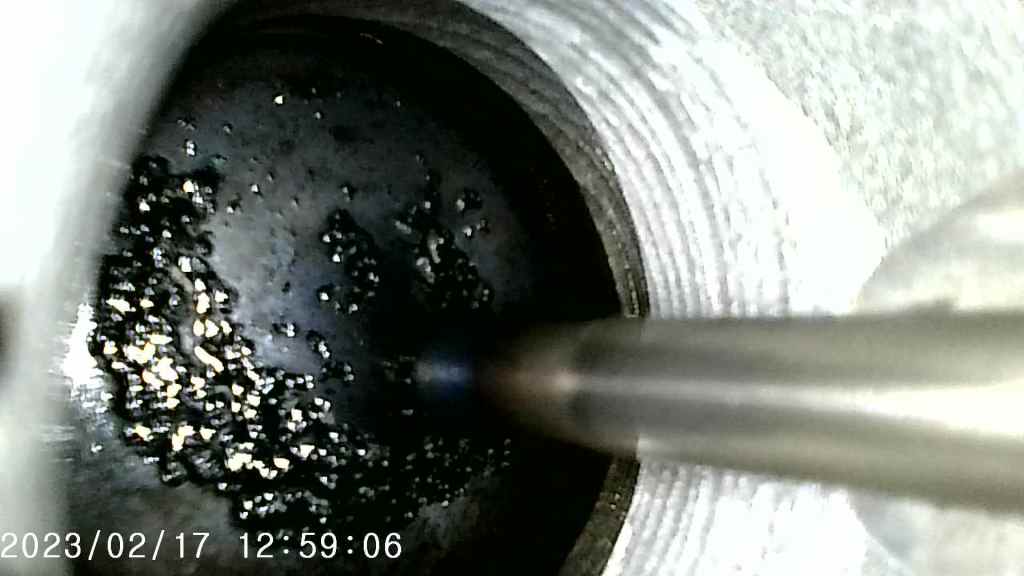
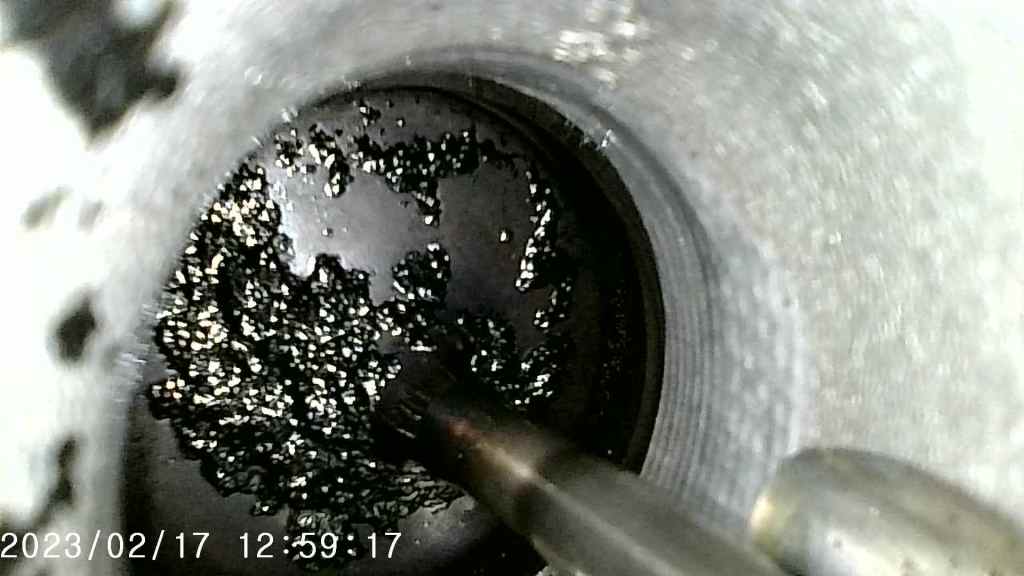

Is it my wishful thinking or do some of those valves look better after than before? Cylinder 2 for some reason had less carbon build-up to begin with so didn’t have much improvement, but there seems to be some reduction on the valves in cylinders 1 and 3, and definitely cleaner walls. And with the motor treatment in the fuel, hopefully there will be more reduction during the coming rides.
I dunno. It was worth a try, and harmless. According to the company, Seafoam is a petroleum based product and will not harm your engine. I’m not comfortable putting it in the crankcase because then you are thinning the oil, but this top-end treatment seems innocuous.
While I was down there, I lifted the airbox and resynchronized my throttle bodies, which I had done prior to my valve adjustment and Seafoam treatment but now needed a tweak. I also reset the ECU adaptations following all this.


The three cylinder pressures are listed on the left dial. Pressure is less after decarboning, which is to be expected.
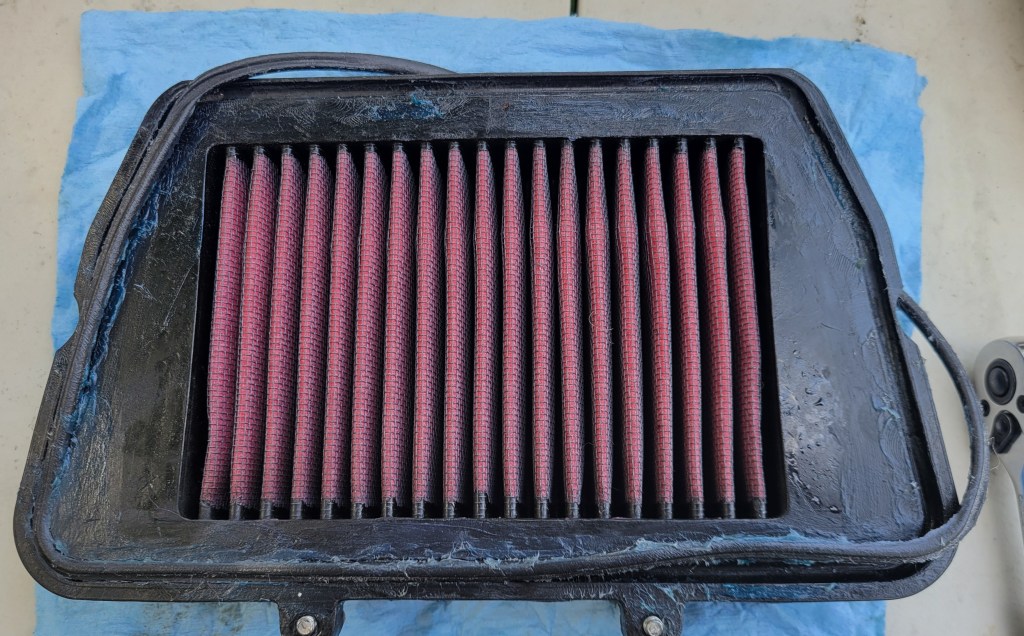
I also had the opportunity to check my K & N air filter and was happy to see it’s completely clean; the Unifilter prefilter I installed seems to be doing its job. I took the Unifilter out and gave it a clean and relube.
With the bike all back together, the Michelin Anakee Wild tires and the new lower windscreen on, the bike is ready for some dirt. Doggie is making good progress on his rehab so I’m holding some hope I’ll be able to get away for a short tour before it’s back to work.
 650thumper