Two popular adventure bikes. How do they compare?
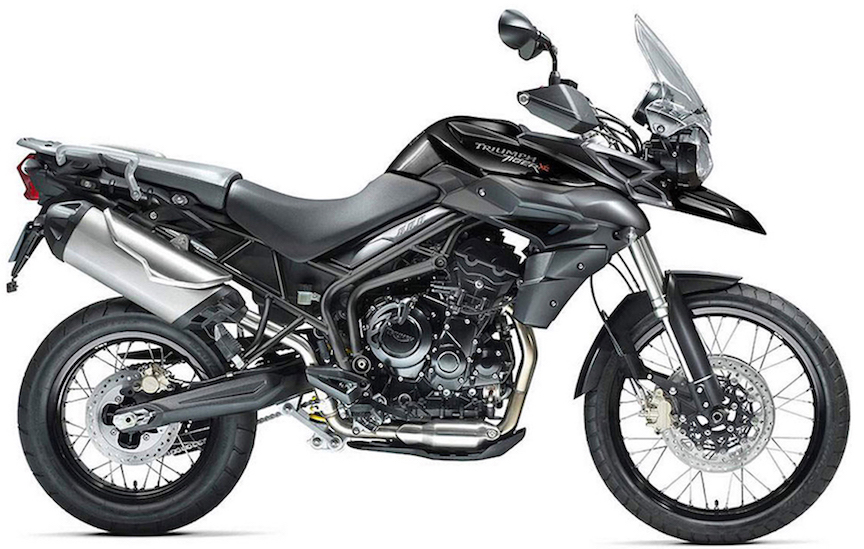
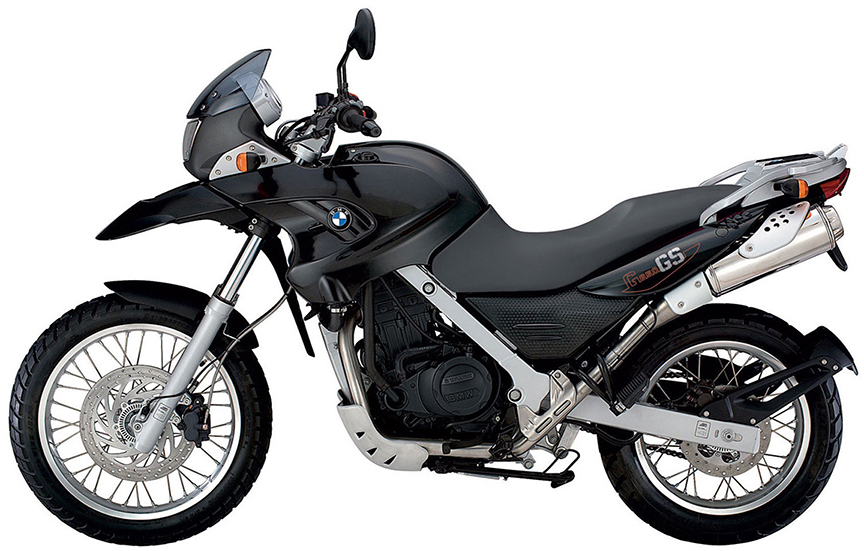
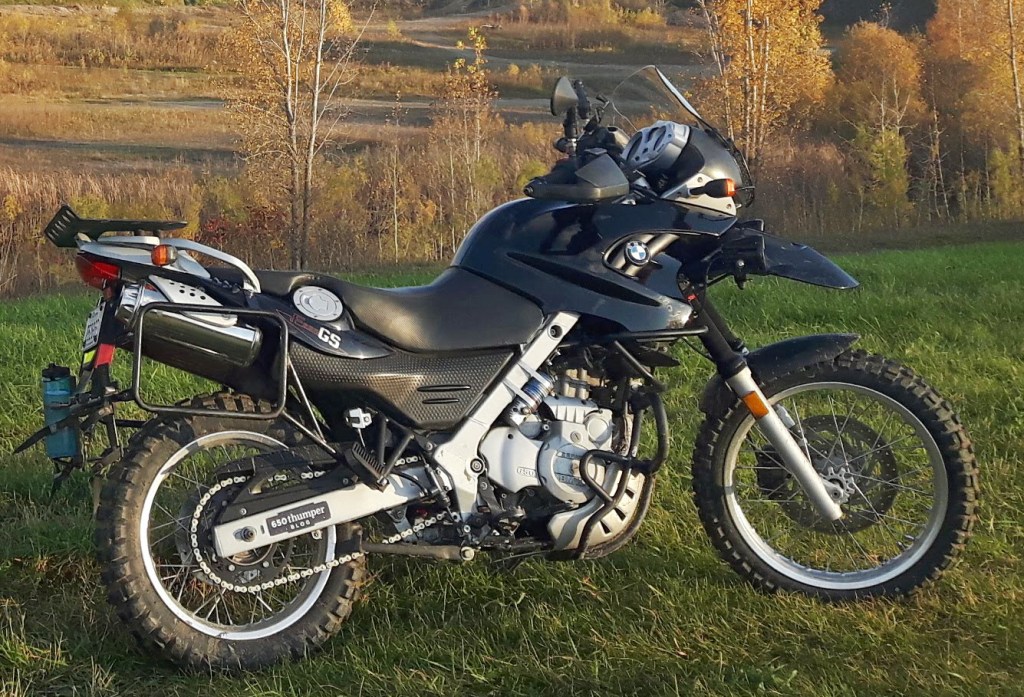
I’ve had the Tiger for a full season now and a reader asked me to do a comparison of the two bikes, so here goes. I won’t say it’s like comparing apples and oranges because both of these bikes are peaches, but one is definitely older than the other, so the comparison is a little unfair. I didn’t sell the Beemer until the end of the season so had the rare opportunity to ride both bikes alternatingly, and the experience revealed their differences. This is how I see they line up.
Ergonomics
Looking at the two bikes above, you’d think the ergonomics would be quite similar. In fact, that is not the case. The first time I climbed on the Tiger for a test ride, I felt like I had to reach for the bars, and the dash seemed distant. This took some getting used to. There’s a lot more space around the triple clamp with the Tiger. Conversely, after riding the Tiger for while, when I climbed onto the BMW, the cockpit seemed cramped. This is really a preference thing; you get used to whatever your ride. But I would have liked a bit more room on the BMW. That tight triple-tree led to cracked plastics when the buckle of my tank bag got pinched between the centre panel and the fork tube when the bike was at full lock.
This sense of being a bit cramped was exacerbated by the height and design of the saddle. As I said in my original review, the OEM seat made me feel like I was sliding down into the tank, and while raising the seat when I did the Seat Concepts upgrade solved the sliding problem, I could have used a bit more leg room. On long days, I often found myself stretching out with my legs up on the Giant Loop Possibles Pouches I had strapped to the engine guards. The BMW is a great bike for someone who wants to get into adventure riding but doesn’t have long legs; it’s not the best for people like me, whom my mother nicknamed “Long Shanks.”
Power
The Tiger’s engine displacement is only 150 cc more than the BMW’s, but the triple cylinder engine puts out an extra 44 bhp, almost twice that of the BMW’s (94 bhp vs. 50 bhp). This is noticeable. You get used to what you ride, and the BMW, fully loaded, pulled Marilyn and me over The Rocky Mountains, so it’s got plenty of power for adventure touring. But I have to say, after riding the Tiger, the BMW seems a little, uh . . . gutless. Sorry BMW folks! You can have a spirited ride on the Beemer, for sure, and I’ve kept up with much bigger and faster bikes on it, but nothing replaces the thrill of torque. The BMW has 44 ft/lb of torque, whereas the Tiger delivers 58 ft/lb.
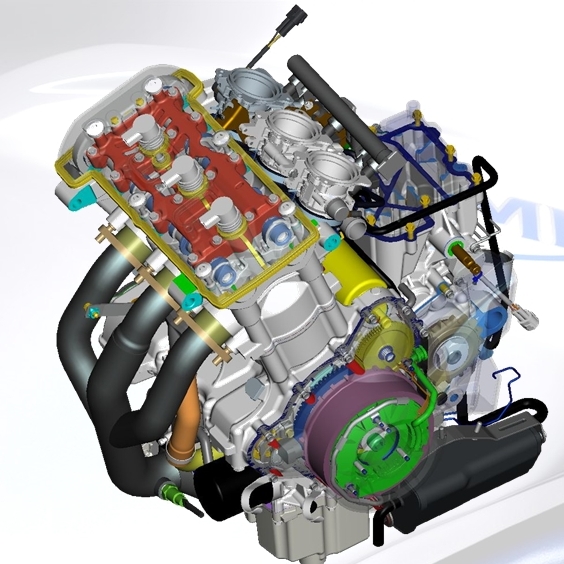
However, the BMW delivers reliable, linear power throughout its rpm and gear range and for that reason, it’s probably the better engine for off-roading. As I’ve written, the single cylinder engine hooks up both on acceleration and engine braking, providing a sort of mechanical traction control and ABS. (It has something to do with large gaps between the power strokes.) The Tiger, on the other hand, is an inline triple without even the T-crank of the new models that offsets the firing by 270 degrees. My 1st Gen model fires 120 degrees apart, so there’s constant power delivery to the rear wheel.

Vibration
Okay, another big difference, as you might expect when comparing a single with a triple. To be honest, the main reason I decided to upgrade was for a smoother ride. The BMW is as smooth as you get with a thumper, but upon returning from a 20,000 kilometre tour across Canada and back, I decided I wanted something that would be more comfortable, particularly at highway speeds. And I couldn’t have chosen a smoother bike than the 1st Gen Tiger (except for maybe a boxer, but didn’t want the weight). I’m glad it doesn’t have the T-crank. As I’ve been reading on user forums, why would you unbalance an engine primarily for the exhaust note? Yes, the T-crank has some of the properties like I mentioned above with regard to traction and braking, but those characteristics are better handled by electronic rider aids on today’s bikes. I love the high pitched whine of the silky smooth triple and would only go back to a single on a trail bike.
While I’m on this subject, when I was researching the upgrade, I considered the f800 GS, which would have been the natural upgrade from the 650. But isn’t a parallel twin just another single but with the piston cut in half? I don’t understand why manufacturers don’t make inline twins; it seems they would be smoother, especially if the firing was 180 degrees apart, making the pistons counterbalance each other. I read that even the f800 GS can be a little vibey at highway speeds, and since smooth power was my top priority, I went with the Tiger. The only vibration one can get apparently is from a little rotational movement after the third cylinder fires, but it’s nominal. I can see from using TuneECU that my throttle body is a little off, so I’ll be balancing it first thing in the spring and that should make an already smooth engine even smoother.
Electronics
Electronics? What electronics? Both bikes are from an era before ride by wire, rider modes, CAN bus, and rider aids. The Triumph, however, at least has ABS whereas its an option on the GS (mine did not), and it’s nice to have a fuel gauge instead of just a fuel lamp. (The BMW’s fuel light comes on when there is 4L left in the tank, good for about another 100K if you’re careful.) Both have robust stators that put out more than enough power to charge your phone and farkles. The BMW puts out 400W and the Tiger a whopping 645W. The display on the BMW is pretty bare bones—just lamps, dial instruments, and a clock. The Triumph has a little more: 2 trip meters that show live and trip fuel efficiency, estimated remaining mileage in the tank, and other data that may or may not be of interest to you. The interface is a bit clunky, or I’m getting old; an entire season with the bike and I still don’t feel comfortable navigating through it. Turning off the ABS requires several inputs, and unfortunately, converts back to ABS when the bike is keyed off.
Off-Roading
Both bikes are designed for “light off-roading,” according to their manufacturers. They both have a 17″ rear wheel but the BMW has a 19″ front to the Tiger’s 21.” I discovered the first time I strayed off the tarmac with the Tiger that this is a bigger deal than what you’d think. Those extra 2 inches make a big difference. I found myself rolling over obstacles on the trail that would have jolted the BMW and had me losing balance and momentum. The difference might be related to suspension as well. The forks on the BMW are pretty poor for off-roading, a weakness that couldn’t be corrected entirely by adding Ricor valves. The BMW has 41mm diameter forks and the Tiger 45mm. Again, that small difference in size is significant in performance. (That’s what she said.)

Image source: ADVMoto

Image source: f650.com FAQ
The smaller front wheel would lead you to think that the BMW would be better on the road than the Tiger, but I haven’t noticed much of a difference in how both bikes tip into corners. Despite the 21″ wheel, the Tiger is surprisingly good in the twisties. Perhaps that’s because it’s based on the sporty Street Triple Daytona but tuned and geared for off-roading. And while we’re talking about gearing, the Tiger has 6 to the BMW’s 5. The gearbox of the Tiger is silky compared to the clunky box of the BMW.
Fit and Finish
By this point, my BMW readers must be feeling annoyed. As I said, it’s a rather unfair comparison between bikes 7 years apart in age. But bear with me: there are some shortcomings to the Tiger. They are not, however, in the fit and finish. The Triumph is remarkably polished and refined in look and feel and has an excellent reputation for reliability, surprising given the British company’s reputation for unreliability in its old bikes. If Triumph couldn’t compete with the Japanese in manufacturing and quality control during the 1970s and early 80s, they certainly can now. In fact, they can compete with the Germans too. Triumph have developed a solid reputation in user forums for reliability, and while I can’t attest to that personally, the fit and finish of my Tiger is excellent, equal to the renown German-engineered BMW.
Balance
Yes, this is where the BMW shines. Putting the gas tank under the seat produces a very low centre of gravity. To my knowledge, there really aren’t better balanced bikes than the 650, 700, and 800 GS’s with the low gas tank, except for maybe the larger BMW boxers. The Tiger, by contrast, is a little top heavy, so I have to be careful moving it around by hand. (Thankfully, the top-heaviness disappears once you’re rolling.) The Tiger is also heavier overall—an extra 50 pounds (473 vs. 423 wet, respectively).
The other shortcoming of the Tiger is its tendency to stall from stopped. There was a problem with the fuel mapping of the earliest models, but I’m not talking about that. I’m talking about how unforgiving the engine is off the line. This is a known issue that Triumph have tried to correct in its latest iteration of the bike (3rd Gen), with apparently limited success. I think it has something to do with the tiny pistons, but I’m not sure. At any rate, between the tall centre of gravity and the tendency to stall, I have to be more cognizant than ever of throttle and clutch control when riding, especially two-up.
And along the same lines, I’d say the BMW is more agile and maneuverable than the Triumph. I am more confident on it thus far than on the Triumph, although I’m hoping to get more confident once I do more slow-speed practice. Parking lots, tight spaces, single track—I can turn the BMW on a dime. It really is a very, very good bike for a beginner learning the basic skills of counter-balancing and clutch control, or someone maybe looking to downsize from a heavier bike.
Other Annoyances of the Tiger
Whoever at the Hinckley plant designed the side and centre stands should be fired. The side stand is so tall I have to be careful parking the bike; if the lot or driveway has a slight camber and the bike isn’t oriented accordingly, that can be enough for the bike to fall. Once I stopped at the side of a road to deal with a problem and as I stepped off the bike, it almost fell over. (Thankfully I caught it in time.) Another time I parked it okay, but I removed the left side case first, and before I could say “Bob’s your Uncle” the bike was on its side. I never had to think about this on the Beemer. In fact, it has quite a low side stand, and the bike listed quite a bit.
Similarly, compared to the BMW, it’s very difficult to get the Triumph onto the centre stand. I can’t have any cases on the back when I try, and if I do, I have to park the bike with enough aft-slope to help me pull the bike onto its stand. Even without the cases, if there’s a slight forward slope to the road or lot, it’s not going on. Both the side stand and centre stand heights are known frustrations for many owners, based on comments on user forums.
Conclusion
Overall, however, I’m very happy with the Tiger, as I was very happy with the GS. Which is better? It really depends on where you’re at in your riding and what kind of riding you want to do. The BMW was a great starter bike, but I kept it long after I was a beginner because it was a fun, reliable, capable bike. And the experience of riding a big thumper is unique; what I traded for smoothness was the raw, tactile, visceral sensation of the GS. Now that I’ve discovered the joy of long-distance adventure touring, the Tiger is the better bike for me. With its smooth and spirited engine, it’s going to be a blast touring on this bike, and as a pillion, the wife prefers the comforts of the Tiger, especially with the hard case as backrest. We’ll be taking this bike through the Maritimes, and then I’ll change the tires and do a solo trip down to the Outer Banks, including some off-roading on BDRs. As much as I love it now, I suspect I will truly bond with the bike during that planned US tour. Anyway, that’s my hope. Stay tuned.
As always, feel free to drop a comment below, especially if you have one of these bikes. In the meantime, my Canadian friends, we are less than two months away from the start of the new season. How are you keeping busy in the off season? Are you upgrading too, doing any mods? I’m always happy to hear from readers.
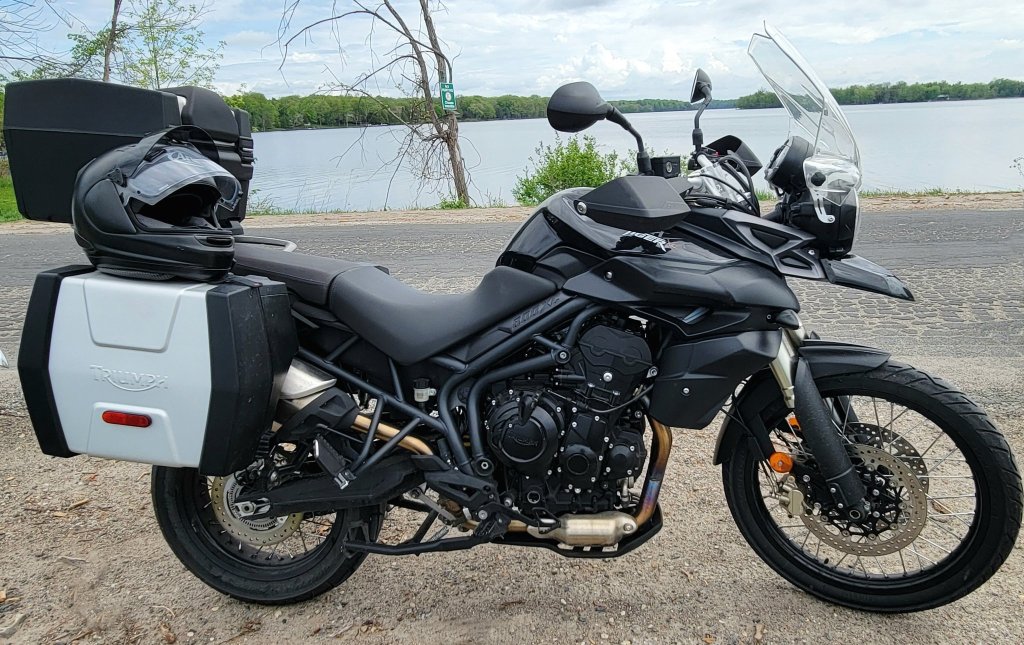

 650thumper