The Ottawa Valley Overland Route

My friend Ray and I went looking for adventure and got more than we bargained for.

When I got back from Newfoundland, it was the end of July and I was already starting to think about teaching. More accurately, I was beginning to dream about teaching. (My school begins mid-August, unlike most universities that begin after Labour Day.) I get these dreams toward the end of summer. In them it’s the first day of the semester and I’m not ready—my outlines are still at the printers, my textbooks aren’t in, I’m running late and can’t find something I need in the office, and when I arrive to class, a senior respected colleague is sitting at the back, having decided to audit my course. That kind of thing. I thought I was the only person who got them, but apparently they’re so common among teachers that they’re called Teacher Dreams. Anyway, I was already getting them so decided I’d put off that second planned trip to The States and the BDRs until the following summer and use what little time there was left in my summer vacation period to do shorter trips.

I asked my buddy Ray if he’d join me in doing a local overnight adventure ride. Ray likes the big gleaming classic bikes and rides an Indian Chief Vintage, but we won’t fault him for that. He’s also got a 2003 KLR in army green and joins me on off-road adventures when he’s feeling especially masochistic. We’ve had some adventures in the past, usually involving a hydro line, water, mud, and something semi-legal, so I think he was a bit reluctant. But I assured him I’d find something mellow this time, and like the good sport he is, he agreed, so I started researching the ride. The idea was for a relaxed dirt and gravel ride that had some nice scenery in the mix.

My first choice was The Bytown Adventure Loop and went as far as to pitch it to my editor at my paying gig, northernontario.travel. It’s always nice to ride, even better when you get paid to do it. The Bytown Loop was announced a few years ago to great fanfare, including a whole YouTube video to present it, and it looked pretty perfect for our purposes—big-bike friendly, close to home, with food and accommodations available should we want to avoid camping and cooking. Easy peezy. The only problem is that I couldn’t find the GPS files anywhere. You can see my query on the YouTube page, with no response. Same when I asked the channel owner directly. Hmm . . . seems like a lot of work went to waste at the final stages of development or there’s something I don’t know.

A little more sleuthing brought me to GravelTravel and he has lots of files available for a small fee, including the TCAT, and another that caught my eye, the Ottawa Valley Overland Route. It seemed similar to The Bytown Loop so I checked it out on YouTube. The videos I saw looked pretty mellow—apparently a large section of it is on abandoned railway line, which is usually flat, straight, and easy. Forums did not reveal anything concerning. In fact, I saw one post asking if it could be done in a non-modified AWD car, so I thought we’d give it a go. It would mean camping and cooking, but to be honest, I prefer that to venturing into town. I bought the files, reserved a campsite at Granite Lake, about halfway through the loop, and bought Lanark County trail passes for Ray and me.

The route is listed as 2-3 days. We were going to do it in 2, which was a bit ambitious since it would take us 1.5 hours to get to Merrickville, where we would pick up the route. To make matters worse, no sooner had we begun when we had a delay. We had done some service on Ray’s bike earlier in the summer and as we rode toward the Ontario border I began to doubt that we had re-oiled his K & N air filter. I remember washing it, and setting it out to dry . . . but not oiling it. You really don’t want to run those filters dry at risk of damaging your engine, so when we reached Alexandria, we pulled into a Tim Horton’s and discovered that yes, it was dry. Thankfully, the ubiquitous and life-saving Canadian Tire there had a K & N maintenance kit so we oiled the filter and let it sit while we had our coffees. It was a small delay, but on a tight schedule, every unplanned stop costs you dearly later on.

Arriving in Merrickville in time for lunch at Bob’s Fresh Cut Fries.

Merrickville is a charming historic village with more heritage buildings for its size than any other town in Ontario. I’ve written about it as a favourite destination for bikers here, but in this case we were just passing through. Soon after lunch, we picked up the OVOR track and, to my great surprise, almost immediately hit mud.

I didn’t have the tires for mud. I still had on Dunlop Trailmax Mission tires from my tour, so I stopped to assess the situation. I was also thinking of Ray, to whom I had promised an easy ride. I waded in and it wasn’t deep, just a bit slippery. I looked at the map and it appeared to be a short section. Now in this situation, Clinton Smout advises to let your buddy go first, but since I’d got us here, I figured I was the test probe. Ray got out his phone to catch any action.

On the Rideau Trail north of Merrickville.

“It’s not bad”? Soon I’d be eating my words when my tires caked up. Some of this easy trail wasn’t so easy.

The Tiger doesn’t have much low-end torque and I have to keep the revs way up whenever off-roading or it stalls. Soon after this ride I did my valves and all the exhaust valves were tight. I’m hoping that opening them up will help with the stalling. A little further on we turned left onto some two track, crossed a swamp, and popped back out onto gravel.

Once back on the road, it was smooth going again up into Carlton Place, another pretty town that was on my Top 5 Ottawa Area Destinations list.

You can see me glance at the hydro line as we crossed beneath. Premonitions of things to come?

We filled up in Almonte before heading down into the bush south of Ottawa. The highlight of the day was riding the Lanark County Trail System south of Ottawa.

California Road in Lanark County.

I was loving this and could have done it all day! The Tiger is in its element here and the Tailmax Mission tires are fine for this stuff; the back end slides out but consistently. We stopped for a photo out over White Lake during the golden hour and the ride was now everything we were hoping it would be. We had a little ways to go to get to our campsite and were looking forward to the steaks I had packed in one of my panniers.

Sadly, the fun would come to an end too soon. We crossed a hydro line, then rode the line for a few hundred metres before exiting onto another gravel road. Unfortunately, what we didn’t know is that the bridge crossing the river that feeds into Duncs Lake was under construction and was out. We got off our bikes and surveyed; sometimes you can find a way through even if it’s closed (the semi-legal stuff I alluded to earlier). In this case, that wasn’t possible at all, and we happened upon a workman finishing up his day and he confirmed what we already knew: end of the road. (What was especially frustrating is that they were building a new road called, appropriately, The New Road, and it was smooth sailing on the other side. We looked at our map and figured we were about 2 kilometres from Highway 511 and the best bet was to return to the hydro line and follow it out to the road.

Hydro lines. When you’re stuck in the bush, they’re a lifeline to civilization, a man-made geometrical order imposed on the chaos of wilderness. But they can also lure you into that chaos, the fisherman’s line drawing you into dark waters. And speaking of water, what I’ve found is that they almost inevitably involve some of it at the low points as the terrain rises and falls. A ride along the primitive access trail of a hydro line is a rocky descent to a water crossing to a steep rocky hill climb to a moment of respite before another descent, and on, for hundreds, thousands of miles if you want, from dams to urban centres, traversing great swaths of Canadian boreal forest.

We got through that without incident but by now it was getting late, we were getting tired, and our off-road skills were suffering as a result. I offer these two videos for your amusement, at our expense.

Ray took his own tumble and decided, while down there in the tall grass, to take a little nap.

In the first video, you can hear concern in my voice. I was worried that we would come upon a crossing that was just too deep to cross and that would block us from the highway. At this point, I was getting some serious arm pump and had pretty much given up on making it to Granite Lake and our planned campsite. We’d figure out where we were going to spend the night once out of the bush.

But we never made it that far. At one water crossing, I got hung up on some rocks and dumped the bike. I hit the kill switch before it dunked but the bike wouldn’t start once righted. After trying for a while, I left it sitting there while deciding what to do.
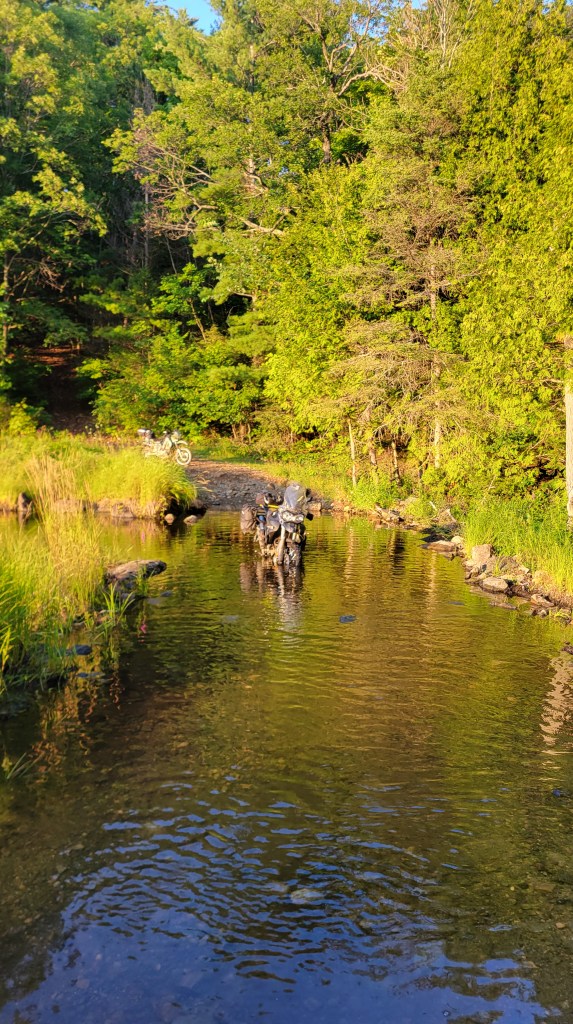
Eventually, we ended up just pushing the bike out by hand and it was surprisingly easy. But it wouldn’t start, no matter how many times I cranked it. Thankfully, Ray got across without incident. I have to say, the KLR really showed its capabilities on this ride. Where I was struggling on the Tiger, Ray was getting over stuff using the tractor factor of the KLR.

I figured the Tiger was hydrolocked, but to get to the spark plugs on this machine you have to remove a lot of plastics and lift the gas tank. I didn’t want to start that work with 30 minutes of light remaining, so we made the decision to camp on the hydro line. I left my bike where it was, Ray rode his up to a clearing on the line, and we set up our tents there. I fired up my stove and cooked us the steaks. We had a little something from the liquor store in Alexandria, and I had a pipe and Ray had a cigar. It wasn’t exactly the campsite at Granite Lake I had imagined, but we made the best of a bad situation.

Still smiling, despite the bugs and our situation.
Not smiling.

That night in my tent I had a restless sleep, worried that I might not have packed the spark plug socket. I wasn’t sure because it’s such an involved process to access the plugs that I might have concluded I’d never be lifting the tank trailside. But thankfully I had, and after morning coffee and porridge, we started tearing apart the Tiger.

In this photo, you can see a section of hose coming out of the bottom of the tank. That is a hose I carry for emergency syphoning should someone run out of gas. We found that when we lifted the tank, gas flowed out of the overflow drain. I’ve had that tank lifted before and it’s never done that. It was a clue that I should have paid more attention to.

We took out the plugs and they looked dry. We turned the engine over and no water came out of the plug holes. Next we thought that maybe the air filter was soaked and choking the engine. Unfortunately, Triumph put a weird 7mm hex screw on the airbox and I didn’t have that socket on me. I pride myself on being prepared but I came up short on this occasion.

We decided that I would ride Ray’s KLR out and up to the Canadian Tire in Renfrew. Why me? Ray said I had more experience off-roading and would have a better chance of getting out. There was some really gnarly terrain and a pretty significant water crossing, but I made it out, again, impressed by the KLR’s capabilities off road.

Shortly after I started heading up toward Calabogie, the skies opened up and it started to rain cats and dogs.

Wishing I’d zipped up my vents earlier.

It was weird weather. In Renfrew it was dry with blue skies. Little did I know it was still coming down hard back on the trail. Canadian Tire had the 7mm deep socket, and while in town I picked up lunch and water and gassed up Ray’s bike. I was planning for the worst case scenario.

As I rode south on the 511 toward the trailhead, I rode back into the torrential rain. It was bad! In fact, unbeknownst to us, this extreme weather was causing major flooding in nearby Ottawa and back home our wives were concerned. I got to the trailhead and started heading back in, but before I reached the bike, who did I see walking out but Ray. He was soaked to the skin and looked pretty miserable. Our “easy ride” had turned into 24 hours of hell, stuck in the bush in extreme weather. I was never going to live this down.

Ray had determined that the trail was now impassable and that I might be waiting for him at the highway. I guess he doesn’t know me as well as I thought. No extreme weather was going to prevent me from getting back to my bike. But he looked cold and miserable and it was teeming, so we agreed to abandon the troubleshooting and get a room in Calabogie. There was nothing more to do but turn around and splash Ray, who couldn’t get any wetter, then double him out to the highway.

“Hop on. This part is pretty tame.” Camera shuts off by itself at the worst time. Sorry about that.

Unfortunately, he had started walking without his helmet, so I doubled back, tidied our gear, grabbed his helmet and jacket, and returned to ride us up to the Calabogie Motel.

It was sunny in Calabogie but probably still raining 20 kilometres south on the trail. I didn’t feel very good about leaving my bike on the trail overnight but tried to put it out of mind. We went for dinner at The Redneck Bistro.
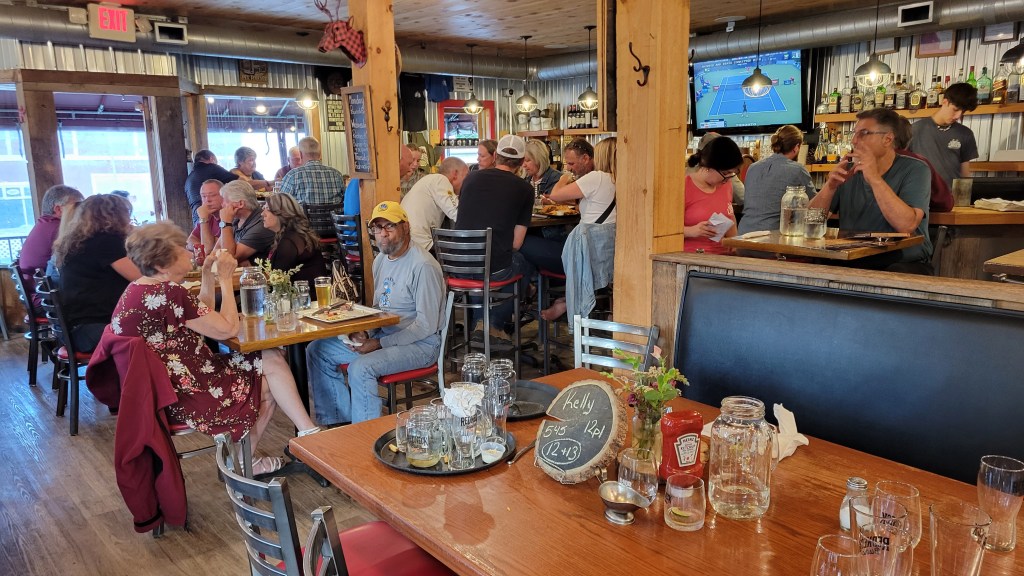
The next day we were up and out early, eager to get the airbox open and hopefully solve our problems. I’d been communicating with my buddy Riley from The Awesome Players, who has more experience with bikes than me. He too was confident that when we got it open, we’d find a soggy filter and after drying everything out the bike would fire right up again.

The trail was still waterlogged and I was worried about doing the deep crossing again. We didn’t need two hydrolocked bikes. But the KLR is a beast, and I told it so.

Things went a little sideways on me there but we got safely across. I left his bike at the top before the gnarly stuff, then walked down to the bike. With great anticipation and suspense, I got out the new 7mm socket and opened the airbox . . .

It was dry, bone dry. I was deflated. Ray had been walking in from the road and soon arrived. We continued our troubleshooting but were running out of ideas. We tested the plugs and there was spark. We took out the filter and the Unifilter prefilter. We checked all the fuses. The one for the auxiliary socket was blown and we thought we’d solved it then, but after replacing it, the bike still wouldn’t start. We looked down inside the throttle bodies for water. We inserted twisted paper into the throttle bodies and it came up dry. We put a drop of fuel from my stove bottle into each throttle body and still it did not fire! Not even a cough.

As a last resort, I walked up to where there was reception and called Riley to see if he could think of anything I hadn’t. He asked if I could hear the fuel pump cycle on with ignition. I did. He said he’d consulted with Player Ivan and it didn’t make sense: we had fuel, we had air, we had spark—the bike should run! We were all stumped, and with it already getting on the afternoon, I decided to throw in the towel. I didn’t want to spend another night on the hydro line and knew there were limits to what I could ask of Ray. Riley offered to trailer me back to Montreal if I got the bike out of the bush. So we took Ray’s bike again and rode back into Calabogie where I found someone who does trail rescue. It cost me a pretty penny but I was out of options.

Throwing in the towel.

Back in Calabogie, Riley and his brother arrived and we loaded both bikes onto their trailer and headed for home.
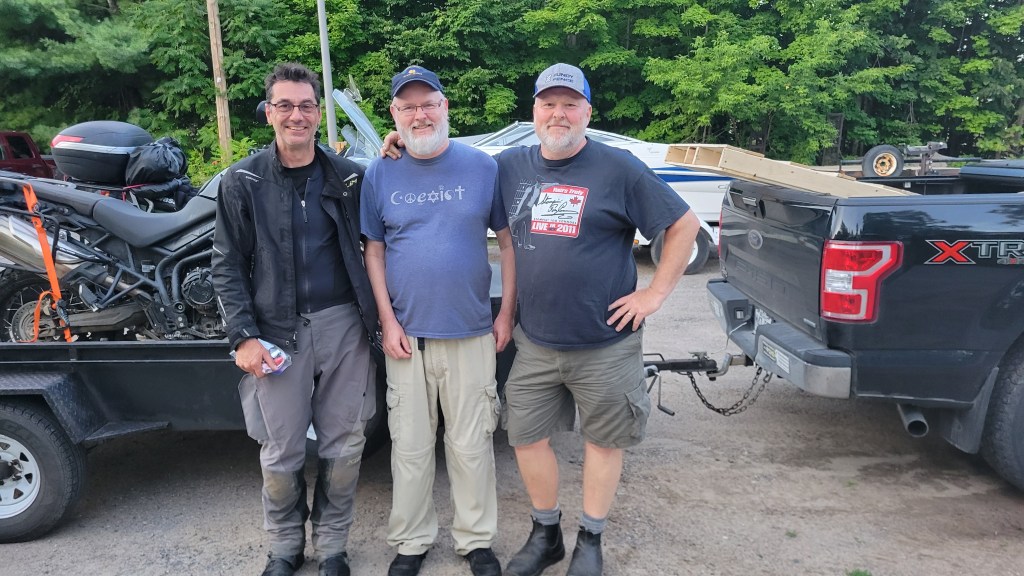
With Riley (right) and his brother Kelly. I owe these guys one large favour! photo credit: Ray Bourgeois

I will admit I was feeling more than a little deflated on the drive back to Montreal. It reminded me of when the water pump went on the 650GS while at Dirt Daze and, for a moment, I considered selling it for something more reliable. Perhaps Riley knew what I was thinking and told me about Super Dave’s mint 1200GS he got for a song.

And I was disappointed in myself. How could I ride into remote areas if I couldn’t be sure to get myself out? It felt like, after all my preparation over the preceding years to learn about bike mechanics in order to do that kind of riding, I’d been tested and had failed. I also felt bad for Ray, who had suffered hypothermia and water-damaged his phone. When I got back to Montreal, I stuck the bike in the shed and couldn’t bring myself to touch it for a few days.

When we are at our lowest, it’s our friends who lift us back up, people like Riley who drove out from Montreal to fetch me, and my buddy Mike who came by to shake me out of my doldrums and help troubleshoot the bike. He noticed almost right away the presence of water around the fuel line in the way the fuel was beading on parts, and we decided to drain the tank. I make home-brew beer and had an empty carboy to use. This is what we found in the tank.

Gas on top, water on bottom. Several litres of dirty water in the gas tank!

Gas and water are insoluble and water is heavier than gas. This is a 23 litre carboy so I estimate that there was at least 3 or 4 litres of water in the bottom of the tank, and since the fuel pump draws from the bottom, the bike wasn’t getting any fuel. No wonder it wouldn’t start!

How did the water get in the tank? The fill cap seal is good, so it didn’t get in there. The bike was running fine up until it wasn’t, so I didn’t get bad fuel in Almonte. No, the only theory that makes sense is this: at the river crossing, the engine and tank were hot. When I dunked the bike, the tank cooled rapidly, creating a vacuum, and water was siphoned up through either the tank overflow or breather tube that was hanging in the water. It would only take a bit of water to foul the injectors and prevent firing, but with this much water in the tank, now I think the bike was drinking water the entire time it was in the river.

I’ve posted this theory on ADVRider to see if anyone else has experienced it and no one said they had, but I did find some threads on ATV forums supporting it. There’s supposed to be a check valve that prevents water or sand entering and also serves as the tip-over sensor. It’s a simple ball bearing valve, but I haven’t been able to locate it on the Tiger. The solution, I think, is to reroute the tubes to a higher point. This is what the ATV guys have done. You don’t want to just cut the tubes because you don’t want fuel draining onto a hot engine, so I’m thinking I will run them back along the frame toward the rear of the bike and have them drain somewhere safely behind the engine.

I’d be very interested to hear what others think about this. I’m surprised more bikes don’t have this problem, which makes me wonder if it’s particular to the Tiger or my bike. I’ve seen guys completely submerge their bikes and they don’t get any water in the tank, so what goes? If you have any ideas, drop a comment below. I’ll be getting out to the shed in the coming weeks to do a bunch of work on the bike in preparation for the season, and I understand there are some water crossings on the MABDR.

Anyway, Mike and I removed the fuel pump and squeezed as much water out of the filter as we could, then let it dry and reassembled. We purged the fuel rail and I changed the spark plugs. With clean fuel, the bike reluctantly started, first on two cylinders, then three. I added some Seafoam to a tank of gas and gave it the Italian tune-up all the way to Cornwall and back. Now it’s running great again. I also put in some cheap oil for a few hundred kilometres, then drained and refilled with the good stuff, just in case some water got in the oil. The bike is running fine now, especially since doing the valves. I feel better for having an explanation for what happened and am no longer thinking of selling it.

Some people say that the essence of adventure riding is adversity. We watch Itchy Boots riding through Nigeria and Cameroon with their bad roads, bad gas (if you can find it), security check points and security risks and are impressed by her courage. On the other hand, there are lots of people in my club who just want to ride and skip the adversity. I remember Ray once said at a club event that “riding with Kevin makes you feel alive,” and I’m reminded of what D. H. Lawrence once said along the same lines, something like, “Only once you’ve accepted death can you truly live.” I’m paraphrasing, but I think I know what he’s on about: if you don’t face risk, you are only existing, not living. I don’t go seeking danger—I love life too much—but neither do I let “what ifs” stop me from living the life I want to live.

Memento mori. When I’m old and feeble and no longer able to ride a motorcycle, I’m sure I’ll be thinking wistfully of Ray’s and my Ottawa Valley Extreme Weather Misadventure.

Pin marks where my bike crapped out. You can see the trail along the hydro line. It ducks into the forest and exits onto the 511 just south of the line. The big water crossing is just left of the circular lake.

TuneECU Tutorial

Paired with an OBD-II reader, this app is an essential tool for DIY’ers.

When I had my BMW GS, there was only one OBD diagnostic tool and it was called GS-911. At over $800 for just the Enthusiast (WIFI) version, it was always a little too much for me to swallow, even though I knew you really shouldn’t be riding anywhere remote without one; there are just some issues that require you to be able to communicate with the ECU to solve.

Now that I have the Tiger, there are more options available, and a popular one is an app called TuneECU. I recently used it to balance my throttle body, but it can be used to do so much more.

Background

TuneECU began because of a fuel mapping problem on some Triumph bikes. One owner was so annoyed at Triumph’s unwillingness to fix a gap in the rev range, he took matters into his own hands and created an app that can read and write fuel maps to the ECU. I’m happy with the mapping on my 2013 TigerXC, but I had noticed a little buzz in the right hand-grip and a forum post advised to check the balance of the throttle body.

For those who might not know what that means (I didn’t, having come from a thumper), as I understand it, it’s basically getting all your cylinders to fire with the same force. If one is more powerful than the others, it destabilizes the engine and creates vibration up into the handlebars. Sure enough, when I checked mine, the third cylinder was a little out of sync with the other two.

Tools Required

  • an Android phone
  • a WIFI OBD-II reader (OBDLink LX recommended)
  • TuneECU (Doh!)

The hardest part of this job is getting down to the throttle body. On my Tiger, I have to lift the tank and remove the airbox, and that requires removing a lot of body panels first. I won’t go into that because it’s bike specific, but just follow your service manual (you have one, right?), photograph everything before it comes off, and lay parts and hardware out methodically in the order they came off. And because you might have to unplug a sensor—at least temporarily—it’s probably a good idea to remove the cable from the negative terminal of your battery.

You’ll be required to run the engine to do this, so be sure to keep all sensors plugged in or you’ll get an error code. (You can clear codes in TuneECU too, but more on that later.) On the Tiger, that meant unscrewing the sensors from the airbox and throttle housing and laying them out of the way. You also have to ensure that hoses essential to the correct running of the engine are plugged, for the same reason. This may require some creative solutions since you have to find things with just the right diameter. (No bad jokes here.)

Bike Set-Up. Tank lifted to expose throttle body but all sensors and hoses plugged. Actually, I should have left the breather tube unplugged. (That’s the one with the drumstick in it.)

Connect your scanner

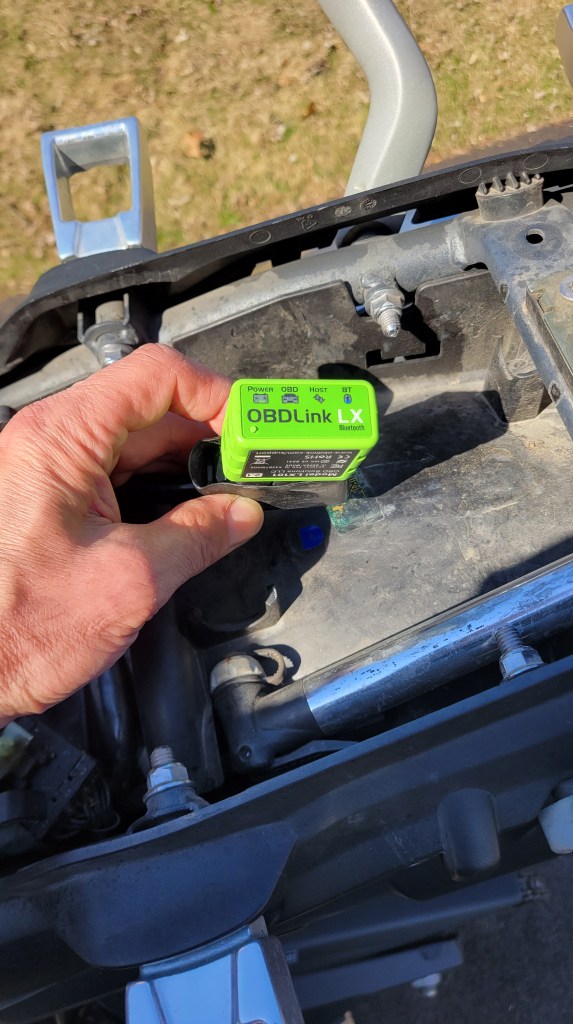
Once you are ready to go, replace the ground on the battery but don’t start the engine just yet. First, plug in your OBD-II reader. There are lots of them available, some for as little as $25 on Amazon, but you take your chances with the cheap ones. You might find that it can’t read your bike or communicate with TuneECU. I’d heard that the one to get is OBDLink LX. It’s a little more expensive, but it works without issues.

You need to know where your OBD-II connector is. On the Tiger, it’s under the passenger seat. When you plug in the scanner, you’ll see its power light go on, indicating that it’s already getting power from the battery. Now get your phone and open TuneECU and select Select from the ECU menu. You’ll see a long list of motorcycles and hopefully yours is there. If not, select Other.

By the way, for Triumph bikes, there are two ECUs: Sagem and Keihin. You’ll see both options under the ECU menu. I wasn’t sure which ECU my bike has, but I figured 50/50 odds were pretty good, guessed Keihin and got lucky. I’m not positive, but I think TuneECU can autodetect if you choose the wrong one.

Once you’ve selected your bike, click Connect. (Later, you can simply choose Connect from the ECU menu.) You’ll see some flickering, both on the scanner and in the bottom right corner of the TuneECU screen, and when it turns green, you are connected.

Make your adjustments

Now start the bike and let it warm up to running temperature. You’ll see the three cylinders listed in the Adjustments screen. Cylinder 1 is the left-most cylinder on the bike (facing front, when seated on the bike), and Cylinder 3 is right-most. Cylinder 2 is not adjustable but is the baseline to which you adjust the other two. In the photo below, the adjustment screws are circled in red. Triumph have thoughtfully added a stripe of yellow paint to each screw so you can keep track of where you are.

Go slowly! Do small adjustments one at a time, blipping the throttle and waiting for the engine to settle back into idle after each adjustment to see what it has done. It didn’t take me long before I had all three relatively the same. They should be within 10 hPa of each other.

The pressure will jump around a bit but the cylinders should stay relatively the same.

Run tests

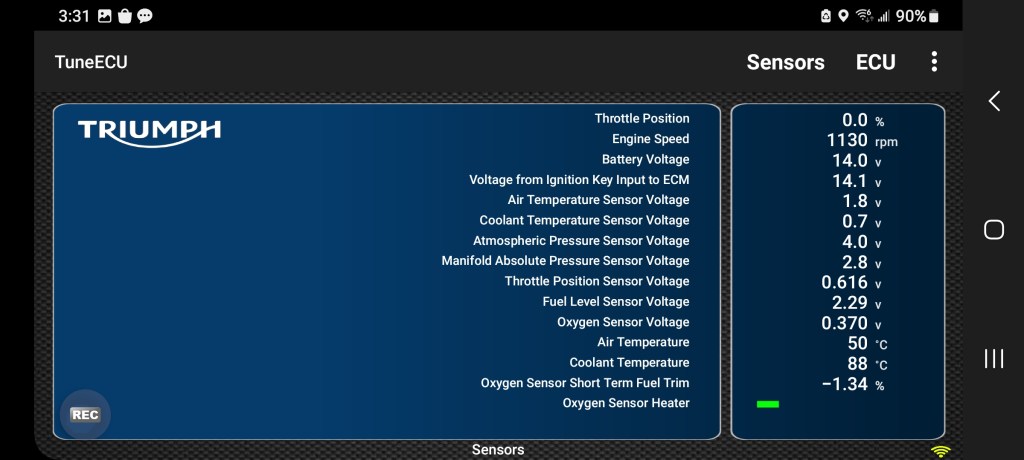
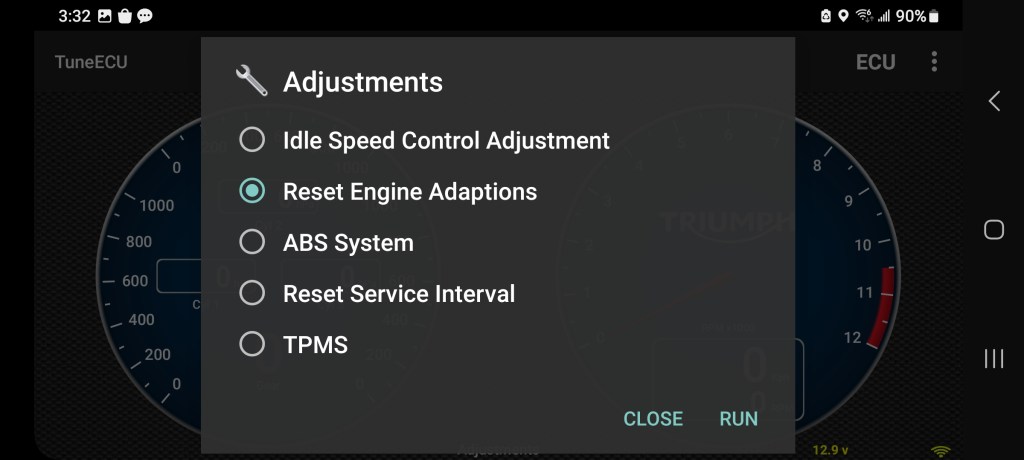
When you’re satisfied you’ve got it as close as you can, slide the screen right to left to get to the Sensors screen. Under the List menu, select which sensors you want to test. This is where TuneECU becomes an excellent diagnostic tool! You’ll see what voltage is getting to each sensor. You can also see and clear error codes, run specific tests, reset the ECU adaptations, and reset the service reminder. Normally the latter can only be done at a dealer, but TuneECU can also clear it. If you do your own maintenance, you no longer have to see that annoying little reminder (wrench symbol) every time you start your bike.

While I had the airbox off, I added a Uni Filter pre-filter to my bike. It replaces the snorkel and apparently removes 95% of the dirt, and since I have to remove my fuel tank to service my main air filter, I was all over that. The pre-filter sits under the seat so access is a lot easier, and I think it will keep my engine cleaner too. Some people swear by K&N filters; others say they’re not trustworthy (I’ve written about this earlier), but with two filters in there, I think I’m good.

Final adjustments

Because I added the pre-filter, I decided to reset the ECU adaptations so it would learn the new parameters. When you do this, just beware that the bike may act a bit weird at first afterwards. For example, my idle was low, and the bike in fact stalled once. But after a short ride, it was back to normal.

I had another small issue that will be of interest to other Tiger owners and perhaps others. Once I put everything back on the bike and went for a test ride, my fuel gauge was showing empty and my gas light was on. I thought I hadn’t plugged in the fuel level sensor correctly so off came all the plastics again and up came the fuel tank. But I had, and a little Google research reminded me that you have to ride the bike a few kilometres for the level to be updated. I’d noticed this after filling the bike—how it seems to take a long time before the display adjusts—but forgot in this context. Every job requires at least one “mistake,” but I’ve come to look upon mistakes as “opportunities to learn.”

TuneECU is a powerful tool, so just a word of caution and a disclaimer to use at your own risk. Writing to the ECU is no small thing, and I don’t like second-guessing Triumph engineers, so be careful. I have a minimalist approach to this stuff, and now that the throttle body is adjusted, I’ll be using it primarily as a diagnostic tool.

TuneECU is €24.99 and OBDLink LX is about $100, depending on where you live. That’s a price I’ll gladly pay to have the silky smooth Triumph triple running even smoother, and for the peace of mind of having an excellent diagnostic tool with me while on tour. It’s small enough to fit easily in my kit and can give me a ton of information about all the mysterious electrics of the bike. As motorcycles become increasingly complex and computerized, it’s nice that there are tools like TuneECU and OBDLink LX at an affordable price for DIY mechanics.

BMW f650 GS and Triumph Tiger 800 XC Head to Head

Two popular adventure bikes. How do they compare?

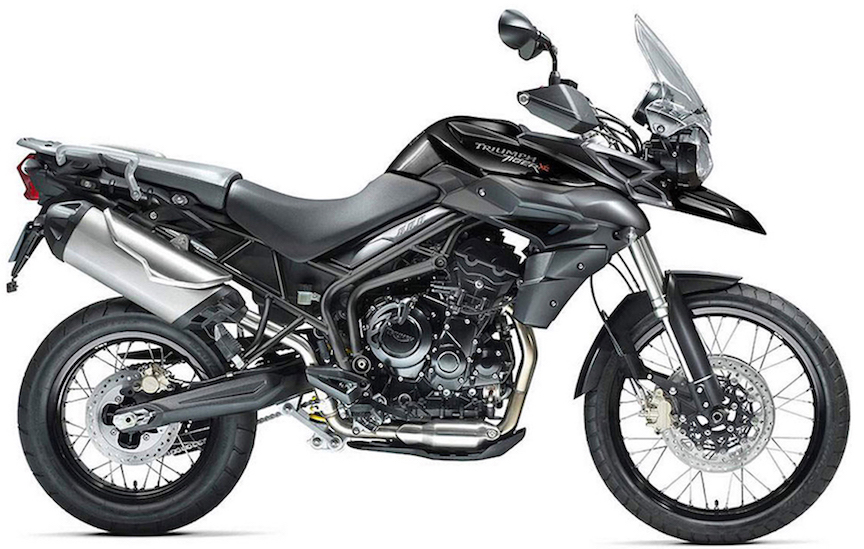
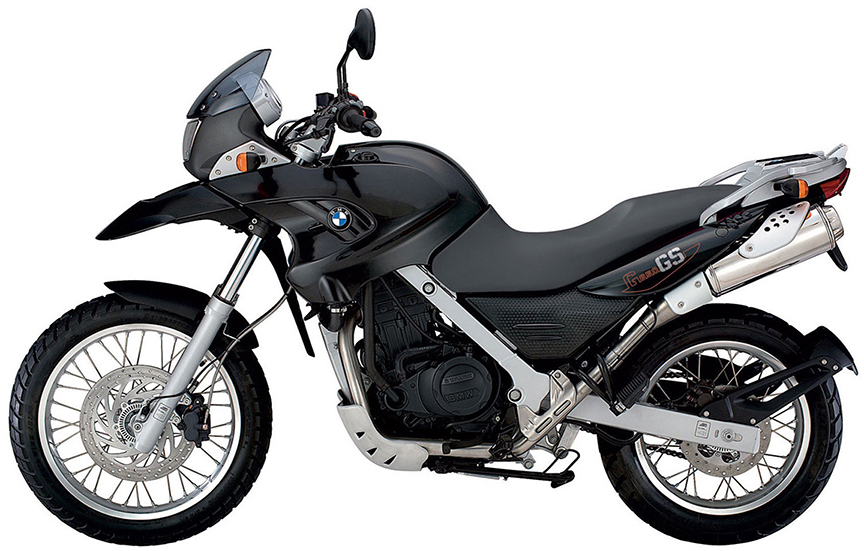
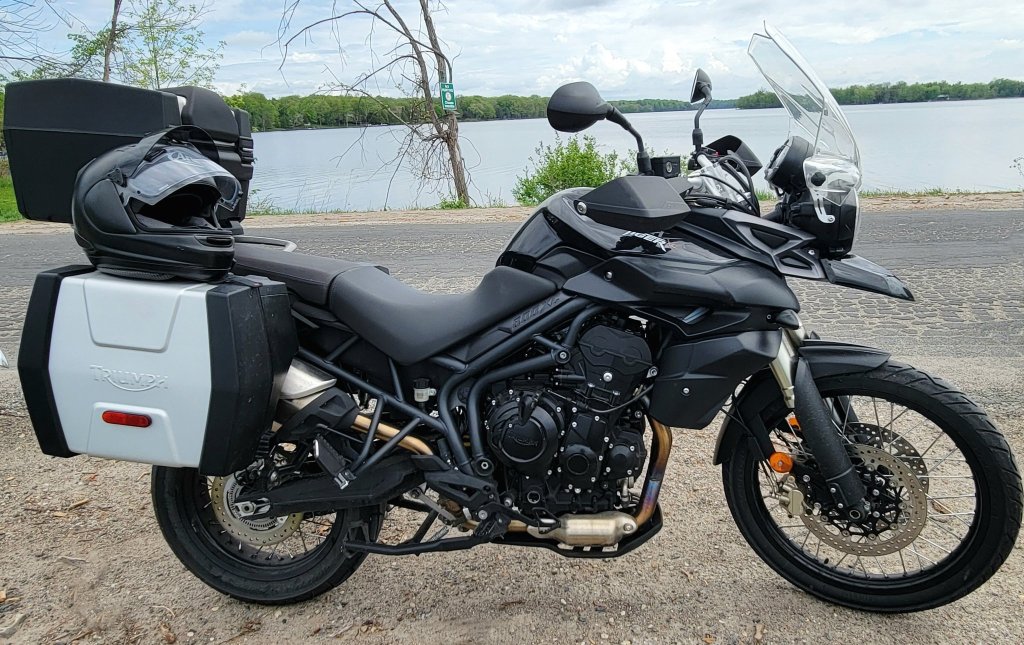
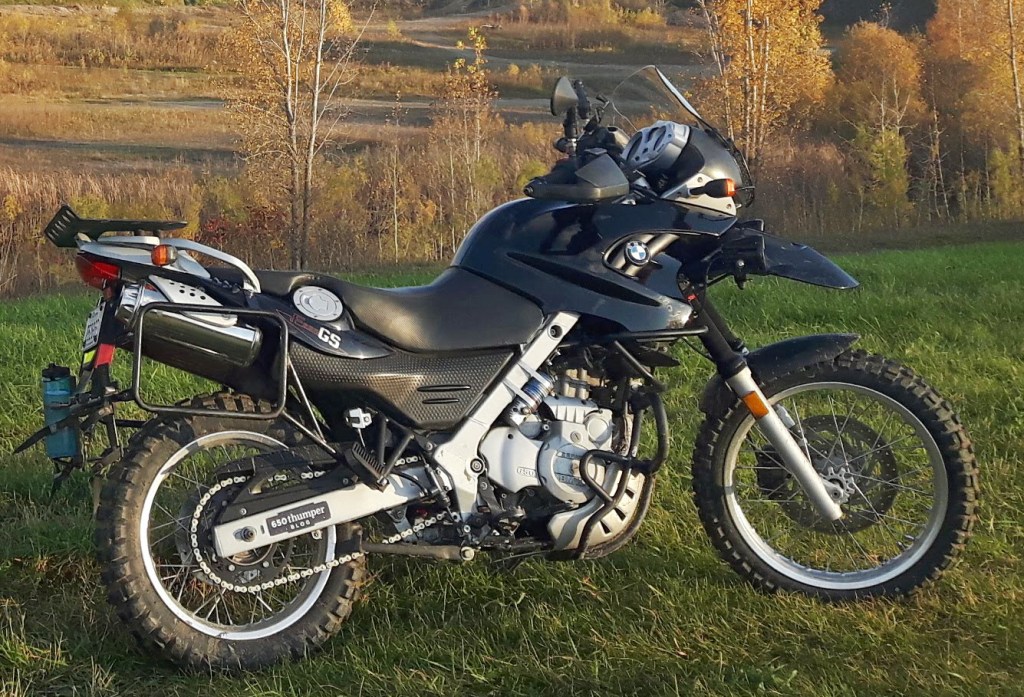
I’ve had the Tiger for a full season now and a reader asked me to do a comparison of the two bikes, so here goes. I won’t say it’s like comparing apples and oranges because both of these bikes are peaches, but one is definitely older than the other, so the comparison is a little unfair. I didn’t sell the Beemer until the end of the season so had the rare opportunity to ride both bikes alternatingly, and the experience revealed their differences. This is how I see they line up.

Ergonomics

Looking at the two bikes above, you’d think the ergonomics would be quite similar. In fact, that is not the case. The first time I climbed on the Tiger for a test ride, I felt like I had to reach for the bars, and the dash seemed distant. This took some getting used to. There’s a lot more space around the triple clamp with the Tiger. Conversely, after riding the Tiger for while, when I climbed onto the BMW, the cockpit seemed cramped. This is really a preference thing; you get used to whatever your ride. But I would have liked a bit more room on the BMW. That tight triple-tree led to cracked plastics when the buckle of my tank bag got pinched between the centre panel and the fork tube when the bike was at full lock.

This sense of being a bit cramped was exacerbated by the height and design of the saddle. As I said in my original review, the OEM seat made me feel like I was sliding down into the tank, and while raising the seat when I did the Seat Concepts upgrade solved the sliding problem, I could have used a bit more leg room. On long days, I often found myself stretching out with my legs up on the Giant Loop Possibles Pouches I had strapped to the engine guards. The BMW is a great bike for someone who wants to get into adventure riding but doesn’t have long legs; it’s not the best for people like me, whom my mother nicknamed “Long Shanks.”

Power

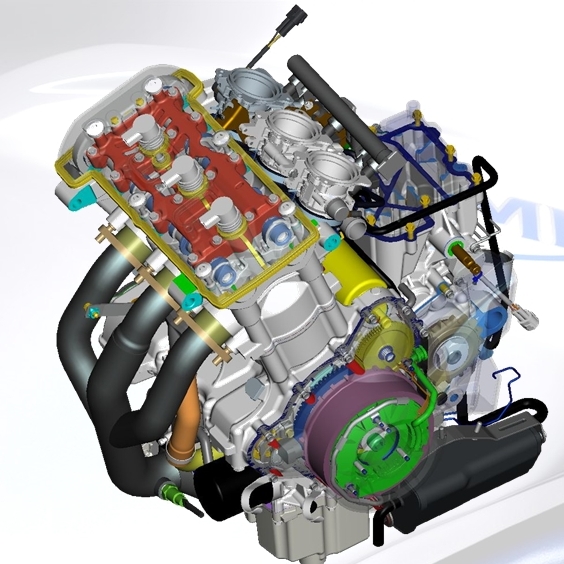
The Tiger’s engine displacement is only 150 cc more than the BMW’s, but the triple cylinder engine puts out an extra 44 bhp, almost twice that of the BMW’s (94 bhp vs. 50 bhp). This is noticeable. You get used to what you ride, and the BMW, fully loaded, pulled Marilyn and me over The Rocky Mountains, so it’s got plenty of power for adventure touring. But I have to say, after riding the Tiger, the BMW seems a little, uh . . . gutless. Sorry BMW folks! You can have a spirited ride on the Beemer, for sure, and I’ve kept up with much bigger and faster bikes on it, but nothing replaces the thrill of torque. The BMW has 44 ft/lb of torque, whereas the Tiger delivers 58 ft/lb.

However, the BMW delivers reliable, linear power throughout its rpm and gear range and for that reason, it’s probably the better engine for off-roading. As I’ve written, the single cylinder engine hooks up both on acceleration and engine braking, providing a sort of mechanical traction control and ABS. (It has something to do with large gaps between the power strokes.) The Tiger, on the other hand, is an inline triple without even the T-crank of the new models that offsets the firing by 270 degrees. My 1st Gen model fires 120 degrees apart, so there’s constant power delivery to the rear wheel.

Vibration

Okay, another big difference, as you might expect when comparing a single with a triple. To be honest, the main reason I decided to upgrade was for a smoother ride. The BMW is as smooth as you get with a thumper, but upon returning from a 20,000 kilometre tour across Canada and back, I decided I wanted something that would be more comfortable, particularly at highway speeds. And I couldn’t have chosen a smoother bike than the 1st Gen Tiger (except for maybe a boxer, but didn’t want the weight). I’m glad it doesn’t have the T-crank. As I’ve been reading on user forums, why would you unbalance an engine primarily for the exhaust note? Yes, the T-crank has some of the properties like I mentioned above with regard to traction and braking, but those characteristics are better handled by electronic rider aids on today’s bikes. I love the high pitched whine of the silky smooth triple and would only go back to a single on a trail bike.

While I’m on this subject, when I was researching the upgrade, I considered the f800 GS, which would have been the natural upgrade from the 650. But isn’t a parallel twin just another single but with the piston cut in half? I don’t understand why manufacturers don’t make inline twins; it seems they would be smoother, especially if the firing was 180 degrees apart, making the pistons counterbalance each other. I read that even the f800 GS can be a little vibey at highway speeds, and since smooth power was my top priority, I went with the Tiger. The only vibration one can get apparently is from a little rotational movement after the third cylinder fires, but it’s nominal. I can see from using TuneECU that my throttle body is a little off, so I’ll be balancing it first thing in the spring and that should make an already smooth engine even smoother.

Electronics

Electronics? What electronics? Both bikes are from an era before ride by wire, rider modes, CAN bus, and rider aids. The Triumph, however, at least has ABS whereas its an option on the GS (mine did not), and it’s nice to have a fuel gauge instead of just a fuel lamp. (The BMW’s fuel light comes on when there is 4L left in the tank, good for about another 100K if you’re careful.) Both have robust stators that put out more than enough power to charge your phone and farkles. The BMW puts out 400W and the Tiger a whopping 645W. The display on the BMW is pretty bare bones—just lamps, dial instruments, and a clock. The Triumph has a little more: 2 trip meters that show live and trip fuel efficiency, estimated remaining mileage in the tank, and other data that may or may not be of interest to you. The interface is a bit clunky, or I’m getting old; an entire season with the bike and I still don’t feel comfortable navigating through it. Turning off the ABS requires several inputs, and unfortunately, converts back to ABS when the bike is keyed off.

Off-Roading

Both bikes are designed for “light off-roading,” according to their manufacturers. They both have a 17″ rear wheel but the BMW has a 19″ front to the Tiger’s 21.” I discovered the first time I strayed off the tarmac with the Tiger that this is a bigger deal than what you’d think. Those extra 2 inches make a big difference. I found myself rolling over obstacles on the trail that would have jolted the BMW and had me losing balance and momentum. The difference might be related to suspension as well. The forks on the BMW are pretty poor for off-roading, a weakness that couldn’t be corrected entirely by adding Ricor valves. The BMW has 41mm diameter forks and the Tiger 45mm. Again, that small difference in size is significant in performance. (That’s what she said.)

The smaller front wheel would lead you to think that the BMW would be better on the road than the Tiger, but I haven’t noticed much of a difference in how both bikes tip into corners. Despite the 21″ wheel, the Tiger is surprisingly good in the twisties. Perhaps that’s because it’s based on the sporty Street Triple Daytona but tuned and geared for off-roading. And while we’re talking about gearing, the Tiger has 6 to the BMW’s 5. The gearbox of the Tiger is silky compared to the clunky box of the BMW.

Fit and Finish

By this point, my BMW readers must be feeling annoyed. As I said, it’s a rather unfair comparison between bikes 7 years apart in age. But bear with me: there are some shortcomings to the Tiger. They are not, however, in the fit and finish. The Triumph is remarkably polished and refined in look and feel and has an excellent reputation for reliability, surprising given the British company’s reputation for unreliability in its old bikes. If Triumph couldn’t compete with the Japanese in manufacturing and quality control during the 1970s and early 80s, they certainly can now. In fact, they can compete with the Germans too. Triumph have developed a solid reputation in user forums for reliability, and while I can’t attest to that personally, the fit and finish of my Tiger is excellent, equal to the renown German-engineered BMW.

Balance

Yes, this is where the BMW shines. Putting the gas tank under the seat produces a very low centre of gravity. To my knowledge, there really aren’t better balanced bikes than the 650, 700, and 800 GS’s with the low gas tank, except for maybe the larger BMW boxers. The Tiger, by contrast, is a little top heavy, so I have to be careful moving it around by hand. (Thankfully, the top-heaviness disappears once you’re rolling.) The Tiger is also heavier overall—an extra 50 pounds (473 vs. 423 wet, respectively).

The other shortcoming of the Tiger is its tendency to stall from stopped. There was a problem with the fuel mapping of the earliest models, but I’m not talking about that. I’m talking about how unforgiving the engine is off the line. This is a known issue that Triumph have tried to correct in its latest iteration of the bike (3rd Gen), with apparently limited success. I think it has something to do with the tiny pistons, but I’m not sure. At any rate, between the tall centre of gravity and the tendency to stall, I have to be more cognizant than ever of throttle and clutch control when riding, especially two-up.

And along the same lines, I’d say the BMW is more agile and maneuverable than the Triumph. I am more confident on it thus far than on the Triumph, although I’m hoping to get more confident once I do more slow-speed practice. Parking lots, tight spaces, single track—I can turn the BMW on a dime. It really is a very, very good bike for a beginner learning the basic skills of counter-balancing and clutch control, or someone maybe looking to downsize from a heavier bike.

Other Annoyances of the Tiger

Whoever at the Hinckley plant designed the side and centre stands should be fired. The side stand is so tall I have to be careful parking the bike; if the lot or driveway has a slight camber and the bike isn’t oriented accordingly, that can be enough for the bike to fall. Once I stopped at the side of a road to deal with a problem and as I stepped off the bike, it almost fell over. (Thankfully I caught it in time.) Another time I parked it okay, but I removed the left side case first, and before I could say “Bob’s your Uncle” the bike was on its side. I never had to think about this on the Beemer. In fact, it has quite a low side stand, and the bike listed quite a bit.

Similarly, compared to the BMW, it’s very difficult to get the Triumph onto the centre stand. I can’t have any cases on the back when I try, and if I do, I have to park the bike with enough aft-slope to help me pull the bike onto its stand. Even without the cases, if there’s a slight forward slope to the road or lot, it’s not going on. Both the side stand and centre stand heights are known frustrations for many owners, based on comments on user forums.

Conclusion

Overall, however, I’m very happy with the Tiger, as I was very happy with the GS. Which is better? It really depends on where you’re at in your riding and what kind of riding you want to do. The BMW was a great starter bike, but I kept it long after I was a beginner because it was a fun, reliable, capable bike. And the experience of riding a big thumper is unique; what I traded for smoothness was the raw, tactile, visceral sensation of the GS. Now that I’ve discovered the joy of long-distance adventure touring, the Tiger is the better bike for me. With its smooth and spirited engine, it’s going to be a blast touring on this bike, and as a pillion, the wife prefers the comforts of the Tiger, especially with the hard case as backrest. We’ll be taking this bike through the Maritimes, and then I’ll change the tires and do a solo trip down to the Outer Banks, including some off-roading on BDRs. As much as I love it now, I suspect I will truly bond with the bike during that planned US tour. Anyway, that’s my hope. Stay tuned.

As always, feel free to drop a comment below, especially if you have one of these bikes. In the meantime, my Canadian friends, we are less than two months away from the start of the new season. How are you keeping busy in the off season? Are you upgrading too, doing any mods? I’m always happy to hear from readers.