Marilyn and I begin our east coast tour on Canada Day, 2023.

Have you ever noticed how, just before setting off on a major holiday, strange things start happening to obstruct you? Things start breaking or go missing, or the dog gets sick, or you get audited, or the secretary for the specialist you’ve been trying to see for months phones to offer you an appointment next week. Well, according to Swiss psychologist Carl Jung, that’s your unconscious saying “Not so fast! Where do you think you’re going? Get back here, young man!” (or woman, as the case may be).
Jung’s theory is that the unconscious likes the status quo. It doesn’t like change, negative or positive. You’ve survived life so far, it deduces, so more of the same must be good, safe. This applies to all aspects of life, including planned and unplanned positive change, like going on a major holiday or experiencing a leap of personal growth. It’s as if you have to push through the obstacles the psyche in all its guile throws up in front of you before you can reap the rewards of progress.

We’d been planning this trip for close to two years. The original plan was to go summer of 2022, but with the addition of a new dog to our family, we postponed a year to allow him to settle (Obstacle #1). I’d been thinking about the trip through the dark months of the previous winter and had been planning the route, modifying the bike, and boosting my fitness to be fully prepared. Now with less than a week before departure day, all hell was breaking loose, right on time and as expected.
For one, a family member had a major medical event that left us wondering if we could go at all (Obstacle #2). Then I received a call from the car dealership: the vehicle we were expecting to take delivery of in August arrived early. Could we come complete the paperwork and pick it up before July 1? (Obstacle #3) The day prior to our leaving, when I was supposed to be full-on packing, CTV News phoned asking for an interview about an op-ed article I’d published (Obstacle #4). In the meantime, an article for my paying gig, northernontario.travel, about a club ride I did to Prince Edward County was due. (Obstacle #5) That ride was our shakedown ride during which I discovered that we were significantly under SAG, so I had to get the rear shock off and to Stadium Suspensions in Beloeil to be re-sprung (Obstacle #6). I also changed the oil, coolant, brake fluid, and rear brake pads, and tweaked a bunch of little things. I was busy.
Finally, however, on Saturday, July 1st, we were packed and ready to roll. All adversity had been overcome. The departure date, Canada Day, was symbolic and the same as it was in 2021 when I set off to discover western Canada. This eastern tour of the Maritimes and Newfoundland would be the companion trip to that one. We said good-bye to our furry friend, climbed on the bike, noted the odometer reading, and pulled away from the house.
The first task when living in Montreal is always to get out of the city. This is not always easy, but leaving after the morning rush hour on a national holiday meant a relatively quick exit. We crossed over the Champlain Bridge to the south shore and continued on Highway 20, the Trans Canada Highway, until east of Quebec City before dropping onto Route 132, the highway that would take us right the way around the Gaspé Peninsula.
Highway 132 is an incredible road. It’s the longest highway in Quebec, stretching from New York State in the west to the New Brunswick border in the east, and it’s one of Quebec’s oldest highways, passing through many historic towns and villages that date back to the 17th Century or earlier, when Europeans began to arrive. It’s also arguably Quebec’s most scenic highway, hugging for long sections the shoreline of the Gulf of Saint Lawrence on one side with mountains rising sharply up on the other.

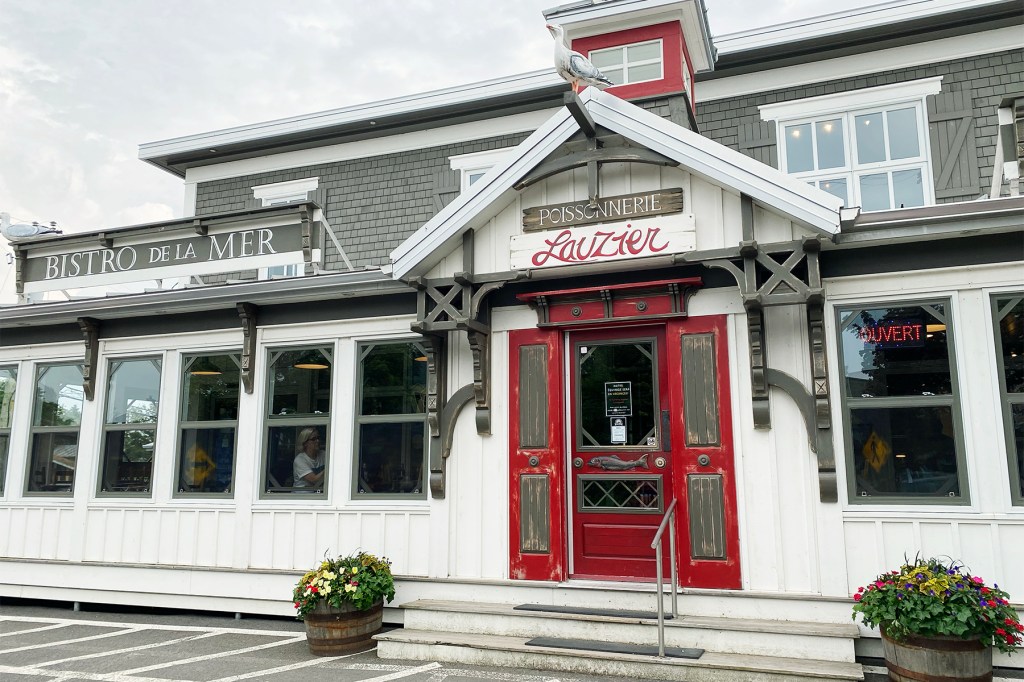
When I first came to Quebec as a student on an immersion program, I lived in La Pocatière, in the Kamouraska region. No wonder I fell in love with Quebec and decided to move here. Kamouraska is one of the province’s major tourist regions. The Gulf of Saint Lawrence has opened up enough for inns (or gites, as they’re known here) to advertise “sur la mer” (on the sea), which is a bit self-aggrandizing because it’s still the river but, okay, brackish with a small tide. But the river starts to smell like the sea and look like the sea and you can imagine it being the sea, even swim in it, if you want. We decided instead to get some lunch at one of our favourite spots. The lobster bisque is worth all 400 kilometres and the $17.

When Marilyn and I toured out west, the compromise was that we did no camping; she would ride pillion as long as there was a bed waiting for her at the end of the day. Fortunately, we had friends and family across Alberta and British Columbia that welcomed us into their homes, and we took a hotel room when needed. But the remoteness of some of the regions of this trip would require some camping. How do you experience Gros Morne National Park without camping?
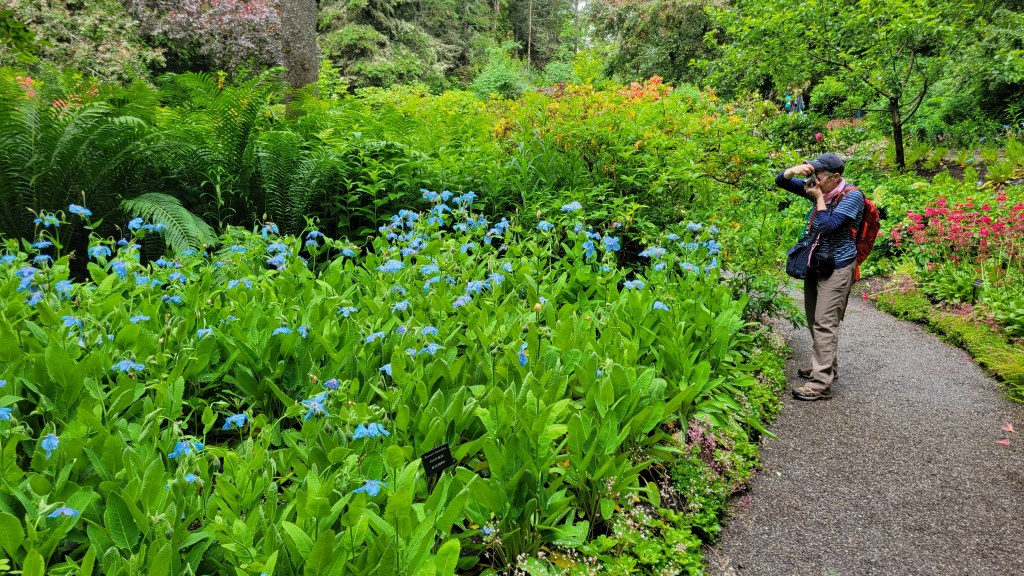
With that in mind, I planned strategically. Our destination for Night 1 was close to Reford Gardens – Jardins de Métis, where we would spend the next morning before continuing along the 132. The Reford Gardens is another famous garden like Butchart Gardens we visited in Victoria. Similarly, it was a labour of love by one woman, in this case Elsie Reford. By enlisting the help of local farmers and fishing guides, she was able to turn a spruce forest into a lavish garden which included the very rare Tibetan Blue Poppies. If you have to ask your wife to do anything really unpleasant, like camp in the rain, just remember the diplomatic power of flowers.
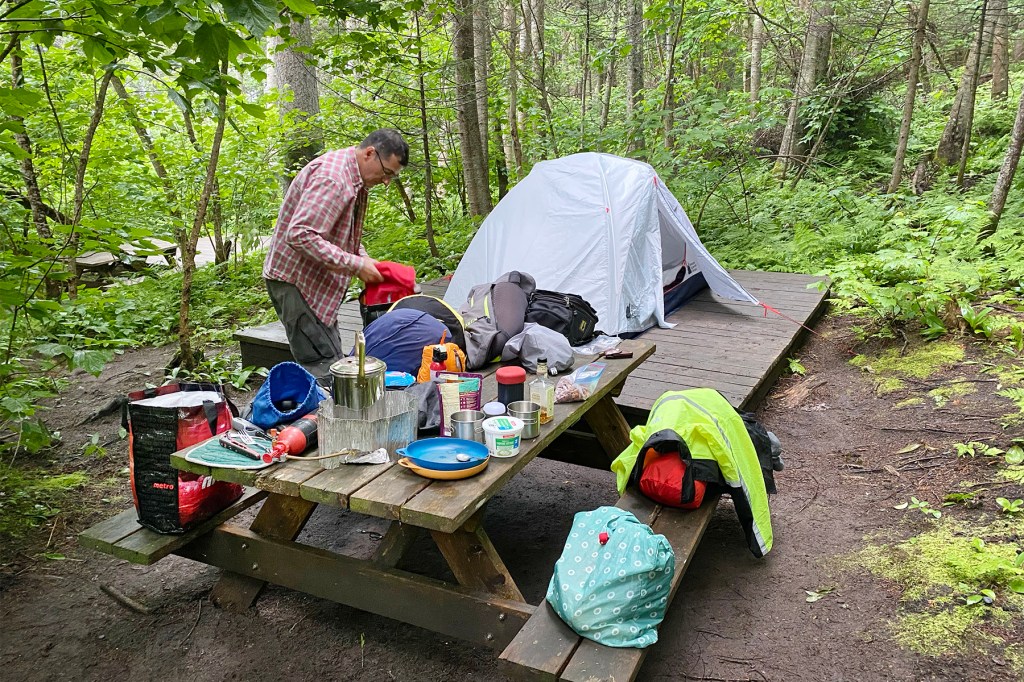
The first night was the toughest. To ensure we would have time to see the gardens, I reserved a site at Parc Régional de la rivière Mitis [sic. that’s not a typo; I don’t know why there are two spellings], barely a stone’s throw from the gardens’ entrance. I saw when making the reservation that these are walk-in sites, but only about 230 meters from the parking lot, so how bad could it be, right? Well, the sites are on a trail network and the trail was muddy and hilly. When we arrived, it started to rain, and it kept raining, all night and through breakfast the next morning. Marilyn, who is a light sleeper, heard the neighbouring campers’ music and conversation, the Canada Day fireworks at 10, the neighbouring campers’ sex, the heavy rain and thunder and, through it all, my light snoring. She got about one hour of sleep. Oh yeah, and then there were the bugs.

As if to punctuate the state of affairs, the next morning, while I was preparing the coffee, animal excrement of some kind slid out of the tree above and landed with a splat! on the water bladder. It was going to be that kind of a day.

But after a porridge breakfast and a top-up of coffee, the rain stopped and the sun came out. Yes, the absence of pain is pleasure, and the sun that day was all the more enjoyable, especially while at the gardens.

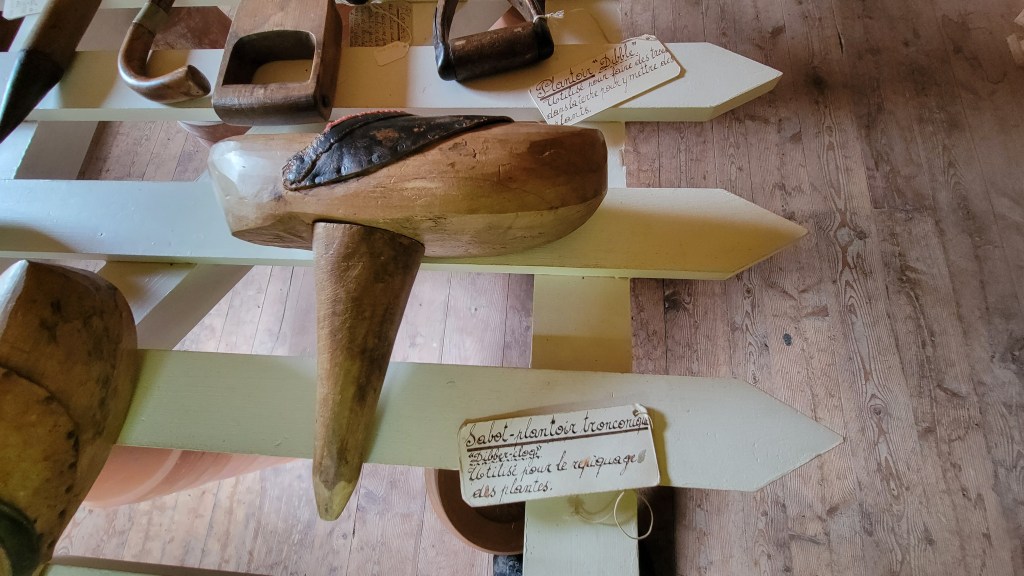

It was all uphill from here. We had survived the worst of it with our marriage intact. After a quick snack at the cafe in the gardens, we were back on the bike and headed for Forillon National Park on the tip of the Gaspé Peninsula.
We are bound for Newfoundland. If you want to follow along, click Follow.


 650thumper