The Wish List, 2022

It’s time to modify the Tiger for dirt.

There’s a balance between customizing a bike and over-modifying it. I remember an episode of Adventure Rider Radio in which Jim Martin talks with Warren Milner, who worked at Honda for 30 years in product planning and R & D. Warren warns against rashly modifying your bike, especially based on advice given on internet forums. For example, at one point in the interview, he talks about the exhaust system, describing how manufacturers spend hundreds of hours developing and testing it before the bike goes into production. That’s because today’s bikes use back-pressure from the exhaust as an integral part of the combustion process to optimize fuel efficiency and emissions, yet one of the first mods owners often do is to slap on an aftermarket exhaust. One can almost hear the collective groan of the engineers as they do.

At the same time, every bike that rolls off the assembly line is built for the average rider—average build, average riding (whatever that is), average skills, average goals. That’s why it’s important to customize it for your specific needs. Tall rider? You might want a taller windscreen to avoid buffeting, or add a wind-deflector. Long legged? You might want to lower your pegs or raise your seat. Or the opposite: you might want a lowering kit so you can flat-foot. Going off-road? You’ll need different tires, etc.. There are a lot of considerations, and fortunately, a lot of options available. The industry is healthy with aftermarket products.

I decided to ride the Tiger for a season pretty much as I bought it. I wanted to get a feel for it stock before making changes. I still have the stock front tire on that came with the bike. The only changes I made were in the realm of protection: crash guards and a beefier skid plate. I’d learned my lesson with the BMW, waiting to buy some upper protection and ending up buying a new radiator along with the guards when I eventually did. After studying the market, I went with Outback Motortek. The guards and plate set me back a cool Grand, but I think they’re the best on the market. The only other mods I’ve done to the Tiger so far were to add an AltRider rear brake extender and a wind deflector.

But with two big tours planned for 2023, it’s time to ask Santa for some items to get the bike ready. Here’s what’s on my wish list for 2023.

Panniers

The Tiger came with Triumph racks and cases. The system is fine for commuting and light touring, but those side-opening cases aren’t practical for moto-camping.

I deliberated (read, “agonized”) over this decision for a long time. I love my Touratech hard cases, but the Tiger has a high exhaust on the right side so I really should go with an asymmetrical system. When I had the 650GS on the market, I had offers just for the racks and cases, but I was reluctant to separate them from the sale of the bike. The new owner wanted to buy them too, but in the end, I decided I couldn’t separate from them either.

They are great cases and contain a ton of memories with all the stickers from where I’ve been. They are the original puck system, which you can’t get anymore, and I like that you can lock them. I’ll probably use these when I tour the East Coast with Marilyn because they are big and we need the space and I won’t be doing much dirt on that tour anyway. We’ll just have to pack them so the bike stays reasonably balanced.

However, I also plan to ride the NEBDR and MABDR next summer, and from what I’ve seen on YouTube, there are some challenging dirt sections of the NEBDR in particular for which I’ll need a smaller, soft-pannier system. (Soft panniers are generally considered safer for off-roading; there is less chance of breaking a leg.) I know everyone is getting the Mosko bags these days, and they are beautiful bags, but I decided to go with the Enduristan Monsoon Evo 34L/24L system.

I’m using the past tense because Santa took advantage of a Black Friday sale and got these 20% off. I picked up at the same time the matching bottle holster (for my stove fuel) and a can holster (for water, chain lube, or bear spray). One of the nice things about this system is that it’s modular, and I’ll probably be adding more to it as I figure out my needs.

Marilyn and I used the Enduristan pannier topper through the West Coast and loved it. Enduristan products are completely waterproof and designed by ADV riders to withstand the abuse of adventure touring. But the main reason I went with this system is the weight; they are the lightest panniers on the market, with no backing or mounting plates to worry about. This also means that the bags and cases will be easily interchangeable.

Racks

It’s Outback Motortek all the way. They put a lot of R & D into their products and back them up with some brave testing, dragging expensive bikes along the ground. Even though the bars do not come up as high as Heed’s and others, they are sufficient to keep the plastics and vital parts off the ground and protected. The bars look like crap afterward but have done their job and can be re-powder coated.

The rear racks offer protection for the silencer and rear of the bike, in addition to carrying the panniers, so again, I went with the strongest. These are a full 18mm + with the powder coating. In fact, they are industry leading in their size, so big that Dual Sport Plus, where I bought the Enduristan bags, includes a workaround kit of washers so the bags fit these bars.

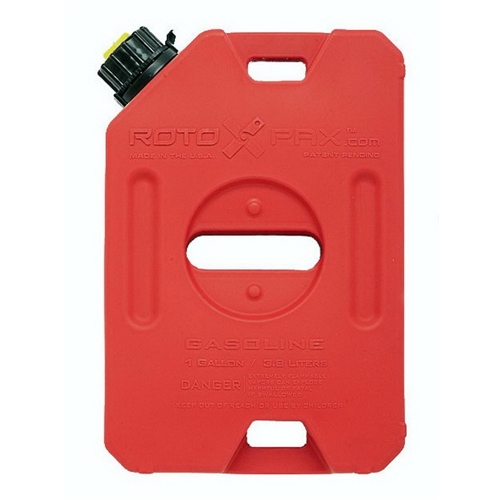
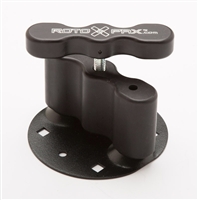
To these bars, I’m going to add on the left side an X-frame plate so I can mount a RotoPax 1G fuel container inside the bars. This will increase my range when remote riding and help balance the bike, especially when using the symmetrical TT cases. Clint at Dual Sport Plus has my exact planned set-up—racks, panniers, and RotoPax—seen here.

Hand and Lever Protection

The final bit of protection I’ll need before attempting those gnarly sections of the NEBDR is some protection for the levers. I considered going again with foldable levers but that would still leave the front brake reservoir and my hands unprotected. After looking at all my options, I decided to go with Barkbusters. They have a model that is made for my specific bike so the install is straightforward. And if I had any lingering doubts, they were quashed when I saw that BB make a plastic with my bike’s name on it. I know the Jet plastics don’t provide as much wind protection as the Storm and other plastics, but I think they suit the styling of the Tiger, and sometimes you just have to sacrifice a little practicality for vanity . . . I mean, aesthetics.

I’m not going to change my mirrors for now. I’m really not fond of the look of the double-take mirrors and am hoping the crash guards will sufficiently protect the OEM ones. And if they don’t, well, the decision will have been made for me.

Foot Pegs

What’s the most important part of the bike when off-roading? Given that I’ve posed this question in the subsection titled Foot Pegs, you’ve probably guessed correctly. If your body position while off-roading is correct, you really shouldn’t have much weight on the bars; you should be pretty much balanced on the pegs and steering the bike with your feet (i.e. peg-weighting). Of the four contact points with the bike (hands and feet), the pegs are the most important, so a good set of foot pegs is a must if you are going to do any technical riding.

The Triumph pegs aren’t small but they aren’t large either. I’ve heard that a large foot peg can make a big difference (sorry, bad pun), changing the entire feel of the bike and inspiring confidence. They will also save you resoling your boots quite as often. I looked at IMS, but they don’t make pegs for the Tiger. When I found that Fastway did and that there was a Canadian distributer, I jumped, Black Friday sale or not.

As you can see, at 2.25″ x 4.75,” these pegs are huge. They have adjustment for height and camber, and come with two lengths of cleats: 10mm and 12mm. I’ll probably start with the 10mm since my adventure boots already have a tread. They are expensive, but you only have to buy them once; Fastway sell bike-specific fit kits for mounting, so I will hold onto these babies when the time comes to sell the Tiger.

Honestly, I never thought I’d pay $300 for foot pegs, but I’ve been watching YouTube videos of guys doing, or trying to do, the Class 4 roads on the NEBDR and thought, “I’m going to need all the help I can get.”

Tail Plate

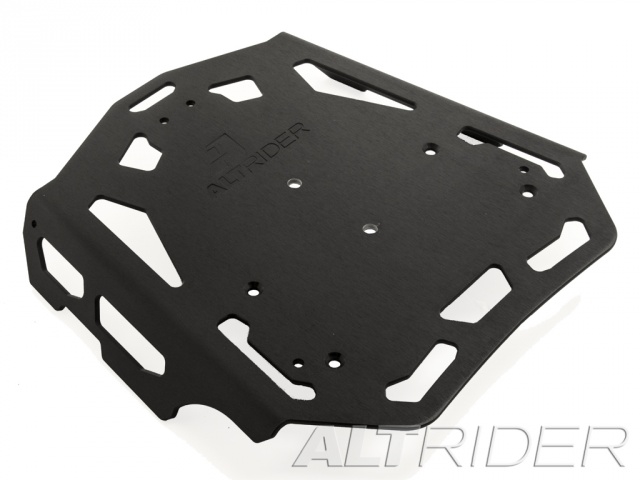
The OEM tail plate is too small for a duffle and has no good strapping points. It also shifts side to side as part of that Triumph system that shifts as you corner. I really like the AltRider tail plate, but at $260 for a piece of metal, I’m considering other options. You can get an eBay Special from China for 1/3 of that price, but will it be the same? Will the cut-outs be bevelled so they don’t cut into your straps? Will the powder coating begin to wear off after a season or two, as happened on my Kildala rack? AltRider make good stuff, and I like how this one projects out the back of the bike so there’s still plenty of room for Marilyn behind me. I might just watch and wait for this item to go on clearance somewhere, but I’ll definitely need a new tail rack before I tour.
Tires

I’ve had the Dunlop Trailmax Mission tire on the rear of the Tiger, and I had them on the GS when I took it to Vermont last summer. This 70/30 tire is a good choice if you are doing a lot of street with some dirt or gravel roads. That’s what I expect when Marilyn and I go through Gaspé, PEI, New Brunswick, Nova Scotia, and Newfoundland. So I’m going to put the matching tire on the front first thing in the spring before we head off.

For the tour in the US, that’s a little different and more complicated. I plan to start out on some BDRs (Backcountry Discovery Routes) that will take me from the Quebec border down to Pennsylvania, then I’ll be riding principally asphalt as I make my way over to the Outer Banks, including The Blue Ridge Parkway—a bucket list ride for me—and, why not, Tail of the Dragon while I’m in the area.

What do you do when faced with such diverse riding, everything from Class 4 (i.e. unmaintained) roads to the most renown section of twisties in The U.S.? Well, based on my experience, you have to go with the most aggressive tire required for your off-roading needs. You can ride a knobby on asphalt but if you try to take a street tire into mud and gnarly stuff, you can get yourself in trouble. Of course I could by-pass the gnarly stuff, but where’s the fun in that, and besides, I like a challenge!

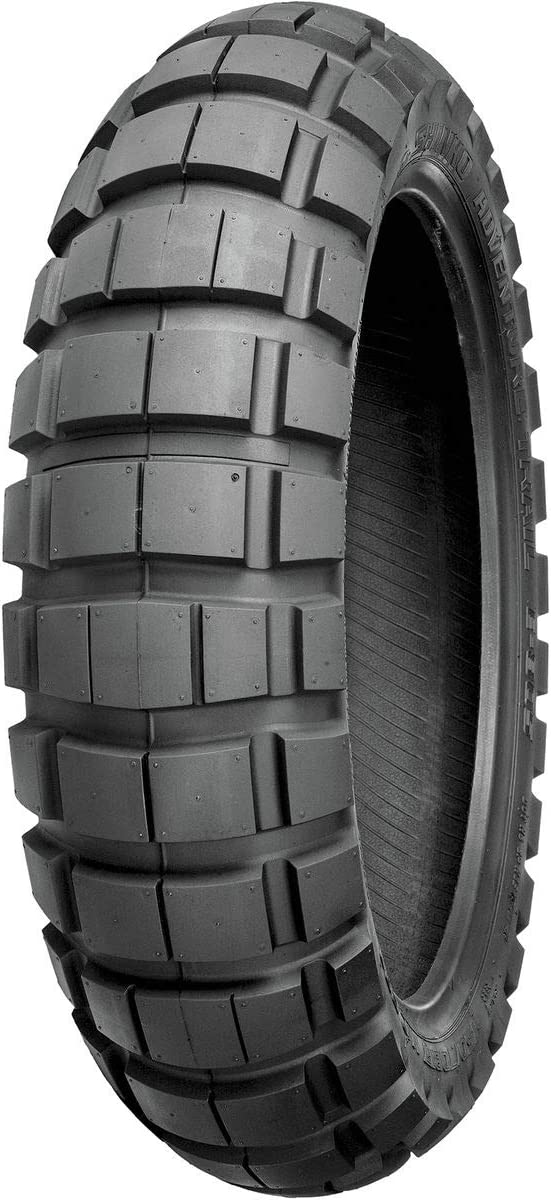
I’m currently deliberating between Shinko 804/805s and Michelin Anakee Wilds. I know the Shinkos are surprisingly quiet and smooth on the road, despite being a 40/60 road/off-road tire. However, they aren’t great with lateral stability. The Wilds are listed as a 50/50, but I have a sense they might be better in the dirt but louder on asphalt. (I’ve never ridden a set of these before.) I also like that the Anakees are a radial tire, so they will run cooler in the heat at speed. And for what it’s worth, Lyndon Poskitt just put a set of these on his Norden 901 for his tour of Iceland where he’ll be doing similar riding.

The Shinkos are about half the price of the Anakees, but for a tour like this, having the right tire is more important to me than a few hundred dollars. I have run the Shinkos before and they were great . . . until they weren’t. From one day to the next, they started skidding and sliding out on me.

What do you think? Anyone tried either of these tires?

Tools, More Tools . . .

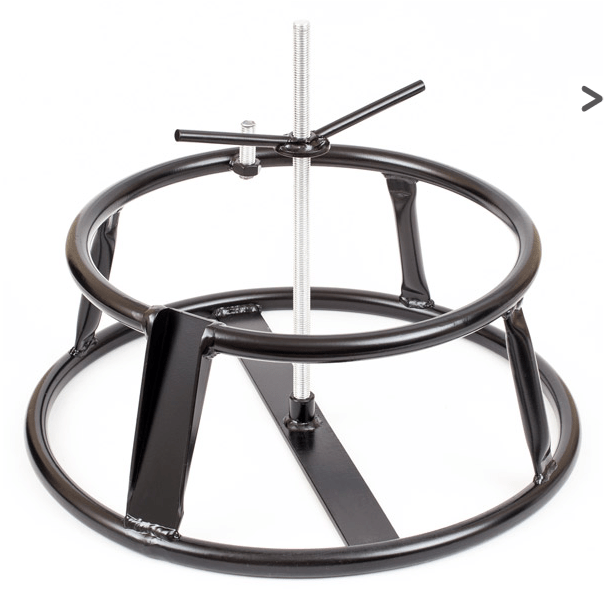
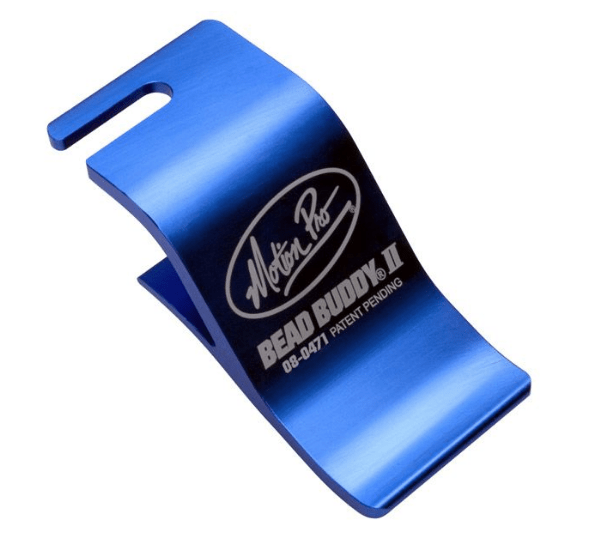
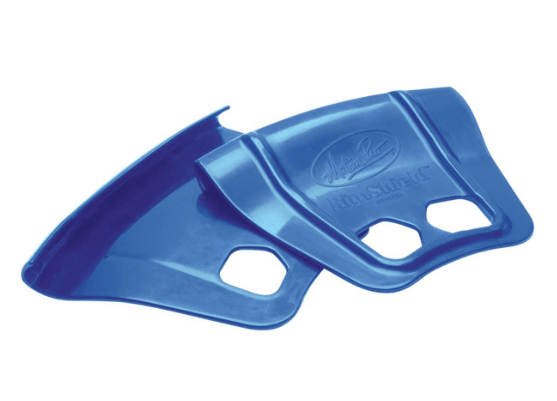
Finally on my wish list are some tools for helping me with these tire changes. I’ve always worked off the grass, but it’s not ideal; you’re grinding dirt into your bearings as you wrestle with the tire, and it’s hard to stabilize the wheel while levering. I think I’m going to ask Santa to get me a tire changing stand and some Motion Pro tools to facilitate this work and protect my rims.
The Tiger is basically a sport bike in adventure clothing; it rips, and I love how it handles through twisties. But I’ve yet to really test it off-road in technical terrain. Fully protected, with an aggressive knobby and soft panniers, Jet will be ready to hit the dirt and I’ll be eager to get back to exploring. Gros Morne National Park is a bucket list item for Marilyn and me, and I’m hoping we’ll be able to get deep into the park on the bike.

In the meantime, we’ve just received here in Montreal the first big snowfall of the winter. I’ve been shovelling the driveway for the past 24 hours, but I really don’t mind. It will be nice to have a white Christmas. I’ve just finished all my grading in my teaching work, and we are sufficiently stocked with holiday sweets and treats.

I was just remarking to Marilyn that, in many ways, I prefer the midwinter holiday to the summer one. While I can’t ride, being a bit house-bound provides an opportunity to step back from everyday life and reflect—a sort of retreat. And what comes to me this year as I do that is how incredibly blessed I am in so many ways. I and my loved ones are healthy, we have enough money, I have a fulfilling job . . . I could go on, but I’m thinking mostly of the people in Ukraine and other parts of the world who are less fortunate. In the immortal words of Ron MacLean, “count your blessings, not your presents.” It’s nice to dream and plan to buy stuff for what we are passionate about, but the most precious gifts cannot be bought.

I wish you and yours a healthy, happy holiday, and safe riding and travelling in 2023.

The Wish List, 2019

Biker Santa

It’s that time of the year again, when we reflect on the year that’s been and plan for the year ahead. This year I upgraded my training by attending two remise en formes, discovered Vermont’s wonderful dirt roads, travelled up the Gulf of the Saint Lawrence almost into Labrador, and wrote a handful of articles for northernontario.travel. I was so busy travelling, I didn’t do a lot of club riding, although I did lead two day rides: one to Ottawa for the Tulip Festival, and one to Smuggler’s Notch in Vermont.

Next year I want to start to introduce what I’m calling hybrid rides to our club. Those are rides where a group splits off from the main group and rides some dirt and then meets up with the gang later for lunch. I’ve been thinking about this for a while now but just have to figure out the logistics. I know there are some club members with ADV or ADV-style bikes who are interested in riding some easy dirt roads.

I want to do more challenging trail riding to improve my off-road skills, and it might finally be time to head across the country, completing that teenage dream of seeing Canada from a motorcycle. But more on that later. Right now I’m thinking of the goodies I’m asking Santa for to make my riding next year safer and more enjoyable. Here is the Wish List, 2019.

Stadium Suspensions PR1 Rear Shock

My rear shock now has over 90,000 kilometres on it and has never been serviced.  Imagine, that oil in there is 13 years old! Also, the stock shock on my bike is okay for road riding, but it’s too soft for any serious off-roading. The spring is also too soft; when I’m fully loaded, I’m sitting 2 cm under the recommended sag. I could try to have it serviced and replace the spring, but the combined cost would be almost as much as a new shock. I think it’s time to upgrade.

I’ve been talking with Stadium Suspensions in Beloeil, Quebec, just south of Montreal, where I live. They specialize in ATV, MX, and off-road suspensions. The nice thing about going with a company like this is that they can customize the shock to your weight and riding style. They have three models, and since I’m neither a beginner nor a pro, I’m going to buy the mid-priced unit, the PR1.

Stadium

You can see that this shock is an upgrade from my stock one because the PR1 has a remote nitrogen reservoir. On mine, the nitrogen is in the same compartment as the oil, which is fine for street riding, but once you get off road and the shock is working hard for extended periods of time, the oil heats up and mixes with the gas and froths and you start to lose your compression. Separating it is the answer; the best shocks are designed with a remote reservoir.

Other features of the shock include:

  • Spring preload adjustable
  • Rebound damping adjustable
  • Compression damping adjustable
  • Thermostatic system
  • Velocity Reaction Damping System (VRDS)
  • Bladder system reservoir
  • Length adjustable (+/- 10 mm)
  • Piggyback Reservoir, 360 degree angle adjustable
  • Magnum reservoir optional
  • Tool free compression knobs optional
  • Individually custom build for rider/application
  • Fully serviceable/repairable/convertible
  • Gold, red or blue, anodised reservoir
  • Progressive or linear springs

The other nice thing about Stadium is that they can build into the new shock my existing preload adjuster. I really like the ability to adjust the preload with the turn of a knob—no tools necessary—so I’m sold. With my new Ricor Intiminator fork valves in the front and this baby at the back, I’m going to be flying!

Protection

Speaking of which, I’m getting up to speeds now off-roading at which I really should be wearing a neck protector. A neck protector prevents your head from rotating beyond a certain degree, saving your neck in a fall. I don’t want to end up a quadriplegic, thank you very much. I don’t have a specific one chosen yet, but Leatt are a major manufacturer. Again, I don’t need the pro version (5.5) so I’ll probably go for the 3.5.

gpx_neckbraces_35__0000_leatt_neckbrace_gpx_3.5_wht_front_1020003950

In fact, I believe these are kind of a custom fit item since they are semi-restrictive, so I’ll probably just try a number of them on at a store with my helmet on and see which feels best.

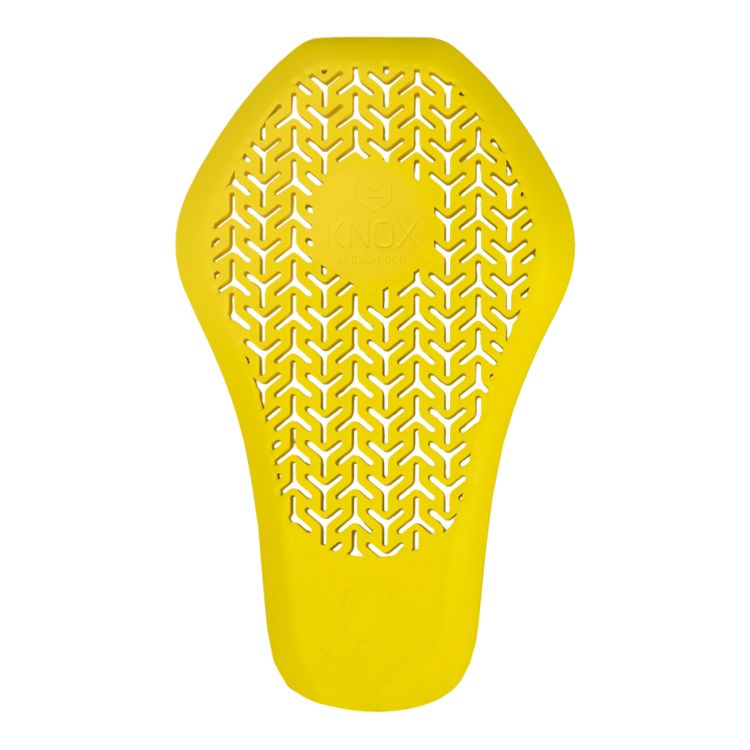
The other piece of protective gear I’ll pick up is a new back protector. I love my Knox Venture Shirt but the pack protector is cheap EPS and prevents air-flow. On those really hot days, it results in an uncomfortable wet back and has led me to not wanting to wear my protective gear. Knox have a better one which, as you can see, allows air circulation. It’s D30 so will provide better protection too. Neither do I want to be a paraplegic.

knox_microlock_back_protector_upgrade_part114_750x750

Auxiliary Lighting

I’ve been thinking of getting aux lighting for years, ever since I had a run-in with some roadkill coming home late one night from New Hampshire. Sure, you can get the cheapo made-in-China generic knockoff version at Amazon for $40, but they break easily and don’t stand up to the beating of off-roading. Everyone I know who’s bought cheap has had issues soon after. There’s also the quality of the LED light; it’s apparently not just a question of the number of lumens but the optics technology involved to reflect those lumens where you want them. If I’m going across the country, some auxiliary lighting will help get me there.

I’m pretty sure I’ve had Denali D4s on a previous wish list, but I think I’m going to go with the Cyclops Long Range Auxiliary Lights. I’m very happy with the Cyclops LED lamp I put in my headlight. In fact, it’s been one of the best upgrades I’ve ever done on the bike. It occurred to me the other day that Cyclops also make auxiliary lighting, so I’ll stay with the tried and true. Cyclops lights might be a little cheaper than Denalis and have a number of features that make them a compelling choice. I like also the smaller size on my little bike.

Cyclops

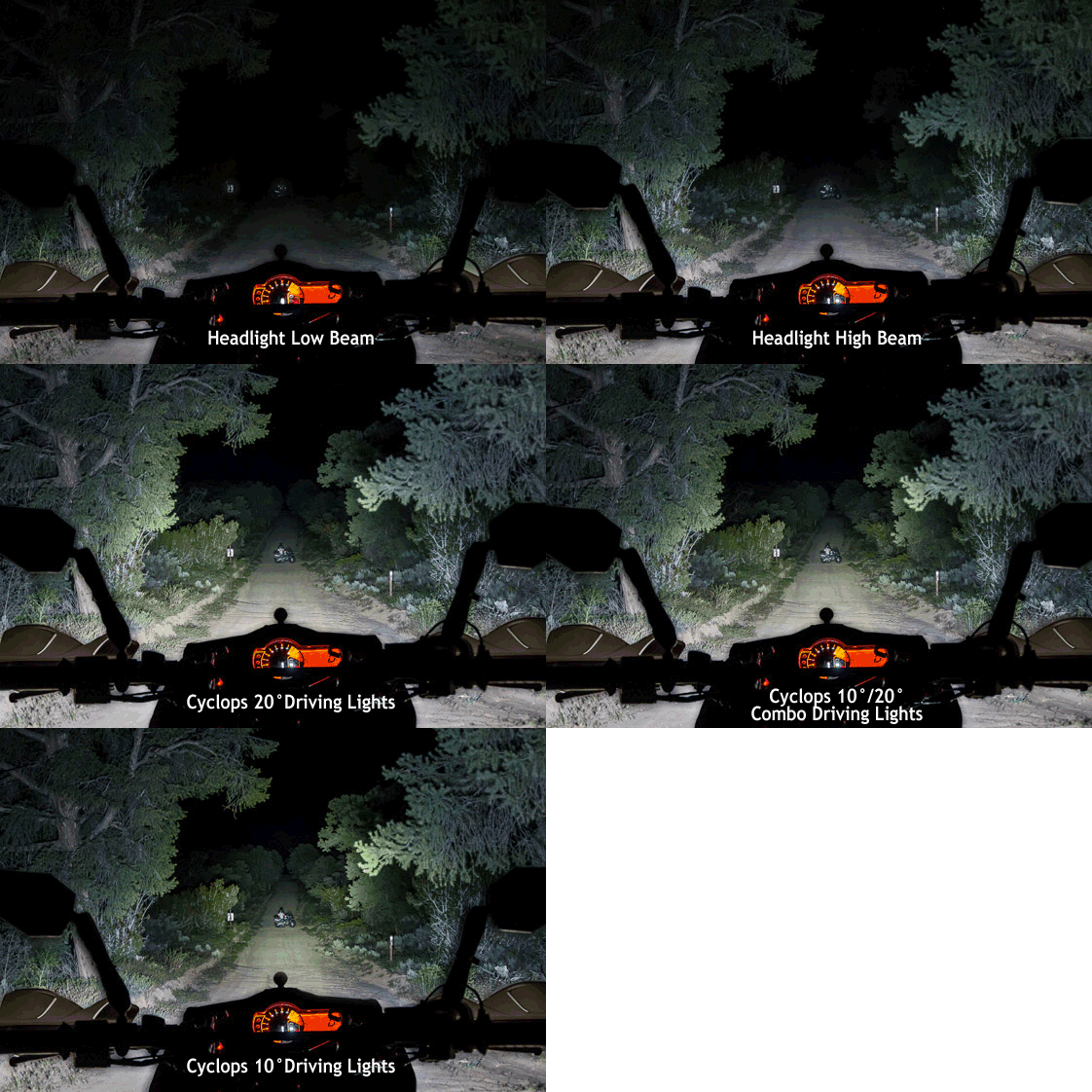
The Long Range lights stand up to their name by projecting a whopping 883 feet down the trail. They come in either a 10˚ or 20˚ arc, and a popular set-up is to put a 20˚ unit on the right and a 10˚ unit on the left. This arrangement will give good illumination of the side of the road while still penetrating those 883 down the road.

But of course it’s not just about seeing things but also being seen. Studies have shown that oncoming drivers sometimes mistake that single headlight for a double in the distance and turn in front of you. Having that triangle configuration makes you a lot more visible day and night.

One very nice feature of these lights is the ability to wire them directly into your headlight switch and program them. You set the intensity you want for low-beam driving lights so you aren’t blinding oncoming drivers. Then, when you flick on your high beams, you get full intensity. The plug-and-play wiring harness makes installation easy.

Got you curious about how good these are? Here’s a sequence of comparative photos provided by ADVPulse.

distance-sequence

Cardo Packtalk

Cardo

I’ve been of two-minds about communications systems. One of the things I like about riding is the solitude. Even when you are riding in a group, you are alone with your thoughts, as Ted Bishop aptly describes in Riding With Rilke:

When I first put on a full-face helmet, I have a moment of claustrophobia. I can hear only my own breathing and I feel like one of those old-time deep-sea divers. . . . When you hit the starter, your breath merges with the sound of the bike, and once you’re on the highway, the sound moves behind you, becoming a dull roar that merges with the wind noise, finally disappearing from consciousness altogether.

Even if you ride without a helmet, you ride in a cocoon of white noise. You get smells from the roadside, and you feel the coolness in the dips and the heat off a rock face, but you don’t get sound. On a bike, you feel both exposed and insulated. Try putting in earplugs: the world changes, you feel like a spacewalker. What I like best about motorcycle touring is that even if you have companions you can’t talk to them until the rest stop, when you’ll compare highlights of the ride. You may be right beside them, but you’re alone. It is an inward experience. Like reading.

Riding a motorcycle is one of the few occasions in my life to be in the moment. It’s just me and the sensations of the bike and the beauty of the surrounding environment. Why would I want to pollute that silence with people nattering in my ear?

Maybe I’m just anti-social. Maybe I’m a purist, or a rebel, or all three at different times. I’ve heard the argument about comm systems increasing safety, but my response is if you need to rely on others to stay safe, you shouldn’t be riding. On the big club tour I did last summer, I was the only rider without a comm device. Did I feel left out? Not really, except when I went to talk to someone at a rest or gas stop and that person gestured to say “I can’t hear you because someone else is talking to me in my helmet.” Yeah, ironically, comm systems can alienate people too.

But I’ve decided to join the club, so to speak, and get one, and I have to say it’s mostly for the ability to hear voice commands from my GPS, to hear incoming texts and send out voice-activated replies, and to answer and initiate phone calls while riding. But I’ll admit it will occasionally be nice to communicate with others in a group, especially if I’m leading. And of course there is always the option to mute the nattering when desired.

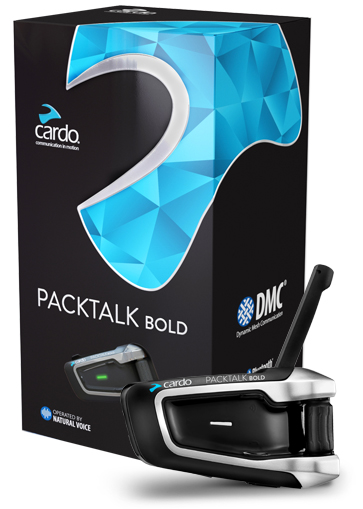
Club members are very happy with the Cardo Packtalk, mostly for its mesh technology which makes connecting (and reconnecting) large numbers of riders fairly easy. I had the opportunity to try one during a club ride and found the sound quality good. And while I didn’t have the opportunity to test the connectivity to my phone, other club members have said that the person you are talking to on the phone cannot tell you are riding a motorcycle, so the mic must work very well at cutting out ambient noise. My feeling is that this purchase is going to be the most significant change in my riding experience.

Pearly’s Possum Socks

Pearlys

Last but not least, I’m asking Santa for socks in my stocking. I heard about Pearly’s Possum Socks on Adventure Rider Radio. The host Jim Martin raves about them. Socks, you say? You want Santa to bring you socks? Well these are not just any kind of socks. They are a blend of merino wool, which I’ve raved about elsewhere, and possum fibres, which are hollow and therefore super warm since each fibre has a built-in dead-air space. (I wonder how vegan motorcyclists manage?) They are apparently also very soft. A little nylon to strengthen everything up and you have a premium sock that is warm, breathable, comfortable, durable, and anti-bacterial in a compression fit to aid circulation and to help avoid muscle fatigue.

At a premium price. With extra S&H to Canada and the currency conversion, these socks come to over $100 a pair! Gulp. I’ve balked a click away from purchasing them a few times, which is why I’m asking Santa to bring me some instead.

* * *

I always feel very First World, or is that now Developed World?, in making these lists. I’ve worked hard my entire life to achieve a certain level of material comfort, but I’m also aware of the opportunity I have here in Canada and the lack of opportunity less fortunate have elsewhere. And being year-end, I always end these lists by expressing gratitude for what can’t be bought: my health, my wife, and my son. I’m also pretty fortunate to have so many friends, a community of riders and others who help give life meaning and value.

We don’t have to look far to see those who are alone and without basic material comforts. And neither did Saint Nicholas, who gave his inheritance to the poor and became the patron saint of sailors, repentant thieves, prostitutes, children, and students, among others. His charity lives on amid the advertising and commercial hype of Christmas as long as we continue to look.

Happy holidays, and safe riding in 2020.

The Wish List, 2018

Moto Santa

If I’m going to get my wish list to Santa before Christmas, I’d better send it now. This year has been a tough one for a few reasons, but mostly because my mom died in the fall. That threw everything off, including my blog writing. I just didn’t have the appetite to write, or ride, or do any of my other interests. But the midwinter holiday and the turn of the new year is as good an opportunity as any to turn the corner and start to look forward to the warmer weather and the chance to ride again. Here are a few things I’d like to get for the 2019 season.

But first, let’s take a look at what didn’t make it off my wish list last year.

  • Upper crash bars: check
  • Inline fuel filter: check
  • Flexible front flashers: check
  • Chain-breaker: check
  • Wheel lug/tire iron wrench: check
  • New front tire: check
  • Body armour: check (not Leat but Knox)

So the only two items that didn’t make it off my 2017 wish list were the Garmin Montana GPS, for the second year running, and the Sea-to-Summit mattress.

Garmin Montana 650

The GPS is a must this year; I can’t put it off anymore. As you know if you read my last post, I actually suffered a breakdown on my tour this summer from using a phone GPS. The port on the phone is just not built to withstand the demands of off-road riding—the vibrations, the moisture, the drain on the battery. I ended up jeopardizing my bike’s battery which led to the breakdown. And if you’re doing any serious off-roading, you’re often going to be outside of cell service. This is a fairly big-ticket item so I’ve been avoiding it, but fortunately, I’ve been doing some writing for Ontario Tourism and the money earned from that writing will offset the cost this year.

There is a new 680, but the 650 will be more than enough for my purposes and maybe I’ll get a deal on a discontinued model. I’m so tired of trying to use GoogleMaps to plan my rides! It works okay to get you there but you don’t have much choice in the route (just “avoid motorways,” “avoid toll roads,” and “avoid ferries.”) I’m looking forward to being able to use BaseCamp to plan rides on my computer and import tracks to the GPS. It’s also going to open up a whole new world of off-road track sharing through forums. The Montana is the most popular off-road GPS on the market, with topographical maps, the ability to geocache photos, dual map capability, a micro SD card slot, and many more features that I’ll probably never use. Best of all, it’s rugged.

A Lithium Battery

Shorai

Shorai LFX14L5-BS12

I’ve also decided it’s time to retire my old wet cell battery. I actually got two when I bought the bike. One died about a year ago, and the second is now getting weak. The battery on my bike is known to lose fluid because it’s right next to the upper oil tank, so it gets hot. Also, you have to remove all the plastics on the bike to check and to maintain the battery, so a low maintenance battery would be a huge benefit. I’ve decided to try a lithium battery. I heard about them on Adventure Rider Radio but had concerns about using a lithium battery in a cold climate like Canada’s. However, I’ve heard on forums that it shouldn’t be a problem. You just turn the electrics on for a minute or two to let the battery warm up before hitting the starter. I won’t have to worry about this one boiling dry, as my current one did outside of Mattawa, and an added huge benefit is that it’s much lighter than a wet battery. It’s the easiest way to shed several pounds up high on my bike.

Ricor Intiminator Fork Valves

Intiminators

41mm Ricor Intiminator Valves

This past year, I lost the preload adjuster on the rear shock. I think what happened was the new Holan upper crash bars install too close to the adjuster. The bars use the same mounting point, and I think the adjuster threads got strained from the tip-overs and eventually stripped. I was lucky to find a generous soul willing to swap me his adjuster for mine, but in doing some research on this item, I discovered that many riders find the suspension on my f650GS too soft, especially for off-roading. I’m not a big guy, so I don’t find the rear too soft, but the front end does dive under braking, and for the past while I’ve had a clunking noise coming from the forks on certain types of bumps. I was going to rebuild the forks this summer, replacing the bushings, so I’ve decided to install some Ricor Intiminators at the same time to firm up the front end. They don’t look like much, but these babies have something called Inertia Active Technology. Developed over a twenty year span, this technology can distinguish between chassis motion (fork dive) and wheel motion (bumps in the road). It allows the wheel to move and stay in contact with the road but doesn’t allow the forks to compress when front brake is applied. How, you ask? You’ll have to read the details of the technology at their site. The bottom line is that you get a cushy ride on the road without the fork dive under braking, and better handling off road. According to many comments on user forums, the suspension on my bike is its greatest weakness, so I’m looking forward to improving the front end.

K & N Air Filter

KandN

This one is kind of a no-brainer, which makes me wonder what took me so long to make the switch from paper to cloth air filters. Okay, I do remember reading up on foam filters when I first got the bike, but what I read was that the OEM paper filter protects better than foam. And that is true, partially. Dry foam filters have holes upwards of 90 microns in size, too big to stop sand, which can penetrate your engine and do nasty stuff to it. But an oiled foam filter will protect your engine just fine, and most dirt bikes and off-road bikes like KTMs use oiled foam filters. However, too much oil results in loss of power because not enough air is getting in to mix with the fuel. Recently I discovered the K & N cloth filter which protects as well as OEM but is reusable like foam. It’s also zero maintenance (no oil to administer) and is reusable; just clean in soapy water, rinse, and dry each year. Sounds like the best option for me. Goodbye disposable paper filters.

Klim Carlsbad Pants

carlsbad-pants-grey-30

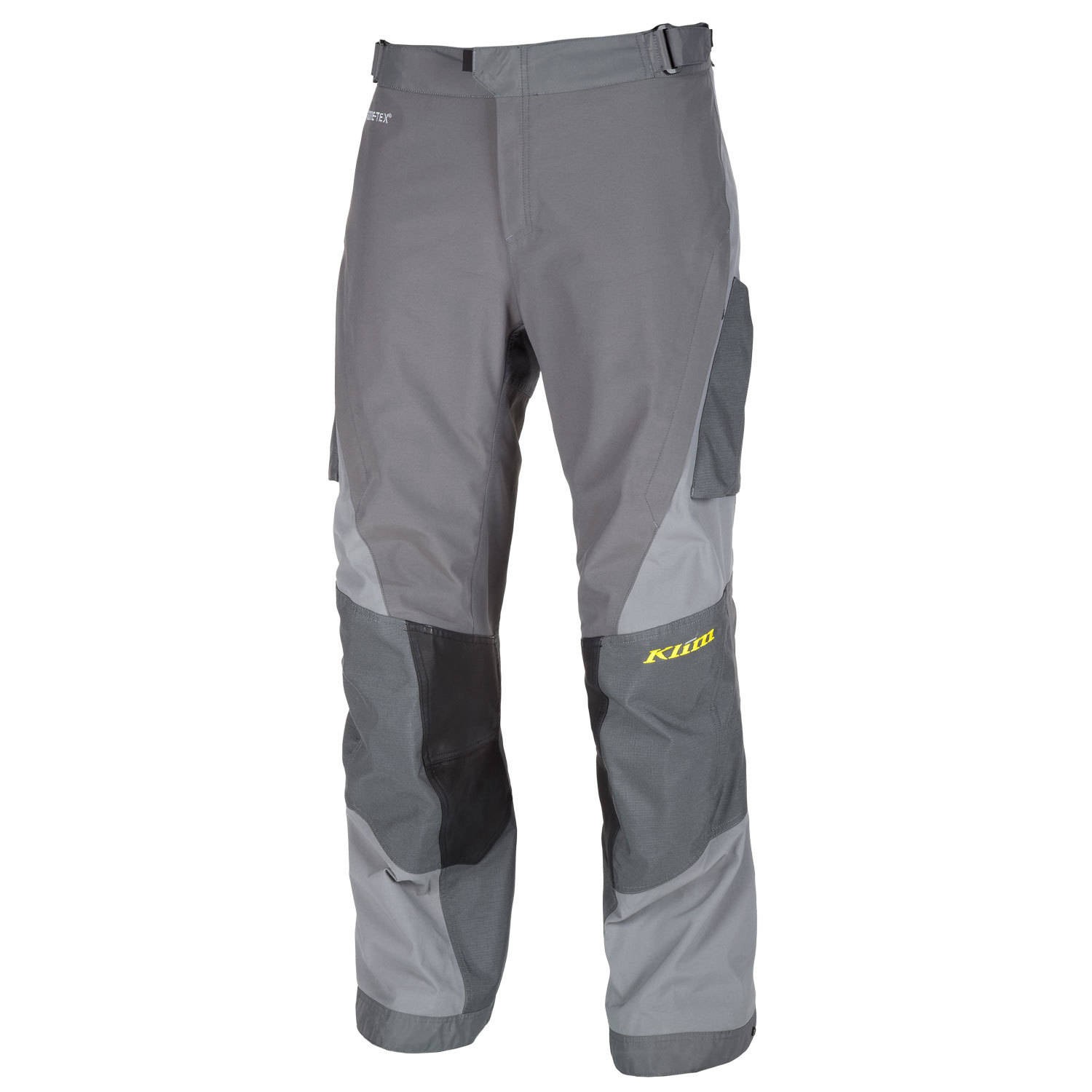
Santa came a little early this year with some Klim Carlsbad pants for me, so this one is not officially on my wish list. I love my Klim Dakar pants; nothing is more flexible and durable for off-road riding than the Dakars. But they are not waterproof. That’s just not the way they are designed. They are designed to pull through overhanging thorny brush without tearing, and to allow maximum airflow when it’s not, so not waterproof and not for adventure touring. I’ve been desiring a Gore-Tex pant that will keep me cool in the heat and dry in the storms. No stopping under bridges to pull on rain gear, no trying to anticipate weather—just ride rain or shine and remove guessing from your day. I saw these on sale 43% off their regular price about a month ago and jumped before Fort Nine sold out of my size.

Steel-Braided Brake Lines

Single Front Line

Last year I accidentally damaged my rear brake line while fixing my rear shock. I’ve decided I might as well take the opportunity to upgrade to steel lines which are better for off-roading anyway. Galfer lines are made in the USA, are model specific, and have teflon inner coating to avoid deterioration. There are even colour options for both the line and mounting hardware. I’ve already got new front and rear disc pads waiting to be installed, so I’ll be doing a complete brake rebuild in the spring.

That’s it. A suspension upgrade, a lithium battery, and (finally!) a motorcycle GPS top my wish list for this year. But like last year and every year, my main wish is continued health. A friend of mine is currently battling brain cancer and wasn’t able to ride last year. He’s recently had a setback and will be spending Christmas in the hospital. I’m thinking of him a lot and would gladly forego all these goodies and more for his health, but unfortunately there are no deals like that available in life. You have to count your blessings, and bless each day you have to live. However messed up this world is, experiencing all it has to offer is and always will be the most wonderful gift of all.

Merry Christmas and happy holidays to you and yours.