In one week, I bought a bike, sold a bike, and retired from teaching. Yes, there’s a relationship between those events.
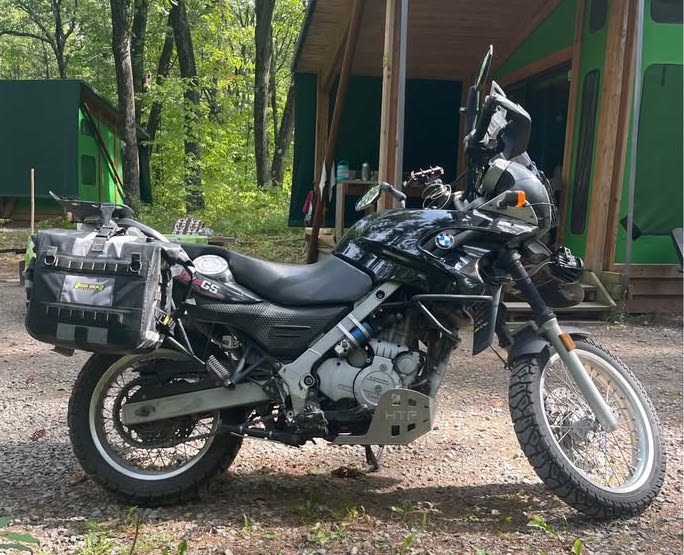
At 59, I crunched the numbers and came up with three scenarios: retirement at 61, at 63, and at 65. Because I’m Canadian, I went for the compromise. Here it is, 4 years on, and I’ve taught my last class, graded my last essay, attended my last department meeting. The occasion called for something special: a new bike. No wait, two new bikes.
The original prize was going to be a Honda CRF300 Rally for playing on the trails. But as I was researching that purchase over the long winter months of the off season, I found myself more often drawn to Facebook Marketplace listings for a big GS. I watched buyer’s guides on YouTube, read about the different generations, models, years. I listened to the BMW Motorrad podcast Ride and Talk, and spent a lot of time at the BMW section of the Motoshow. It was clear that in many ways I was more excited about upgrading my touring bike than getting the little dirt bike.
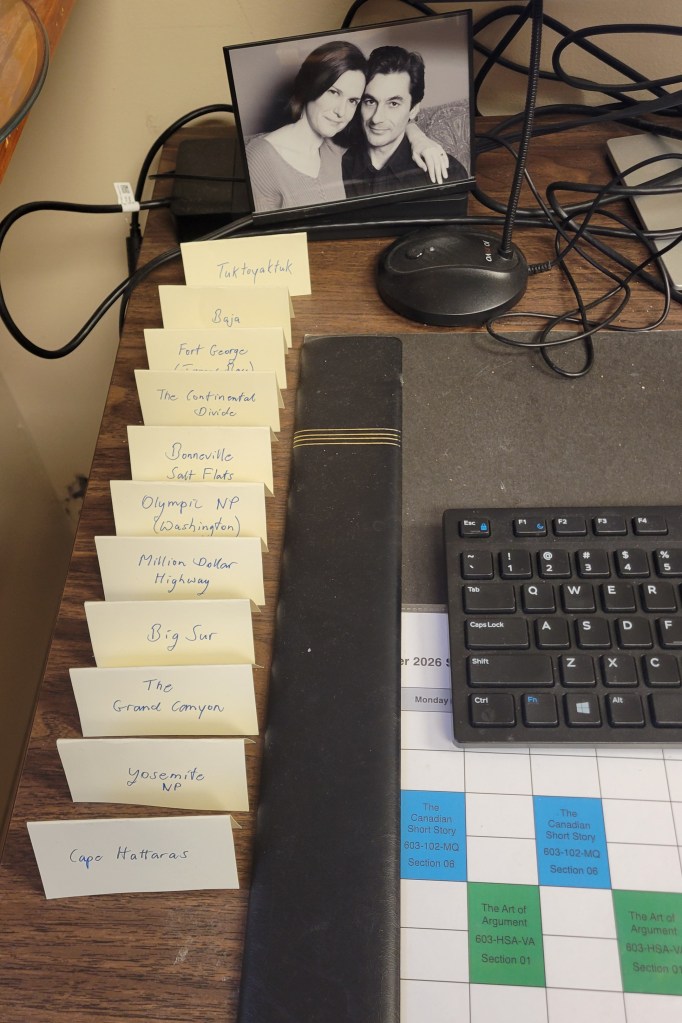
I guess that is to be expected. My retirement plans focus on places I want to tour. In my final semester, I had 15 little labels on my office desk, each with a destination, and took one home at the end of each week as I counted down to retirement. I would need a big Kilometre Cruncher to get all across North America, something bigger and more comfortable than the Tiger, and I knew the BMW 1200 GS was the best bike within my budget for that.
I was leaning toward the 2013-17 water-cooled models. They had a little more power than the earlier oil/air-cooled models, a wet clutch that is easily accessible, rider modes, cruise control, and a smooth gearbox. Then my buddy Riley started singing the praises of the old oil-cooled models. He had an 1150 years ago so was familiar with those engines. No radiator, no water pump, no gaskets, no thermostat, he said, and lighter and generally more reliable. AI suggested that the water-cooled models were sportier but the oil-cooled ones were more reliable. And without all the electronics, the oil-cooled engine was easier to work on for the home mechanic like me and for trailside repairs.
There are pros and cons to both, and all GS’s are good, but in the end I followed my gut, which was telling me I’m an old tech type of guy. The original 650 Thumper had no rider aids, not even ABS, and while the Tiger at least had ABS and a fuel gauge, it also didn’t have modes or cruise control. I think the only essential rider aid is good ABS for those panic situations. Some form of traction control is also useful in rainy conditions. The 2010-12 GS was now my target, when the old R25 engine was at the very end of its run and all the kinks had been worked out.
In the end I followed my gut, which was telling me I’m an old tech type of guy.
By now, Riley had become my unofficial (or at least unpaid) consultant. He said he likes spending other people’s money. He was sending me listings and accompanying me to look at bikes. He found a white 2012 with low mileage and under $10G. I got excited and we went to look at it but that bike had too much history. It had developed a rattle and the dealer said the engine was finished so the first owner (or was it the second?) bought an engine off eBay and installed it himself. I don’t think anyone knew what the actual mileage on the bike was. So I backed out of that. (It turned out that the original engine had only something minor wrong!)
As we sat on my porch drinking beer, Riley mentioned a late friend’s bike. The first owner sadly had passed away about two years ago and he didn’t know what had happened to his bike, which was a shame because it was apparently a really nice low-mileage bike. After he left, I naturally opened Marketplace and looked at the GSs. There was a low mileage triple black at a good price so I left a message. A few days later, Riley and I were on our way to see it.
As we turned onto the street of the address, Riley said he knew someone who lives here, and as we pulled in front of the house, he recognized it and the bike sitting in the garage. It was his late friend’s bike! It was one of those coincidences that seem like it was meant to be. And from a practical point of view, it meant I knew the history of the bike. It had always been serviced by the dealer, never ridden off road, and ridden conservatively. Buying it was a no-brainer.
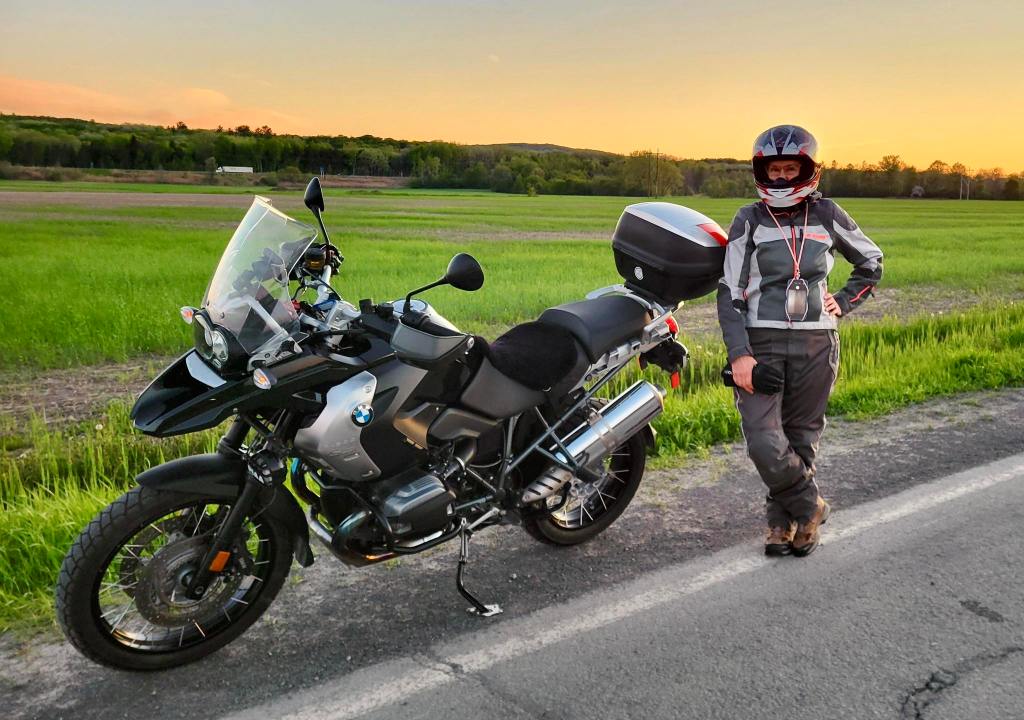
So let me introduce to you the bike that will take Marilyn and me across North America over the next 10-15 years, God willing, and maybe some of Europe too.
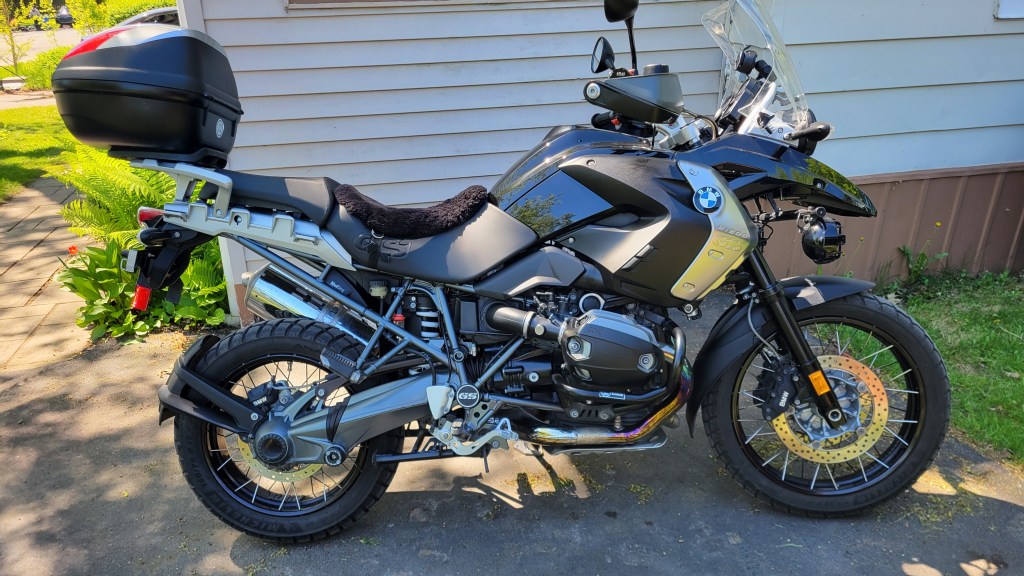
The bike has 35K on it, exactly the same mileage as the 650 when I bought it. These bikes apparently aren’t broken in until that mileage, so there’s plenty of life left in it. In fact, many of these engines last well over 200,000 kilometres if taken care of with regular oil changes.
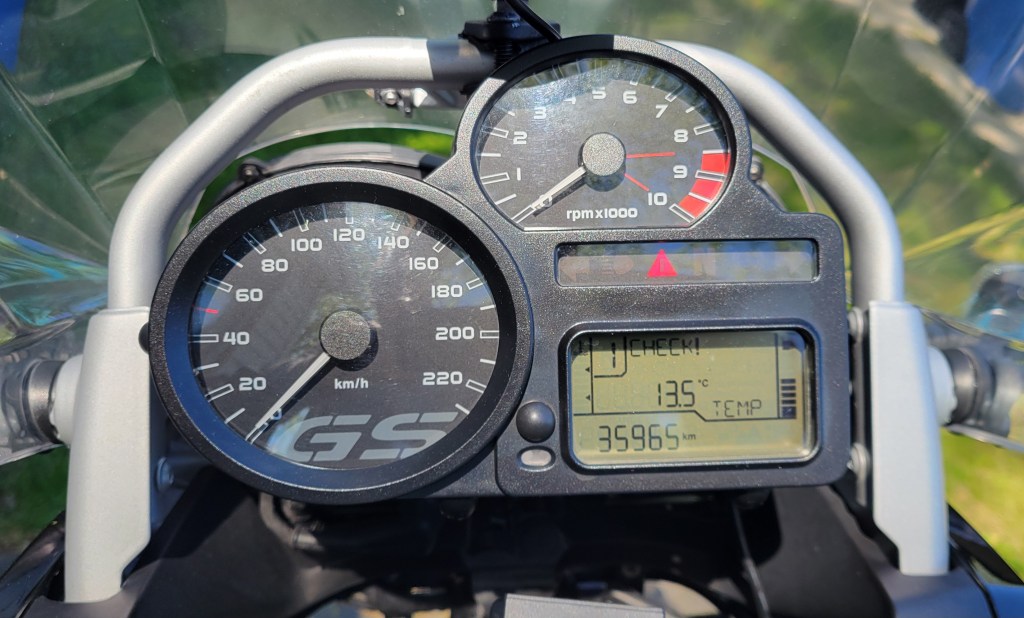
I don’t know what the options were for this particular model, but the bike has ESA (Electronic Suspension Adjustment) and ASC (Automatic Stability Control, or BMW’s early version of traction control). It has heated handgrips, a must in my opinion for touring in Canada and at elevations. I think those things are standard.
It was one of those coincidences that seem like it was meant to be.
I like most of the modifications the first owner has made to the bike. Since it doesn’t have cruise control, he has added an Atlas Throttle Lock and a Throttle Rocker. That might seem like overkill but I like both. There are times when I just use the rocker, and on the open highway, times when I use the throttle lock. I had an Atlas on the Tiger and they are great. He’s also added Grip Puppies to reduce vibrations in the hands.
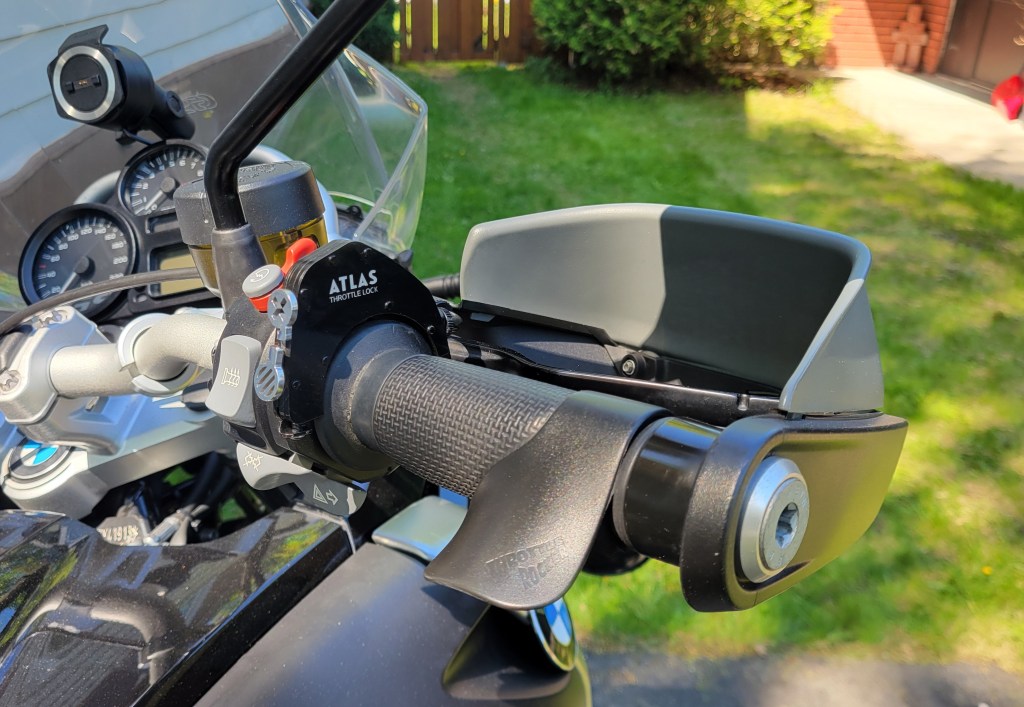
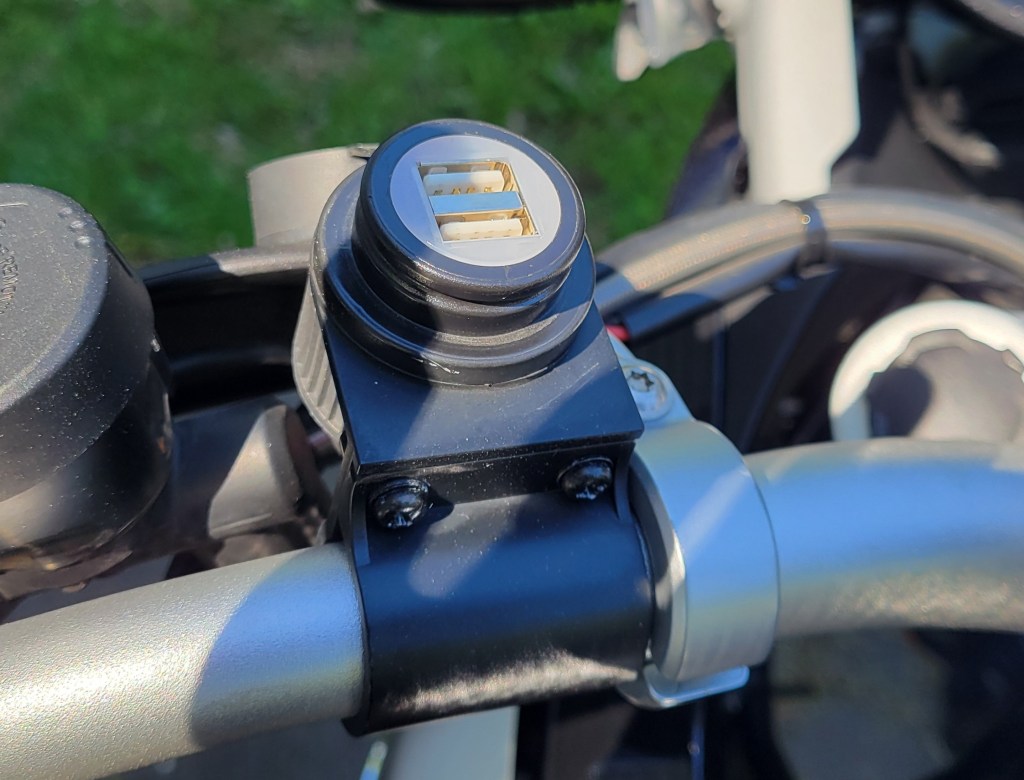
You can see in this photo a mount for a GPS. The bike came with a Tom Tom unit, and while I’ve gotten used to touring with my phone, I’m going to try the GPS for now. I like that it’s waterproof and heat and vibration resistant. It also works of course by satellite and not cellular service, which will be handy when touring out of country. On the other handlebar, he’s added a double USB port instead of the standard aux port. There is an aux port, however, under the seat near the back, so with an adapter Marilyn will be able to plug in to charge her phone or use heated gear.
He’s added a Mudsling rear suspension guard to protect the rear shock, and at the front, PIAA auxiliary lighting with a separate switch on the left handguard. I’m pretty partial to my Cyclops Aurora lights, so will probably swap them in as my aux lighting. I like how visible the amber halo makes me when riding around town, and I like the 4000 lumens they provide when I hit my high beams.
The bike has a Canbus electrical system, so I was preparing to install a CANsmart Controller to do that, but then I lifted the seat to find this.
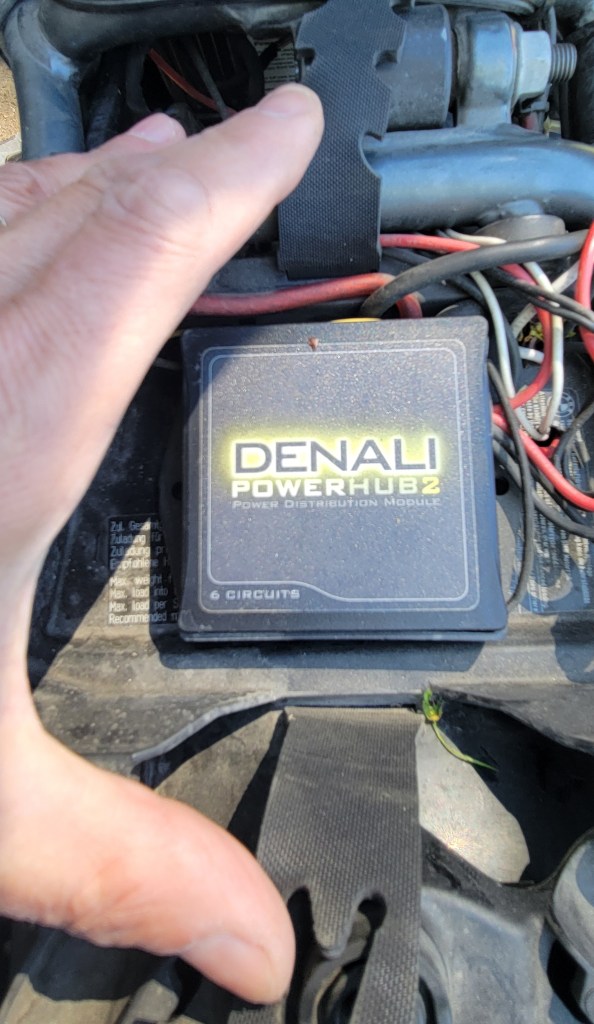
Nice! The Denali Powerhub 2 Distribution Module works with a CANbus system, making the install of the Auroras a lot easier. There are six circuits and only three are currently used (presumably one for the PIAA lights) and all six circuits can be either switched or non-switched power. I had the Centech AP-2 Aux Fuse Panel briefly on the Tiger but this is clearly a superior system.
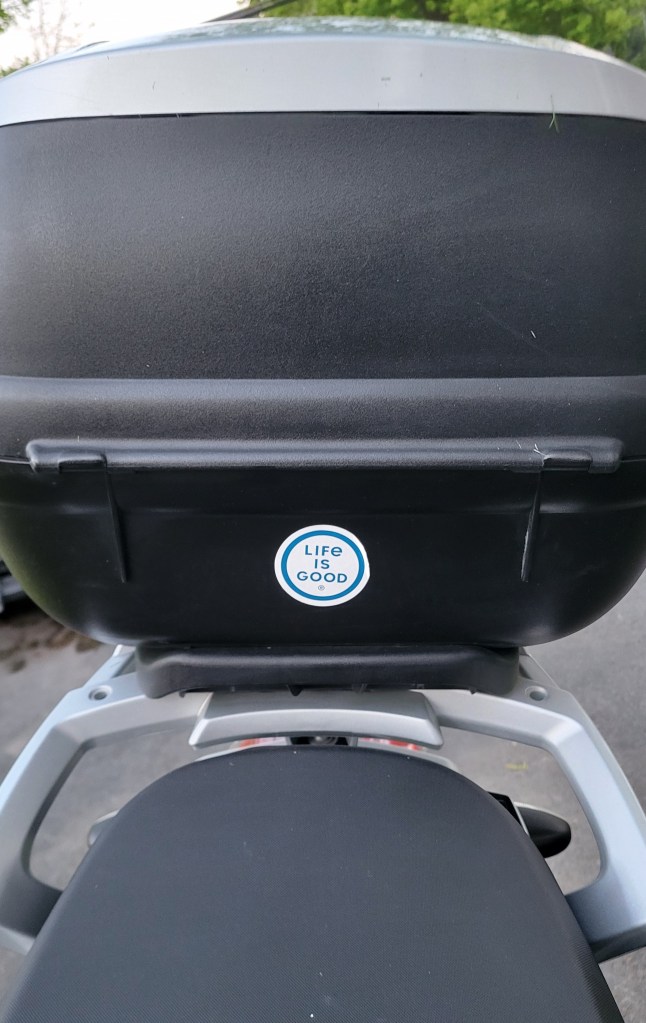
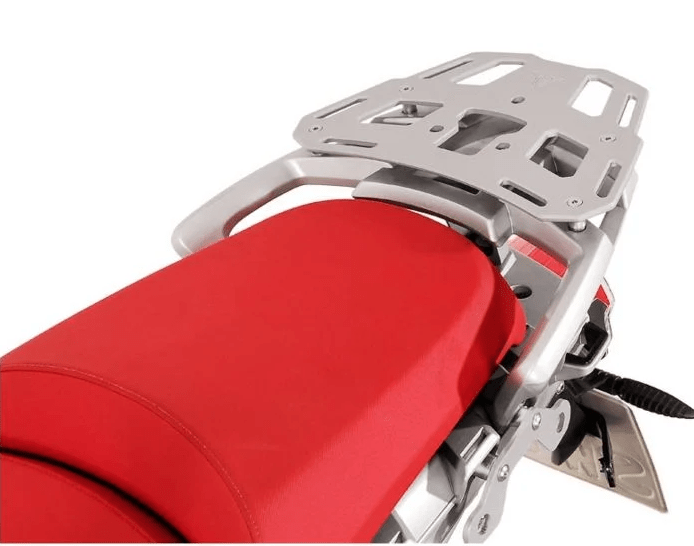
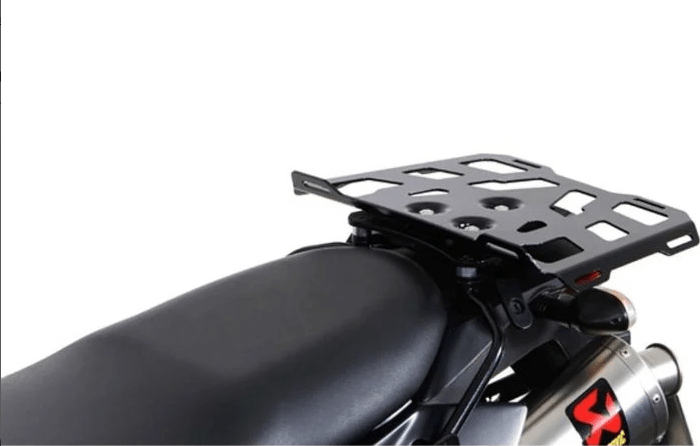
I’m not really a top box guy so will probably eventually take off the GIVI box, but I have to admit, it sure is handy around town. I’m enjoying it for now but have bought an SW-Motech Alu-Rack and Quick-Lock Luggage Rack for touring. The Alu-Rack is a durable, secure base for a small tail bag when I’m not touring, and the Quick-Lock Luggage Rack can quickly be added over and will provide a larger platform for a duffle bag.
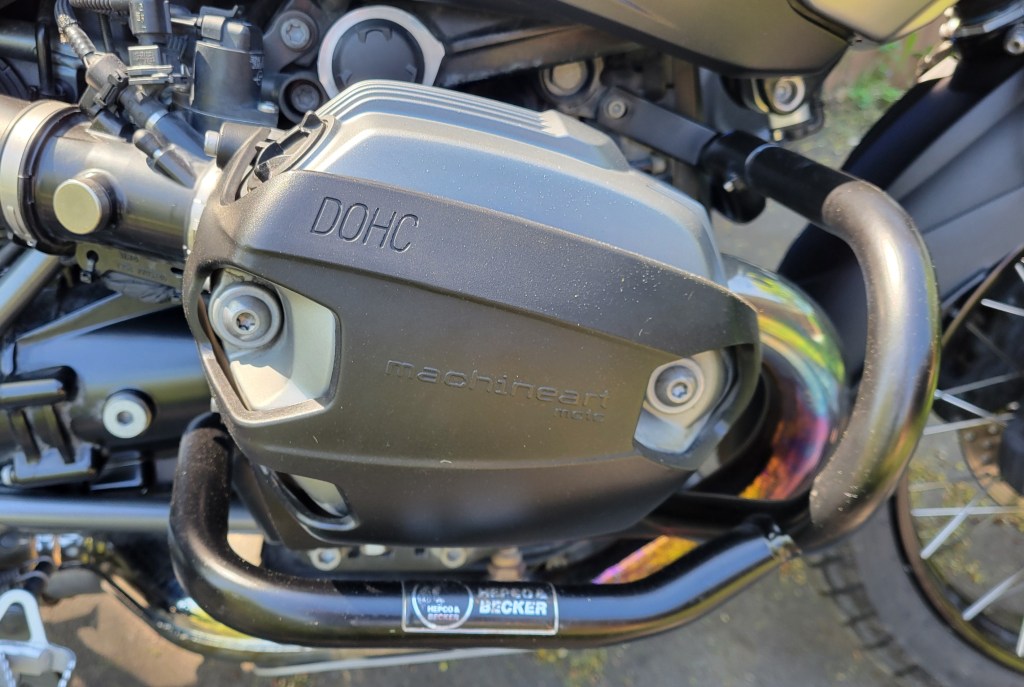
Last but certainly not least, he’s added excellent protection for the engine with Hepco-Becker bars and head covers from Machineart Moto. No need for big bars going halfway up the faring; these are all you need with the boxer engines.
I love everything about this bike. I love that it’s black—triple black, to be specific. All my bikes have been black, even my bicycles growing up. I used to buy bicycles at the police auctions, strip them down, paint them black, then reassemble them with new grease. When I bought a new bicycle from Canadian Tire in my early 20s, it was burgundy, so naturally I had to do the same. I don’t know why because blue is my favourite colour, but my bikes are always black. It just wouldn’t have felt right having a white bike.
I love everything about this bike.
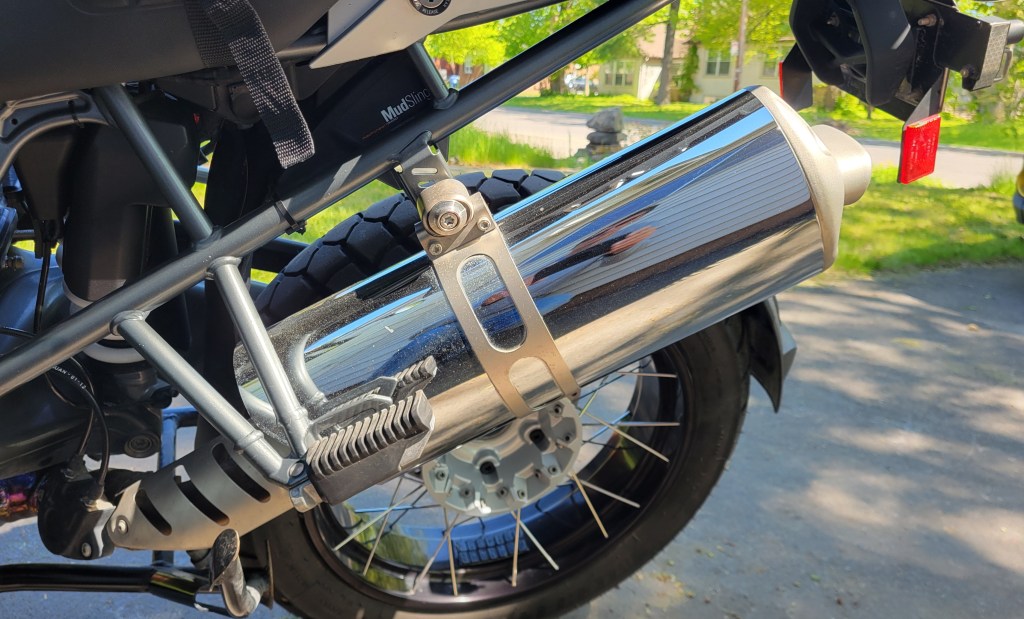
I love that it starts on half a crank and twitches when you twist the throttle. I love that it shakes a little at idle and at low revs. And I love the baffle that BMW added on the 2010-12 years, giving it a real throaty exhaust note. It’s a far cry from the silky smooth Triumph triple and reminds me of the original thumper but without the buzziness at highway speeds.
Given the context, I can’t help think of the original owner when I swing my leg over the bike. In some way, it feels like I’ll be riding the adventures he should have had in his retirement but for some rotten luck. I don’t know what he would think, and I obviously can’t speak for him, but I like to think that part of him would be happy that his bike will be used for its original intent.
We must count our blessings and appreciate what each new day brings. That may sound like a platitude, but as I age, I recognize the wisdom of it more and more.