In celebration of Canada Day 2024, here are my 10 favourite roads to ride in Canada.
Canada is a huge country with over a million kilometres of roads. I can’t say I’ve ridden most of them, but I have ridden to both the east and west coasts and almost to the northern one, so I’ve done a good survey of the country. Here are my favourite roads in Canada, going from east to west.
Highway 430 (Newfoundland)
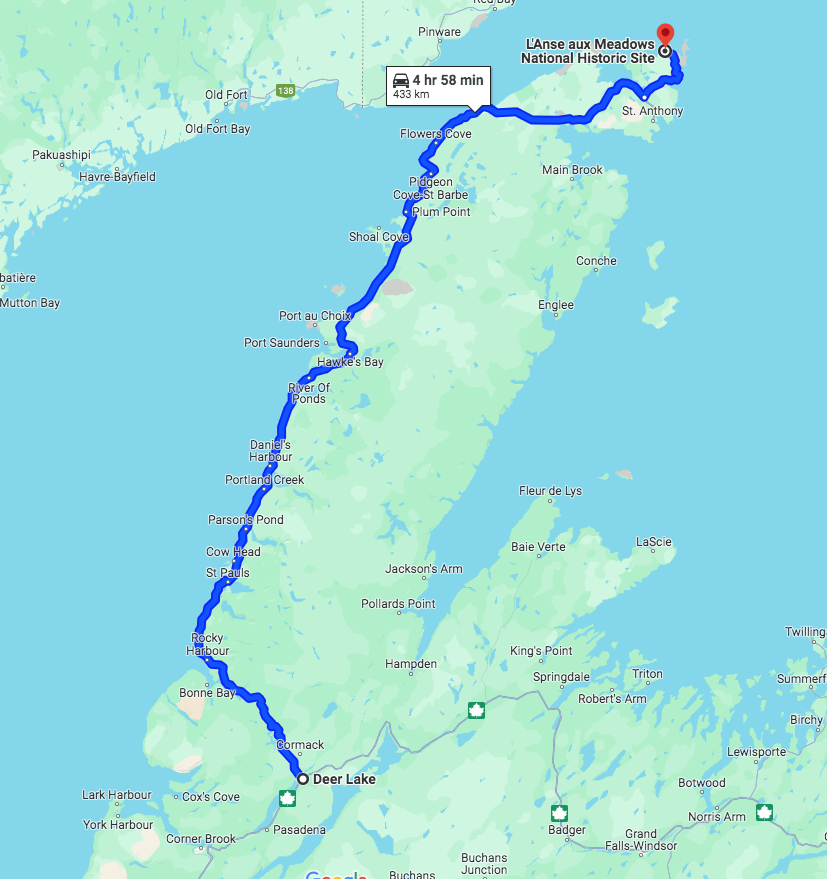
Also known as The Viking Trail, this highway begins at Deer Lake, where it splits off from the Trans Canada Highway and heads west and then north. It hugs the western shore of Newfoundland, offering hours and hours of spectacular ocean views and some of the most impressive geology in the country. Be sure to stop in Gros Morne National Park and hike The Tablelands Trail with its unusual orange rock, and camp at one of three campgrounds right on the beach. A highlight for riding is the section through Rocky Harbour, a mountainous region with changes in elevation and twists and turns and scenic lookouts that rival the iconic Cabot Trail in Cape Breton. Further north, the 430 levels out and follows the shoreline. You’ll feel the air temperature change rapidly when the wind blows off the ocean, so have a windbreaker on hand. Another highlight is Point-au-Choix, a national historic site where moose, caribou, and other wildlife can often be seen. If you make it all the way up to the northern tip of the highway, you’ll be rewarded with views of icebergs drifting southward from Greenland and L’anse Aux Meadows, the historic site of the first settlement of Europeans from which the trail takes its name.
Highway 4 (Nova Scotia)

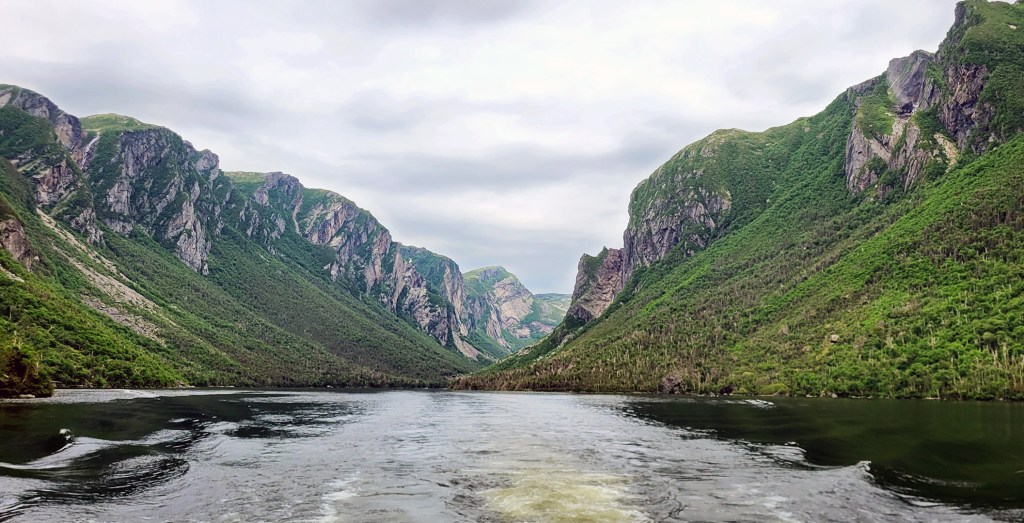
You may be surprised that I didn’t choose The Cabot Trail as my favourite road in Nova Scotia. It’s a fun ride, no doubt, but for really getting a sense of interior Nova Scotia, I prefer Highway 4. Apparently it was the original Trans Canada Highway traversing the province and you can see that in the way it criss-crosses its replacement. You can also hear its history in some of the towns along the way. Travelling east, you pick it up just outside Oxford before it hooks south through Wentworth Valley, then east through Truro and Bible Hill, New Glasgow, and Antigonish before crossing onto Cape Breton, where it hugs the south shoreline of Bras d’Or Lake all the way to Sydney and, finally, Grace Bay at the shore of the Atlantic Ocean. It’s as long as its history and every bit as varied and interesting. It doesn’t contain the dramatic switchbacks of The Cabot Trail, but weaves its quiet way through rolling hills, countryside, lakes, and villages, never far from civilization but as if in another era. The two or three times I’ve ridden it, I enjoyed it so much I forgot to take a photo, so you’ll just have to get out there yourself to see why it’s one of my favourite roads.
Highway 132 (Quebec)

The 132 is Quebec’s longest and oldest highway. It begins in the west at the US border south of Montreal and follows the south shore of the St. Lawrence River all the way around the Gaspé peninsula. It’s best to pick it up at Rivière-du-Loup east of Quebec City, where it becomes picturesque with old clapboard houses and churches dating back to the origins of Quebec and, indeed, North America. East of Rimouski, the road narrows and mountains rise up on your right so that for hundreds of miles you are riding a narrow ribbon of asphalt strung between the Gulf on one side and dramatic cliffs on the other. And when the road turns inland to traverse the mountain range, the riding gets even better. Be sure to make a stop at Forillion National Park and the iconic Roche Percé (pierced rock), a biker mecca. But don’t stop there; keep riding around the peninsula to see sandy beaches as you pass through quaint fishing villages. When you reach the New Brunswick border, you can cut back across inland on the 299 for some technical riding.

Highway 2 (Ontario)

The first ride I ever did, the day after I got my licence, was along Highway 2 from the Quebec border to Kingston. It is another shoreline road, first in the east with the St. Lawerence River and opening up to Lake Ontario west of Brockville. It is also one of Canada’s oldest roads with a ton of history to explore, particularly Loyalist history. Be sure to check out the Lost Villages Museum, containing replicas of buildings flooded when the Long Sault dam was built, and the Long Sault Parkway, known as the Florida Keys of the north. (It’s actually a series of islands created by the flooding and strung together by bridges.) Windmill Point still contains the original windmill that was the focal point of the 1838 uprising, when Americans invaded across the river in a failed attempt to overthrow the fledging government. Just down the street in Prescott is Fort Wellington, an important early military location, and in Brockville you can walk the first train tunnel in Canada. And while we are on the road of firsts, once you get to Kingston, you can tour the first penitentiary and, a little further, the original milestone marking Highway 2 as the first asphalt highway in Canada. Riding Highway 2 is like riding back in time to the birth of Canada.

Highway 17, from Sault Ste. Marie to Thunder Bay (Ontario)

Highway 17 in the northwest of Ontario is far enough away from the urban sprawl of the GTA (Greater Toronto Area) to feel remote and pristine. Soon after leaving the Sault, you enter Lake Superior Provincial Park with several campgrounds, but regardless of whether you’re camping or not, be sure to pull off at Agawa Bay for the sandy beach and Agawa Rock containing ancient Ojibwe pictographs. When you leave the park travelling west, keep your eye out for the Wawa goose, and then settle in to miles and miles of excellent rolling tarmac with spectacular views of the The Great Sea. Although only two lanes, there are passing lanes on many hills so you can get past that RV and stretch your bike’s legs. At the end of the day, there’s Pukaskwa National Park to rest your head, get down to the shore, or hike inland to The White River Suspension Bridge. If you want a sense of northern Ontario, Highway 17 is it.

Highway 18 (Saskatchewan)
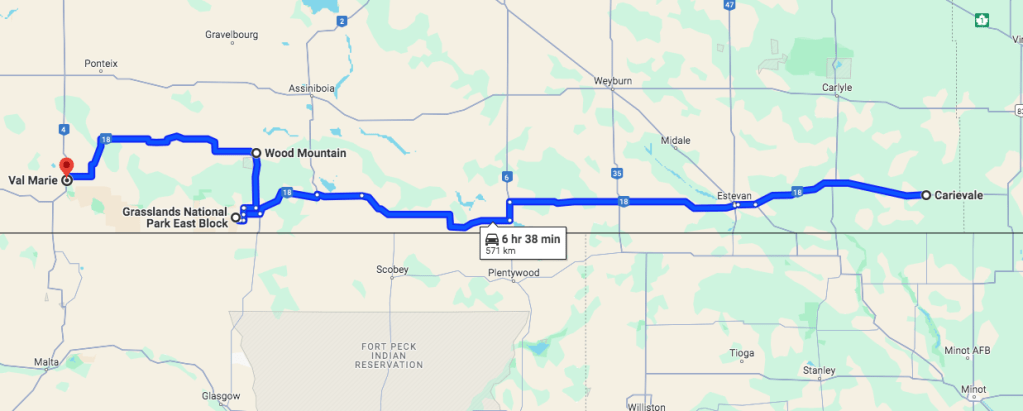
Think Saskatchewan is flat and boring? Think again. Highway 18 along the southern border strings together quaint towns, abandoned homes, historic grain elevators, rolling hills, and unblemished prairie. I rode Highway 18 west into Grasslands National Park East Block. It’s a fantastic national park with a very distinctive style of its own. Instead of the usual towering pines and lake views, Grasslands is in open prairie, and you can imagine what it would have been like to cross this formidable region by wagon in the 19th Century. Be sure to ride the single-lane loop along the top of the badlands, and the next morning, why not, continue on the 18 across the park to Val Marie. When I did it, I had the pleasure of watching four majestic elk cross the road in front of me and, one by one, as if in slow motion, leap the boundary fence before heading off across the open countryside. Grasslands NP and Highway 18 put you in touch with the prairie soil and grass and big sky like no other place I know.

Highway 31 and 31A (British Columbia)

The 31 hugs Kootenay Lake from Balfour up to Kaslo, with the lake on one side and mountains on the other. Not bad. But it gets even better when you turn west and head along the 31A from Kaslo to New Denver. This road is listed in several “best of” articles and I’m going to include it in mine too because it’s pretty special. I don’t know how it compares to Tail of the Dragon for corners within a certain distance, but it has many, and one thing it has going for it that Tail does not is incredible scenery. You don’t really want to ride it fast or you’ll miss the view. There are towering mountains on either side and, for the eastern part at least, it follows the bubbling emerald green Kaslo River. At the end, although it needs no prize, is the quaint and secluded town of New Denver. I think I might just retire out there—if only to ride that road whenever I want.

Highway 4 (British Columbia)

If you have to cross Vancouver Island, you have to take Highway 4. Good thing it’s a gem of a road, rising and falling through mountainous terrain with Cathedral Grove as a rest stop and the Pacific Ocean as the destination. As you approach Ucluelet, the road twists up into the mountains and you might find yourself in fog before it drops down again to the ocean. Once there, you’ll find Pacific Rim National Park, a magical place with long sandy beaches, crashing surf, and nothing between you and Asia but 19,000 kilometres of water.

Highway 37 (Northern British Columbia)
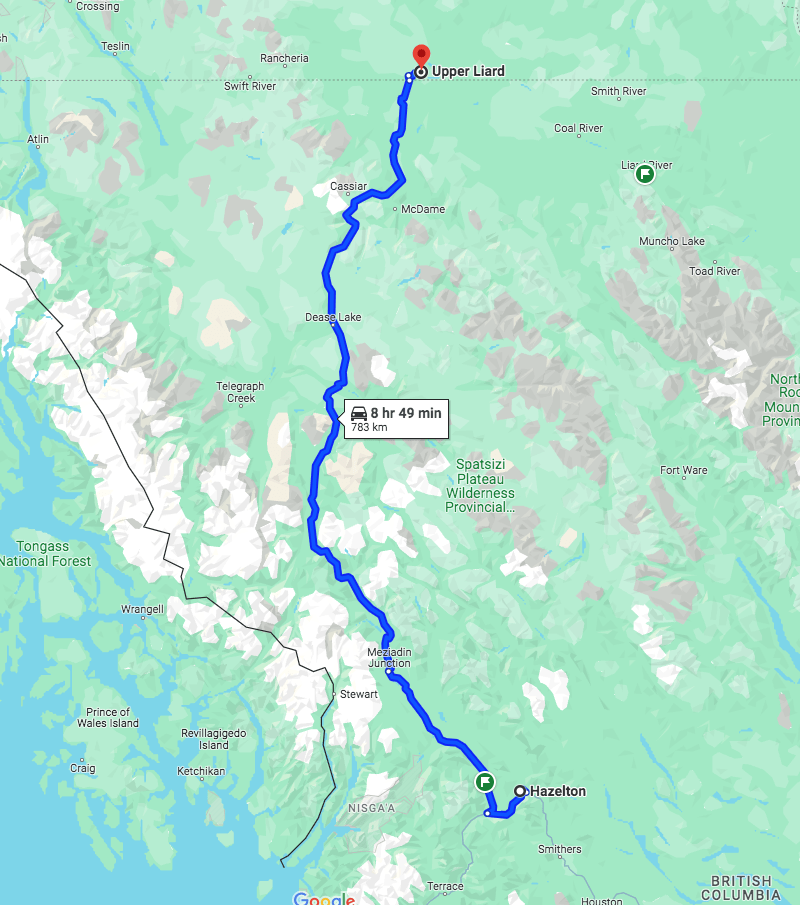
Technically further west than Highway 4 and Tofino is Highway 37, also know as The Stewart-Cassiar Highway. If you are going into Yukon, it’s one of only two roads going that far north, and I’ll go on record as saying it is preferable for riding to The Alaska Highway. Just north of Smithers and west of Hazelton, you turn right at Kitwanga and head north, 750 kilometres of twisting smooth two-lane blacktop with scenic views of rivers and lakes at the sides of the road and northern Rocky Mountains as backdrop to your ride. It’s pretty remote up there and you will ride for hours without seeing another vehicle, so be sure to have lots of gas and tools at hand, just in case. This is bear country, and you will see many on the road or at the sides, eating berries in the ditch. There might even be some grizzlies in these parts, but the remoteness, your exposure to the elements, and the lingering threat of danger is part of the energy and excitement of Highway 37. This is a road that pushes you out of your comfort zone and into the realm of risk and adventure.

The Dempster Highway (Yukon)

Not enough risk and adventure for you? There’s one highway that trumps all others in both. It’s the Dempster Highway, 886 kilometres of gravel that will eat your tires if not puncture them. When I was up there, I saw a camper rolled over at the side of the road and figured it was due to a puncture because the tire tracks went sideways. But unlike the Trans-Taiga in northern Quebec, you don’t ride this road for bragging rights. You do it for the astounding, majestic, magnificent views like no other in the country. That’s because you are above the tree-line for sections of the Dempster and the wide open vistas of subarctic tundra are worth every kilometre. If you just want a taste, head up about 80 kilometres to Tombstone Territorial Park, but bring bear spray and be sure to string your food. If you want to venture further, you’ll need to go at least 400 kilometres to get to Eagle Plains and the next fuel station, so depending on your bike, you might need to carry extra fuel. One other major consideration: don’t attempt this road on anything but knobby tires; it’s covered in calcium chloride and when it rains the road becomes so slippery you will be forced to wait for it to dry before you can get back down to Dawson City. All warnings aside, this is my favourite road in Canada if only for the geography it offers and the sense of remoteness.

I know I’ve missed a few provinces and a territory, but I’m blaming that on Covid. When I went across Canada the summer of ’21, I wasn’t allowed to stop in Manitoba, and the border to The Northwest Territories was closed. I also didn’t spend much time exploring Alberta but stayed mostly with friends and family in Calgary.
So what roads have I missed? Which of these have your ridden? Let me know your thoughts. I’m two years away from retiring and there’s a lot more of this beautiful country I want to see, so please drop a comment below and I’ll put it on my bucket list.
Here in Montreal, Canada Day is mired in the usual nationalist politics and anti-colonial sentiment, and I think that’s a shame. Surely it’s not the right time to highlight differences or mistakes made in our past, but to celebrate the many collective freedoms and opportunities the country offers as well as to recognize its complex history and natural beauty. All things considered, and certainly compared to many other countries around the world, it really is a pretty great country to live in, and an amazing one to ride. Happy Canada Day. Now tomorrow get out there and ride.
 650thumper