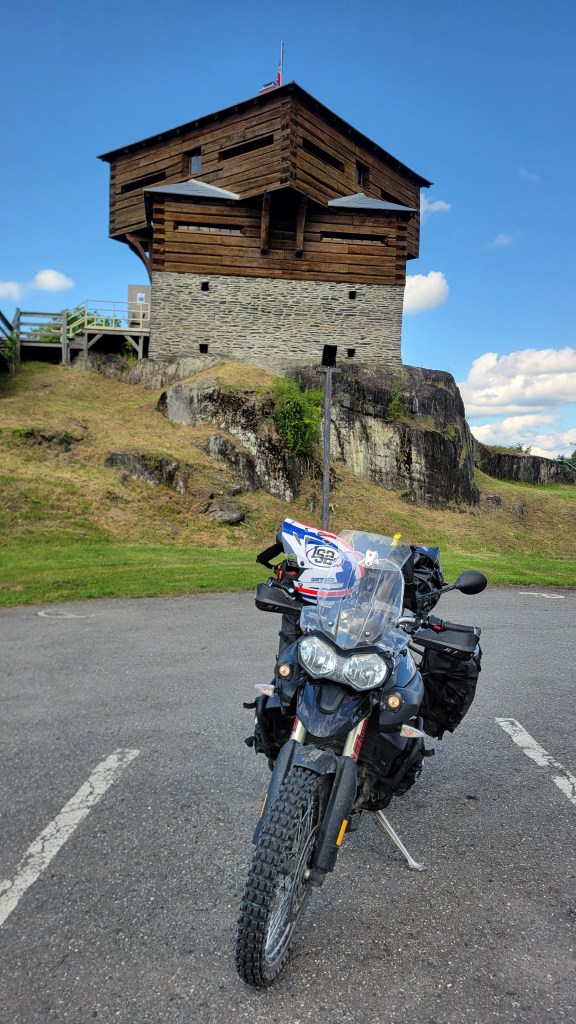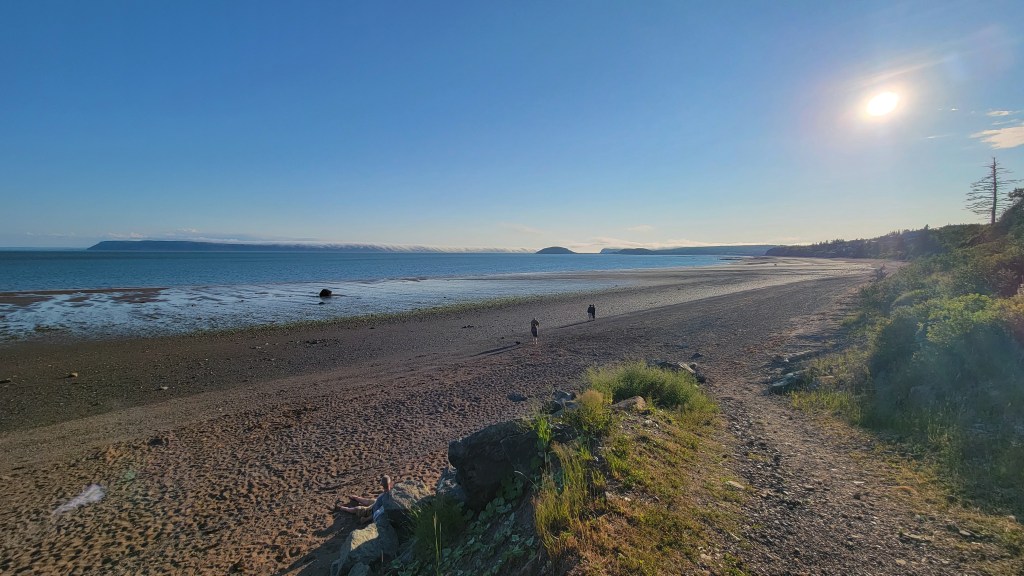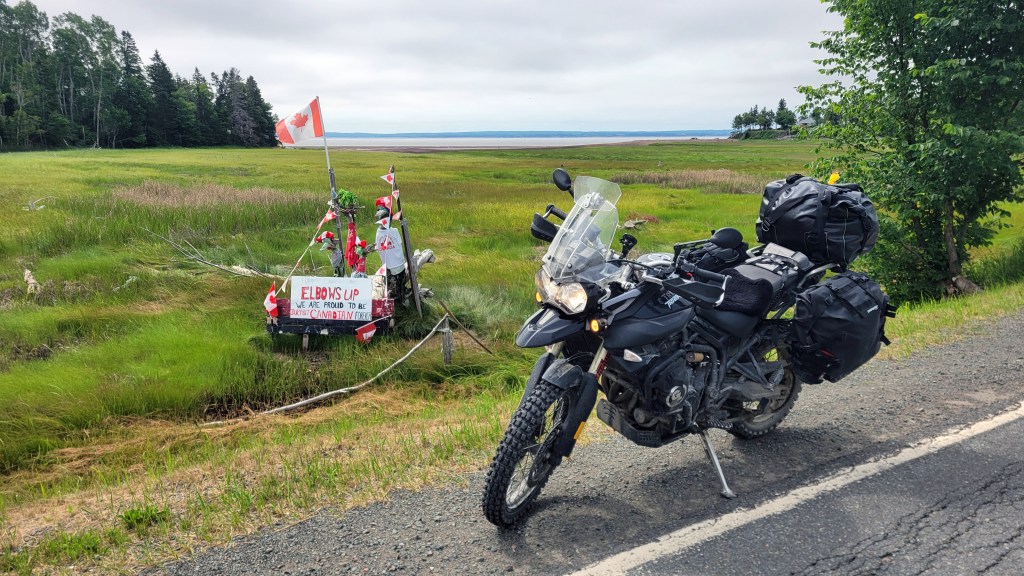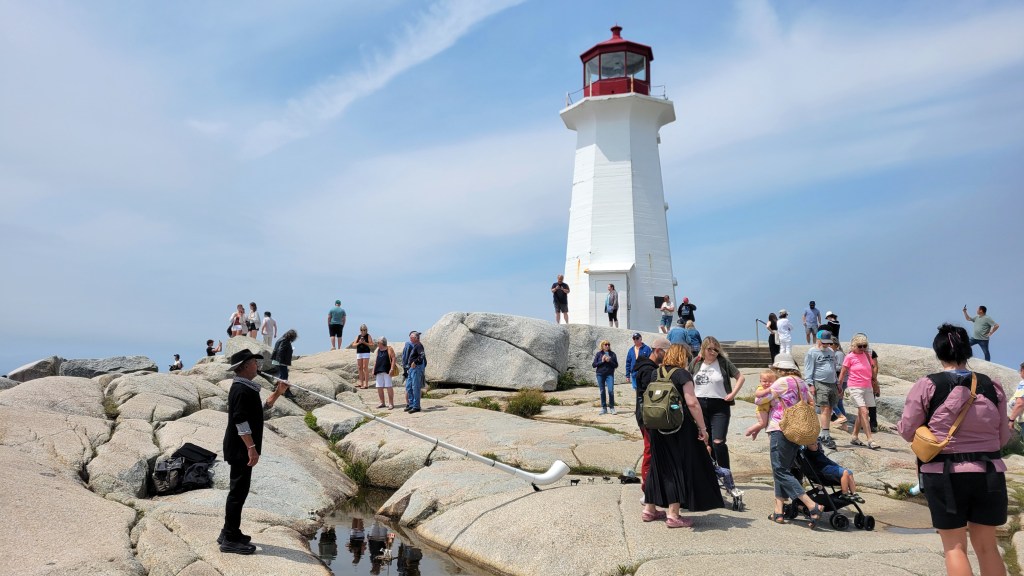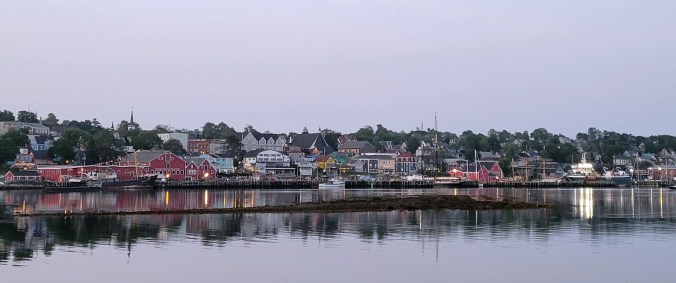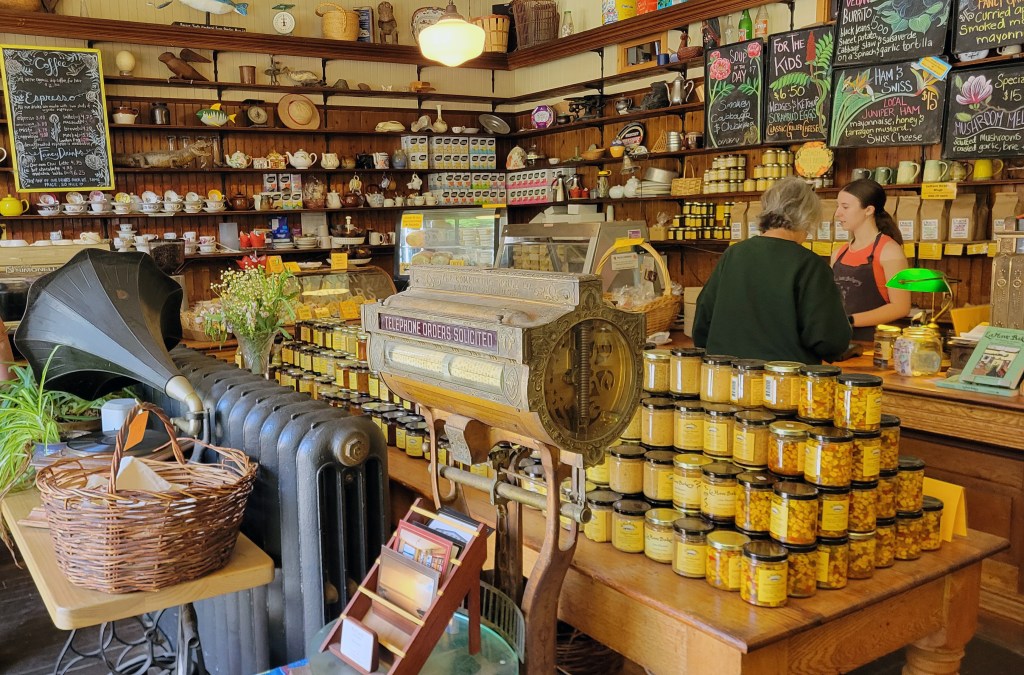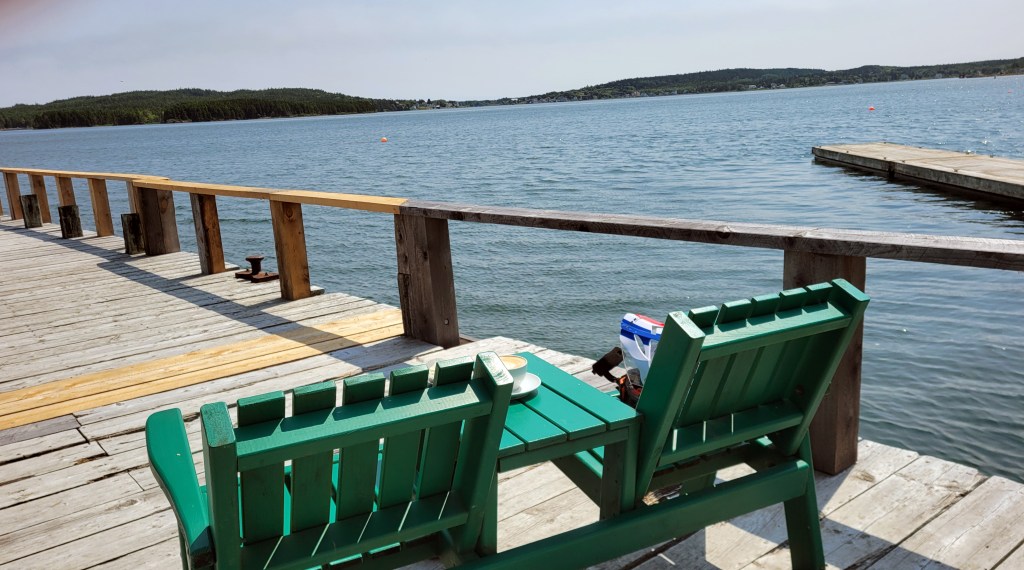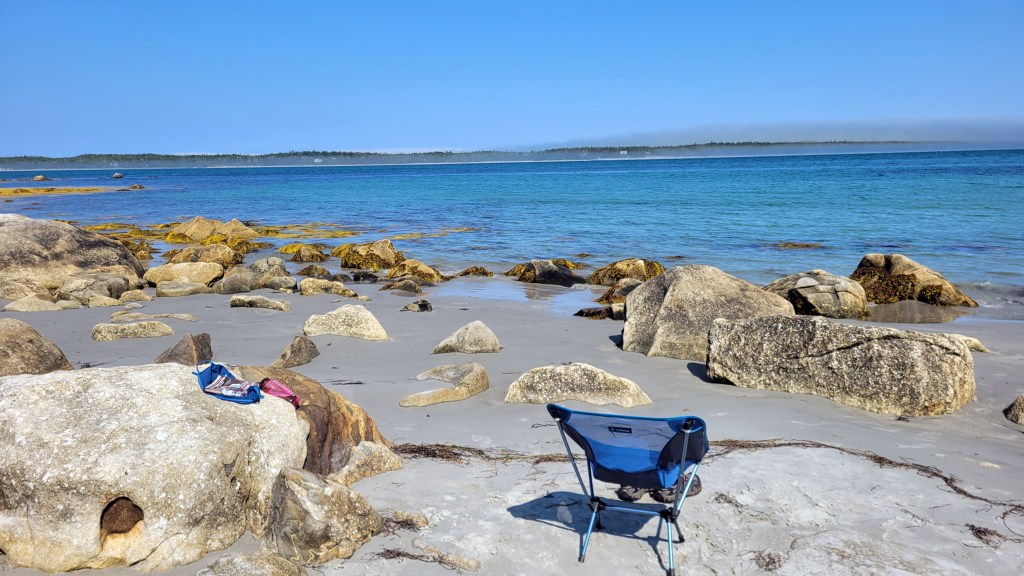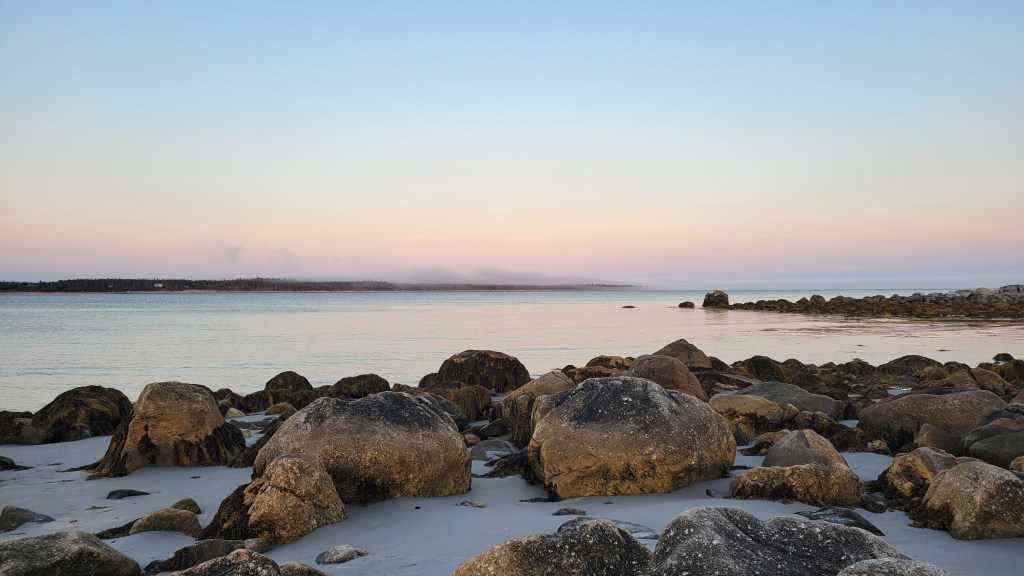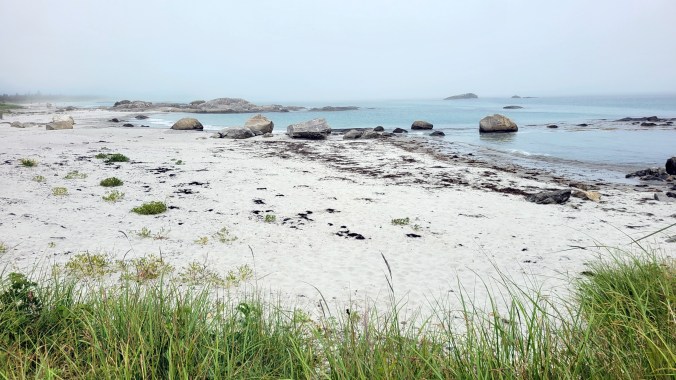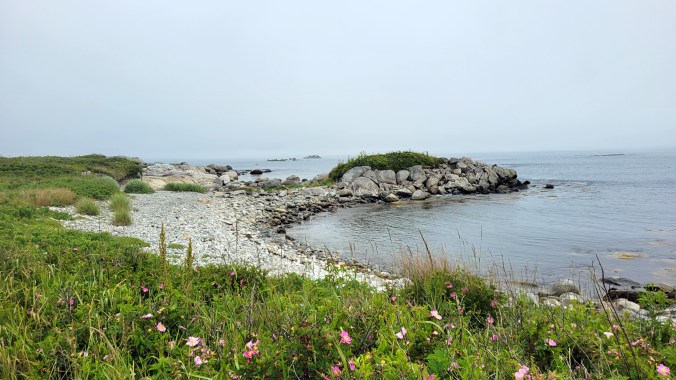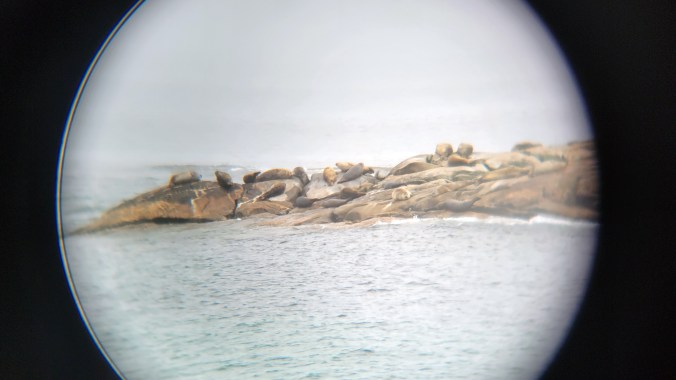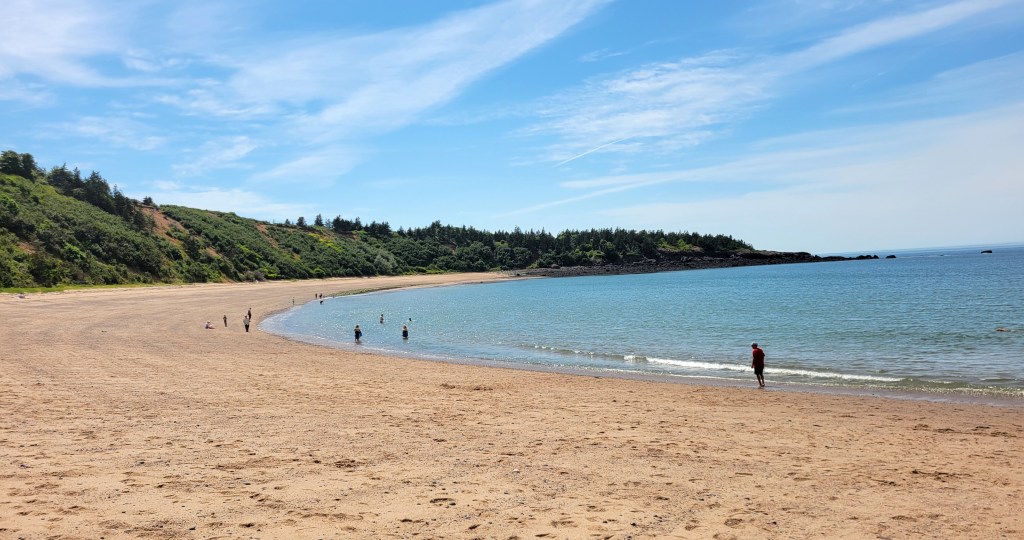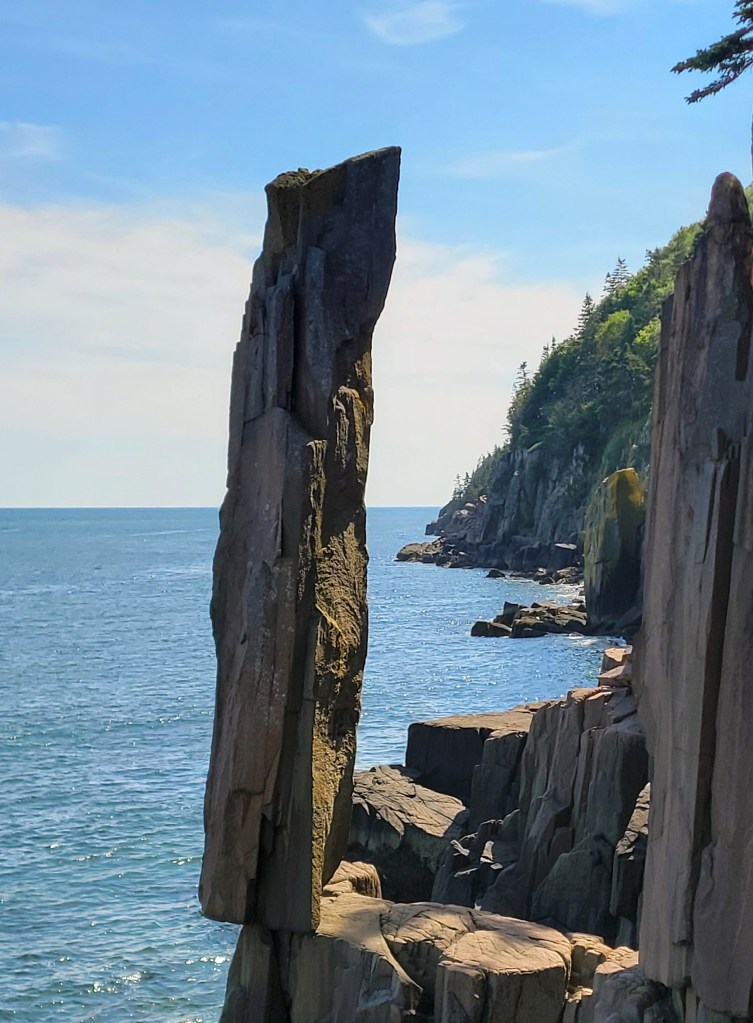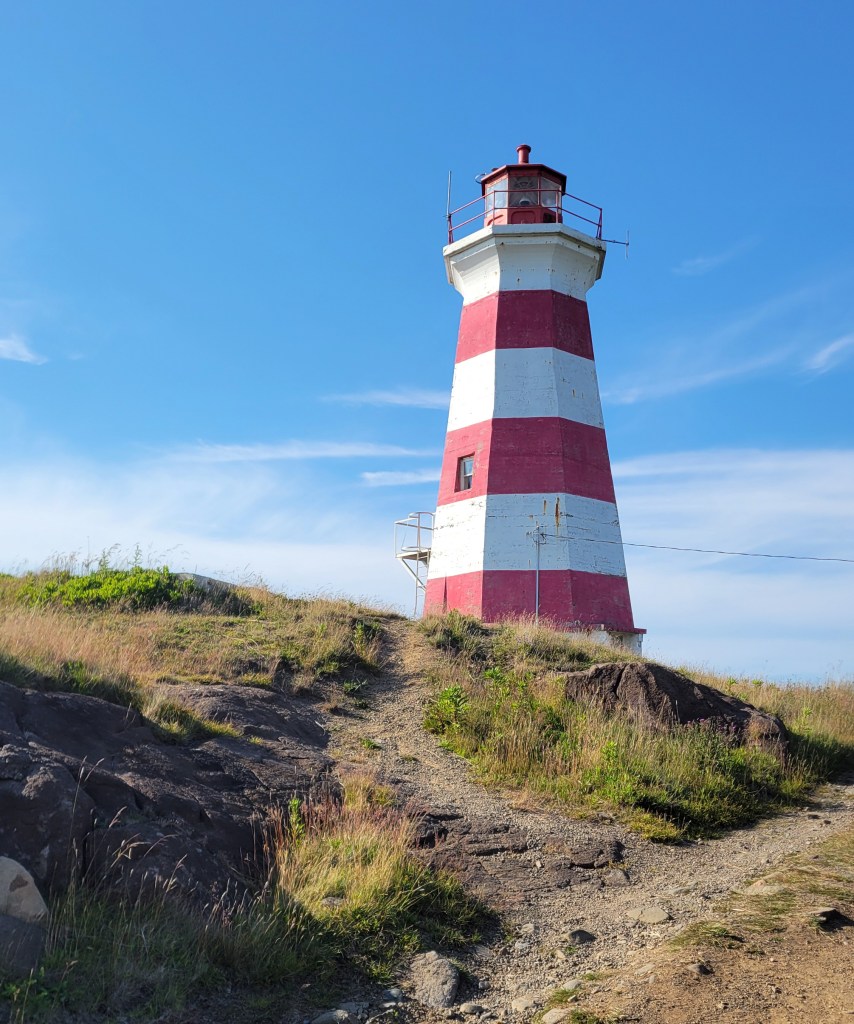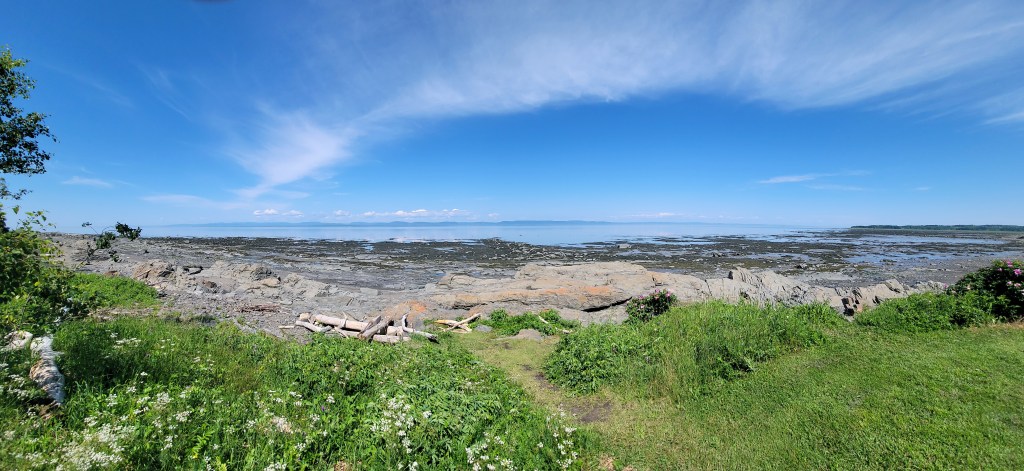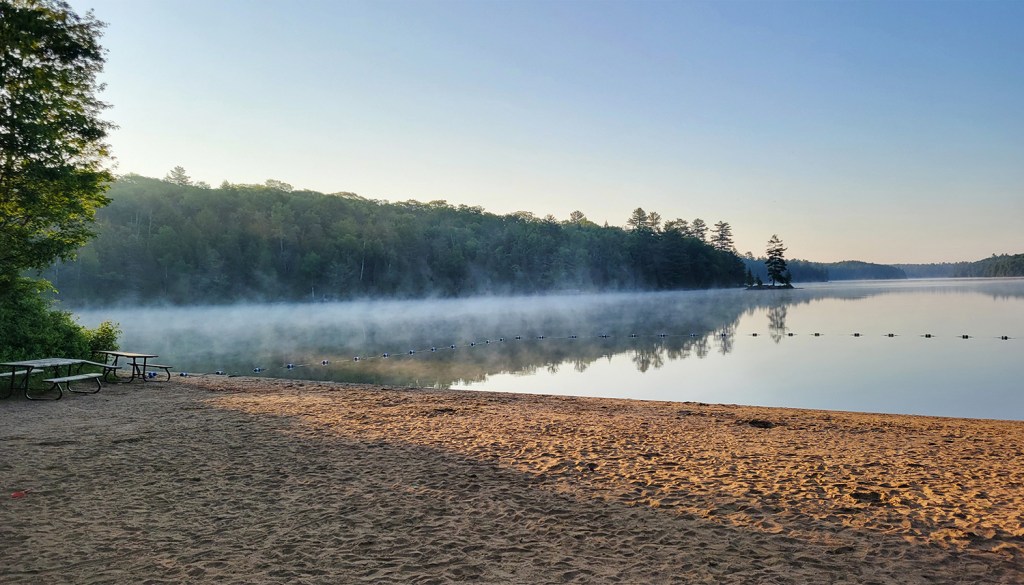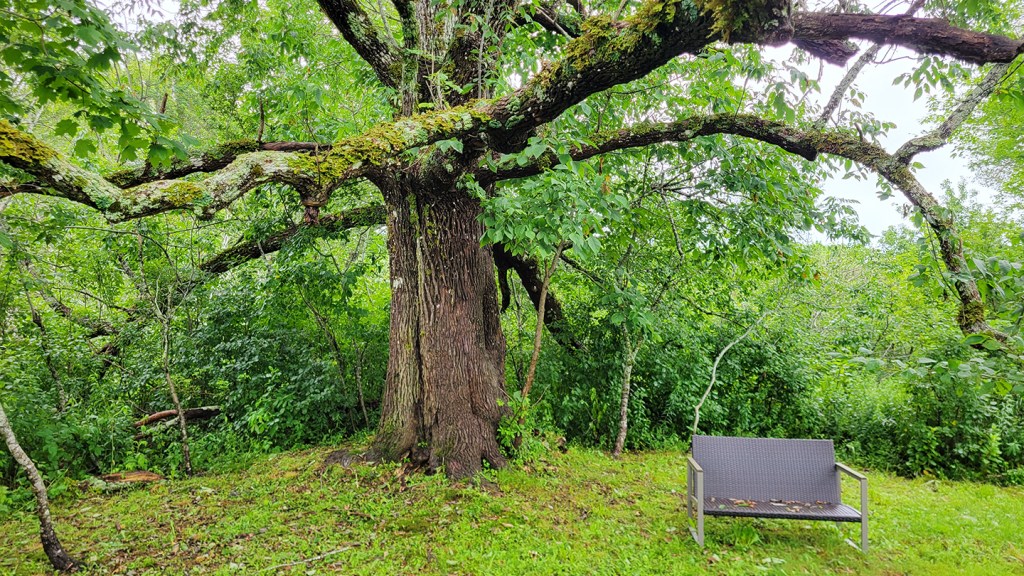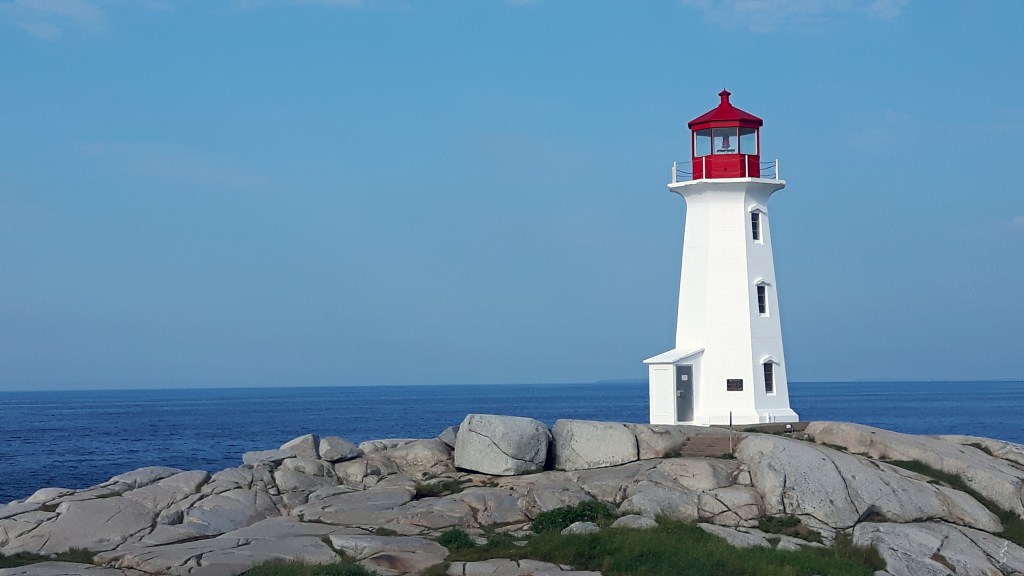
Port Joli Beach at Thomas Raddall Provincial Park, Nova Scotia
The annual wistful synopsis of the summer.
Here we are, at the beginning of autumn. There’s still plenty of good riding left in the season, but the days of summer vacation and touring are already behind us. As usual, I haven’t posted much over the summer since I’ve been busy riding, reading, travelling, troubleshooting, and generally staying away from sitting at a computer, the occupational hazard of my job.
This summer I tried to balance travelling and resting, my two favourite activities. Okay, resting isn’t really an activity, but napping is. In the past, I did a little too much of the former and not enough of the latter and ended up going back to work in the fall not feeling rested. This year, I did a smattering of shorter trips, one longer trip, and a whole lot of resting. I’m a year away from retirement so consider this good practice for the future.
My eldest sister, Susan, and my dad, 96 years young!
The summer began, as it usually does, with La Classique Moto Fest, the big ADV rally here in Quebec held each year over the May long weekend. If you missed my write-up about that event, you can find it here. Then when I was free and clear of all work duties, I made a trip back to Ontario to visit family, and in particular my dad for his birthday. He’s now 96 years old, so I like to get back to see him at least a few times a year. That was followed by my annual literary pilgrimage with my writer friend, Harold. We usually visit the gravesite or home of a famous writer, and this year we planned to get to Orillia and Stephen Leacock’s house. We stopped in Kawartha Lakes, Ontario, in Lanark County at Silent Lake Provincial Park and never made it much further. The historic residence of the author of the enduring Canadian classic Sunshine Sketches of a Little Town will have to wait another year.
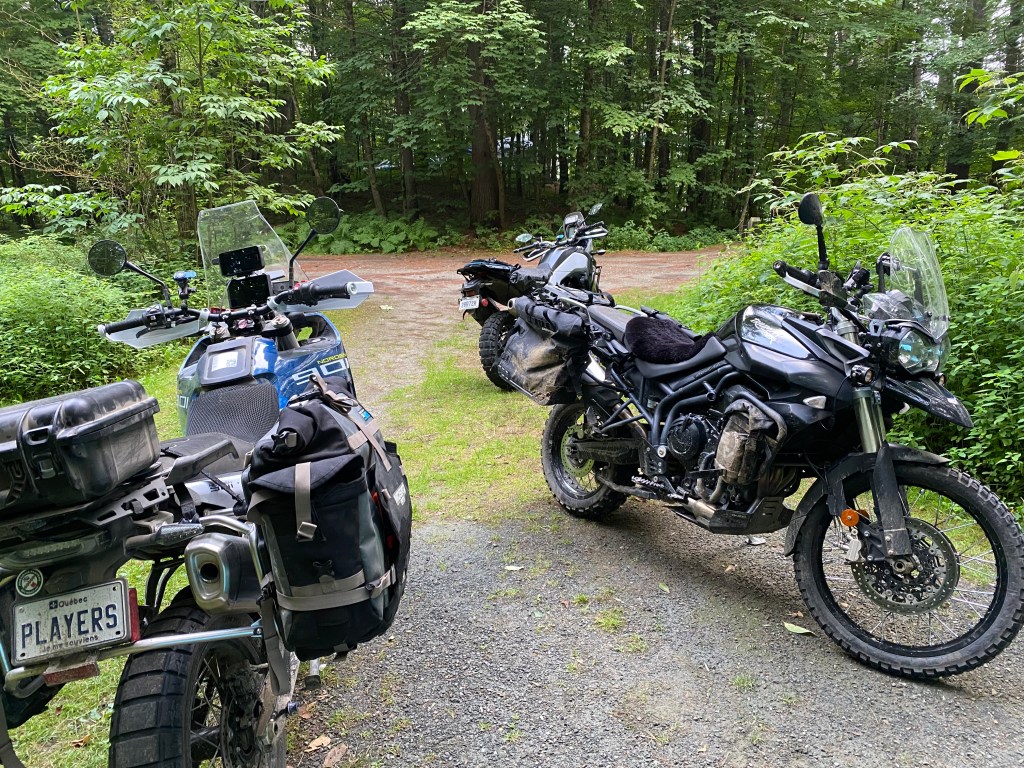
While I was there, I scouted the campground for a return trip with some riding buddies the following week. We stayed two nights and rode most of The Timber Trail. I did that Highlands loop solo last fall and, although a few of the boys were on street bikes this time, I knew most of the dirt and gravel roads would not pose them any problems. Yes, even an R1200RT and a Honda ST can do much of this loop, albeit slowly and when dry. It’s not only big bike but also street bike friendly.
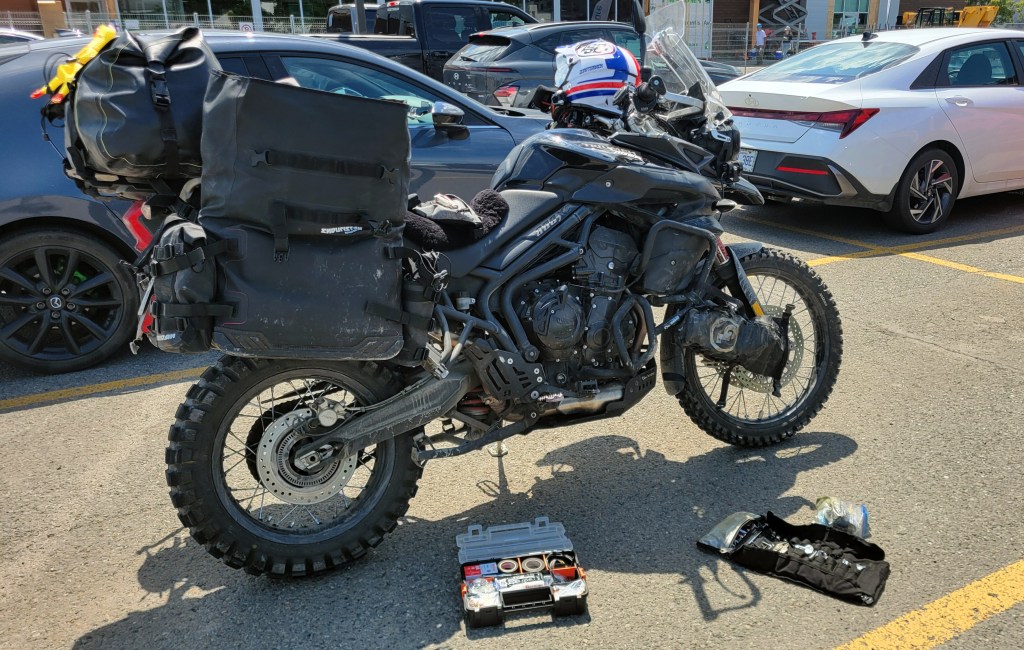
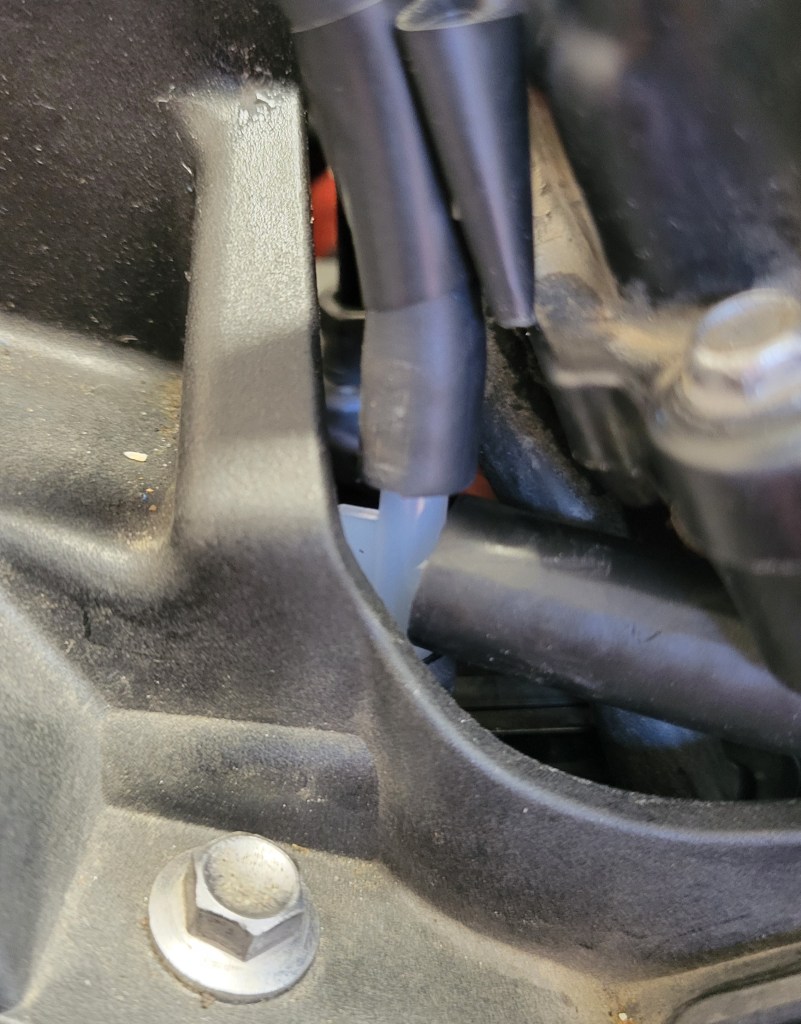
That was the shakedown ride for my summer tour and a good time to find out that I had some intermittent starting issues. After stopping for a short break, my bike wouldn’t crank. At first I thought it was a switch (sidestand, clutch, starter?), then a relay. Once home, I changed the starter relay under the battery, then the battery. I ended up doing my tour without incident but had more starting issues once back home. After more troubleshooting, I think I’ve traced the problem to a loose wire into the fuel pump relay. Perhaps it was the relay itself, and I’m still not 100% sure I’ve solved it, but for now the bike is starting fine. You gotta love intermittent electrical issues.
Looking for a short in the wiring harness.
I’ll be writing about my tour over the winter months when I’m off the road, but suffice to say it was one week of the Trans Quebec Trail from Magog to Rimouski, and one week doing The Lighthouse Route that follows the southern and western shores of Nova Scotia. Watch for those posts soon and click Follow if you want notification when they’re posted.
Crossing the Laurentian Mountains on the TQT south of Quebec City.
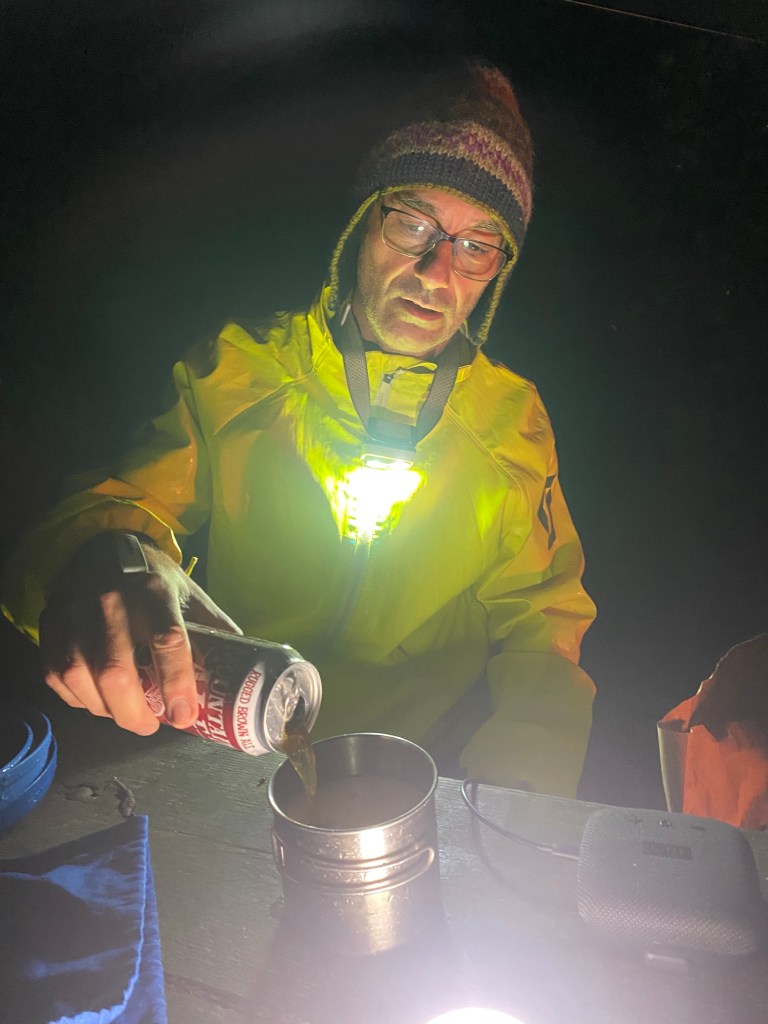
The summer was capped by another short trip with the boys to the Calabogie, Ontario, area to ride The Pickaxe Loop. I don’t take many photos on these group trips because who wants to ask four guys to stop while you snap a few photos, but here’s one from our final night at Black Donald Tent and Trailer Park, cooking under a tarp in the rain.
L to R: Danny (Triumph Scrambler 1200XE), Steve (Honda ST), Mike (BMW 1250GS), and Riley (Norden 901).
Amid it all, I’ve been dealing with an oil consumption issue with the Tiger. If you read my post on the piston soak, you will know that I had a lot of carbon in the cylinders and I think the oil retention ring was stuck. I used Seafoam and a water treatment to clear a lot of it out in June and the bike seemed fixed. But as the summer progressed, it started to burn oil again—not as much as before, but still about 400 mL over 1,200K (745 miles) on the Pickaxe trip.
The moral of the story is don’t mess with OEM set-up on the engine!
Just the other day I was doing some research on what causes carbon build-up and something caught my attention: “When it comes to the mechanical operation of the engine, air to fuel ratio inconsistencies also plays [sic] a key part in the development of carbon buildup.” Just the mention of air to fuel ratios got me thinking about my Unifilter prefilter that was an early mod I did on the bike. The OEM air filter is under the fuel tank and so kind of a PITA to access. The prefilter replaces the snorkel under the seat and not only reportedly catches 95% of the dirt but is easy to remove and service.
I remember having a nagging concern when I installed this. Don’t I now have two air filters, and what might that do to the air-fuel ratio? But it’s a popular mod and so I dismissed the concern, reassuring myself that the ECU would adjust, as it does for temperature and altitude. Now I was returning to that mod and suspicious it was the cause of my carbon build-up. Isn’t running the prefilter essentially like running a dirty main filter? A quick Google search indicated that, indeed, running a dirty air filter can lead to carbon build-up!
So last weekend I removed the prefilter and reinstalled the original snorkel. The bike seems to start faster, idle smoother, run better, and have more power. I now think the bike was choked all this time! The moral of the story is don’t mess with OEM set-up on the engine! I’m now completely stock with a Triumph air filter and a Triumph oil filter. I’ll be doing another piston soak and engine clean toward the end of the season, and in the meantime I’m adding Seafoam as a fuel additive to start the cleansing. I want to start next season with a clean engine in the hope that it will stay clean.
With the bike running great, I’m looking forward all the more to the fall riding. If there’s a silver lining to the end of summer, it’s the cool, beautiful riding of the autumn, especially here in Canada when the leaves begin to turn colour. I’ll be leading a club ride down through the Eastern Townships at the end of September during the height of the fall colours, and the following week I’ll be participating in the appropriately-named Fall Colours Ride in Barry’s Bay, hosted by Rally Connex. 10 guys in the same cabin is surely going to be an adventure in itself.
How did you spend your summer? Drop a comment below, or at least tell us your favourite destination. What was your best moto moment? Unfortunately, I don’t think WordPress permits photos, but you can always try, or post a link to your own online photo host.
Silent Lake at dawn
Lots more to come in the months ahead, but for now, let’s get out there and enjoy the autumn riding while we still can.
The biggest drawback of hammock camping has nothing to do with the hammock
The first time I tried hammock camping it was with a little recreational hammock, the kind that pack up to the size of a mini-football. I’d bought it with the idea of using it around camp on off days to lounge and read and nap, but not necessarily to sleep in. When I decided to see if I could use it to replace my tent while mototouring, I bought an Aquaquest 10×10 tarp to go over it and a cheap ($17.99) zippered bug net off Amazon. I figured I’d dual purpose the ratcheting straps I now carry when I tour; they are good for bike recovery but I’d also use them to string the hammock.
It took me 1.5 hours to string that hammock first time. My camping friend made a point of noting it, thank you. Okay, the ratcheting straps didn’t work, and I never did figure out how the little bug net was supposed to work with the hammock. I got eaten that night but recognized the potential of hammock camping, so when I got home I bought a Hennessy Jungle Expedition hammock.
The nice thing about the Hennessy is that the fly, ridgeline, bug net, tree straps, and hammock are all included and integrated in a system that is easy to set up and works very well together. There’s even an optional insulated pad for cooler temperatures. I camped exclusively with the Hennessay over a tour of two weeks in July through Quebec and Nova Scotia and found it comfortable but with a few drawbacks.
Hennessy Hammocks
Tom Hennessy began sleeping in a hammock while camping with his family in the 1950s and has been making them for over 60 years. His first was bought at an army surplus store for $3 and he loved it but decided he could improve on it. He began a series of over 50 prototypes that eventually led to the patented hammock that went on the market in 1999. Since then, he’s continually tweaked the design and added some extras. I get the impression Mr. Hennessy sometimes lies awake in his hammock at night trying to figure out how to make it even better.
Features
Hennessy hammocks are asymmetrical. The hammock and tarp are not diamond shaped but are more like a parallelogram.
This allows you to sleep diagonally in the hammock. The problem with conventional hammocks is that you end up like a banana squeezed in the shoulders and hips and with no room to move. The Hennessy strings from opposite corners like a conventional hammock but has tie-outs at the other two corners that you stake to the ground (or can tie to neighbouring trees). The result is more like a floating 1-person tent than a backyard hammock.
The fly is also asymmetrical so matches the shape of the hammock and attaches to two hooks on the ridgeline. At first I removed it each time I broke camp, but eventually I decided to keep it on. That’s a personal preference. Maybe if it were wet I might remove it and store separately.
Hennessy hammocks also have a unique entrance system. Instead of entering from the side, you enter through a slit in the bottom and the hammock snaps closed beneath you under your weight. Apparently this system is better for avoiding mosquitoes. It seemed a bit too vaginal for my liking so I decided on the side zip entrance which was introduced by popular demand. It’s easier to set up your bedding and I imagine to exit for nighttime “excursions.” This is a matter of personal preference and I wasn’t able to try the classic model but was happy with the side zip.
The integrated ridgeline is made of high tension cable with a plastic coating. This ensures a consistently straight and strong ridgeline across the top of the hammock regardless of how you’ve strung it. On the ridgeline inside the tent is a sliding net bag for personal items like glasses, wallet, phone, etc. and the ridgeline can also be used to hang a lantern or water bottle.
Finally, all Hennessy hammocks have very strong mesh that is impermeable to mosquitos, black-flies, and even tiny no-see-ums. There were a few times when it accidentally got caught in the zipper and I feared it would be torn, but when I forced the zipper open again the mesh was unfazed. It’s strong!
Stringing the hammock
The cordage is permanently attached to the hammock and Hennessy provide plenty of it, but you want to find trees that are fairly close to the length of the hammock because, unlike the ridgeline, the cordage stretches. I once had to string the hammock using most of the extra cordage and found myself almost touching the ground no matter how tight I strung it.
Hennessy have a recommended lashing for stringing the hammock. You can use a knot like the Siberian Hitch but you run the risk of it getting hard to undo, especially under weight if it gets wet. The lashing is easy to do and is plenty strong enough. Apparently it will also preserve your cord better than knotting.
Instead of ratcheting straps, the Hennessy comes with tree straps, which are a similar type of wide (1″?) nylon webbing. Using them protects the trees; paracord digs into the bark and can damage a tree. Depending on how thick the trunk is, you might have to wrap the strap around twice.
You want the tree straps about eye-level and the same height so the hammock is level and your feet are slightly off the ground when you are seated upon entering. Instead of bringing gear into a tent, I stored it under the hammock and it never got wet. If you are dry, your gear underneath you is dry. This is a change from tent camping and took some getting used to but the same precautions apply: nothing smelly near the sleeping space except your boots which, if they’e anything like mine, after a week of touring act as a deterrent to any sentient being rather than an attractant.
My hammock came with free Snakeskins, an optional extra that slides over the hammock when packing up to protect the hammock in your pannier and to keep it dry. (I got them free for signing up for Hennessy’s newsletter.) They stay on the ridgeline and slide up to the ends when the hammock is in use and slide down (like a long nylon sock) for packing. At first I thought they were a bit gimmicky but ended up finding them helpful in facilitating set up and take down. I had it so I only had to pull up the stakes on the tie-downs of the hammock, pull down the snakeskins, and unlash everything from the trees. It took maybe 2 minutes. Alternatively, you can leave your sleeping bag in the hammock and stuff everything in a bag when breaking camp and use the snakeskins on the tarp to protect your gear if the tarp is wet.
You can see the snakeskins in use at the very end of this video of Tom demonstrating the classic model.
The Jungle Expedition model
I got the Jungle Expedition Model because it has the double bottom where you can slide a blanket or the optional Radiant Double Bubble Pad. I knew enough about hammocks to know that you don’t get the insulating properties of a mattress as you do in a tent and that the down of your sleeping bag compresses underneath you and loses its R-value, so there is a tendency to be cold. The Double Bubble is like those fold-out reflective screens you put in your car windshield to protect your upholstery from the effects of the sun. In fact, Tom suggests this for those who don’t want to buy their custom one. You just have to cut it to fit.
I decided to get the Hennessy Double Bubble pad even though it would mean I’d have to take a tail duffle. The Hennessy ones have clips sewn into them that attach to hooks in the compartment underneath and keep it from moving out of position. If the Double Bubble pad is not enough, the SuperShelter 4-Season Insulation System has been tested in the Arctic and, as the name suggests, can turn your hammock into a 4-season hammock.
I was trying to pack small and light and so did not buy the SuperShelter. In the end, the Double Bubble was not quite enough for some of the 12C (54F) nights and I had to pick up a cheap synthetic blanket and slide that in too, plus wear merino wool and a wool sweater to bed. Maybe I wasn’t stringing the hammock correctly because I found it did not retain body heat as well as a tent.
Pros and Cons of hammock camping
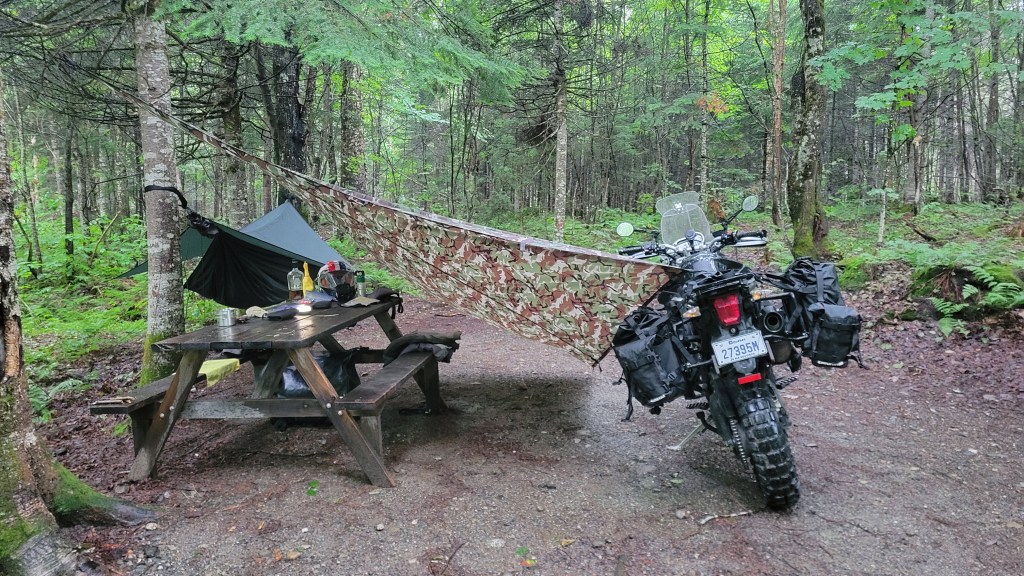
Aside from the cold, the biggest challenge of hammock camping was finding the right trees. Many campgrounds clear cut their sites or leave only some coniferous trees on the perimeter. Where this was most apparent was near the water, when I was up along the coast of the Gulf of St. Lawrence. I never had to sleep on the ground with the tarp strung off my bike but I came close a few times. Overall, I think the hammock is not practical for motorcycle touring. For that, where the geography is so varied, a self-supporting tent is still the way to go.
The other disadvantage I found with a hammock is that it is more difficult to get undressed (or dressed, as needed) in it. You need to be a contortionist at Cirque du Soleil to get out of your pants or put on a sweater. I guess you have to do all this outside the hammock, but then there’s less privacy. Similarly, getting in and out of a sleeping bag is more arduous, and if you are using a bag liner, that’s even more complicated. In the end, except for the really cold nights, I opened up the bag and used it more as a blanket over me. For the same reason, a mummy bag doesn’t work very well in a hammock and negates the ability to stretch out or be active in sleep. There’s also less room in a hammock to put anything like a book, and what you do bring into the hammock and cannot be hung on the ridgeline ends up underneath you (including said book).
On the plus side, my back was happy throughout the tour and it’s getting fussier in my older age. I also didn’t have the annoyance of a loud inflatable mattress or the sliding around (and off it) that happens with my particular one. When I got home, I bought a self-inflating mattress that is quieter for tent camping and can slide into the bottom of the hammock for cold nights. I’m curious to try this combination when the conditions are right.
I never once got wet, and I had some stormy weather through a couple of nights. Most people are nervous about this, but rest assured, the tarp is impermeable and covers you and your gear sufficiently. In fact, a hammock is arguably less susceptible to wet because it’s off the ground.
The Hennessy Jungle Expedition is a good choice for motocamping when you can be sure to find appropriate trees and when it’s not going to be colder than, say, 15C (60F) at night. I imagine it would be great for travelling through the more temperate United States, but here in Canada, where even midsummer the temperatures drop at night, you aren’t saving any space because you’ll have to bring extra insulation.
But get everything right and the Hennessy will produce a very good sleep, better than sleeping on the ground, regardless of how good your mattress is. It definitely has its place amongst my camping gear and will be my preferred choice for car or canoe camping and some motocamping if it’s not going to be cold.
Rain, Rides, and Ribs—the unofficial season opener La Classique never disappoints.
My students were writing a final test when I got the missed call and then message: Riley had a spot on the Awesome Players team at this year’s Classique. I wasn’t planning on doing the rally this year but jumped at the opportunity to ride with them, which is always fun. I called him back at the break, got the details, and confirmed.
I’ve done this rally once before by jumping onto an open spot with another team. The way registration works is that teams are created by team captains and each team has 10 spots. Riders on a team preregister, and if there are any open spots, they can be filled during the open registration. Participants are asked a lot of questions during registration like riding experience, type of bike, number of years off-roading, etc. to ensure that team members are compatible. You’re even asked if you prefer a relaxed or sustained pace. It’s a good system that allows lone riders to join a team and participate in the rally.
The Awesome Players have been doing this kind of riding for many years and usually enter into one of the advanced rides. Maybe they are tired of pushing heavy bikes through mud while getting roosted, or maybe they just wanted an easier ride but they decided to do the Classique Plus this time, which suited me fine. I did that ride when I participated in 2023 and it was at my level—mostly dirt roads but with a little sand, rocks, and water in the mix to keep it interesting.
Our ride was Sunday but it’s fun to have a relaxed day at the rally to hang out and do demo rides. Many of the manufacturers were there, so I rode up Friday evening with Curtis, a fellow West Island Motorcycle Club member, who had recently bought a 2017 Tiger XCA and was going to try ADV riding. There’s camping available on site so we would camp two nights and do demo rides on the Saturday.
Demo Rides
Dealers are now reluctant to offer demos so you have to attend these events and get them straight from the manufacturers. I was lucky because I was able to demo two of my dream bikes: the Kove 450 Rally and the Aprilia Tuareg. I’m a year away from retiring so am scouting a potential new bike for the kind of riding I want to do in retirement.
Kove 450 Rally
Okay, maybe it was a little naïve of me, maybe a little romantic, but I had visions of slapping a little Mosko Moto 40L Reskless system on this bike and using it as a super-lightweight ADV bike capable of tackling anything Colorado or Utah could throw at me. One of my bucket list rides is The Continental Divide, a challenging ride technically, so what better bike to do it on than one that completed the Dakar. I also figured that if rally riders can ride it for long days on end, so could I, and with 8 gallons of fuel capacity, there would be no more fuel anxiety when remote riding.
The first thing I noticed when riding the Kove 450 is that it’s loud! I have to be careful with what hearing I have left so I’d have to change the pipe or get a baffle or something, but that’s an easy mod. The other thing I noticed is the significant head-shake I was getting at speed. I thought it might have something to do with the particular front tire on the bike, or maybe my body position, but a steering damper would take care of that too.
In the end, I think this would be a really fun bike for day rides, but the experience of riding one is so raw it would be tiring for a multi-day tour. The bike is, after all, a race bike. But it is a ton of fun to ride and when I get out into The Rockies, one might be in my garage.
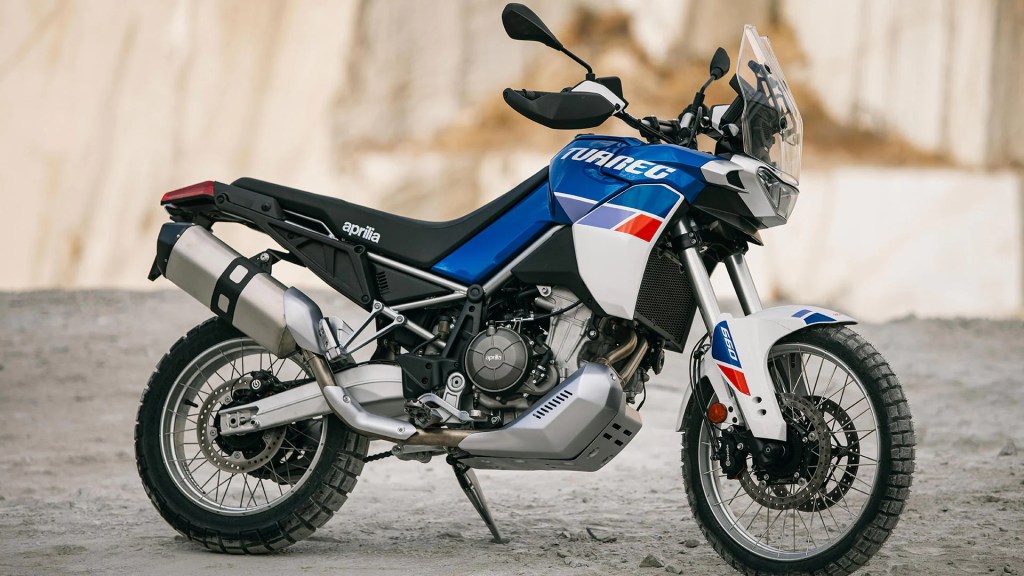
This bike had just been released when I sold my BMW f650GS and decided to get something a little bigger. I didn’t give it a serious look because at only 10cc larger, I didn’t think it was different enough from the BMW. In fact, it’s closer to the Tiger 800 I have now in power than the 650, and that is why I probably won’t get one. I already have a good midsize bike for adventure touring, and if I were to get another bike, it would either be a bigger bike like a 1250 for crunching the miles 2-up across The United States and Canada or a smaller bike for playing in the mountains out West.
The Tuareg is getting excellent reviews and I’m sure it’s an excellent bike. Llel Pavey of Brake Magazine gave it a glowing review, and he’s normally very discerning in his reviews. He said everything about it—the engine, the suspension, the balance—was excellent and implied it is the perfect adventure bike. If I were in the market now for a midsize do-it-all bike, the Tuareg would be a good choice.
I wasn’t able to test this bike on anything but asphalt so I can’t judge what it’s like off-road. On road, I found a surprising amount of vibration in the handlebars and, again, it was loud. (Other reviewers have said the same about the noise.) Aprilia were clearly aiming for the off-road market and made the induction intake robust and guttural. I’m sure the Tuareg is better than the Tiger for technical riding, but on asphalt and I imagine on dirt and gravel roads, I have to say I prefer the Tiger for its smooth engine and exciting but not deafening exhaust note. It’s always nice when you walk away from a demo ride feeling that you already have the best bike for you, especially when that demo is of a dream bike.
CF Moto Ibex 450
The surprise of the demos was the CFMoto Ibex 450. Maybe it shouldn’t have been. People are saying that the Ibex is finally the unicorn bike everyone has been asking for but no one has been willing to make. It’s small and light but with plenty of power, a 270 degree crankshaft, slipper clutch, rider modes, KYB adjustable front and rear suspension, spoked tubeless wheels, a great exhaust note, radial brakes, 5″ display with Bluetooth connectivity . . . all for under $8,000! People at the rally were saying it’s going to be a KLR killer.
The fly in the ointment is that it’s Chinese made (as is Kove). Does that matter? To some it does; to others it doesn’t. CF Moto have been making bikes for KTM since 2017 and has competed in Moto 2 and has won Moto 3 and Rally Raid, so it’s not some Johnny-Come-Lately cheapo brand. In fact, the Ibex comes with a 5 year warranty. Maybe it’s time we stop generalizing to all Chinese manufacturers the stereotype about poor build quality.
Besides reliability, the other issue with buying from a Chinese company for some is that you are supporting the Chinese government and its authoritarian practises, human rights violations, and general bullying behaviour in Asian geopolitics. I can understand this. Currently there’s a “Buy Canadian” spirit happening in Canada as ordinary citizens exercise one of the few ways they have political agency—through their pocketbooks. When it comes to China, it’s especially hard to separate company from state, and many people are deciding today to purchase ethically. On the other hand, Capitalism has pulled more than 1 billion Chinese people out of extreme poverty since 1981, virtually eliminating extreme poverty in the country (World Bank Poverty and Inequality Platform (2024) – with major processing by Our World in Data). If you choose to boycott China when purchasing, are you hurting the Chinese government or the Chinese people? The ethics are not simple.
But back to bikes, unlike the Kove’s 450 single, the Ibex’s 450 twin is smooth. I also noticed that CF Moto have geared the first two or three gears with lots of torque for off-roading, with the other gear ratios spread out so that even at highway speed the little 450 is not straining. In sum, it’s a sweet little bike, and perhaps it will be an Ibex and not a Kove that I take over those Colorado mountain passes.
BMW
BMW’s luxury tourer.
Of course I had to spend some time at the BMW display. Yes, I still have a bit of sweet spot for the German brand that began my motorcycle life. I had in mind to try their flagship 1300GS, but it was fully booked. In fact, all the GS’s were booked in the remaining time slots so I tried a big K1600 GTL for a lark. This luxury tourer starts at $36,000. A demo is about the only opportunity I’ll have to ride one, so I thought, “Why not?” Marilyn would surely be riding in style and comfort on the back of one of these!
The experience was pretty interesting. I’ve ridden a Gold Wing before so am not unfamiliar with a big bike, but this big bike was something else. If the rawness of the Kove is at one end of a spectrum, the comfort of the GTL is at the other. I wouldn’t say it felt like I wasn’t riding a motorcycle, but it felt more like flying an airplane than riding a motorcycle. Quiet and smooth, it glided over the pavement and banked into turns like a jetliner on final approach. When it started to rain on the demo ride, I simply lifted the windscreen with the push of a button and stayed dry.
In the end, it was fun to demo, but even if I had that kind of money, I don’t think I’d buy a GTL. It would take all the fun out of riding, and what’s more, I couldn’t help thinking of what it would be like with Marilyn on the back and trying to navigate all the off-camber stop signs and slow speed corners of somewhere like Saint John’s, NL, on such a heavy machine. One tired touring mistake and . . . Again, the Tiger is about perfect in weight and power for touring, and I feel very comfortable navigating it at slow speed, even 2-up.
There was one last demo and it came unexpectedly. My buddy Steve was riding the 1300 GSA and when we stopped for a break halfway he offered to switch. What a great guy! He knew I wanted to try the big GS, so I rode that back to the rally while he tried the GTL. The boxer is a very distinctive engine and I had more fun on the GSA than the GTL. I also found it really nicely balanced, as all GS’s are. No wonder the GSA is one of the top 12 open-class ADV bikes of 2025, according to Cycle World.
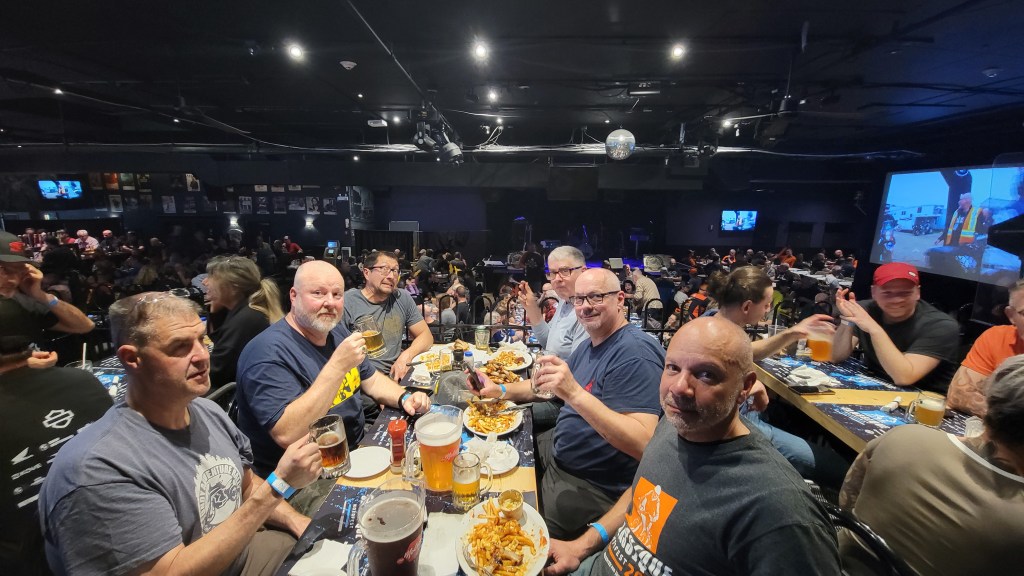
After the demos, we all piled into a bus and headed into Lachute for dinner. It’s great that the rally organizes the shuttle because they know that most grown men don’t have the good sense not to ride after “just a few.” The dinner was a fitting rack of ribs and poutine, with door prizes and Cherry Bomb, a Joan Jett cover band for the night’s entertainment. There’s a ton of organization behind this rally!
Chowing down with the boys. Clockwise: Pete, Riley, Ivan, Marc, Dave, and Curtis.
Classique Plus Ride
Sunday was our ride so I was up at 6:00 to be ready for an early start. Rally organizers provide coffee and muffins for breakfast so I didn’t even bother to bring my camp stove. I geared up and headed up to get the bike inspected, then slotted into line at the staging area. Shortly after 8:00, we headed off.
The Awesome Players use Sena and The West Island Moto Club uses Cardo. The previous evening we had overheard someone trying to connect a Sena with a Cardo and had a laugh about that. Good luck! Yeah, apparently in theory they can connect, but only if both are in Bluetooth mode and even then it’s pretty useless unless the other person is a pillion; anything further and you lose the connection. So Curtis and I could talk to each other—that is, until his battery crapped out. Maybe I’ll have to bite the bullet and get a Sena if I’m going to be riding more with these guys.
Like I said, this ride is mostly dirt and gravel roads and fairly mellow, but the road into lunch at Duhamel was a little more challenging with some mud, potholes, and rocks, but I didn’t get any video footage of it. My camera battery died early and I would need lunch to change it. After lunch, as we headed down a sandy trail, I turned on the camera just in time to catch the action.
Making a splash.
Does this look familiar? If you saw my crash in Vermont last August, it should. Again, the front end tucks but this time it’s me and not the bike that ends up off the road. I’ve watched this a dozen times and still don’t know what happened. I didn’t chop the throttle and I didn’t hit the front brake. The only thing I can think of is that I made the classic mistake of making an input on a low-traction surface with the handlebars instead of the pegs. The front tire dug in and sent me sideways. This rally is always the first ride of the season and I think I was just rusty. I was also just really surprised because so far there had been nothing in the ride that was particularly challenging or unexpected.
But the drama was not yet over. Shortly after setting off again, I had another two near falls with epic saves. I wasn’t the only one struggling in the deep sand but at the time I thought I was. On these ones, especially the second, I think my front tire gets rutted.
After the second, I started choosing my line more carefully, staying out of ruts as much as possible, and especially getting my weight back. That seemed to help. In retrospect, I realize I should have accelerated through the deep sand, but that’s the last thing you feel like doing after you’ve just fallen.
When we stopped for gas shortly thereafter, I had a moment to check my bike more thoroughly because it felt like the handlebars were not aligned. I probably torqued the front forks in the crash. The station had old-style pumps where you pay inside after filling and just as we were about to set off again I realized I’d forgotten to pay. Doh! I was a bit discombobulated.
Now it was time to ride some asphalt east of Namur on the fun Boileau Road. After the incidents in sand, I was happy to be back on asphalt where the Tiger is in its element.
Most of the ride through the afternoon was on hard-packed dirt roads snaking through pretty rural countryside, like this one.
Brookdale Rd. west of Boileau, QC.
I don’t know if it was the climax of the ride but certainly a highlight was riding Scotch Road with these guys who in no small part made that road famous and popular for off-road riders. It’s a Class 4 road north of Grenville that even Fort Nine videoed when he was still in Montreal. Unfortunately, the Bob and Margs have moved in, literally, and it’s slowly being converted to cottage country. The road is now quite graded and you can see as we pass the famous sand pit that someone has blocked off access. I’m curious to know who and if that land is owned or crown land. If you know what’s happening there, drop a comment below. Sadly, spaces for recreational off-road motorsports are disappearing, and one has to travel further and further out of the city to find them, a topic Ryan F9 addresses as he rides Chemin Scotch. (Incidentally, you can compare the road eight years ago and now, as well as the quality of the video stabilization.)
We made it back to camp wet, cold, and tired, but the weather didn’t really dampen any spirits. It had been a really fun weekend of beer, burgers, and bikes. Thanks again to Marc Chartrand and his team of volunteers for once again putting together another great rally, to Riley for being such a good host, to Ivan for setting a nice pace for us newbies, and to the rest of the boys for including me and making it so much fun.
Have you participated in La Classique in the past? Drop a comment below describing your experience or another rally you would recommend. Any thoughts on access to public lands for motorsports? Here in Quebec we have it pretty good with the FQMHR network and the TQT—more initiatives of Marc Chartrand. Any other comments?
“April is the cruelest month,” T. S. Eliot wrote as the opening line of his iconic poem “The Wasteland” (1922). Clearly, he had never experienced a Canadian March. As I write this on March 25th, we are 10 days into the new riding season, yet no one is riding. It’s 2C (36F) and the sky is a slab of grey slate pissing cold rain that turns to ice in patches on the treacherous sidewalks. Brown, dirty snow still sits at the sides of the roads and in patches on lawns, slowly melting over weeks to expose winter garbage and dog shit lying underneath, and the grass, when it finally pokes through, isn’t really grass but mud and last year’s soggy, decaying leaves. Eliot’s poem captures postwar disillusionment and his nervous disorder, but it might equally describe the mood of Canadian bikers in late March.
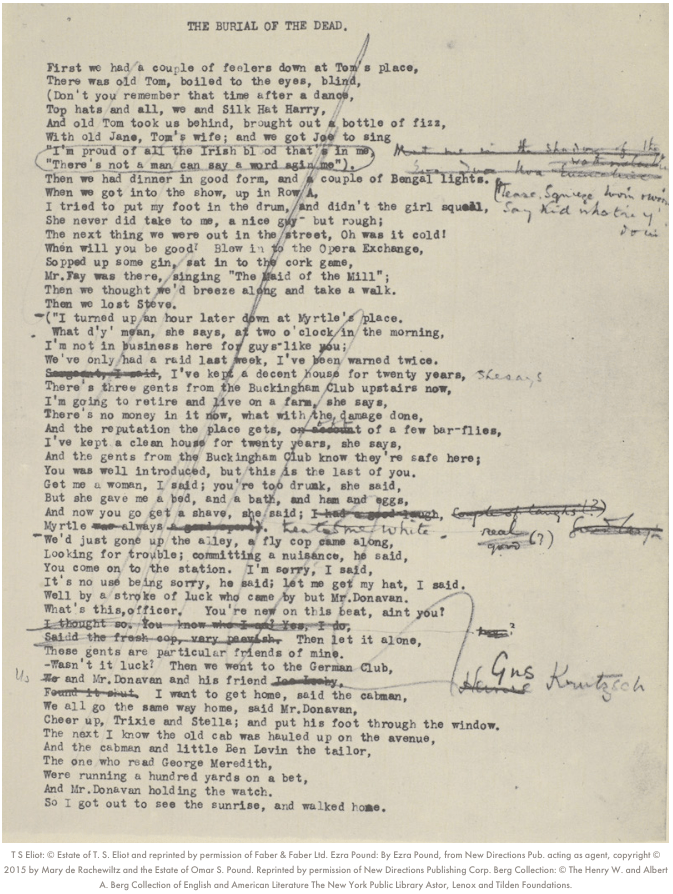
Nevertheless, we continue to plan and prepare for the season to come in a kind of blind faith. Yesterday I did a practice pack of my gear. I’m trying a new gear set-up and have the ambitious plan of eliminating my tank bag, tail duffle bag, and hydration knapsack. I want to ride this year without the extra weight either on the bike or my back. To do that, I had to be as ruthless as Ezra Pound was to Eliot’s manuscript.
Gear
I replaced my tent and mattress with a hammock and bug net. I’ll be touring midsummer so I’m going without a hammock underquilt. I also swapped my MSR Dragonfly stove and 2L Billy pot for an Odoland isobutane stove and pot, but I’ve added to my kit a Bushbox twig stove. I’m not sure which will become my primary stove, but the idea is to use the twig stove when dry wood is readily available and the isobutane when it’s not. And as a back-up to the back-up, just for its simplicity and ease, I’ve also picked up a Trangia alcohol burner. This fits nicely inside the Bushbox and can burn isopropyl alcohol, available at any pharmacy. Can you tell I’m nervous about giving up my Dragonfly?
My camping mates will be happy to know that I finally retired my toy hardware store hatchet and bought a Gränsfors Bruk Wildlife Hatchet. I don’t know why I suffered as long as I did. I’ll be using this around camp to prepare firewood and split firewood into twigs for the Bushbox. I’ll be travelling solo so edited out of my kit the second plate, cup, and cutlery, resulting in my cookware now being considerably smaller and lighter.
When I did The Timber Trail at the very end of last season, I found my Wolfman Expedition tank bag too big and heavy, making the Tiger more top-heavy at slow speed than it already is. It also worked better on the 650GS with the fuel cap on the side of the bike and not under the bag. It would have been possible to move the essentials to my hydration knapsack, but I want to eliminate it too. Water is heavy and the knapsack restricts airflow through a jacket. Mine also interferes with my neck brace. (If it goes under the brace, the brace sits too high; if it goes over the brace, the brace digs into my shoulders from the extra weight.) Instead, I’m going to try a fanny bag with only a few essentials from the tank bag: aux port to USB adapter, some electrical cords, a Leatherman Wave, tire pressure gauge, 8mm socket and micro-ratchet for my pre-load adjuster, and my monocular. I think fanny bags are nerdy, especially if worn in the front (i.e. the scrotum bag), and I wouldn’t be caught dead in one anywhere but on the trail, but one might be the answer to staying cool and unencumbered on the bike. If they find me dead somewhere on a trail this summer, at least my reasons for wearing one are now known.
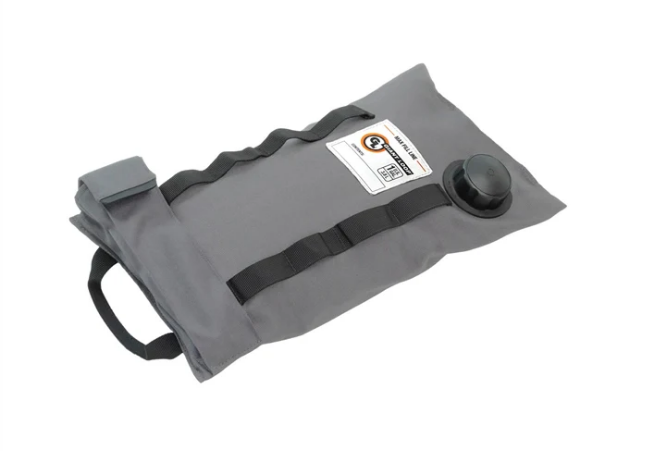
As for water, since I won’t be needing to bring a fuel bottle for the Dragonfly stove, my bottle holster is free. I’ve moved it from the back of a pannier to the front left side and will try the Simple Modern Insulated Tumbler with Straw and Lid for sips when I can. It’s only 28 mL so I’ll also be carrying an MSR 4L Dromedary to refill it as needed. Marilyn and I took the latter through Newfoundland but never used it much, so I was ready to retire it from my kit, but I’ll be doing some pretty remote riding midsummer so will strap the Dromedary onto the bike along with a 1G Giant Loop Armdillo bag to extend my range to around 400 km (~250 miles).
Giant Loop Armadillo Bag
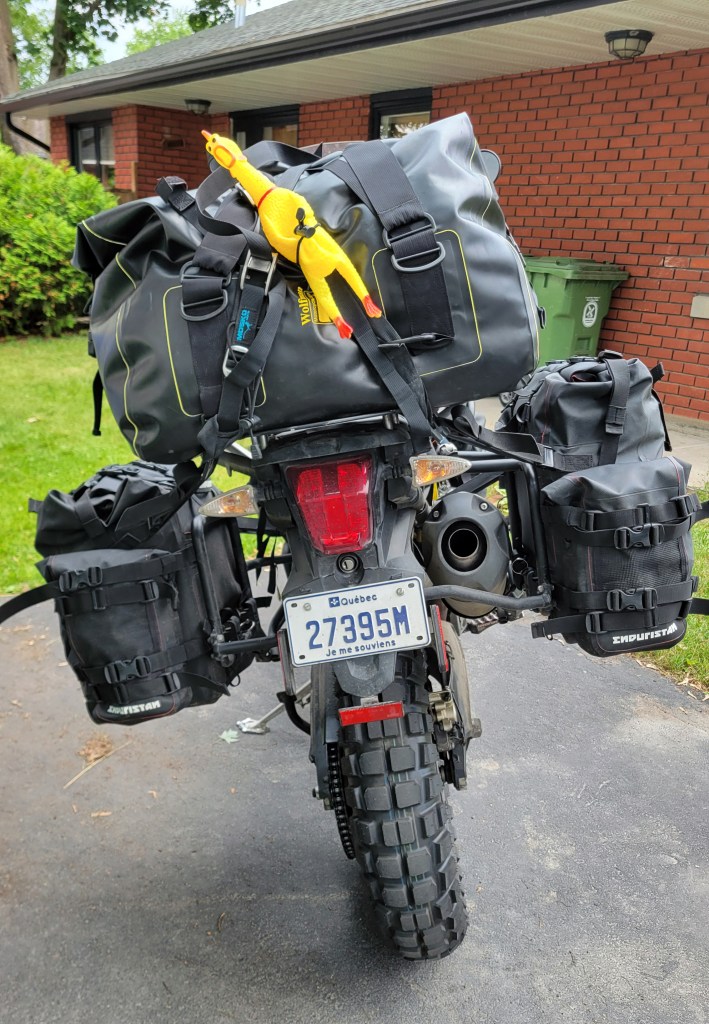
After the practice pack last night, I can confidently say that almost everything fits into my Enduristan Monsoon Evo bags. I’ve added two Enduristan Fender Bags onto my panniers, into each fits perfectly a 10×10 Aquafest Safari Tarp. (I’ll be taking two—one for over the hammock, one for shelter.) My tools and tubes, as always, will go in two Giant Loop Possible Pouches that I strap to the crash bars at the front of the bike. I say “almost” because I will still have to have a small Enduristan tail bag on the rack at the back for my rain jacket, windbreaker, and down vest—my layering system to deal with temperature changes. I can live with that.
Finally, I’ve added to my gear to prepare for the risks of off-roading. I have a Knox compression suit and recently purchased the chest protector upgrade that doesn’t come standard with the shirt.
Knox Venture ShirtChest protector upgrade
I swapped out Level 1 armour for Level 2. I also recently replaced my ageing Arai Signet-Q helmet with a Contour-X. I know, I know: why didn’t I get an XD-5 or similar adventure helmet? Well, I already have an adventure helmet, the LS2 Pioneer, and this will be my touring helmet. The peak causes wind noise and I was looking for the most comfortable, quietest, safest helmet on the market, and the Contour-X fits me like a glove.
Route
I’m sorry, my American friends, but I’ve decided that I can’t do this summer my planned ride of The Blue Ridge Parkway south and the BDR’s coming back. This will be the 3rd time I’ve postponed this ride, and I don’t do it lightly. I was looking forward to exploring the Appalachian Mountains and challenging myself on the MABDR and especially NEBDR, but after much deliberation, I’ve decided to join my fellow Canadians and stay north of the border this summer, that is, the “artificially drawn border.”
What makes this decision especially difficult is that I have always found Americans extremely friendly and helpful, and I recognize the difference between Americans and their government. But lately we Canadians have been hearing of visitors having their phones confiscated at the border and searched, and some Canadians detained, and even some anti-Canadian sentiment from certain states that shall remain unnamed, so I don’t feel entirely safe to visit while tensions are this high. I’ll be travelling solo in remote regions so am especially vulnerable. It’s really unfortunate that it’s come to this and I hope our good relationship can be restored quickly so I can complete that bucket list ride.
Instead, I’ve decided to do some of the Trans Quebec Trail. This is a system of trails throughout Quebec. Initially I was going to do a section of the TCAT (Trans Canada Adventure Trail) called The Forest that runs from Baie Comeau, Quebec, to Kenora, Ontario, but that gps track isn’t always kept up to date. My Calabogie Misadventure ride a few years ago was largely a result of the track not being kept current; my riding buddy and I didn’t know that a bridge was out and were forced back out onto a gnarly hydro line. The big benefit of the TQT is that there is an accompanying app that is user-submitted; if there’s a problem on the track, one can immediately report it with the press of a button. The app also shows campgrounds, gas, groceries, attractions and more, so I feel I can ride with a lot less stress and simply explore, as I like to do, finding the essentials when needed. Thanks to Marc Chartrand and his team for putting this route and app together.
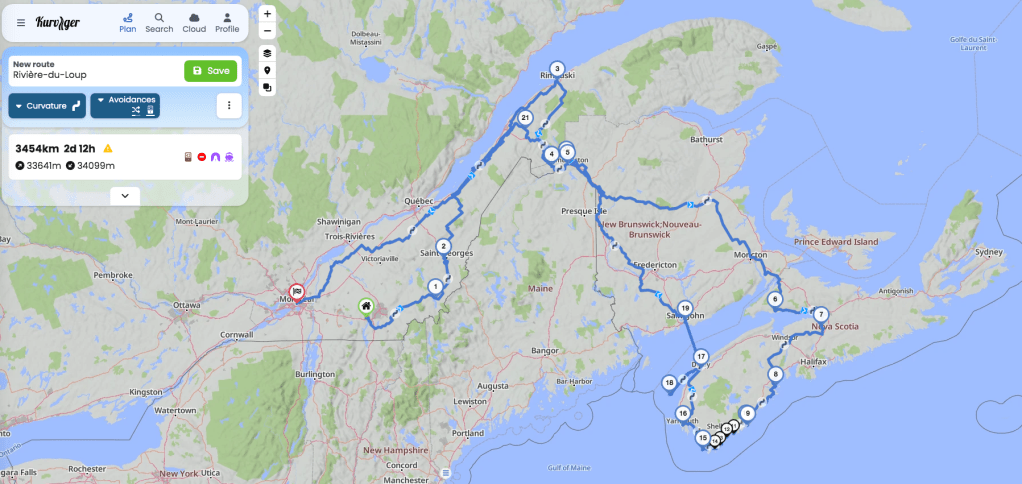
I plan to pick up the track south of Montreal and follow it east to Rimouski and beyond, perhaps into the Gaspé interior. Then I’ll cross the St. Lawrence River (uh, by ferry) from Matane to Baie Comeau and come back by the north shore, up through northern Quebec with some of the most remote riding I’ve ever done. It loops over Lac Saint Jean, where Marilyn and I visited last fall, but on dirt roads this time. Apparently about 90% of the route is dirt and gravel. You can see the entire trail and photos at the STQT Facebook page. I don’t know how long this will take me and I don’t have a definite schedule, but that’s the kind of adventure riding I like. With the app and riding solo, I can play it by ear and simply explore at my own pace. Teachers’ benefits.
Training
To prepare for the off-road element of this tour, I’ve decided to do some more instruction this summer. When I got my licence in 2016, I did some classes to get a Level 1 foundation, but it’s been several years since and I’m ready to improve on those skills. I’m going to look into the Level 2 class with Académie Ridaventure. Their Level 2 class covers such things as water crossings, clearing obstacles (logs, large rocks), and brake slides. I think it’s always good to develop your skills, and I feel I’ve plateaued recently.
I hope to do a semi-private Level 2 class.
“Ah spring!”
There’s another poem I know about spring. Unlike Eliot’s 434-line masterpiece, this one contains two words: “Ah spring!” I know it by heart. It’s been a brutal winter with record snowfall in Montreal and frigid temperatures for months. No January thaw this year. But we’ve finally arrived at the cusp of spring and the riding season.
If there’s one positive of the off-season, it’s the opportunity to “reculer pour mieux sauter,” as D.H. Lawrence said, step back to jump forward. It’s a time to dream and plan for adventures to come. I’m ready; the bike is ready. It may not be the cross-country tour I did in 2021, but in many ways it feels like this tour will be my most ambitious and the one I’ve been working towards since I began riding in 2015. It’s the kind of ADV remote touring I wanted to do on the cross-Canada tour but didn’t have the time. I discovered then that this country is so large that you have to explore it one province at a time, and I guess I’ll start with the one I’ve called home now for 35 years.
What are your plans for the season? What changes have you made to your bike and kit to prepare? Drop a comment below. Whether you are an armchair adventurer or a seasoned traveller, despite what Nature presents us today, it really is a special time of year. Keep the faith, my motorcycle friends: we’re almost there.
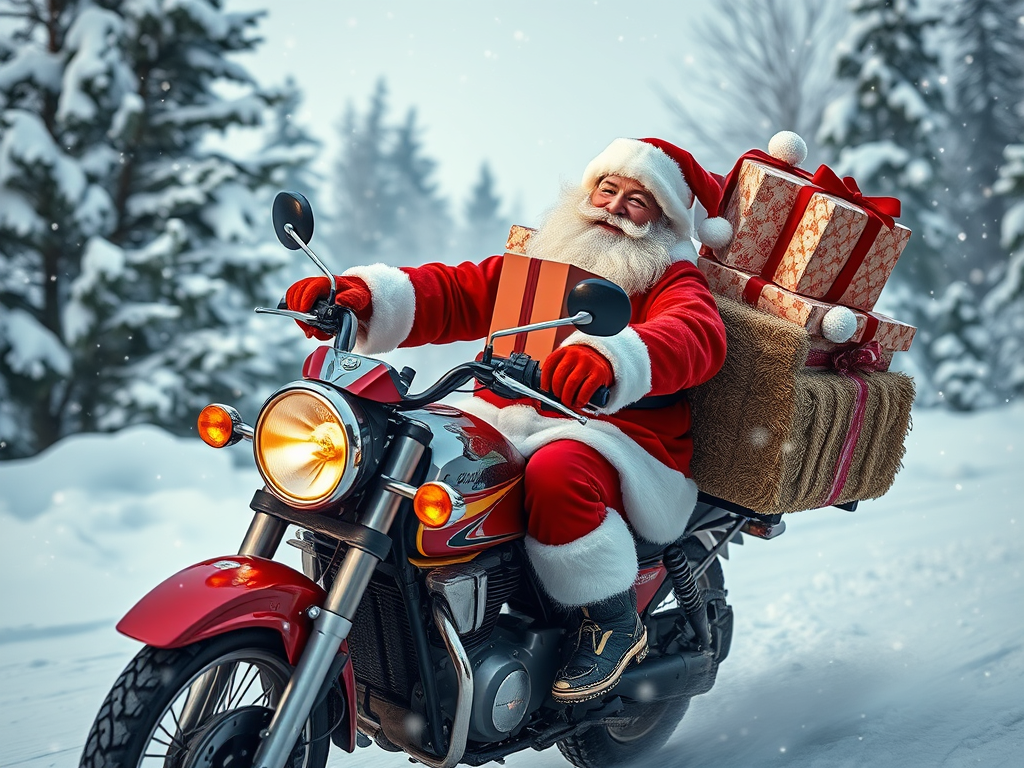
This Christmas I ask for only one thing: that my students stop cheating using AI. It gobbles up my time preparing for the meetings and zaps my morale when they deny it all the way through the appeal process.
Accordingly, I’ve begun this post with an AI-generated image. Whatever generator WordPress uses apparently doesn’t know what an adventure motorcycle is, just as ChatGPT doesn’t really know how to write an insightful analysis of a short story. In both cases—looking at the photo and the essay—it’s pretty obvious they’re fake. What is that square thing on Santa’s lap? Is it supposed to be a present, and if so, why is it on his lap when he’s got all that room on the . . . hay bale? And somebody needs to tell Santa that Sorels don’t provide much foot protection when he lowsides in the snow.
We live in a world where the real and the natural occupy an increasingly small part of our lives. That’s one of the things I love about adventure riding—its ability to help us get away from civilization and screens and the news (and students) and take in, as the saying goes, The Great Outdoors. This year my wish list does not contain mods and accessories for the bike but mostly camping gear. I want to downsize my gear and be more comfortable around camp.
Cookware
If you read my post on motocamping gear, you’ll know that I use an MSR Dragonfly stove and a Zebra 3L stainless steel Billy pot as my motocamping kitchen. This is the same gear I use canoe-camping, but now I’m ready to go even smaller. When I’m canoe-camping, it’s usually with my son and, uh, we’re in a canoe, where there’s lots of space, and weight is only an issue on the portages, but when I’m adventure touring, I’m usually on my own and less is more, so to speak. Space in the panniers is at a premium, and I feel every extra pound on the bike.
I came upon this little unit via Adam Riemann’s video on his gear. I’ll probably leave the cup and fold-out base at home, and I’ll probably substitute the folding cutlery for real stuff. I’m not that minimalist. (While I’m trying to reduce weight, I won’t be cutting my toothbrush in half anytime soon.) This kit will cut down my cooking gear considerably.
It means switching from liquid fuel to butane, which I never thought I’d do. Liquid fuel has a lot going for it: no canisters to buy or dispose of, the ability to refill at any gas station, and as an emergency supply for the bike. But the Dragonfly is loud and slow. You can get a Dragon Tamer by BernieDawg, but at 82€, that’s almost the price of the stove, and it doesn’t seem to speed it up, just silence it. An 8 oz cylinder fits nicely inside the Odoland pot with room for the burner on top, so it’s very compact. I like Adam’s suggestion of wrapping the canister in a goggle bag to provide some padding. The entire kit is, incredibly, only $38 Canadian, so I hope at that price it isn’t, in the immortal words of my late mom, “cheap and nasty.” ADV touring is hard on gear, so it has to be tough.
Whether I take a separate frypan and plate remains to be decided. Maybe I’ll go hardcore and try to get by just with this.
Ditch the Tent and Mattress
Speaking of hardcore, I’m seriously thinking of switching to a hammock system for sleeping. I was talking to my brother-in-law about a canoe camp he did north of Lake Superior—5 nights using a hammock—and he swears by it now. He strung up a tarp overhead, just in case of rain.
This would allow me to leave behind my tent and mattress, which together weigh 7 lbs. More importantly, my tent doesn’t fit in a side bag, so I have to strap it on top lengthwise or across my tail rack in a duffle bag. I’d love, I say love, to be able to do without a duffle bag up high on the back. (BTW, I’m ditching the tank bag too.) With weight down low in the panniers and only a few small bags with tools and tubes up front, the bike would be a lean mean machine, helping me to do the kind of riding I want to do, especially now that the Tiger’s suspension’s been upgraded. It’s not quite a rackless system, but something resembling it.
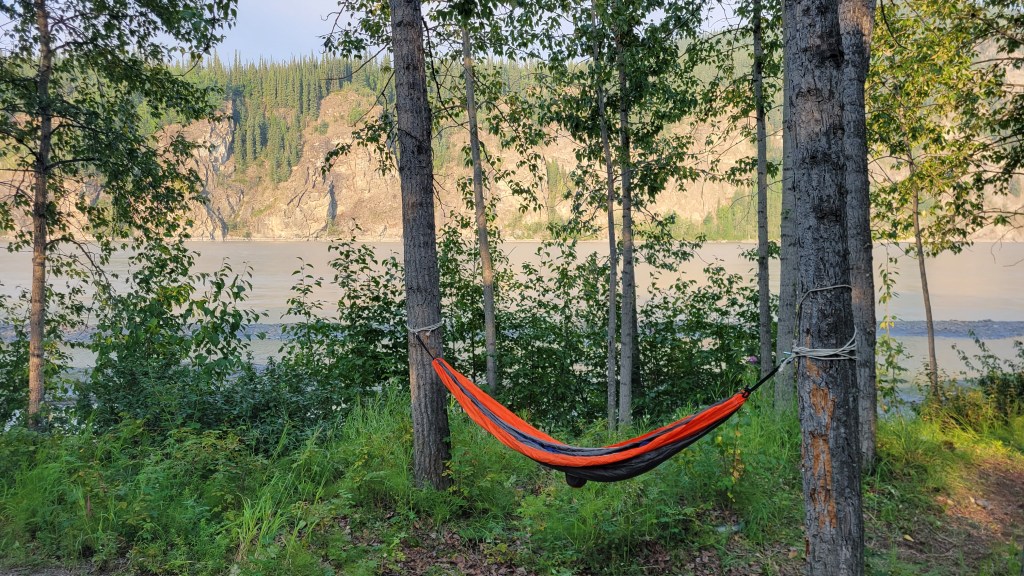
I’ve slept in a hammock before and froze my butt off. Okay, it was at Yukon River Campground, so not the best place to try. One of the issues with hammock camping is that the down in your sleeping back gets compressed underneath you, and you don’t have the insulation of a mattress to keep you warm. You can get a hammock quilt and string that up underneath, but they are heavy and bulky, so you lose any savings gained in weight and space.
Yukon River Campground
My other concern is that there may not always be two trees to string the hammock. I’ve been at sites before where this was the case, and I’m imagining, say, being out at a campground on the Outer Banks— basically a sand bar on the eastern seaboard of North Carolina—where they’re aren’t any trees. Would I be able to sleep on the ground and string a tarp off the bike in case it rains? What about bugs? Night visits? Privacy? You don’t see any RTW riders using a hammock.
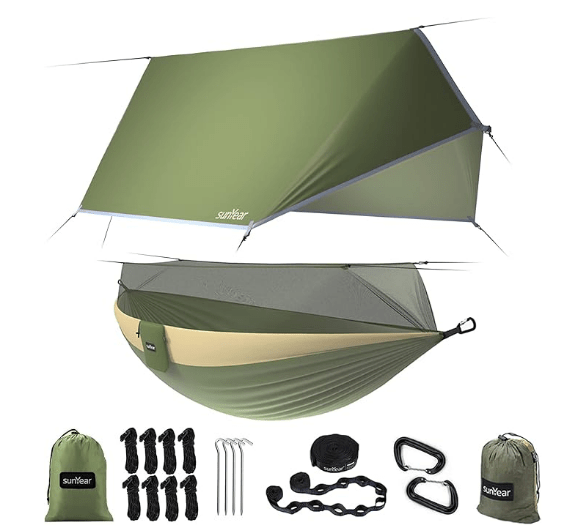
Well, there’s only one way to find out. After some initial research, the SunYear hammock is on my wish list.
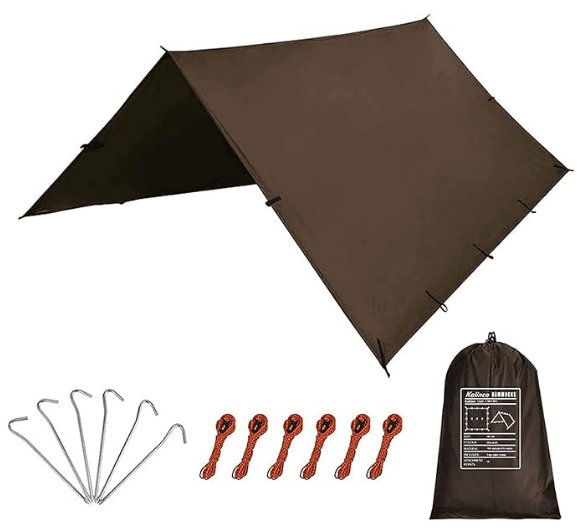
The SunYear is made of parachute nylon, and if someone is trusting it from ten thousand feet, I’ll trust it from 2 or 3. As you can see, it comes complete with a bug net and a tarp. A nice feature is the triangular shape of the tarp for some privacy, not that I care.
But before I go investing in a new set-up that costs about the same as a new tent, I’ll try a shorter trip using my existing hammock and see how it works. Alternatively, I could just buy a separate bug net and tarp if that works out. And for stringing it, I’m thinking I’ll carry a couple of ratcheting straps for bike recovery (a lesson learned from my last trip to Vermont) and they will work just fine to anchor the hammock without damaging the trees.
What do you think? Am I crazy? Have you tried hammock camping? How did you find it? Great recent development in camping gear or latest fad? Leave a comment below.
Shelter
Without a tent, a reliable tarp is all the more essential for rainy days around camp. When Riley and I had rain in Vermont last August, we strung his tarp up over the picnic table and were happy.
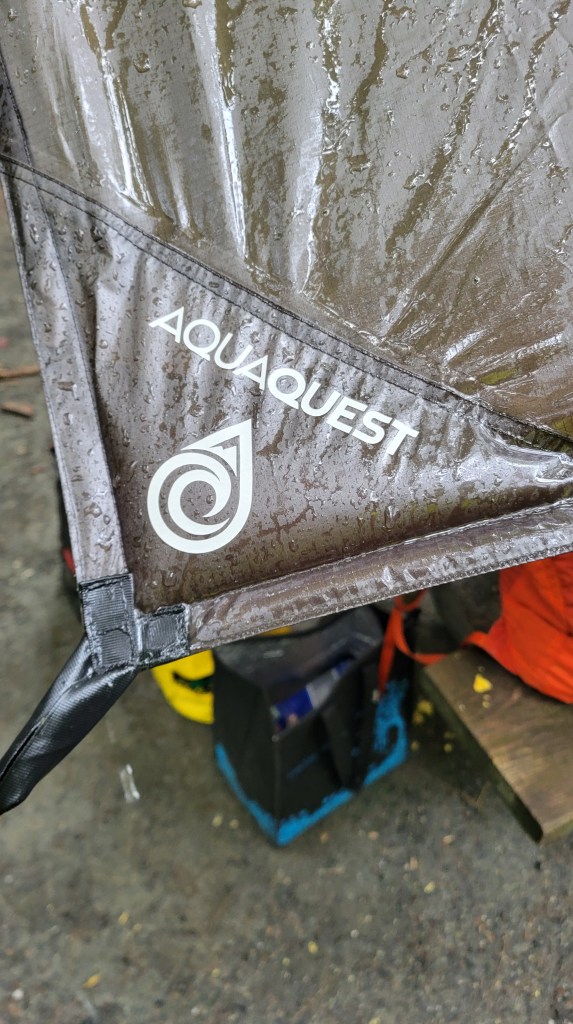
I was so impressed with his tarp that I took a picture of the logo. I later looked it up online and nearly shit my pants. I didn’t know that a tarp can cost $260. I usually get mine from the dollar store. Okay, they smell of plastic off-gassing and are as loud as my Dragonfly stove, so I’m ready to upgrade. When it’s your home away from home, a reliable tarp is worth its weight in gold. A good one will also pack up small.
I haven’t decided on the size yet, but I’ll want something big enough to shelter from driving rain. The only question is: Aquaquest or cheap Chinese rip-off?
Two items that never made it off my wish list last year are a new helmet and shorty levers. I’ve had the same Arai Signet-Q since I started riding in 2015. Don’t tell the cops. You’re supposed to change it every 5 years by law. That means I really should either get a new one or move to New Hampshire.
Last year, I was looking at the Arai Tour-X5. Arai make arguably the safest helmets on the market, but as every Harley rider in a skid lid will tell you, safety is over-rated. More importantly, there’s fashion. But seriously, other factors include comfort, weight, ventilation, and a big one for me, wind noise.
The Arai Tour-X5. Sadly, still on The Wish List.
Recently I was intrigued by what Chris (Chap in a Cap) at MotoLegends was saying about flip helmets. He argues that modular helmets should be considered the true adventure helmet, and the only reason most ADV riders have a helmet with a peak is for fashion. “Get over yourself,” he says elsewhere.
One thing I didn’t know is that, according to Chris, a flip helmet is the quietest type of helmet, even quieter than a full face. I thought that the hinge system created some wind noise, but perhaps that was just the case with the early modular helmets. It’s not just the absence of the peak that makes it quiet but also because the neck opening is smaller. With a flip helmet, you naturally lift the chin bar to put it on, so the neck opening can be smaller and less wind enters the helmet from underneath.
I’m sold. I have to admit, I’m interested in the idea of having the quietest helmet possible. As some of my readers know, I’m completely deaf in one ear so have to protect what’s left of the other one, and even with earplugs, which I always wear, the wind noise can be loud on the highway with a bad helmet like my LS2 Pioneer.
Champion Helmets, who do the most comprehensive and reliable testing in the industry, in my opinion, put the HJC RPHA-91 not only as the quietest helmet on the market but also the best overall modular helmet of 2025. The Shoei Neotec 3 was a close second. Schuberth helmets don’t fit my intermediate oval noggin, and Arai, well, Michio Arai doesn’t believe in flip helmets. So I think either the HJC RPHA-91 or the Shoei Neotec 3 is in my future.
The HJC is about half the price of the Shoei, but honestly, for something as important as the helmet, it will probably come down to which has the best graphics.
Back to Levers
The other item that never made it off my 2023 Wish List are shorty levers. What I did instead was move the levers perch inward on the handlebar as per another of Reimann’s suggestions, so I was pulling with two fingers but on the end of the OEM levers. This seemed to be the best of both worlds: I could use two fingers but still had the leverage of a full-length lever.
The downside to this set-up, I discovered, is that the front brake master cylinder is part of the lever assembly, and now it’s so far in it’s slightly tipped because the bracket is on the slope of the handlebar. The mirrors are also part of the same unit, so their position is affected. I can see okay, but all things considered, maybe it’s just easier to get shorty levers.
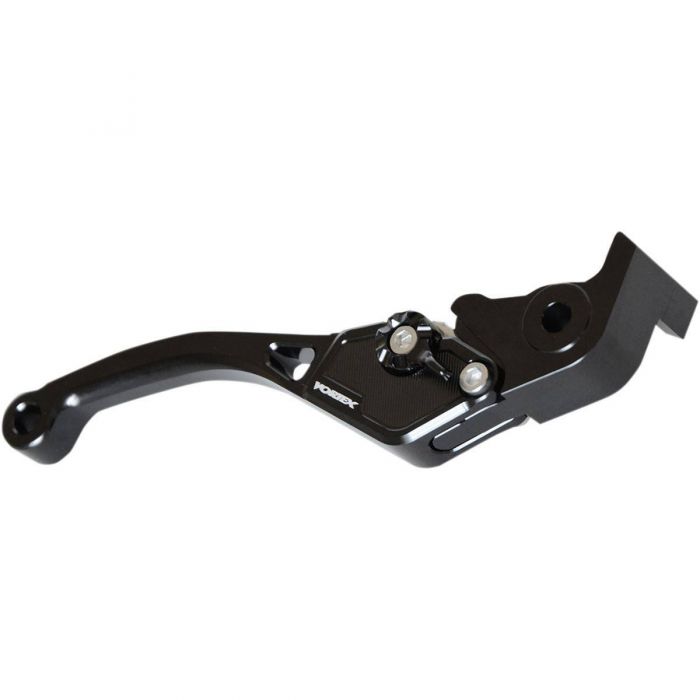
Last year I had the Vortex levers on the wish list. This year, it’s ASV, but don’t be surprised if they, at over $400 a set, are on next year’s list too.
VortexASV
So if you didn’t think I’m crazy for giving up my tent, you probably do now. What can make someone pay that kind of money for levers, especially when you can get cheap Chinese ones on Amazon or eBay for $35? Probably the same thing that would compel someone to pay $260 for a tarp. It’s the quality of the product, and in this world, you usually get what you pay for, despite proclamations of cheapos to the contrary.
Aside from being unbreakable with an unconditional 5-year crash damage guarantee, the ASV levers apparently have excellent feel, if you believe comments on forums. That’s a result of the pivot that has precision-sealed bearings, the only lever on the market for my bike with a bearing pivot. ASV also have a micro-indexing adjuster with 180 increments, so you can literally dial in each lever to your exact preference. The C-series have a matte finish and cost a little more than the polished finish of the F-series.
I really don’t know if I’ll get these, but it’s nice to dream. Isn’t that the purpose of a wish list?
One More Thing
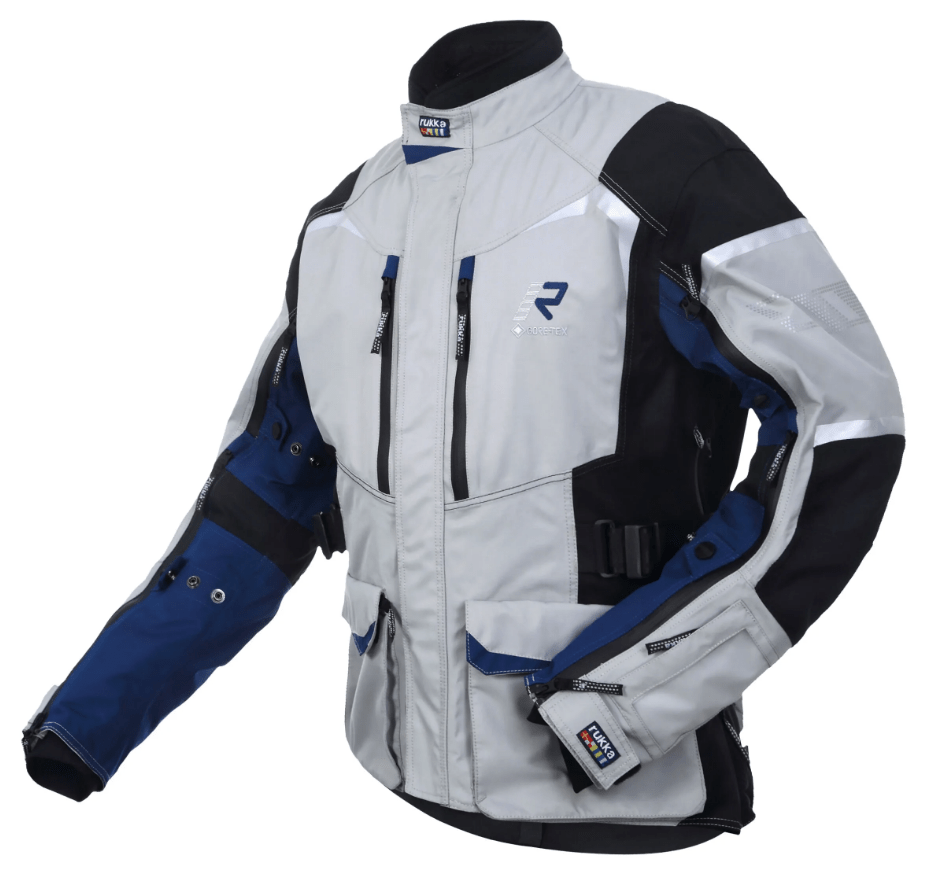
“Oh yeah, one more thing.” That’s what Steve Jobs used to say to introduce the most exciting new Apple product at the very end of his keynotes. I’d love to get a new jacket, one made for cold weather. I’d love to get a Rukka jacket, any Rukka jacket, but preferably one with a down-filled liner. I’m tired of freezing on early- and late-season rides.
My warmest jacket is the one I bought off eBay for $55 US when I started riding. It’s a Joe Rocket with textile front and back and leather arms and shoulders. It’s my warmest jacket because it has a quilted liner. My other two jackets are hot weather: the Klim Marrakesh, which is mesh, and the Traverse, which is a Gore-Tex liner.
Again, the option here is premium or budget-friendly. I’ve been hearing a lot about the MSR Xplorer jacket from Rocky Mountain ADV and it might work with some good heated gear inside.
Rukka Rimo-R for $1000or MSR Xplorer for half the price?
One of the most viewed posts on this blog is the one on how to make your own heated jacket for under $50, and it’s a good option for commuting. However, the cheap Chinese controller is fragile and doesn’t hold up to the demands of adventure riding. I’ve already broken and fixed it a few times. The other thing I don’t like about the jacket is that it’s a rather thick, puffy jacket, that doesn’t pack well, so it’s either the homemade heated jacket or a wool sweater, but not both, and for around the fire, I’ll take wool any day.
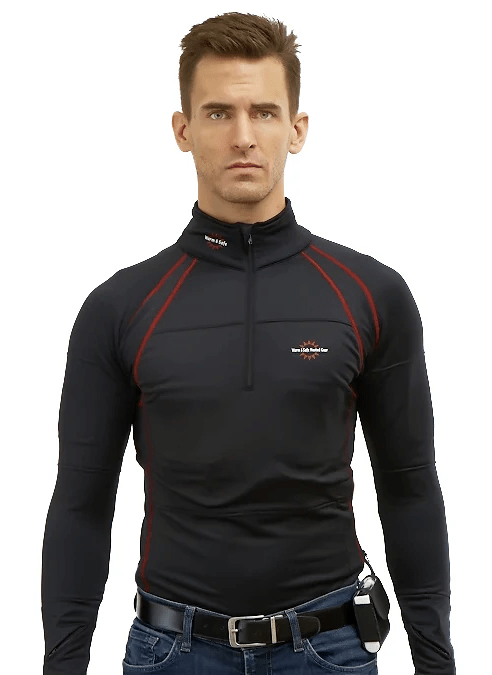
My friend Riley of The Awesome Players posted a video of a late-season ride he did on which he was wearing a Warm and Safe Heated Jacket. He later texted me that he also has the baselayer, and so I looked into it.
Warm and Safe Heat Layer Shirt
I like the idea of a base layer. It just makes sense to have the heat next to your skin instead of having to penetrate layers of thermal clothing first. Other people like the flexibility of having a light heated layer that you can easily remove if it warms up.
The company has over 25 years of experience and R&D. Each product connects to a heat troller that controls the heat. Instead of just three settings like with the controller on the Chinese-made pads, the W&S troller has a dial, so there’s a lot more variability. Okay, Warm and Safe don’t win the award for the most imaginative naming, but some of their gear also make it onto The List.
Conclusion
Well that list ended up being longer than I anticipated. As the instructor of my motorcycle course said first night, “This sport is harder on your wallet than an ex-wife.” Thankfully, my marriage is still strong, although would be considerably weaker if Santa fulfilled all my wishes.
And as I usually do at the end of these fun Christmas-themed blogs, I have mixed feelings about being so materialistic when wars are continuing in other parts of the world and some people lack heat, food, shelter—the basic materials of life. I don’t feel I can do much or anything about that, but I can help those closer at home in need. This year, Marilyn and I have decided to give a significant donation to a food bank. It will be a drop in the bucket, but it will be our drop, and I hope it provides a little relief to someone in greater need than me. With inflation and current food prices, the need is greater than ever.
The Wish List posts come at the perfect time of year, just after the bike is pulled off the road for four months by law here in Quebec. They help me though the transition to no riding by thinking of the rides being planned for next season and the gear that will make them all the more enjoyable. I’m still planning to do the tour that has been postponed now for two seasons—down the Blue Ridge Parkway into West Virginia, maybe over to the The Outer Banks, and back up via the MABDR and NEBDR.
What are your plans for next season? Drop a comment below and don’t feel they have to be anything as ambitious as mine. I’m always interested in hearing from my readers.
Merry Christmas and Happy Hanukkah to all my readers, and safe riding in 2025.
Spirited on road, capable off road, the Tiger 800XC is a great all-round middle-weight bike.
My review of the 650GS has been the most viewed page on this blog for years, so I thought I’d write one on the Tiger, which I’ve had now for three full seasons and over 45,000K. These are both old bikes, so I know most people reading the reviews already own the bike and want to see if they’ve made a mistake. You have not. Well, as always, it depends on the type of riding you do. But if you’re looking for a long-distance ADV touring bike, the Triumph Tiger 800XC is a good choice.
But I’m getting ahead of myself. As I did before, I’ll break down the review into components.
Engine
The heart of any bike is the engine and the Tiger’s is a gem. When I pulled into my driveway on the GS at the end of my 2021 cross-country trip, I knew I wanted a smoother bike. The big thumper got me to the Pacific Ocean and the Arctic Circle and back, but it wasn’t very comfortable, especially on those highway miles. When I test rode the Tiger, I knew I would buy it even before I was around the block; I couldn’t believe what I was feeling. This engine is SMOOOTH! I’d go as far as to say it’s the bike’s defining characteristic. This is the 800, so before Triumph moved to the T-plane crank and off-set firing order, so it’s about as smooth as a triple can be. If you’re coming from the nuts-numbing world of a big thumper, the inline triple with a 120 degree crank is a world apart and exactly what I was looking for.
Aside from being smooth, this engine has a ton of character. It has comparable torque to its rival, the BMW F800 GS (58 ft.lb @ 7850 rpm vs. 59 ft.lb @ 5750 respectively), but gets that torque much higher in the rev range. And it likes to rev! It spins up fast, so even pulling away from a stop light you find yourself pulled involuntarily into The Giggle Zone. Yet despite that high peak rpm, the torque on the Tiger is incredibly linear.
photo credit:// ADVMoto. 1st Gen Tiger 800 dyno results. Note the linear (flat) torque “curve” above 3000 rpm.
The gearbox is also smooth, both upshifting and downshifting. It’s so smooth, someone I swapped bikes with once asked if it has a slipper clutch. The high-revs, the smoothness of both engine and gearbox, combined with a wonderfully guttural exhaust note make the Tiger 800 a really fun bike to ride. It feels like Triumph has shoe-horned a sport bike engine into an adventure chassis, which I guess they have since the engine comes from the 660 Sport. I’m not afraid of the dirt but, to be honest, most of my adventure touring is on asphalt, and the Tiger makes crunching those miles enjoyable.
Where the engine does come up short is in slow-speed technical riding, a downside the T-plane crank of its successor, the Tiger 900, attempts to address. The 800 is happy when revved, but is prone to stalling at slow speed, especially in sticky mud or over obstacles—anything that requires careful clutch work in 1st gear. It has no tractor-factor, so if you like ATV and snowmobile trails, single-track and getting out into the woods, the Tiger is probably not for you. It can do it, but you have to keep the revs up and feather the clutch a lot, which can be tiring on your hand and the clutch.
Handling
The XC model I have has a 21″ front and a 17″ rear wheel—an unusual combination in the ADV world where an 18″ rear is the norm. Perhaps Triumph did that to compensate for the nose-heavy geometry of the big triple compared to a parallel twin. (It still has a stink bug stance.) They’ve also increased the rake on the front forks beyond the competitors’ to 23.9˚ (compare with 26˚ for the BMW 800). What this weird-ass geometry does is make the 21″ front wheel surprisingly easy to turn in yet planted through corners. For an ADV bike, the Tiger is surprisingly agile and confidence-inspiring through the twisties. That’s when it’s in its element, whether on asphalt, gravel, or dirt.
Lanark County Trail System on 70/30 tires.
The cost is a tendency for the front end to tuck in mud or sand, especially if you forget to steer with the pegs. My crash this past August was a direct result of that happening on a muddy downhill corner, although I think balance of the bike front to back was also a factor. (I was under sag.)
Front-end tuck on the Bailey-Hazen hero section.
The Tiger is also a little top heavy, despite its flat horseshoe-shaped gas tank. That’s probably a result of the tall and wide engine. (To get the 660cc Sport engine to 800, Triumph lengthened rather than widened the bore.) You don’t feel it once the bike is rolling, but again, it’s another characteristic that makes the Tiger a challenge off-roading at slow speed. What all this means is that if you want to ride hero sections on the Tiger, you’d better have skills.
Triumph says that the Tiger is for “light off-roading” and they don’t lie. The engine and balance of this bike are designed for 2nd gear and up. But the biggest indicator that this bike is not for serious off-roading is the placement of the spark plugs and air filter, both of which are under the tank. If you’re doing water crossings—and what serious off-roader isn’t—you’d better not swamp the bike or you’re going to be removing bodywork and lifting the tank trailside. Been there, done that. It’s not much fun. To lift the tank, you need first to remove the beak, radiator side panels, indicator panels, and trim. I’ve done this perhaps a dozen times now and have the whole process down to about 20 minutes. Needless to say, for an ADV bike, this is a major design flaw, or at least a serious limitation.
Suspension
The Showa suspension on the XC is a step up from the XR version. Rear travel is 215mm and front is 240mm. That’s more than what I’ll need because I’m not blasting down rocky trails as much as trying to thread my way through them. (The 650GS, for comparison, has 165mm rear and 170 front.) With the Outback Motortek skidplate, ground clearance on mine is about 9 1/4″ or 235mm. The shock has hydraulic preload and rebound adjustment. The forks are a beefy 45mm but with no adjustment. That’s a fairly basic system, but again, sufficient for ADV touring.
Like most ADV bikes off the production line, the Tiger 800 is set up for road use. The suspension is soft and cushy, making a plush ride around town (and during test rides, I should add). But if you want to use this bike for how it’s intended—ADV touring (the XC stands for cross country)—you’re going to have to stiffen the suspension.
The OEM shock has a spring rate of 9.7 kg/mm which, surprisingly, gives me a static sag of 18% (40mm). This means that under its own weight on the OEM spring, the bike is under sag. Rider sag for me is 35%, even with preload fully wound. (Note to newbies: static sag is unloaded with no rider and should be 10%; rider sag is loaded with rider and should be 30%.) At 150 lbs (177 in all my gear), I’m not a big guy, and with about 66 lbs of luggage (56 on the back, 10 on the front), I don’t think I’m overloaded, although I’ll be working over the off season to reduce that weight. Nevertheless, it’s clear to me that the OEM spring on the shock is too soft for anything but solo street riding.
I recently upgraded the suspension and will publish a separate post on that topic, so click Follow if you’re interested in what I’ve done.
Ergonomics and Comfort
The ergonomics on the Tiger are generally comfortable whether you are seated or standing. The wide handlebars are what you’d expect and want on a bike designed for the dirt, yet they don’t feel like ape-hangers when seated either. I haven’t added any bar risers because the bar mounts are already high, and when I stand the bars fall to the right place when I’m in the correct body position with hips slightly bent. (Most people who add risers are seeking comfort while standing erect.)
One unusual feature of the bike’s ergos is the distinct sensation of the fuel tank between your, uh, thighs. It was something I immediately noticed on that brief test ride and something others have commented on when we’ve swapped bikes. The tank is wide, and it forces your knees apart. (No bad jokes here). I find it actually reminds me to squeeze the bike, which is good practice whether riding on and especially off road.
The seat is generally comfortable for long days, although when touring I add a sheepskin pad to improve comfort and airflow. Triumph sell a comfort seat for this bike but I haven’t needed it. Similarly, Marilyn hasn’t complained about the seat on the back. The 1st generation Tigers do not have a heated seat option but subsequent ones do.
My knees sometimes complain over long days but I’m pretty long-legged, so they are bent slightly more than 90˚. I put my Fastway pegs in the low position and the adjustable seat in the high position and this set-up has been pretty good. With the bike now sitting even higher, I’m anticipating improved comfort for my ageing knees. In the raised position, seat height is 34.5″ or 885mm, which is comparable to its BMW competitor.
My biggest complaint about comfort is in the area of wind management. I’ll be doing a separate post on my search for a solution, but let me say here that the OEM windscreens for the Tiger suck! The stock screen is notorious, and the touring screen is little better. Maybe it’s too much to ask of a screen to allow airflow at slow speed when off-roading and a quiet ride at speed on the highway. The best solution I’ve found is the touring screen with a cheap clip-on wind deflector, which helps with the wind but ruins both the lines of the bike and video footage from my chin-mounted camera. Oh well.
Aesthetics
Canadian poet Robert Bringhurst has a collection titled The Beauty of the Weapons and I think the Tiger is a beautiful weapon, especially the all black model. I get a lot of compliments on the bike, even from other riders. You can see in the neoclassic bikes like the new Bonnevilles that Triumph pays a lot of attention to how a bike looks, and they’ve done a great job with the Tiger. Okay, you may say they’ve copied their competitor with the beak, but I think a bike without one looks weird. There are a lot of complimentary parallel angular lines on the bike that thankfully Outback Motortek has followed. Aesthetics is something not everyone is into, but I want a bike that makes me turn around and look at it as I walk away in the parking lot, and the Tiger does that.
Reliability
There are a few known issues with this bike, not surprising given that it’s a first generation model. The shifting mechanism is known to fail, and mine did, but not in the expected way of the return spring or the pin for the return spring breaking. No, it was the selector arm that failed at about 45,000K, so while I was in there behind the clutch, I decided to replace not only the selector arm but also the problematic spindle, the return spring, and the detent wheel, all of which have been redesigned. You can read about that work here. The bike also let me down once in the bush during a water crossing when somehow about 3-4L of water got in the tank. I still think the only viable theory is that water got sucked up through the tank breather tube and I’ve since redesigned the tube to avoid this happening again.
I cut the breather tube behind the airboxand added a T-joint and short length of hose
The other known issue with this bike is the starter motor. There are many accounts of it failing to restart the bike when the engine is hot. It was fine for me the first two years but then started to act up and got progressively worse. I’ll be doing a separate blog post on that too, but I’ll let the cat out of the bag here and say the problem was, at least in part, a dirty main ground on top of the engine block that was causing a voltage drop. If you have the dreaded starter motor issue on your Tiger, clean the main ground and contacts on the starter relay before changing the starter or battery.
That’s it. Clutch, stator, voltage rectifier, water pump, oil pump—all good—and no issues with any of the electronics. That’s not bad, in my opinion, for a bike with over 60,000K on it.
I adjusted the exhaust valves at 45,000K; the intakes were perfect but all the exhausts were tight. There are some reports of the engines, particularly on the 2nd gen Tigers, to start burning significant oil at about that mileage, but thankfully that has not been the case with mine. It burns a little oil now, particularly at high-revs on the highway, but nothing significant. I’ll come back from a tour of a few thousand kilometers and top up maybe 200mL. I’ve been using Castrol Power 1 4T and, more recently, Motul 7100, but when I mentioned my oil consumption to my dealer, he said they put Motul 300V in all the “high-revving bikes.” I thought it was only for racing bikes, but henceforth that’s what will be going in this bike.
I like that the 2011-14 Tigers are still relatively simple and easy to service on my own. There’s no ride-by-wire and rider modes or complicated electronics that require a computer to diagnose and repair, although I wish turning off ABS were easier than navigating menus. The 1st Gen Tigers that ran 2011-14 are at the tail end of an era before things got pretty complicated electronically. Build quality and fit-and-finish are excellent, and the bike is looking as good as new with no rust or corrosion on it anywhere, despite its age.
Summary
Pros
Fun, spirited engine
Smooth gearbox
Agile and planted through corners
Comfortable seat and ergonomics
Good looks
Aside from a few early-model issues, generally reliable
Relatively easy to service
Cons
No tractor-factor; stalls easily in 1st gear
A little top heavy
A tendency for the front end to tuck in low-traction terrain
Poor wind management
Shifting mechanism weak
Some reports of starter issues with OEM starter
Plugs and airbox under the tank
Vulnerability in water if the tank is rapidly cooled
Looking at the length of those two lists, you’d think I’m not happy with the bike, but I am. That’s because the main elements of the bike are good—the engine, the handling, the reliability. The bike has a few issues, like any bike, but they are overshadowed but just how much fun it is to ride, and isn’t that the main thing we want in a bike?
Conclusion
When I participated in La Classique Moto Fest here in Quebec a few years ago, I saw my bike in a long line of other bikes there for the rally. Maybe it was my subjective perspective, but it seemed slightly out of place. It occurred to me that most of the bikes there were set up for off-road riding whereas the Tiger, at least my Tiger, is more an adventure bike, and I was reminded of a comment made years ago on the ARR Raw podcast about this distinction. (I’ll link to the podcast but can’t remember the specific episode.) They were talking about tire choice, if I remember correctly, and one of the guests made the distinction between what they do as RTW riders and what weekend warriors do. He said he’d never attempt half the stuff some guys do off road because, when you’re touring halfway around the world, you can’t afford to break something on your bike and wait weeks, perhaps longer, for parts to arrive. In other words, they ride more conservatively, and that was reflected in his tire choice. I’ll add that it’s also reflected in your bike choice.
Off-road versus adventure bikes. An arbitrary distinction?
As we all know, the adventure bike is the ultimate compromise. It has to be good on road and off road, capable of crunching out miles on the highway as well as getting you down a logging road. It has to be quiet and comfortable for long days in the saddle, powerful enough to climb mountains and carry camping gear, maybe a pillion, yet small and light enough to pick up on your own in the middle of so-called nowhere. It has to be reliable, and simple enough to fix yourself, trailside if necessary, if something does break. With these considerations in mind, the middleweight Triumph Tiger 800XC is a great all-rounder and an excellent choice as a long-distance ADV touring bike. It has its drawbacks, for sure, and may be master of none, but it’s the best Jack of all trades I’ve been able to find.
It wasn’t the tour I planned for the summer, but it was eventful.
photo credit: Riley Harlton
The initial plan for my big tour of 2024 was to ride The Blueridge Parkway down to West Virginia and then come back on the MABDR and NEBDR. It would have taken me probably close to a month. But then those plans got kiboshed by unforeseen circumstances and for a while there it seemed I wouldn’t get away at all. In the end, I managed to spend four days in August touring Vermont with Riley and Marc from The Awesome Players Off-Road MC doing Sections 4 & 5 of the NEBDR.
We decided to do a spoke-and-hub type trip, using Silver Lake State Park in Barnard, VT, as our home base. This meant not only that we didn’t have to move camp each day but also that we could ride for a few days without luggage. I’ve stayed at that campground several times and it never disappoints. The general store in Barnard has gas and makes a great breakfast sandwich.
We decided to ride Bailey-Hazen down. B-H is an old military road dating back to the war of independence (1776). It’s primarily dirt and gravel and runs from Montgomery Centre down through Lowell, Albany, Craftsbury, Greensboro, Walden, Peacham, and into East Ryegate. I’ve ridden it a few times but never the hero section. In fact, the last time I rode B-H, I attempted the hero section and had to turn around. It’s basically an ATV trail filled with babyheads, and I was alone and on street tires. It’s definitely a challenge.
So I was thinking of that section as we rode down toward the border and thinking of it some more as we approached Montgomery Centre. (The hero section is early in the track.) This time I had Michelin Anakee Wild tires on and there were three of us, but I was fully loaded with all the camping gear. Riley and Marc have a lot more off-road experience than me and the last time I rode with them it didn’t go well. You never want to be the guy holding everybody up.
We headed up the nasty little hill climb and I got loose a few times but kept it upright. Riley said later that he was thinking I must be happy not to be on the Beemer and I was. The Tiger is definitely more capable with the 21″ front wheel. There was a crew working on the trail and soon we hit some deep gravel they were spreading and that was interesting. But somehow I made it to the top without dropping the bike and felt pretty good about that. Unfortunately, things were about to take a turn for the worse.
For those unfamiliar with Awesome Players lingo, a douche rope is a fabricated rope with a steel karabiner on one end and loops along its length for handles. It’s used to pull out the douche who is stuck in mud or, in my case, whose bike is down a ravine. I don’t know why I was going so fast, except I guess because adrenaline was pumping through me and maybe I was over-confident, having just done the tough part. I think I also relaxed my concentration. You can see my front tire slip out on the muddy downhill corner which threw my balance, and then I was struggling to keep the bike on the trail. Riley thinks I hit a false neutral because you can hear the bike rev a few times but I think I just panicked. Fortunately, what I lack in riding skills I make up for in tree avoidance technique. When I saw it coming up fast, the bike went one way and I the other.
I’m breathing hard into my helmet because I was in some pain and thought at first I might have pulled an Itchy Boots and broken my collar bone. But in the end, it was just a separated shoulder and, a month later, I’m almost fully recovered. The tendons have healed and I’m just working on strengthening and stretching the scar tissue. It could have been much worse. If the bike had hit the tree, I imagine there would have been structural damage and it would have been a write off. In the end, it just made for a few uncomfortable days around camp and especially trying to sleep in my tiny tent.
I was pretty mad at myself, as you can hear. It was an auspicious start to the tour and I was living up to my reputation. But here’s the thing I’ve come to realize after reflecting on the crash over the past month: crashing is not only an inevitable part of off-roading but part of learning. In fact, Brett Tkacs lists dropping your bike as an indicator that you’re improving your riding skills, which at first seems counter-intuitive, but when you think about it, if you aren’t dropping your bike once in a while, you aren’t pushing beyond your limits where both sh*t and learning happens. I’m pretty familiar with riding on dirt and gravel roads but haven’t done much trail riding. By contrast, Riley and Marc have been doing trails for years, so I knew that riding with them would be a learning experience.
Their experience was essential to getting my bike back on the trail. They had the gear and know-how. Here’s Marc explaining the procedure.
video credit: Riley Harlton
Once the bike was taken care of, we had lunch and I took a bunch of meds for the pain. I wasn’t sure how it would go on the bike but it was surprisingly okay; the shoulder is relatively immobile while riding, and it was actually off the bike around camp that I felt the injury most.
When we headed off again, I decided to let Marc go first and went slower on the downhill.
That’s my windscreen rattling; I lost some hardware in the crash that I replaced at the next rest stop. Later, Riley lead and I followed his line.
Bailey-Hazen actually isn’t a technical road, aside from a few bits. This clip is more indicative of what most of it is like—hard-packed dirt lined by trees and periodically opening up to nice views of the surrounding hills. It’s a fun ride and appropriate for big bikes.
The next day we headed south on Section 4 of the NEBDR but not before the amazing breakfast sandwiches of the Barnard General Store. There we met Bethel, who was visiting from California and had rented a Ténéré 700 from MotoVermont. She was enamoured by the general stores and bucolic countryside of Vermont, and who wouldn’t be, especially if you live in Superslab City. (I might have this wrong, but I think she said she lives in Los Angeles.) We shared stories over breakfast of falling in mud puddles and down ravines. It’s always nice to meet fellow bikers; there’s definitely a bond between like-minded people enjoying the freedom and thrill of motorcycling. Unfortunately, she was heading north to return the bike in Burlington and we were heading south.
If you know anything about the NEBDR, you know that it’s one of the harder BDRs and that Sections 4 and 5 are the toughest sections, so we were expecting some challenging terrain. I was trying to figure out where the by-passes were because I’d already decided I would take them with my gimpy shoulder; I just couldn’t risk another fall. But to our surprise, the section was relatively tame, more of the same winding dirt and gravel roads. When we finally stopped for coffee and a pastry at Sweet Birch Coffee Roasters and Bakery in Wallingford and Marc got out his map—yes, his paperButler NEBDR map—we realized we had done all the bypasses. It seems that the most recent gpx tracks (March 2024) had the bypasses as the default and you had to load the harder sections separately if you wanted them. When I downloaded the tracks, there was much description of flood damage, so I suspect the organizers decided to steer riders away from those Class 4 roads for now. It worked out for me, but I think Marc was disappointed.
Despite that, Section 4 has some very nice riding. One of my favourite roads was the Forest Service Rd. 30.
Lower Podunk Road is also sweet, as is Hale Hollow.
Sorry about the bad angle of the action cam. If it’s not the wind deflector that obstructs the view, as was the case with my Newfoundland footage, it’s the bad angle unbeknownst to me. I’ll eventually get it right.
We ended up in Readsboro before high-tailing it back up to Barnard on asphalt, stopping en route for groceries and beer.
The next day we headed north on Section 5 and decided to split up so Riley and Marc could get their Class 4 fix. Unfortunately, while doing the harder section north of Stockbridge that follows the White River, Marc suffered the same fate as me. He said it was an easy section but he got target fixated on a rut and was thrown violently off the bike, separating his shoulder too! Now there were two of us gimpy. Even before his accident, he had decided that he was going to head home a day early because camping was not agreeing with him. That’s a polite way of saying he’s a wimp. No, seriously, some people are campers and some are not, and to his credit, he at least gave it a try. He said he enjoyed the campfire and time around camp, but I think he wasn’t sleeping well.
Even experienced riders periodically take a tumble. We’ll blame this one on sleep deprivation. photo credit: Riley Harlton
So after riding the exhilarating Lincoln Gap Road, we said our good-byes and Marc headed north on the 100 back to the border. It was already mid-afternoon and rain was in the forecast, so Riley and I decided to call it a day too. We picked up steaks and potatoes and, being the final night, some port. As we rode back to Barnard the rain started and never really stopped the entire evening, but we strung a tarp over the picnic table so all was well.
A tarp, woollen hat, Rugged Brown Ale, and bluetooth speaker. What more do you need? photo credit: Riley Harlton
For the ride home, we figured we’d ride the Puppy Dog Route, which passes through Barnard and goes right up to the border. I’ve ridden it a few times and it’s an easy dirt route, but I’d only ever done it when dry. After the heavy rain of the night before, it was greeasy! We were crawling along in 1st gear when I stopped and asked, “Do we really want to do this?” Riley agreed that it would take us forever, so after a few miles of that we hit asphalt and stayed on it, but the drama was not over yet.
As we rode toward the border, the rain got heavier and heavier. When we crossed the border, it became torrential, and as we came over the Mercier Bridge it was apparent that there was major flooding, including on the main highway. Traffic had come to a standstill, so we had to find another way home and that included some deep water.
154 mm of rain fell on Montreal on Aug. 9, shattering all records.
When I got in, Marilyn was none too pleased. She’d texted early in the day that we should just come straight home, but I didn’t know why since the rain wasn’t that bad in Vermont. Little did we know that Montreal was in the midst of more extreme weather and that many people were either stranded or had basement flooding. Apparently 80% of the basements in Dorval, the city next to where I live, were flooded.
A pretty hard crash, two, in fact, some challenging riding, extreme weather—this ride had it all and was the true adventure I needed before heading back to the doldrums of work. It also gave me a taste of the NEBDR and how difficult, maybe foolish, my original plan would have been to ride the entire thing alone, fully loaded, including the Class 4 roads “as a challenge.” The riding on the NEBDR is enjoyable and as challenging as you want it to be. We’ll see how I feel next summer but at the moment I’m feeling like I can skip the Class 4s if I’m alone.
The best part of this ride actually wasn’t part of the route at all but reconnecting with The Awesome Players. When I tried riding with them before, I just couldn’t keep up on the big GS when they were on smaller bikes. Now that I have the Tiger, I’m willing to try again. It’s the kind of riding I’ve wanted to do for some time but most of the riders I know don’t do dirt. I know I’ll be a little out of my comfort zone but in a good way, and there isn’t a better bunch of supportive, fun guys to ride with than them. You only have to watch a few of their videos to see what I mean.
But that will be probably next season, to be honest. Next week is the Ride for Dad to raise funds for prostate cancer research. It’s a great cause, and you can contribute to my team’s campaign here. Anything helps and is greatly appreciated.
After that, Marilyn and I are riding the Saguenay Fjord, which neither of us has seen, and I’ll be changing tires and windscreen for that tour so I don’t know if I’ll be back on the dirt until spring. Look for an upcoming post on Saguenay/Lac Saint-Jean, and a few more rides through the glorious fall season here in Canada when the leaves turn colour. Who knows: maybe I’ll even make it down to Vermont again before the snow flies.
At Silver Lake State Park. Norden 901 Expedition, Tiger 800XC, and Yamaha T7.
Marilyn and I got a kick out these signs. The NL potholes don’t compare to Montreal’s.
After a night crossing on the ferry from Newfoundland, I decide to ride The Cabot Trail, then stop at friends in Nova Scotia and Maine before the final push home.
The night crossing was terrible! I think it ranks up there as one of the most miserable nights of my life, such as once on a day trip in Germany when I missed the last train back to Munich with no cash in my pocket and too young to have a credit card so had to sleep on the street, or when I once slept in a trailer with a door that didn’t properly close, in June, in Canada, and got eaten alive all night by mosquitoes. The snoring was like a thousand mosquitoes entering my sleep to feast all night, or an over-sized dentist’s drill boring through my ear-plugs. I tried slumping in my chair, both sides, slouching, curling into a fetal position across two chairs (and an armrest), lying on the floor, trying a different floor . . . nothing worked. Eventually I gave up and went for breakfast in the dining hall.
This was the only enjoyable part of the entire crossing, during which I struck up a conversation with a young man at an adjacent table. He was from Cape Breton and had recently started working on an offshore oil rig. It was interesting to hear about that experience and life in Cape Breton. The story I kept hearing during my travels from him and other locals is that the Maritime winters are not what they used to be. Very little snow and many have sold their snowmobiles. Fishermen report of increased fog. Great White sharks have been spotted in the waters off Ingonish, etc. etc. Yeah, we know, you must be thinking—the planet is getting warmer. Duh! I only mention it because Marilyn has always said she wouldn’t retire to the Maritimes because she couldn’t take a Maritime winter. Thanks to global warming, the east might be back in the cards! (However, as I write this, it’s just received a record snowfall).
When I said I was headed to Baddeck on a bike, he suggested I take the 223, the Grand Narrows Highway that goes up through Iona. Nice tip! Here’s a taste.
It’s like that the whole way—twisty right along the shore of Bras D’Or Lake where it juts up into the Narrows. The pavement is a little broken but not bad. Keep in mind that I’m operating on one hour of sleep and that brush on the right that comes up close to the road is always a red flag for me, so I’m holding back. I would have my fun later in the day on the Cabot Trail.
After arriving at Baddeck Cabot Trail Campground, one of my favourite campgrounds and my second stay there this trip, I set up camp before hitting The Cabot Trail. Yes, the definite article deserves to be capitalized because The Cabot Trail is an iconic ride. I’ve done it before on my 650GS but wanted to do it again on the Tiger. So after a quick nap, I headed off.
I told myself, given my sleep debt, I’d just cruise it, but it wasn’t long before I was lured up into the adrenaline zone—until the bike twitched on a tar snake mid-corner. Never a pleasant feeling and I decided to cool it down.
The real fun was riding out to Meat Cove. The road is twisty and undulating and broken in spots, and then it turns to dirt. It started to rain, which made it more interesting. The dirt section had recently been graded so there weren’t any potholes or washboard to worry about.
This is exactly the kind of riding the Tiger is made for—twisty asphalt and light off-roading. I was having fun, once I got the damn ABS off. (I wish it were easier on the Tiger than having to navigate down through menus.) Unfortunately, I didn’t get footage of the best riding into the campground because the camera turned off for some unknown reason, but trust me, I was power-sliding the rear wheel out over the cliff-edge on those left-handers. 😉 Maybe it’s best that the wife doesn’t see that footage anyway.
I was pretty annoyed when I discovered the camera had stopped. To be honest, I’m not happy with much of the footage from the tour, so I’m definitely going to change how I work with the camera. Maybe I’ll use the phone app so I can see when and what I’m filming (or when I’m not filming), and maybe I’ll use the loop setting in which the camera constantly records over the same bit of memory card until I stop recording. The only issue with loop mode is it drains the battery fast. Voice commands don’t work with wind noise at speed, and I don’t want to be fumbling either with the camera or the phone, but I’ll experiment in the spring and come up with a better process. If you use an action camera, I’d be interested in hearing about your experience and set-up.
Anyway, back at Meat Cove, I arrived amid a torrential downpour, much to the amusement of hikers who were laughing at me while waiting it out in their SUVs. I didn’t care. A hormone concoction of endorphins, dopamine, adrenaline, and testosterone were coursing through my veins. It was time for a fresh lobster roll at the Clam Chowder Hut and the bragging rights photo.
Some bikes can’t make it in to Meat Cove but the Tiger sure can.
There’s a lot more of The Cabot Trail I could show but this is already going to be a long post, and there’s no shortage of footage available online. It’s always a great ride, and I’m glad I made the effort to do it again while I was near. I ended up doing the complete loop and was back at camp in time to enjoy a campfire and some of the bourbon I’d picked up earlier in the day.
My destination the following day was Urbania, Nova Scotia, just south of Truro, where some friends of mine live. I met Sharon in 1986 when I was an undergrad, so our friendship is long! I’ve admired her dedication to her writing career and teaching work and watched her fall in love and marry the man of her dreams, move out of the GTA (Greater Toronto Area) and into their dream home built largely by her equally talented husband, Kevin. If any of my older readers remember the Canadian 80’s band New Regime, well Kevin was the lead singer, among other accomplishments. This would be my first visit to their new place and I was looking forward to it. They have several acres of property that back out onto the Shubenacadie River.
The current was especially powerful after the rains the previous night.
The riding in Nova Scotia is excellent and probably worthy of a separate post, but I’ll just say here that Old Highway 4 from New Glasgow down to Bible Hill is about as good as it gets for a secondary highway through non-mountainous boreal forest. It was the original primary east-west highway until the Trans Canada was put in, and you can take it all the way to or from Sydney, Cape Breton. I followed it for much of the day and only jumped onto the Trans Can toward the end as I was racing against a system of precipitation that was moving into the area.
As I rode up the driveway to Sharon and Kevin’s, it started to rain. And it rained! There was a massive thunderstorm during the night and, in fact, major flooding in Halifax. We actually received an evacuation notice during the night because we were near a dam that was at risk of breaching. (Whatever . . .) My timing was lucky: I was happy to shelter in place under a solid roof with good friends. The extreme weather also got me thinking that you can’t escape climate change. Forest fires out west, ice storms in Montreal, flooding in the Maritimes—wherever Marilyn and I end up for our retirement, we’ll have to deal with some form of extreme weather.
The next day Sharon and I walked her property down to the river. One of the gems of their property is a tree they call Grandfather Ash. Unfortunately, since I visited, this magnificent tree was severely damaged in Hurricane Lee last September.
Despite the extreme weather, the visit was restful and restorative. The energy on their property is quiet and calm, and I hope my retirement home is as lovely. I keep talking about retirement because it’s very much on Marilyn’s and my minds these days. I’ll be teaching for another two years, until June 2026, and then we’ll be moving out of Quebec. I could write a lot about my frustrations with Quebec politics, economics, and sociology, but let’s stick to adventure touring. The short of it is we have to decide whether to move out west to where Marilyn has friends and family (good riding in The Rockies!) or out east to where we’d be closer to my friends and family. Either way, it’s going to be difficult leaving the friends we’ve made here, but I’m not going to think about that now. Thankfully, we have a few years to decide and emotionally to prepare.
After a few days visiting, I had to tear myself away and get back on the road. I had two more nights planned and wanted to get over the border into Maine the first night. I headed back to the Trans Canada on the beautiful, winding 236.
I had to get around the Bay of Fundy and took the highway as far as Sackville, then split off onto the 106 because I prefer secondary highways. Soon after crossing into New Brunswick, as I came through Dorchester, I saw a giant sandpiper at the side of the road.
“Shep” the sandpiper
I’ve seen the giant goose in Wawa and Husky the Muskie in Kenora, so I thought I’d stop and take a closer look. Even more impressive was the Bricklin parked in the lot.
Bricklin was a Canadian car manufacturer located in Saint John, New Brunswick, in 1974-75. With the help of provincial funding, they built about 3,000 cars, but problems with reliability of the acrylic body panels and other issues drove the price up and the car company soon went bankrupt. The car has a Chrysler slant 6 engine, a Datsun tail, and other parts from Chevrolet and Opel. It’s crowning feature are the winged doors that open upwards. I got talking to a young lady out front and accidentally mistook it for a DeLorean, which must happen a lot. The DeLorean is another long-nosed, snub-tailed, winged car of yesteryear, made famous by the Back to the Future movies. This Bricklin’s in great shape, obviously without a spot of rust on it, and no blistering that plagued the early models.
I’ve said it before, this is what I love about solo touring. I can stop whenever something catches my eye, meet people, and explore. It turns out that I’d stumbled upon the Dorchester Jail, the second oldest jail in Canada and the only privately owned provincial jail and Canada. It’s also the only privately owned Death Row in Canada and was the location of the last double-hanging in New Brunswick—the Bannister Brothers. That reminds me of a skull I once saw at Eldon House in London, Ontario, that was from the first hanging in Canada. Actually, it was the first two hangings because the rope broke on the first try, which leads me to wonder if the executioner apologized to the murderer for having to put him through his execution twice. Hmm . . .
Dorchester Jail
I’ve never spent a night in the clink but if I ever want to, I know where to go. The jail has been converted to an AirBNB and you can enjoy a night in a cell for a moderate price. I don’t know if that includes use of the courtyard during the day because there was at the time of my visit another interesting vehicle there beneath a cover.
This bad girl (the truck, not the woman, who graciously lifted the cover to show me) had a bit more rust on her than the Bricklin. Love the tractor tire front bumper, almost as good as the Bricklin’s featured “energy-absorbing” bumpers.
Also of interest was this metal arch that was constructed from horseshoes, locks, car parts, tools, chains, and prisoner shackles. And amid it all—I don’t know if built or placed—was a bird’s nest.
This place was a feast for eyes, but I had miles to go before I sleep so had to push on. I soon was passing through Saint John, NB (not to be confused with Saint John’s, NL), stopping only to fuel up and caffeinate up because it looked like it was going to be a late arrival at my destination, Cobscook Bay State Park in Maine. By the time I arrived at the border, it was already dusk.
Are you nervous when crossing borders? I’ve crossed the US-Canada one so many times I don’t get nervous anymore, but I’m always cautious about what I say because I know the power these officers have. I knew they were going to ask me the usual questions and was prepared. Our conversation went something like this:
Customs Officer: “Where do you live?”
Me: “Montreal.”
CBP Officer: “What is your purpose entering the US?
Me: “I’m on my way back from Newfoundland and just passing through.”
Officer: “Are you travelling with anyone?”
This is where things started to go sideways. I had pulled up alone so wasn’t expecting this.
Me: “Well, I was travelling with my wife, but she flew back early from Newfoundland for work and I’m riding back alone.”
Officer: “Are you meeting anyone in The United States?”
Another unexpected question. Now I should know better than to say more than is necessary, but I’m honest to a fault. I did, in fact, have plans to meet up with a reader of this blog who lives and rides in Portland, and we thought it would be fun to get in some riding together while I was passing through. So I answered honestly. I thought, better safe than sorry.
Me: “Actually, I’m meeting a fellow rider in Portland, and we’re going to go for a ride together. She’s a reader of my blog.”
This answer did not seem to help, and now I was beginning to feel more sorry than safe.
Officer: “What is your relationship with this person?”
He clearly wasn’t familiar with motorcycle culture. Or blogging.
Me: “I write a blog about my motorcycling. I’m meeting someone who is a reader of my blog. She lives in Portland and, since I will be passing through, we thought we’d meet up for a ride together.”
Officer: “So, it’s . . . like a date?”
I felt like I was digging myself in deeper. He clearly had missed the reference to my wife. Some jokes came to mind that might have lightened the moment, but I know enough never to joke with these guys. Sometimes I think that a lack of humour is a job requirement. I felt like I was at the door of a speakeasy and chose my words carefully.
Me: “No, I’m married. I’m meeting a fellow motorcyclist in Portland to go for a ride together. That’s all.”
I was tempted to enlighten him about the communal aspect of motorcycle culture, about blogging and the writer-reader relationship, or to provide a short romantic history of my marriage, but like I tell my composition students, sometimes less is more. The ball was in his court. By now the notorious Maine mosquitoes were out and finding their way up my nose. I looked him straight in the eye.
Officer: “Have a nice night,” he said, and handed me back my passport.
I felt like I’d just hit another tar snake and was happy I still had some of that bourbon in my pannier.
An hour later I had my tent set up, food on, bourbon poured, and a fire lit. That night I wandered down to the water to get out from under the trees of my campsite. The sky was huge and clear, and it was a perfect night for stargazing. I lay on my back and used a great little app called SkyView (Android and Apple) to pick out the constellations.
Highway 1 Maine is a secondary highway that follows the shoreline almost all the way into Portland, passing through quaint towns along the way. I took it west-east in 2017 when I did my first tour out to Cape Breton and The Cabot Trail and my plan was to do it again the other way this time, dropping down into Bar Harbour en route, which I’d heard a lot about. The cost of secondary highways is always time. It was very hot and the going was slow, slower than I remembered. Still, Google Maps was telling me that Bar Harbour is only about a 2-hour ride from Cobscook Bay, so I thought it would be perfect for a mid-morning coffee stop.
I took a short detour out to charming Lubec, ME.
I wouldn’t know because I never made it. As I was coming down Highway 3 south, I got stuck behind no less than four trucks—a hydro truck, a cement truck, a transport truck, and a dump truck—with no chance to pass. Volume got heavier and slower and it got hotter as morning developed into midday. At the same time, what I was seeing wasn’t particularly appealing—clam huts, lobster shacks, pirate-themed mini-putt, hotels, tour busses, hunting and fishing stores—and I began to wonder why I was there, crawling along in a wake of diesel fumes. There’s a national park there and I’m sure the coastline is impressive, if you can get to it, but whatever natural beauty might be drawing all these people to this region is so buried beneath layers of tourist development that I didn’t want to spend any more time trying to find it. As the traffic slowed to a crawl I said “Fuck it!,” pulled a U-turn, and got the hell out of there.
Now I was running late (am I never?) so had to abandon my plan to continue along Highway 1. Google Maps was saying the fastest way to Portland was the interstate, so that’s what I did. After the frustrations of the secondary highway, and given the heat, I was happy to ride at speed. I decided to get my coffee from a Dunkin’ Donuts at one of the exits and met there, by chance, Eric Foster, whom I had written about in a previous post. He’s the guy who crashed on the Trans-Taiga and was rescued by local trappers. On this day he was riding the newer Tiger 900 and had seen my 800 XC, the same as the one he crashed, so jumped off the highway when I did to have a chat. Small world. I’d never met him in person but it now made sense; I remember he lives in Maine. He told me Bar Harbour sucks during the tourist season. Good to know.
I was down to my final night of the tour and thankfully my friend, Berry, had something special planned for me. Berry and I started corresponding a few years ago. At the time, she also rode a 650GS, so found my blog that way. Soon our online conversations turned to other things like diet, politics, and literature, but motorcycles are the thing we usually talk about. When she decided to upgrade her bike, I was honoured that she sought my opinion on the Suzuki V-Strom 650, which of course I endorsed. So when I knew I’d be cutting back through Maine and passing close to Portland, we decided to try to meet and get in a ride. She went one step further and graciously offered to put me up the night in her beautiful house. This meant not only that I was spared setting up camp one last time but also that I could see a little of Portland. She took me on a tour of the old town out to a seaside restaurant where we could sit out and eat seafood while hearing the crashing surf from where it came. It was a fitting end to my Atlantic tour.
We did get in that ride. The next day, Berry followed me part of the way up toward the Canadian border, or rather, I followed her. I figured, let the local lead and choose the route. Here we are riding Highway 153 which, as you can see, is pretty nice.
Eventually, Berry split off at Conway and started heading back toward Portland. It was nice meeting her and putting a face to words, and I’m sure it won’t be the last time we meet. In fact, the NEBDR ends in Maine, so it may be sooner rather than later.
Berry and her new Suzuki V-Strom 650
There was one more good section of road remaining on this tour and it was The Kancamagus Highway (NH Rte 112) from Conway to Lincoln. Rever lists it as a G1 road, which is one of America’s Best Roads (Epic Incredible Roads)—their wording—and I would agree. After a rip over the mountain range, you get to decompress as the 112 winds its way parallel to the Pemigewasset River through the village of Loon Mountain, where I visited for the New Hampshire Highland Games for my very first overnight adventure tour, back in September 2016.
At a certain point of every tour, you ride back into familiar territory. It’s always a very noticeable sensation for me. After exploring for weeks and seeing everything for the first time, eventually, usually in that final day, you ride a road you’ve ridden before and remember the first time you rode it. You might even recollect your excitement or heightened attention at seeing it for the first time, and I guess that is why I like to travel. It’s that curiosity about the world that comes alive when you are experiencing the unfamiliar. Time slows, days are long and full, your senses fully alert, your mind constantly thinking, processing information, acquiring knowledge, keeping you safe. I can’t see myself spending vacation time at a resort; I think I’d get bored in two days.
The motorcycle is the perfect mode of travel for people like me who like to experience something new. And Newfoundland was certainly new (pun intended). I don’t think I could get bored with it, and I’m sure I’ll be back sometime in the future, God willing. In the meantime, it’s going to be very interesting to try a different type of touring altogether next summer when I do the BDRs (MA and NE, back to back). I’ve never done two weeks+ of constant off-roading, so there will be new technical and athletic challenges for me. At the same time, I’ll be exploring the Appalachian Mountain Range from West Virginia to the Canadian border. If you want to follow along, you know what to do.
What are your plans for the coming season? I always like to hear from readers so drop a comment below.
Lunch at The Blue Donkey and up through Smuggler’s Notch to the border. In total, I was on the road 25 days over just about 10,000 kilometres (6,000 miles) for an average of 400 kilometres per day.
We see caribou at Port au Choix, icebergs at Twillingate, and puffins at Elliston en route to Saint John’s.
We’d reached the northern tip of Newfoundland and now it was time to start making our way back south and across the island to Saint John’s, and not a moment too soon. The bugs were bad! Like the night before, no one wanted to cook, so we headed into Raleigh again in search of food. Unfortunately, the restaurant we had in mind didn’t open until 11:00, but we were referred to an RV park that did an early greasy breakfast for a song. By this time it was late morning and we were no further south with no reservation for the night.
When things look bleak, it’s never a bad idea to go to the local Tim Horton’s. There, you can get a coffee for $2 and free WIFI to sort yourself out. I found a B & B about halfway down the coast, made an executive decision, phoned, and made a reservation for the night. I knew we were essentially losing a day from our tentative schedule, but sometimes you just have to adjust your schedule to fit your circumstances.
Jeannie’s Sunrise B & B turned out to be a real treat. The room we got actually did have a view out over the ocean to the east, so we would wake to the sunrise (and get an earlier start). Jeannie also suggested we take a ride after dinner over to the lighthouse. We said we were nervous about riding after dark but she reassured us the ride across the cape is open with excellent visibility and she was right. On our way to the lighthouse, I spotted two caribou grazing a short distance from the road.
It doesn’t get any better than this. Seriously, I think it was the highlight of the entire tour for me. Marilyn was eager to get over to the lighthouse in the hope of seeing a moose if not another ocean sunset, but I couldn’t help doubling back for a second look.
Click for fullscreenTrust me, it’s worth it
I don’t know why I was so taken by them. Maybe it’s because they are so elusive, like the singular chaste girl at college who was the object of every guy’s wet dream, or the rare motorbike or book you’ve been searching for your entire life. I know I’ll be in trouble for those comparisons but the point I’m trying to make is that rarity increases value and desire. In this case, you have to get pretty far north to have a hope of seeing caribou, and then you have to be lucky to be there at a certain time of the year and a certain time of the day. When all these factors align, you just hope their expert skills of camouflage don’t lead to you driving right past, which most people did. And it’s in the hope of capturing something of that rarity that leads us to making the mistake of reaching for our phones or cameras instead of soaking in the encounter with every drop of attention we have, so it can plant and root in memory, maybe grow into a poem, or some other art. I’m thinking here of Canadian poet Don McKay’s term poetic attention, “a sort of readiness, a species of longing which is without desire to possess” (“Baler Twine,” Vis à Vis, Gaspereau Press).
Motionless, they move just beyond the ridge-line, half hidden, as if wading knee deep in rocky scrub land. In the fading light, it’s a wonder I saw them at all, 100 meters off the road, but there’s definitely something there, two figures, one clearly larger and leading the other. I grab the monocular and see through the lens now how expert they are at camouflage. Their tawny hides are a shade darker than shadow, and the mottled white of their underbellies looks just like lichen. Even the antlers, antennas receiving the last of the light, could be sun-bleached branches scattered on the ground. Heads down, they don’t see us, tourists to their world of wilderness. I should have known this moment cannot be captured except in memory but want more—a shot, a boast, a post. I take the camera and step forward, but when I lift it to my eye I see that now we are the ones observed, strange creatures standing at the edge of their attention.
The next day we went in search of icebergs. We’d heard that Twillingate was the place to see them, but since it was July, we didn’t hold out much hope. We got an early start and rode the rest of the west coast back down through Rocky Harbour to Deer Lake, picked up the Trans Canada Highway, rode that all the way to the 340 east of Grand Falls Windsor, then headed north as far as we could, which turned out to be a place called Dildo Run Provincial Park just east of Virgin Arm. The comments section below is open for your worst jokes.
After dinner, I wandered up to the gate with a pipe in search of a pannier sticker, which they gave for free to anyone who completed a survey. Today you can’t take a piss in a public washroom without being asked to complete a survey and as a rule I do not do surveys, ever. I know that they are just an underhanded way to get your contact info so someone can target market to you, all in the guise of providing “helpful advertising.” I don’t need any help with my shopping, thank you very much; if anything, I need help not shopping. But in this case, with a pannier sticker as the prize, I plugged my nose and did it. As a secondary prize, I struck up a conversation with two local staff members, and talking with locals is always interesting. I learned that one had grown up at Jane and Finch in Toronto, perhaps the most dangerous neighbourhood in Canada. When I asked how he survived the gang violence, he said, “See these shoes?” and modelled his gleaming white runners. “I learned to run fast.”
I heard how both had left Newfoundland earlier in their lives to make an income, first to Toronto to build the Gardiner Expressway and the CN Tower, then to Fort McMurray during the oil boom, splitting their time between two provinces thousands of miles apart. I’m more familiar with the diaspora of my second-generation immigrant students, so it was interesting to hear of their experiences living in two cultures created by national migration. If I remember correctly, one said he would fly back and forth every six weeks to see family. It reminded me of a movie I’d seen recently set in Belfast about a similar sacrifice made by one family whose father was forced to seek work in England. I suppose the conflict between living where you want to and where you have to is nothing new, especially here in Canada where the rural areas are beautiful and the urban ones so . . . not beautiful. I just didn’t think people split their lives in half like this, or that it was even feasible, but that they either stuck it out at an economic cost, or made the difficult move at an emotional one. I was happy that both my acquaintances, later in life, had managed to find employment with ParksNL.
The next day we rode up into Twillingate, the unofficial capital of Iceberg Alley, and beyond onto North Twillingate Island, which is picturesque and worth visiting just to see the colourful clapboard buildings and to climb up to the lighthouse and look out over the ocean. It’s here that icebergs that have broken off of glaciers in Greenland drift by, drawn by sea currents. The best time to view them is April and May so we were late but still able to see some bergy bits (that’s a real term) and growlers. If their size wasn’t super impressive, their colour certainly was.
Looking east from Long Point Lighthouse, Twillingate.
After a night at Terra Nova National Park, we were within a day’s ride from Saint John’s but decided to head up to Elliston on the Bonavista peninsula. We’d been told by a birder friend that it’s the best place to view Puffins. I have to admit that I don’t quite get the appeal of puffins, despite what I just said above about rarity. Maybe it’s because they are such crappy flyers, struggling into the air by flapping their hearts out (up to 400 times per minute), or maybe it’s their creepy faces, giving them the nickname “clowns of the sea.”
But we went, because we were in Newfoundland, and it’s the unwritten law to see puffins when here, like how you have to see a production of The Nutcracker at Christmas and the movie The Sound of Music at least once a year to maintain marital bliss. In the end, however, I’m glad we did. Bonavista literally means “beautiful view” and the ride around the peninsula was special. The puffins were pretty neat too.
Elliston has another claim to fame. It is also the root cellar capital of the world, according to NL tourism. I didn’t know there was a root cellar capital or who decides such things, but I found the little structures quaint in a Hobbit-like way and the idea interesting. These cold storage facilities keep vegetables cool in the summer and prevent freezing in the winter, so essentially the earth regulates the temperature. I can’t keep mice out of my back porch so am curious how half of the produce doesn’t get spoiled by vermin. The doors, stonework, and sky make for some picturesque photos.
Feeling like I’m in a tourism commercial.
Our treasure hunt across the northern peninsulas was coming to a close, yet ironically, although we were not searching for it, the best discovery was yet to come. Earlier in the day, during a rest stop at a coffee shop, I overheard a staff member say she liked a place called Trinity. I figured if a local likes it, it must be good, so despite Marilyn’s concerns about the time and getting into Saint John’s late, I made another executive decision and pulled off the 230 when I saw signs for Trinity. The ride in from the highway was pretty and the village even better. We stopped at the Dock Marina Restaurant and Gallery. Now Marilyn was no longer complaining about the time but wondering aloud how we might be able to retire here. We ended up buying some artwork as a souvenir and shipping it home.
The beautiful quilts had me thinking of my late mom whose passion was quilting.
It was getting late and we still had a three-hour ride to our hotel in Saint John’s. Yes, we were splurging on a hotel this night. I could say that we were enjoying ourselves so much that we decided to loosen the purse-strings, but the truth is that we misjudged accommodations in Saint John’s. We’d made reservations all up the east coast, thinking that the remoteness might make it difficult to secure campsites, and deduced that there would be no shortage of cheap accommodations in the city. In fact, Saint John’s is very busy during the tourist months of summer. We would “have to” take a night at the exquisite Alt Hotel on Water Street. I didn’t mind. It had been a lot of riding and we’d be getting in after dark. The room, with its electric blinds and view of the harbour, was a welcome treat, and the staff didn’t seem to mind us tromping through the lobby in our muddy gear.
A ride through beautiful Trinity, NL, as we headed out.
In the next post, we hit the town, meet up with friends, and ride the southern peninsulas.