A long-lasting aggressive knobby that’s surprisingly quiet and stable on the road.
The Triumph Tiger is notorious for having a steep rake and an unstable front end in the dirt. Ask me how I know.
I dropped the fork tubes flush with the triple tree to rake out the Tiger but it was still causing me some grief in loose terrain.
All these tucks happened with the 50/50 Michelin Anakee Wild on the front. It’s a good tire, but not aggressive enough for the Tiger when it ventures into sand or mud. Before heading out on the TQT this past summer, I decided that, enough was enough, I’d put the most aggressive tire I could find on the front. That ended up being the Mitas Enduro Trail-XT+, a 20/80 tire that replaces the discontinued the E-09 Enduro. Because I’m cheap, I paired the Enduro Trail-XT+ on the front with a Shinko 804 on the rear and it was a good combination.
Many people find the Mitas naming confusing. Here’s a chart to study. A quiz will follow at the end of this post.
Street Performance
I’ve never had such an aggressive tire on either the Tiger or my old 650GS so it was a new experience for me. As soon as I headed out, I noticed the infamous headshake in the rain grooves on the highway, but I loosened my grip on the bars and said a Hail Mary in my helmet and all was well. I got used to this unnerving feeling and before long was happily blasting at 130+ km/hr without requiring a diaper, er, “incontinence brief.” Maybe the edges of the knobs rounded off a bit, or maybe I just got used to it, but this tire is fine at highway speed. It’s also surprisingly quiet too, with no high-speed whine.
The Trail-XT+ was also reliable in hard cornering on the street. I had it on when I did some “spirited” riding with the boys during a pavement ride at Rally Connex’s Fall Colours Ride. It’s not easy keeping up with KTM Fred and VRRA-man Marc, but I managed, and that was after the tire already had maybe 10,000K on it. Unlike the Scorpion Rally that stepped out on Kyle Bradshaw on his twisties challenge, the Trail-XT+ held without a twitch or slip.
Off-Road Performance
At a 20/80 rating, obviously this tire shines in the dirt. It took me a while to gain confidence in the front again but I can confidently say that the Enduro Trail-XT+ finally stabilized the front end of the Tiger. I can’t speak to how consistently the rear slides out because I wasn’t running it on the rear, but the Trail-XT+ kept the front planted. The TQT doesn’t have deep sand, but I rode through a variety of loose gravel, dirt, wet dirt, mud—even some shallow sand—and the front end never once twitched. I felt I could finally enjoy this bike off road without being nervous about the front end.
Okay, this is not gnarly terrain. The TQT is big-bike friendly so there isn’t any of that. But you can tell by the speed I’m carrying into these corners and especially in the wet dirt (not quite mud, but slippery nonetheless) that I’m confident in the front end now.
What’s the difference? Comparing the Wild and the XT+, it’s clear that the Mitas has smaller lugs that bite into the dirt. More significantly, its sidewall lugs protrude more and hold the front in place when the bike is leaned over.
Enduro Trail-XT+Anakee Wild
I know how to weight the outside peg when cornering off road, and I know to keep my weight over the contact patch, so I don’t think those tucks are simply a result of improper body positioning. Most of those them were a result of hitting a slight rut when riding straight; the Anakee Wilds just cannot climb out of even a sandy rut and start to plough sideways and away we go! I think the side-lugs of the Trail-XT+ make all the difference.
Longevity
In terms of compound, I’d say the Anakee is actually softer. This gives the Mitas its longevity. I got a full season out of one, about 14,000K (8,700 miles), which is pretty damn good for a knobby, especially when about half of that was on asphalt. This is what it looked like toward the end of season with approximately 12,000K (7,500 miles) on it. Obviously, you can’t expect this kind of longevity on a rear.
The Enduro Trail-XT+ is bidirectional for added longevity. I’d say this one is ready to be flipped. 😉
Despite the longevity, the tire is not vibey on asphalt. In fact, I’ve found some street tires with a hard centre compound to be more vibey than the Trail-XT+. I really don’t know how Mitas managed to pull that off.
Conclusion
If it’s not already evident, I’m really impressed with this tire, and if I were not planning to sell the Tiger, another would definitely be going on the front next season. In fact, I’ll probably put the same on whatever bike I end up getting. Excellent grip off road, good road performance, quiet, not vibey, and long-lasting—what more are you looking for in an ADV tire? This is going to be my go-to tire for everything other than street touring, it’s that good.
The Enduro Trail-XT+ is available TT/TL in a full range of sizes and a Dakar stiffer carcass as well. For more information, technical specs, and a complete sizing chart, visit the Mitas page.
Pros:
Not vibey or noisy on road.
Good, reliable grip on road in twisties.
Headshake in rain grooves and cheese-grater bridges bearable.
Excellent off road. Planted front end.
Upwards of 12,000 – 14,000K (7,500 – 8,700 miles) longevity expected on front.
Tube type and tubeless for all sizes.
Good range of sizes available.
Dakar (yellow stripe) version available.
Cons
More expensive than a budget tire.
Have you tried this tire? Was your experience as positive as mine? What do you agree with in my review? What do you disagree with? Any other tire suggestions for off road riding? Drop a comment below. I promise, I’m not a bot seeking your personal info. I always like to hear from readers.
It wasn’t the tour I had planned, but the best adventures rarely are.
The original plan was finally to ride The Blue Ridge Parkway down into West Virginia and then take the MABDR and NEBDR back to Canada. Followers of this blog will know I’ve been trying to do this bucket list ride for the past several years, but something always gets in the way. This past season it was the ridiculous rhetoric coming out of President Trump’s mouth about Canada being the 51st state. Statements like that are disrespectful toward all Canadians at best and mildly threatening at worst. Despite how much I was looking forward to that tour, I decided to exercise what little agency I have as a Canadian by participating in the boycott.
I got to thinking that, while we don’t have BDRs here in Canada (yet), we do have the TCAT (Trans Canada Adventure Trail), and it’s the same idea. I thought I might do the section named The Forest that goes from Baie Comeau, Quebec, west to Kenora, Ontario, so essentially across the two largest provinces in Canada, mostly off road. The TCAT takes you through some very remote regions and would have been quite a challenge, especially solo.
Why solo, you ask? Well, it wasn’t for lack of trying. I put the word out to my riding buddies, but there was none who could get away from work and family commitments for the length of time I was considering, and others who could but had other stuff get in the way. I’m used to touring solo, although this would be the first time solo off road, which is never advisable. It’s always better to ride with a buddy, but if I got into trouble, I had a Garmin inReach Mini to help get me out.
Then my riding buddy Riley reminded me of the TQT, the Trans Quebec Trail. Same idea but closer to home and, more importantly, with an accompanying app. The concern I had with the TCAT is whether the tracks would be up to date. I’d come across this liability before when doing a section of it south of Calabogie, Ontario. A bridge was out but not indicated in the tracks I purchased, and this led to being stranded on a hydro line overnight. However, the TQT has an app and users can report a problem easily in real time, so you know the route is kept current. The app also includes information on gas stations, restaurants, campgrounds, accommodations, hospitals, and more, taking a lot of the burden out of this aspect of touring and providing some support and peace of mind. That decided it: I’d ride as much of the TQT as I could.
On the shakedown ride, the Tiger started having intermittent starting issues—not the usual slow-crank kind but a new no-crank kind—nadda, nothing. After a few minutes, it would crank and fire fine so the problem was clearly heat-related. Given where I was going, I decided to rig up a jumper cable from the starter terminal to up under the seat by the battery. If the bike started acting up in the middle of nowhere, I could bypass the ignition system by touching it to the Pos terminal of the battery.
My departure date arrived and I was loaded up and ready to go. Unfortunately, despite my best efforts to avoid a duffle bag on the tail, in the end I needed it because I was trying hammock camping and needed the room for an insulation pad that goes under the hammock. The duffle, however, was very light, containing the pad, my sleeping bag, and a few other items. It looks worse than it was.
Safety chicken with his seatbelt on a little too tight.
I bombed down to Magog where I planned to pick up the TQT—2 hours of highway riding east of Montreal. It was hot, very hot, maybe not by Nevada standards but enough to make my phone battery overheat. When I reached the route, it took me some time to orient myself with the app. That involved some starting and stopping at the side of the road as I fiddled with my phone, and on one occasion, the bike wouldn’t restart, the same problem I was experiencing before. I figured it was because the lithium battery in the bike, like in my phone, was overheating, a problem I’d experienced before with another lithium battery. Using the jump wire, I found that the starter cranked just fine but the bike didn’t start. It was like it wasn’t getting any fuel. Not good. (At the time, I guessed that the ECU must need power to regulate the fueling, but I discovered much later that the issue was actually a loose wire into the fuel pump relay.) With the entire three weeks of remote riding ahead of me, I decided to err on the side of caution and return home.
The next day I started out again, this time with an old AGM battery in the bike. I rode again hard down to Magog, then stopped and started the bike several times, stressing the bike to test it as best I could before committing to the tour. It seemed to be starting fine now so on I went.
With these glitches behind me and the bike running great, I could finally enjoy the ride, and enjoy I did! I’ve never been east of the Townships up into the Mégantic Mountain Range but this region is beautiful. I passed through rolling hills and farmland in the valleys. The riding is not technical but mostly hard-packed dirt and gravel, which is good if you’re fully loaded.
Farmland near Dixville, Quebec.
The Tiger is perfect for this stuff, and since putting a Mitas Enduro XT+ on the front, the front end is planted, giving me a lot of confidence compared to when I had an Anakee Wild washing out on me.
As you can see, I was climbing up into the mountains as I headed northeast. The time came to start looking for a camping spot for the night. This is where the app is really helpful. It automatically detects when you are on the route and brings up sidebar information like next gas station, nearby attractions, and other options. One option is Campgrounds, and pressing it brings up nearby campgrounds relevant to your geolocation. I saw there was one a few kilometres away and pressing on it gave me the option to navigate there in the app of my choice. Nice! I might be explaining this slightly wrong, but trust me, it’s easy, and the next thing I knew I was pulling in to Camping Mont-Mégantic.
It was starting to rain so I quickly strung a tarp over the picnic table and made my dinner.My drinking buddy likes to sing but doesn’t have much of a voice.
When the sun went down, it wasn’t long before I was in my hammock, enjoying listening to the rain on the tarp.
The next day started with a ride down into the lovely town of Lac-Mégantic. If that name sounds familiar, it’s because the town is the site of one of the worst industrial disasters in Canadian history. I soon found the memorial at the place where the accident occurred.
The inscription is a little difficult to read in the photo above so I’ve transcribed most of it below.
On the night of July 6th, 2013, a 72 wagon train carrying crude oil derailed in the middle of Lac Mégantic. The resulting explosion claimed the lives of 47 people and destroyed half of its historic town centre. The crude oil seeped into the sewage system, contaminating many other buildings and a total of more than 100 shops and offices disappeared. You are now facing the point of impact.
It was a moving and reflective moment, and I will admit, the feeling that came to me at the time in addition to sadness was anger, not at the oil industry or the railway workers. The accident was just that—an accident—and I’m not going to fault anyone for being human. No, my thought went to environmentalists who think they can solve our oil dependency by blocking pipelines. As I write this, about one third of global energy consumption is oil, and while it’s slowly dropping, we are still very much in need of moving oil across geography. Blocking a pipeline from being constructed, however well intentioned, does not erase the need. The oil is simply moved by freight instead, sometimes through populated areas like Lac Mégantic. Oil passes less than a few hundred meters from my house.
I don’t have the space here or the expertise to wade into the renewable versus fossil fuel debate. What I will say, however, is that blocking pipelines is short-sighted. A pipeline like the Trans Mountain Pipeline is an easy target, the proverbial line in the sand, but getting Alberta’s oil to global markets means Canada is less reliant on The United States as its sole buyer and can demand international market prices. More importantly, according to one study by the National Bank, getting China and India off of coal will reduce more CO2 emissions than what Canada produces as a whole. In fact, transitioning China alone off of coal will eliminate 8 times the amount of CO2 that Canada produces.
Of course, none of this was in my head as I stood at the site of the disaster and tried to imagine the devastation that the explosion caused, but I was thinking of the Quebec Government’s opposition to the Energy East pipeline proposal. Recently under increased demand for inter-provincial cooperation and trade, there has been a softening. The issues surrounding proposed pipelines are nuanced and complex, but my hope is that decisions are made based more on pragmatic calculations than political ideology or regional interests.
As I stood on the platform, a train carrying oil slowly passed through town, and it seemed to me that families came to witness it. The train was somehow central to this community, part of its collective memory and culture. The marche du vent is a walk that serves “as a guide for understanding a town in the process of reinventing itself,” and I was glad that a moment of reflection at this historic site was a part of my adventure.
I climbed back onto the bike and burnt some more fossil fuels. At times, the route narrowed to single-lane road so I had to keep my speed down and ride right.
I stopped in Saint George for lunch, then continued on northeast through the Beauce. This region is surprisingly still part of the Appalachian Mountains and the route seemed to zig zag back and forth across mountain ranges, providing a lot of fun riding and some spectacular views.
Somewhere around Frampton, QC, looking north toward Quebec City.
My planned destination for the day was just south of Rivière du Loup, where a friend has some property, but my progress was slow. You can’t really get out of 3rd gear on these roads, nor would you want to. In some sections, the route narrows further and becomes sandy, and there were other delays.
As the afternoon progressed, I had a decision to make: whether to start looking for a campsite or to bail on the TQT and get to my buddy’s property where he said I could pitch. I was curious to see his property and the log cabin he was building there, and I was ready to get out of the forest and nearer the coast, so I decided on the latter. 90 minutes of highway riding later, I was there just as the light was beginning to fade. Unfortunately, I happened to be there in one of the rare times that he was back in Montreal.
Bagged curry and beer dinner in the fading light.
In the morning, I could see that Mark had the foundation poured. He now has the walls up and the roof on, hydro in, and windows and doors installed. That’s pretty impressive for one summer’s work, given that he’s virtually working alone with only his wife to help and provide food services. The only thing he didn’t get to was the chinking, so that will have to be done in the spring. (He has the cabin insulated though.) If you want to see how he’s done most of this construction and other work, check out his YouTube channel, Fierce Tartan. There you will see the nearly-finished project and how he managed to lift those huge beams into place on his own.
The workshite. As with most construction, it’s pretty messy and all comes together at the end.
I decided to stay a second night so I could rest a bit and enjoy the area. I went up to the local public beach for a swim, then rode into town to buy a cheap polar blanket because, even with the insulating pad, I wasn’t warm enough at night.
The camper’s bathtub.
I had mixed feelings about bailing the day before. I tend to get goal fixated and not riding all the TQT to RDL felt like a fail. Honestly, what concerned me was the ZEC section I was heading toward, just south of La Pocatière and Kamouraska. ZECs are nature reserves and there really isn’t anyone in them this time of year when it’s not hunting season. The route skirts the US-Canada border east to Pehénégamook before turning north toward Rivière du Loup. That section looks really interesting as it follows the Notre Dame Mountain Range but would have to wait until I could return with some riding buddies.
Atlas throttle lock needed adjustment. Every tour requires some parking lot maintenance.
After a McD’s breakfast, I followed my nose and found what I was looking for—a sunny, grassy, spot on the shoreline where I could read and nap in the shade. This is technically still the St. Lawrence River but you can see there is a tide. The water begins to become brackish, and just east it widens into the gulf.
After two days of boreal forest, this is what I was craving and was happy that the route east follows the shoreline a short ways before turning inland again. The next day’s riding took me through more small towns, some with unusual attractions.
Can Castle in Saint-Jean-de-Dieu. 27,927 cans used to make this castle. Apparently somebody counted.
But mostly it was more and more forest on gravel roads, and some of it quite remote.
The northern gate of Reserve Duchenier.
The route now was taking me deeper into the bush and at the same time it began to rain. I decided again to detour off and go back to the coast. By the time I reached Bic, just west of Rimouski, it was pouring so I decided to splurge on a room for the night. Okay, call me a wimp, but one of the gifts of ageing is good judgment.
Auberge des Iles du Bic
My room
Lobby
The Auberge des Îles du Bic was constructed in 1840. Rates were very reasonable and came with breakfast. The owner let me borrow the outside tap to hose down my bags before bringing them into the room.
The next morning I went exploring. I’d heard about Parc national du Bic and I was hoping to get a campsite there. Unfortunately, the campground is popular and they had no open sites. A neighbouring private campsite wasn’t very nice, and I was having trouble finding trees near the shore to string a hammock. At the same time, I was coming to some conclusions about the tour thus far.
For one, I wasn’t enjoying the solo touring as much as I had in the past. The shakedown ride with the boys on The Timber Trail in Kawartha Lakes was really fun and I was missing that camaraderie. Or perhaps I was now used to having Marilyn riding pillion. When I’d toured solo before, it was on the street where you run into people and are approached in coffee shops and gas stations. At any rate, riding solo for hours during the day through remote forest was lonely.
I also found that, while the off-road route involved potentially more interesting riding, I had to ride conservatively because I was alone. I didn’t feel comfortable venturing hundreds of miles into a nature reserve alone, and I was having some difficulty finding wild camping or campgrounds where I could string my hammock. Aside from the last few hundred kilometres into Rivière du Loup, I’d accomplished my primary goal of riding the TQT from Magog to Rimouski.
It was sometime around then that I decided to change my plans for the remainder of the tour. I would visit a good friend in central Nova Scotia instead and spend the following week touring that province’s western coastline, a region I’d never fully explored before. It would mean more asphalt and more tourists, but also more cafes, bookshops, and microbreweries. I will definitely be back on the TQT next summer and hope to go further, into Gaspesie and over the Chic-Choc Mountains. Next time I will come with friends.
Foreboding skies over Parc national du Bic.
Do you have any thoughts about my decision? Itchy Boots and Lyndon Poskitt and many other ADV riders ride solo. Am I getting old and soft or old and wise? The solo versus group tour debate is an interesting one. What is your preference? Drop a comment below and click Follow if you want to hear how the rest of the tour through NS goes.
Once, while watching a VRRA race, I saw a guy pat his bike just after he crossed the finish line. It was a real nail-biter and he managed to squeak out the win in the last few meters of the race. I noticed the gesture—a double pat on the side of the fuel tank—because I sometimes do this to my bike, but privately, usually as we either head out on or return from a long adventure. It’s a gesture of kinship, or thanks. I guess I feel silly doing it, but at least now I know I’m not alone.
The pat is silly because, of course, machines don’t have feelings. Perhaps the gesture is only an acknowledgment of our own. If you work on your bike, and especially if it takes you on some adventures, you develop a bond, dare I say an intimacy, with the bike. You trust it with your life and return the favour of that loyalty by keeping it well maintained. And sometimes, I will publicly admit, I even talk to my bike, promising from inside my helmet some much needed maintenance as we cover the last few kilometres of a long tour. No wonder my wife sometimes feels second-best.
I mention all this because, yesterday, while browsing Facebook marketplace listings, I came across my old, first bike, the original Beemer after which this blog is named, the one that took me across Canada and up to the Arctic Circle and Marilyn and me over The Rockies. I put 100,000 kilometres on that bike and did all the maintenance myself, and now here it was, sitting in a stranger’s driveway.
The original 650 Thumper. photo credit://Alain Thibault
I always wondered what had happened to it. Last I heard, the woman I sold it to didn’t keep it for long but sold it, I was told, to trade up to a bigger GS. Her loss, I thought, since she was a learner and it’s a perfect learner bike and more. Now that new owner is selling it, and for a moment I actually considered buying it back. But I’ve got other plans.
Next spring I’ll be buying a new bike, or new to me. I’m looking at the Honda CRF 300 Rally.
The 2021-24 model.
I’ve always wanted a little trail bike. As good as the 650 was as a starter bike, there really is some truth to the adage that you should start small. It’s a lot easier to develop off-road skills on a little dirt bike than on a big adventure bike, a point on which Clinton Smout has founded his SMART riding school and which Adam Reimann argues in a recent video.
The polemical Adam Reimann.
I will also throw some rackless saddlebags on it and use it as a light adventure tourer. I’ve already bought the Enduristan Monsoon 3’s in a Black Friday sale at Dual Sport Plus; now I just need the bike.
I know what’s coming, so let’s just get this out of the way early. Why doesn’t everyone who is reading this leave the comment, “That’s the same bike Itchy Boots used,” and I will henceforth become inert to the remark. But seriously, I’d rather you weigh in on another decision I’m making.
I’ve also decided to sell the Tiger and get an even better long distance touring bike, and yes, it will be a big GS because that’s the law. If you’re over 60 and into adventure street touring, you must get a big boxer. I’ve never owned a big GS but I rode one in a demo ride at La Classique a few years ago and was immediately hooked. If you don’t understand, you clearly haven’t ridden one.
But joking aside, hear me out. I’ve been trying to do it all—trail riding and touring—with a middle-weight bike, but that inevitably involves compromise both in the dirt and on the street. With retirement approaching fast, I think I’m ready for two bikes. The Tiger is a really fun bike, but it’s still a big bike for technical riding and a little small for long-distance touring. The GS carries its weight so low you can turn it on a dime, and where the 800 triple is straining a bit 2-up at 120 km/hr (70 mph), the 1200 GS is cruising in its element. There’s good reason that the GS is the best-selling adventure bike of all time.
I’ve considered getting a dedicated touring bike like a Gold Wing but wouldn’t want to go up The Dempster on one of those. I’ve also considered a sport touring bike like the discontinued Yamaha FJR but want the option of top-loading panniers for my camping gear. No, I knew a 1200GS was somewhere in my future; I just didn’t realize it would be this soon.
The BMW R1200 GS Adventure.
Why a 1200 and not a 1250 or even 1300? Mostly due to budget, but there are benefits to going with an older bike too. I like to work on my own bikes, so the simpler the better, without a lot of electronics, and there are literally thousands of old 1200 GS’s out there, so lots of choice. Ah, there’s the rub: I have choice paralysis.
What is the best era of the 1200? The simple, reliable, and relatively lightweight 04-12 1st Gen oil/air-cooled models; 2nd Gen 13-16 water-cooled models with more power and a wet clutch, electronic suspension, quickshifter, and rider modes with cruise control; or 3rd Gen 17-18 models with TFT display, dynamic (i.e. self-levelling) electronic suspension, cornering ABS, and finally a smooth transmission? There are incremental updates in each generation too so the decision gets complicated fast. Please let me know if you have a preferred year and why. I’ve got all winter and probably most of next season to decide, but I’m researching and narrowing down my decision now. I think I’ll probably go GS Adventure for the extra range and better wind protection if I can get my old Touratech panniers to go on it. (Do all GSA’s have the bent luggage rack on the muffler side?)
As for the Tiger, it’s been a really fun, sporty, adventure bike, and I will be sad to see it go, as I was when I sold the Beemer. We’ve had some good adventures together, and I’ll give it a few pats and parting words before the new owner rides it away. The only consolation for such loss is the promise of new adventures on new bikes. As Galway Kinnell writes of separation, “the need / for the new love is faithfulness to the old” (“Wait” 14-15).
The term “adventure” is so over-used today that it’s lost almost all meaning, but this is how I define it.
In a recent episode of Adventure Rider Radio RAW, host Jim Martin and guests tried to define the word “adventure.” It was a rather abstract discussion that quickly deteriorated into subjectivity and personal perspective, yet the poet and wordsmith in me was piqued. Since I use the term in my blog’s byline and hold the expression “life is an adventure” as a personal motto, I thought I should take a crack at defining it. Yes, the term means different things to different people, but here are the elements of adventure riding as I see it.
Exploration and Discovery
photo credit://History Channel/Shutterstock
There has to be an element of exploration and discovery. Adventure riding is going where you’ve never gone before. I suppose in this sense, all travel has an element of adventure, as it gets us out of our milieus. One of my favourite things is seeing something for the first time, and like the proverbial first step into the stream, we can only see something the first time once; it’s never quite the same again.
I’m a curious person, whether in the realm of ideas or things. Adventure riding allows me to follow that curiosity, leading me into the unknown. There’s a mystery at every geolocation in the world and all we have to do to solve it is go there and look. That’s why it’s important to go slow and stop when something catches your eye, because there’s no point on going somewhere if you aren’t looking.
Sometimes what there is to see is geography, sometimes people, sometimes architecture, art, or any number of things, and sometimes it’s an unknown aspect of ourselves.
Challenge and Risk
photo credit://@LifeofSmokey
At one point in the podcast, Jim Martin tries defining the term by finding something that it is not. (This is called Definition by Exclusion, i.e. A is not B.) He uses as his example the quintessential insult of every adventure rider—a trip to the local Starbucks. Surely a ride to Starbucks and back is not an adventure, he posits. But one of the guests argues that for someone suffering from social anxiety, maybe a trip to Starbucks is an adventure.
What this line of thinking suggests is that personal challenge or risk, even perceived risk or fear, is one element of adventure. We are moving out of our comfort zones, however large or small, where personal growth occurs. We are moving, as Jordan Peterson would say, from order into chaos.
I’ve written before about the thrill-seeking aspect of adventure riding, those people who seek danger by riding extremely remote roads like the Trans-Taiga, or dangerous parts of Mexico and South America. On this topic, I like what guest Michelle Lamphere said: the experience has to be meaningful. Risk for risk’s sake is merely being foolhardy, but risk in order to have a transformative experience is another element of adventure as I define it. That’s why I’ll probably never do the Trans-Taiga but surely will go back up The Dempster and complete my ride to Tuktoyaktuk. (I was prevented entry to NWT because of Covid restrictions.) The former is a lot of mind-numbing forest leading to a dam, but the latter is some of the most astounding geography I have ever been privileged to witness.
Risk in itself is not an adventure, but risk is often part of adventure because we need to risk in order to discover.
Off Road, En Route
Odysseus consults the soul of the prophet Tiresias in Hades. Allessandro Allori, 1580
I don’t think you have to go off road to have an adventure but it sure helps. That’s because when we go off road, we get away from the conceptual order of civilization. Canadian nature poet Don McKay refers to this geographical and epistemological space as “home,” and “wilderness,” by contrast, as “not just a set of endangered spaces, but the capacity of all things to elude the mind’s appropriations” (Vis à Vis 21). When we ride off road, we move from the realm of human to other. As the road deteriorates from asphalt to gravel, then dirt, trail, and bush, we shed the trappings of our everyday lives, where deep discovery can happen.
In Classical Literature, this journey is called Katabasis, the motif in which the hero descends into the underworld in search of valuable, hidden knowledge. Aeneas in The Aeneid does it, as does Odysseus in The Odyssey and Dante in The Inferno; they each make the dark journey through Hades in the hope of finding enlightenment. For Swiss psychologist Carl Jung, the route to personal growth involved a similar descent into what he called The Shadow, the unconscious.
I don’t think it’s coincidental that the archetypal symbol of the unconscious in literature across cultures is wilderness—the forest, the jungle, the sea—untamed geography untouched by human power. When we ride off road, we are riding figuratively into the unconscious. Guided by our GPSs and with the support of our satellite trackers, we face adversity in its most primordial form, and what we hope to find, somewhere at the nadir of this adventure, is a mental and physical toughness we never knew we had.
Sibyl leads Aeneas to the Underworld in The Aeneid
Spontaneity and the Unplanned
Do you make reservations ahead of time when you’re touring, or do you wait until mid-afternoon, then start looking for accommodations? I generally like to wait so I’m not committed to being somewhere by a certain time. It allows me flexibility so I can follow my nose and explore where it leads. Similarly, I often don’t have a set route. I have a general destination, but how I get there is a matter of choice. See an interesting dirt road—why not check it out? Once while riding along the Sunrise Trail in Nova Scotia, I noticed some 2-track leading off from the road toward Northumberland Strait. My curiosity got the better of me and so I followed it to a picnic table on the edge of the cliffs looking out over the water—a perfect lunch spot.
The old Beamer near Arisaig, NS.
For this reason, I also often tour solo, although lately my feelings around that are changing. Riding solo of course provides you with complete autonomy to determine the route, the pace, the accommodations, even what attractions to see. The downside, however, is that you have to be more conservative in what risks you take. This past summer I had the opportunity to ride through a ZEC, which is a nature reserve here in Quebec. I was at the gate paying the entry fee when the staff person mumbled something about “trois cents.” What now?! Three hundred kilometres of off-roading solo with no one around? He actually advised against it. There are a lot of moose in there, he said. So I changed my planned route. As I age, I’m less inclined to take risks. The best of both worlds is to find a riding partner or partners who are compatible in riding skills, personality, and philosophy.
If your route, your accommodations, your attractions are all determined before leaving home, if your entire trip is scheduled, you aren’t really on an adventure; you’re touring. That’s fine, if that’s what you’re into, but allowing something unexpected or unplanned to happen, again, provides greater opportunity for discovery. Perhaps what is essential in this aspect of adventure is that we relinquish control and, instead of acting upon the world, we allow something to happen to us.
An ADV Bike
My 2013 Triumph Tiger 800XC
This one is probably going to be the most controversial. Do you need to have an ADV bike to have an adventure? No. Certainly not. There are people riding around the world on postie bikes, 50cc mopeds, and at the other end of the scale, Gold Wings and Harley cruisers. But I’m going to ask the question, why? My dad always said use the right tool for the job, and I question whether these machines are the best choice. While it’s not a requirement, having an ADV bike will allow you to have an adventure a lot easier than on another machine. Here are the key elements of an ADV bike, IMHO.
It has to be off-road capable. That means good ground clearance and knobby tires. Missing one or the other is seriously going to limit where you can go.
It has to be comfortable, with a large seat (not a dirt bike seat), a windscreen and faring, and good ergonomics. ADV riding is not about crunching the miles, but having a bike that can do it gives you the option if needed. You’re going to be spending the entire day on the bike, so it must be comfortable.
It has to be light enough to pick up on your own. It’s ironic that the big GS, at 600 lbs., has become the iconic ADV bike. Can you lift this bike and gear on your own should you drop it in the middle of nowhere? Okay, it carries its weight low and can be lifted with the right technique, but do you need all that power? I think the ideal ADV bike is a middle-weight at 650-900cc, maybe even smaller—big enough to crunch the miles comfortably, but small enough to lift on your own.
It has to be reliable or fixable. One of the reasons the Ténéré 700 is so popular is that it has minimal tech and one of the most reliable engines in the industry. You also have to be able to source parts from remote places when there is a problem.
It should be able to carry some luggage. The adventure rider is going into remote areas so has to be self-sufficient. That means carrying tools and tubes, some spare parts, clothing, maybe a tent and cooking equipment. Itchy Boots has travelled extensively without driving a single tent stake, but carrying camping and cooking gear frees you from the burden of having to find shelter when the sun goes down.
What’s in a word?
No doubt I’ve pissed off a lot of readers with this post, but I’m open to alternate viewpoints. Yes, words and the phenomena they refer to are somewhat subjective, but if we’re trying to define a term, we have to be somewhat exclusive or the word loses precise meaning. When words get over-used, they tend to lose that quality, so this is my attempt to rescue the term “adventure” from marketing and corporate interests.
What would you add or subtract from my definition? Leave a comment below. I’m not an ADV snob, but I am rather careful with words. I agree with Flaubert that one must strive to find le mot juste (the right word), but that begins with having the word right.
In the end, even this poet will acknowledge the limits to language. Words are crude signs we use to point to phenomena but never perfectly convey their meaning, and definitions of words are yet another semantic step away from the actual thing. However, if you get yourself an adventure bike and head out with no definite route but guided by curiosity, pushing through fear into the unknown, you will discover that the word “adventure” means much more than the sum of its parts. It’s the closest thing I’ve found to complete freedom, something even resembling joy, but then these too are only words.
Improve your street and off-road skills with these simple drills. No dirt needed.
The first instruction in off-road skills I received came from none other than Jimmy Lewis, the Dakar podium finisher in the 90’s who now runs an off-road school in his home state of Nevada. He was visiting the Dirt Daze Rally in NY and offering little 3 hour clinics to ADV riders. He began by stating that the coaching at his school focuses on two things: balance and traction. I think the traction skills come a little later, maybe in intermediate classes—how to find and break traction when needed. But I learnt a lot about balance, throttle, and clutch control from that short clinic, and I’ve added to it with some instruction at SMART Riding Adventures, Clinton Smout’s school in Barrie, Ontario, and a couple of Spring Refresher days with GS instructors at some clubs here in Quebec.
I’ve cobbled together five drills that I try to practice when I have an hour or so to spare. I recently heard Chris Birch say in an interview on Adventure Rider Radio that really what you learn at his weekend courses are exercises that everyone should then go out and practice after the weekend. No one is going to learn how to ride off road well in a weekend, but if you practice, like in any sport, you’ll improve.
These are five exercises I do to improve my skills.
Static Balance
Everything starts with balance, and the best exercise to dial in the neutral point when the bike is in perfect balance is static balance. Jimmy had us attempting this without any assistance and it was hard. No one could really balance for more than a second or two. I think the better way to do it is how the dirt bike guys do it, full lock and your front brake on. You can also move the tire side to side a bit to dig a little rut into the dirt for support. Alternatively, you can lower your front tire pressure or get the bike on a hill pointed down so the front suspension is compressed a bit, which makes it easier.
Okay, it’s not an asphalt but you can do it at the top of your driveway on the grass if your partner doesn’t mind the groove permanently dug into the lawn.
Touch and Go
This one I got from Brett Tkacs’ video on his asphalt drills. It teaches fine braking, clutch, throttle control, and balance. You simply come to a complete stop at each obstacle and touch it with your foot or hand. You can use anything available such as parking blocks, lamp standards, garbage cans, etc. All these drills are simple but not easy. This one is a particular challenge for me on the Tiger.
Sorry about the crappy framing at the beginning.
Figure 8
This one teaches counterbalancing in tight turns both seated and standing. It’s important be able to turn both ways so the figure 8 ensures this. Just place two markers about 6 meters apart as your centre-point of each turn. (A tennis ball cut in half works best.)
For seated turns, you want to shift your butt off the seat—the one cheek sneak—to shift your weight. It’s not enough to move your upper body; you have to move your hips, where most of your weight is, even if you are diminutive like me.
For standing turns, I concentrate on gripping the bike with my legs. For a left turn, for example, I hold myself from falling off the bike when leaning by planting my left calf and thigh against the engine and my right knee against the other side, just under the tank. Using leverage in this way, I’m “locked in.”
For both seated and standing turns, vision is crucial. You want to put your chin on your shoulder and look to where you want to be, the next cone, not the one you are turning around. Keep your revs up so you have power on hand should you feel the bike falling and can clutch out without stalling. The goal is full-lock turns both ways.
Circus Act
This exercise teaches you to move independently of the bike but stay in balance. Begin by standing and riding with one hand, both sides, then lifting a leg off each peg. Once you’re comfortable doing that, swing a leg over your seat and sit side-saddle long enough to place the opposite foot on the peg, so put the right leg on the left peg, and stand up. Then sit back down side-saddle, get your left foot back on the left foot-peg, swing both legs over so you are sitting side-saddle the other way and put your left foot on the ride foot-peg. You’ll find the bike wants to tip to the side all your weight is on so be ready and compensate by tipping the bike away from you. As long as both you and the bike together are in balance, you won’t fall.
I find this exercise helpful for when you get into sand and mud and rocks and the bike starts moving around underneath you. Your muscle memory will remember and you’ll shift your weight to the opposite side to compensate. Off-road riding requires a lot of movement side-to-side with your upper body to compensate when the bike becomes unbalanced.
Finally, I get back to normal seating and then dismount the bike while it’s still rolling. (This teaches clutch and throttle control again.) Walk beside the bike for a few meters then put your left foot on the left foot-peg and do a rolling mount. You’ll have to transfer you weight quickly over the centre line of the bike to avoid it falling toward you. It’s a bit of a step of faith (not quite a leap) so commit and keep the revs up and the bike rolling. Do the same on the other side. The rolling mount is good practice for fine clutch, throttle, and balance, but can be handy in some situations on the trail.
Friction Point Practice
Find a hill or incline (a loading ramp will do) and point your bike uphill. Slowly roll the bike up and back using only the throttle and clutch, no brakes. Try holding the bike stationary for a few seconds only using the throttle and clutch, then roll back and stop the roll, again, only using the throttle and clutch.
I learnt this skill from the IRC Tire guy and he says it teaches you to break the habit of trying to hold the bike on an unsuccessful hill climb with the front brake. Instead, you have to develop muscle memory to use the engine to brake when rolling back on a hill. It also dials you into the friction point of your clutch and helps develop traction on hill climbs. You don’t want to spin the rear tire and lose traction.
All these drills look simple and easy but they are far from easy. I like them though for their simplicity, allowing you to practice them anytime you have a few minutes or even at the start of each ride.
I’m no expert, so feel free to offer advice in the comments section; I won’t be offended. I’m always eager to learn.
Do you have some exercises you do regularly? Drop them in the comments section too. I’ve kept this to 5 so they can be done quickly, but I know there are a ton of excellent exercises out there, so pass on your favourite(s).
Port Joli Beach at Thomas Raddall Provincial Park, Nova Scotia
The annual wistful synopsis of the summer.
Here we are, at the beginning of autumn. There’s still plenty of good riding left in the season, but the days of summer vacation and touring are already behind us. As usual, I haven’t posted much over the summer since I’ve been busy riding, reading, travelling, troubleshooting, and generally staying away from sitting at a computer, the occupational hazard of my job.
This summer I tried to balance travelling and resting, my two favourite activities. Okay, resting isn’t really an activity, but napping is. In the past, I did a little too much of the former and not enough of the latter and ended up going back to work in the fall not feeling rested. This year, I did a smattering of shorter trips, one longer trip, and a whole lot of resting. I’m a year away from retirement so consider this good practice for the future.
My eldest sister, Susan, and my dad, 96 years young!
The summer began, as it usually does, with La Classique Moto Fest, the big ADV rally here in Quebec held each year over the May long weekend. If you missed my write-up about that event, you can find it here. Then when I was free and clear of all work duties, I made a trip back to Ontario to visit family, and in particular my dad for his birthday. He’s now 96 years old, so I like to get back to see him at least a few times a year. That was followed by my annual literary pilgrimage with my writer friend, Harold. We usually visit the gravesite or home of a famous writer, and this year we planned to get to Orillia and Stephen Leacock’s house. We stopped in Kawartha Lakes, Ontario, in Lanark County at Silent Lake Provincial Park and never made it much further. The historic residence of the author of the enduring Canadian classic Sunshine Sketches of a Little Town will have to wait another year.
While I was there, I scouted the campground for a return trip with some riding buddies the following week. We stayed two nights and rode most of The Timber Trail. I did that Highlands loop solo last fall and, although a few of the boys were on street bikes this time, I knew most of the dirt and gravel roads would not pose them any problems. Yes, even an R1200RT and a Honda ST can do much of this loop, albeit slowly and when dry. It’s not only big bike but also street bike friendly.
That was the shakedown ride for my summer tour and a good time to find out that I had some intermittent starting issues. After stopping for a short break, my bike wouldn’t crank. At first I thought it was a switch (sidestand, clutch, starter?), then a relay. Once home, I changed the starter relay under the battery, then the battery. I ended up doing my tour without incident but had more starting issues once back home. After more troubleshooting, I think I’ve traced the problem to a loose wire into the fuel pump relay. Perhaps it was the relay itself, and I’m still not 100% sure I’ve solved it, but for now the bike is starting fine. You gotta love intermittent electrical issues.
Looking for a short in the wiring harness.
I’ll be writing about my tour over the winter months when I’m off the road, but suffice to say it was one week of the Trans Quebec Trail from Magog to Rimouski, and one week doing The Lighthouse Route that follows the southern and western shores of Nova Scotia. Watch for those posts soon and click Follow if you want notification when they’re posted.
Crossing the Laurentian Mountains on the TQT south of Quebec City.
The summer was capped by another short trip with the boys to the Calabogie, Ontario, area to ride The Pickaxe Loop. I don’t take many photos on these group trips because who wants to ask four guys to stop while you snap a few photos, but here’s one from our final night at Black Donald Tent and Trailer Park, cooking under a tarp in the rain.
L to R: Danny (Triumph Scrambler 1200XE), Steve (Honda ST), Mike (BMW 1250GS), and Riley (Norden 901).
Amid it all, I’ve been dealing with an oil consumption issue with the Tiger. If you read my post on the piston soak, you will know that I had a lot of carbon in the cylinders and I think the oil retention ring was stuck. I used Seafoam and a water treatment to clear a lot of it out in June and the bike seemed fixed. But as the summer progressed, it started to burn oil again—not as much as before, but still about 400 mL over 1,200K (745 miles) on the Pickaxe trip.
The moral of the story is don’t mess with OEM set-up on the engine!
Just the other day I was doing some research on what causes carbon build-up and something caught my attention: “When it comes to the mechanical operation of the engine, air to fuel ratio inconsistencies also plays [sic] a key part in the development of carbon buildup.” Just the mention of air to fuel ratios got me thinking about my Unifilter prefilter that was an early mod I did on the bike. The OEM air filter is under the fuel tank and so kind of a PITA to access. The prefilter replaces the snorkel under the seat and not only reportedly catches 95% of the dirt but is easy to remove and service.
I remember having a nagging concern when I installed this. Don’t I now have two air filters, and what might that do to the air-fuel ratio? But it’s a popular mod and so I dismissed the concern, reassuring myself that the ECU would adjust, as it does for temperature and altitude. Now I was returning to that mod and suspicious it was the cause of my carbon build-up. Isn’t running the prefilter essentially like running a dirty main filter? A quick Google search indicated that, indeed, running a dirty air filter can lead to carbon build-up!
So last weekend I removed the prefilter and reinstalled the original snorkel. The bike seems to start faster, idle smoother, run better, and have more power. I now think the bike was choked all this time! The moral of the story is don’t mess with OEM set-up on the engine! I’m now completely stock with a Triumph air filter and a Triumph oil filter. I’ll be doing another piston soak and engine clean toward the end of the season, and in the meantime I’m adding Seafoam as a fuel additive to start the cleansing. I want to start next season with a clean engine in the hope that it will stay clean.
With the bike running great, I’m looking forward all the more to the fall riding. If there’s a silver lining to the end of summer, it’s the cool, beautiful riding of the autumn, especially here in Canada when the leaves begin to turn colour. I’ll be leading a club ride down through the Eastern Townships at the end of September during the height of the fall colours, and the following week I’ll be participating in the appropriately-named Fall Colours Ride in Barry’s Bay, hosted by Rally Connex. 10 guys in the same cabin is surely going to be an adventure in itself.
How did you spend your summer? Drop a comment below, or at least tell us your favourite destination. What was your best moto moment? Unfortunately, I don’t think WordPress permits photos, but you can always try, or post a link to your own online photo host.
Silent Lake at dawn
Lots more to come in the months ahead, but for now, let’s get out there and enjoy the autumn riding while we still can.
The biggest drawback of hammock camping has nothing to do with the hammock
The first time I tried hammock camping it was with a little recreational hammock, the kind that pack up to the size of a mini-football. I’d bought it with the idea of using it around camp on off days to lounge and read and nap, but not necessarily to sleep in. When I decided to see if I could use it to replace my tent while mototouring, I bought an Aquaquest 10×10 tarp to go over it and a cheap ($17.99) zippered bug net off Amazon. I figured I’d dual purpose the ratcheting straps I now carry when I tour; they are good for bike recovery but I’d also use them to string the hammock.
It took me 1.5 hours to string that hammock first time. My camping friend made a point of noting it, thank you. Okay, the ratcheting straps didn’t work, and I never did figure out how the little bug net was supposed to work with the hammock. I got eaten that night but recognized the potential of hammock camping, so when I got home I bought a Hennessy Jungle Expedition hammock.
The nice thing about the Hennessy is that the fly, ridgeline, bug net, tree straps, and hammock are all included and integrated in a system that is easy to set up and works very well together. There’s even an optional insulated pad for cooler temperatures. I camped exclusively with the Hennessay over a tour of two weeks in July through Quebec and Nova Scotia and found it comfortable but with a few drawbacks.
Hennessy Hammocks
Tom Hennessy began sleeping in a hammock while camping with his family in the 1950s and has been making them for over 60 years. His first was bought at an army surplus store for $3 and he loved it but decided he could improve on it. He began a series of over 50 prototypes that eventually led to the patented hammock that went on the market in 1999. Since then, he’s continually tweaked the design and added some extras. I get the impression Mr. Hennessy sometimes lies awake in his hammock at night trying to figure out how to make it even better.
Features
Hennessy hammocks are asymmetrical. The hammock and tarp are not diamond shaped but are more like a parallelogram.
This allows you to sleep diagonally in the hammock. The problem with conventional hammocks is that you end up like a banana squeezed in the shoulders and hips and with no room to move. The Hennessy strings from opposite corners like a conventional hammock but has tie-outs at the other two corners that you stake to the ground (or can tie to neighbouring trees). The result is more like a floating 1-person tent than a backyard hammock.
The fly is also asymmetrical so matches the shape of the hammock and attaches to two hooks on the ridgeline. At first I removed it each time I broke camp, but eventually I decided to keep it on. That’s a personal preference. Maybe if it were wet I might remove it and store separately.
Hennessy hammocks also have a unique entrance system. Instead of entering from the side, you enter through a slit in the bottom and the hammock snaps closed beneath you under your weight. Apparently this system is better for avoiding mosquitoes. It seemed a bit too vaginal for my liking so I decided on the side zip entrance which was introduced by popular demand. It’s easier to set up your bedding and I imagine to exit for nighttime “excursions.” This is a matter of personal preference and I wasn’t able to try the classic model but was happy with the side zip.
The integrated ridgeline is made of high tension cable with a plastic coating. This ensures a consistently straight and strong ridgeline across the top of the hammock regardless of how you’ve strung it. On the ridgeline inside the tent is a sliding net bag for personal items like glasses, wallet, phone, etc. and the ridgeline can also be used to hang a lantern or water bottle.
Finally, all Hennessy hammocks have very strong mesh that is impermeable to mosquitos, black-flies, and even tiny no-see-ums. There were a few times when it accidentally got caught in the zipper and I feared it would be torn, but when I forced the zipper open again the mesh was unfazed. It’s strong!
Stringing the hammock
The cordage is permanently attached to the hammock and Hennessy provide plenty of it, but you want to find trees that are fairly close to the length of the hammock because, unlike the ridgeline, the cordage stretches. I once had to string the hammock using most of the extra cordage and found myself almost touching the ground no matter how tight I strung it.
Hennessy have a recommended lashing for stringing the hammock. You can use a knot like the Siberian Hitch but you run the risk of it getting hard to undo, especially under weight if it gets wet. The lashing is easy to do and is plenty strong enough. Apparently it will also preserve your cord better than knotting.
Instead of ratcheting straps, the Hennessy comes with tree straps, which are a similar type of wide (1″?) nylon webbing. Using them protects the trees; paracord digs into the bark and can damage a tree. Depending on how thick the trunk is, you might have to wrap the strap around twice.
You want the tree straps about eye-level and the same height so the hammock is level and your feet are slightly off the ground when you are seated upon entering. Instead of bringing gear into a tent, I stored it under the hammock and it never got wet. If you are dry, your gear underneath you is dry. This is a change from tent camping and took some getting used to but the same precautions apply: nothing smelly near the sleeping space except your boots which, if they’e anything like mine, after a week of touring act as a deterrent to any sentient being rather than an attractant.
My hammock came with free Snakeskins, an optional extra that slides over the hammock when packing up to protect the hammock in your pannier and to keep it dry. (I got them free for signing up for Hennessy’s newsletter.) They stay on the ridgeline and slide up to the ends when the hammock is in use and slide down (like a long nylon sock) for packing. At first I thought they were a bit gimmicky but ended up finding them helpful in facilitating set up and take down. I had it so I only had to pull up the stakes on the tie-downs of the hammock, pull down the snakeskins, and unlash everything from the trees. It took maybe 2 minutes. Alternatively, you can leave your sleeping bag in the hammock and stuff everything in a bag when breaking camp and use the snakeskins on the tarp to protect your gear if the tarp is wet.
You can see the snakeskins in use at the very end of this video of Tom demonstrating the classic model.
The Jungle Expedition model
I got the Jungle Expedition Model because it has the double bottom where you can slide a blanket or the optional Radiant Double Bubble Pad. I knew enough about hammocks to know that you don’t get the insulating properties of a mattress as you do in a tent and that the down of your sleeping bag compresses underneath you and loses its R-value, so there is a tendency to be cold. The Double Bubble is like those fold-out reflective screens you put in your car windshield to protect your upholstery from the effects of the sun. In fact, Tom suggests this for those who don’t want to buy their custom one. You just have to cut it to fit.
I decided to get the Hennessy Double Bubble pad even though it would mean I’d have to take a tail duffle. The Hennessy ones have clips sewn into them that attach to hooks in the compartment underneath and keep it from moving out of position. If the Double Bubble pad is not enough, the SuperShelter 4-Season Insulation System has been tested in the Arctic and, as the name suggests, can turn your hammock into a 4-season hammock.
I was trying to pack small and light and so did not buy the SuperShelter. In the end, the Double Bubble was not quite enough for some of the 12C (54F) nights and I had to pick up a cheap synthetic blanket and slide that in too, plus wear merino wool and a wool sweater to bed. Maybe I wasn’t stringing the hammock correctly because I found it did not retain body heat as well as a tent.
Pros and Cons of hammock camping
Aside from the cold, the biggest challenge of hammock camping was finding the right trees. Many campgrounds clear cut their sites or leave only some coniferous trees on the perimeter. Where this was most apparent was near the water, when I was up along the coast of the Gulf of St. Lawrence. I never had to sleep on the ground with the tarp strung off my bike but I came close a few times. Overall, I think the hammock is not practical for motorcycle touring. For that, where the geography is so varied, a self-supporting tent is still the way to go.
The other disadvantage I found with a hammock is that it is more difficult to get undressed (or dressed, as needed) in it. You need to be a contortionist at Cirque du Soleil to get out of your pants or put on a sweater. I guess you have to do all this outside the hammock, but then there’s less privacy. Similarly, getting in and out of a sleeping bag is more arduous, and if you are using a bag liner, that’s even more complicated. In the end, except for the really cold nights, I opened up the bag and used it more as a blanket over me. For the same reason, a mummy bag doesn’t work very well in a hammock and negates the ability to stretch out or be active in sleep. There’s also less room in a hammock to put anything like a book, and what you do bring into the hammock and cannot be hung on the ridgeline ends up underneath you (including said book).
On the plus side, my back was happy throughout the tour and it’s getting fussier in my older age. I also didn’t have the annoyance of a loud inflatable mattress or the sliding around (and off it) that happens with my particular one. When I got home, I bought a self-inflating mattress that is quieter for tent camping and can slide into the bottom of the hammock for cold nights. I’m curious to try this combination when the conditions are right.
I never once got wet, and I had some stormy weather through a couple of nights. Most people are nervous about this, but rest assured, the tarp is impermeable and covers you and your gear sufficiently. In fact, a hammock is arguably less susceptible to wet because it’s off the ground.
The Hennessy Jungle Expedition is a good choice for motocamping when you can be sure to find appropriate trees and when it’s not going to be colder than, say, 15C (60F) at night. I imagine it would be great for travelling through the more temperate United States, but here in Canada, where even midsummer the temperatures drop at night, you aren’t saving any space because you’ll have to bring extra insulation.
But get everything right and the Hennessy will produce a very good sleep, better than sleeping on the ground, regardless of how good your mattress is. It definitely has its place amongst my camping gear and will be my preferred choice for car or canoe camping and some motocamping if it’s not going to be cold.
Rain, Rides, and Ribs—the unofficial season opener La Classique never disappoints.
My students were writing a final test when I got the missed call and then message: Riley had a spot on the Awesome Players team at this year’s Classique. I wasn’t planning on doing the rally this year but jumped at the opportunity to ride with them, which is always fun. I called him back at the break, got the details, and confirmed.
I’ve done this rally once before by jumping onto an open spot with another team. The way registration works is that teams are created by team captains and each team has 10 spots. Riders on a team preregister, and if there are any open spots, they can be filled during the open registration. Participants are asked a lot of questions during registration like riding experience, type of bike, number of years off-roading, etc. to ensure that team members are compatible. You’re even asked if you prefer a relaxed or sustained pace. It’s a good system that allows lone riders to join a team and participate in the rally.
The Awesome Players have been doing this kind of riding for many years and usually enter into one of the advanced rides. Maybe they are tired of pushing heavy bikes through mud while getting roosted, or maybe they just wanted an easier ride but they decided to do the Classique Plus this time, which suited me fine. I did that ride when I participated in 2023 and it was at my level—mostly dirt roads but with a little sand, rocks, and water in the mix to keep it interesting.
Our ride was Sunday but it’s fun to have a relaxed day at the rally to hang out and do demo rides. Many of the manufacturers were there, so I rode up Friday evening with Curtis, a fellow West Island Motorcycle Club member, who had recently bought a 2017 Tiger XCA and was going to try ADV riding. There’s camping available on site so we would camp two nights and do demo rides on the Saturday.
Demo Rides
Dealers are now reluctant to offer demos so you have to attend these events and get them straight from the manufacturers. I was lucky because I was able to demo two of my dream bikes: the Kove 450 Rally and the Aprilia Tuareg. I’m a year away from retiring so am scouting a potential new bike for the kind of riding I want to do in retirement.
Kove 450 Rally
Okay, maybe it was a little naïve of me, maybe a little romantic, but I had visions of slapping a little Mosko Moto 40L Reskless system on this bike and using it as a super-lightweight ADV bike capable of tackling anything Colorado or Utah could throw at me. One of my bucket list rides is The Continental Divide, a challenging ride technically, so what better bike to do it on than one that completed the Dakar. I also figured that if rally riders can ride it for long days on end, so could I, and with 8 gallons of fuel capacity, there would be no more fuel anxiety when remote riding.
The first thing I noticed when riding the Kove 450 is that it’s loud! I have to be careful with what hearing I have left so I’d have to change the pipe or get a baffle or something, but that’s an easy mod. The other thing I noticed is the significant head-shake I was getting at speed. I thought it might have something to do with the particular front tire on the bike, or maybe my body position, but a steering damper would take care of that too.
In the end, I think this would be a really fun bike for day rides, but the experience of riding one is so raw it would be tiring for a multi-day tour. The bike is, after all, a race bike. But it is a ton of fun to ride and when I get out into The Rockies, one might be in my garage.
This bike had just been released when I sold my BMW f650GS and decided to get something a little bigger. I didn’t give it a serious look because at only 10cc larger, I didn’t think it was different enough from the BMW. In fact, it’s closer to the Tiger 800 I have now in power than the 650, and that is why I probably won’t get one. I already have a good midsize bike for adventure touring, and if I were to get another bike, it would either be a bigger bike like a 1250 for crunching the miles 2-up across The United States and Canada or a smaller bike for playing in the mountains out West.
The Tuareg is getting excellent reviews and I’m sure it’s an excellent bike. Llel Pavey of Brake Magazine gave it a glowing review, and he’s normally very discerning in his reviews. He said everything about it—the engine, the suspension, the balance—was excellent and implied it is the perfect adventure bike. If I were in the market now for a midsize do-it-all bike, the Tuareg would be a good choice.
I wasn’t able to test this bike on anything but asphalt so I can’t judge what it’s like off-road. On road, I found a surprising amount of vibration in the handlebars and, again, it was loud. (Other reviewers have said the same about the noise.) Aprilia were clearly aiming for the off-road market and made the induction intake robust and guttural. I’m sure the Tuareg is better than the Tiger for technical riding, but on asphalt and I imagine on dirt and gravel roads, I have to say I prefer the Tiger for its smooth engine and exciting but not deafening exhaust note. It’s always nice when you walk away from a demo ride feeling that you already have the best bike for you, especially when that demo is of a dream bike.
CF Moto Ibex 450
The surprise of the demos was the CFMoto Ibex 450. Maybe it shouldn’t have been. People are saying that the Ibex is finally the unicorn bike everyone has been asking for but no one has been willing to make. It’s small and light but with plenty of power, a 270 degree crankshaft, slipper clutch, rider modes, KYB adjustable front and rear suspension, spoked tubeless wheels, a great exhaust note, radial brakes, 5″ display with Bluetooth connectivity . . . all for under $8,000! People at the rally were saying it’s going to be a KLR killer.
The fly in the ointment is that it’s Chinese made (as is Kove). Does that matter? To some it does; to others it doesn’t. CF Moto have been making bikes for KTM since 2017 and has competed in Moto 2 and has won Moto 3 and Rally Raid, so it’s not some Johnny-Come-Lately cheapo brand. In fact, the Ibex comes with a 5 year warranty. Maybe it’s time we stop generalizing to all Chinese manufacturers the stereotype about poor build quality.
Besides reliability, the other issue with buying from a Chinese company for some is that you are supporting the Chinese government and its authoritarian practises, human rights violations, and general bullying behaviour in Asian geopolitics. I can understand this. Currently there’s a “Buy Canadian” spirit happening in Canada as ordinary citizens exercise one of the few ways they have political agency—through their pocketbooks. When it comes to China, it’s especially hard to separate company from state, and many people are deciding today to purchase ethically. On the other hand, Capitalism has pulled more than 1 billion Chinese people out of extreme poverty since 1981, virtually eliminating extreme poverty in the country (World Bank Poverty and Inequality Platform (2024) – with major processing by Our World in Data). If you choose to boycott China when purchasing, are you hurting the Chinese government or the Chinese people? The ethics are not simple.
But back to bikes, unlike the Kove’s 450 single, the Ibex’s 450 twin is smooth. I also noticed that CF Moto have geared the first two or three gears with lots of torque for off-roading, with the other gear ratios spread out so that even at highway speed the little 450 is not straining. In sum, it’s a sweet little bike, and perhaps it will be an Ibex and not a Kove that I take over those Colorado mountain passes.
BMW
BMW’s luxury tourer.
Of course I had to spend some time at the BMW display. Yes, I still have a bit of sweet spot for the German brand that began my motorcycle life. I had in mind to try their flagship 1300GS, but it was fully booked. In fact, all the GS’s were booked in the remaining time slots so I tried a big K1600 GTL for a lark. This luxury tourer starts at $36,000. A demo is about the only opportunity I’ll have to ride one, so I thought, “Why not?” Marilyn would surely be riding in style and comfort on the back of one of these!
The experience was pretty interesting. I’ve ridden a Gold Wing before so am not unfamiliar with a big bike, but this big bike was something else. If the rawness of the Kove is at one end of a spectrum, the comfort of the GTL is at the other. I wouldn’t say it felt like I wasn’t riding a motorcycle, but it felt more like flying an airplane than riding a motorcycle. Quiet and smooth, it glided over the pavement and banked into turns like a jetliner on final approach. When it started to rain on the demo ride, I simply lifted the windscreen with the push of a button and stayed dry.
In the end, it was fun to demo, but even if I had that kind of money, I don’t think I’d buy a GTL. It would take all the fun out of riding, and what’s more, I couldn’t help thinking of what it would be like with Marilyn on the back and trying to navigate all the off-camber stop signs and slow speed corners of somewhere like Saint John’s, NL, on such a heavy machine. One tired touring mistake and . . . Again, the Tiger is about perfect in weight and power for touring, and I feel very comfortable navigating it at slow speed, even 2-up.
There was one last demo and it came unexpectedly. My buddy Steve was riding the 1300 GSA and when we stopped for a break halfway he offered to switch. What a great guy! He knew I wanted to try the big GS, so I rode that back to the rally while he tried the GTL. The boxer is a very distinctive engine and I had more fun on the GSA than the GTL. I also found it really nicely balanced, as all GS’s are. No wonder the GSA is one of the top 12 open-class ADV bikes of 2025, according to Cycle World.
After the demos, we all piled into a bus and headed into Lachute for dinner. It’s great that the rally organizes the shuttle because they know that most grown men don’t have the good sense not to ride after “just a few.” The dinner was a fitting rack of ribs and poutine, with door prizes and Cherry Bomb, a Joan Jett cover band for the night’s entertainment. There’s a ton of organization behind this rally!
Chowing down with the boys. Clockwise: Pete, Riley, Ivan, Marc, Dave, and Curtis.
Classique Plus Ride
Sunday was our ride so I was up at 6:00 to be ready for an early start. Rally organizers provide coffee and muffins for breakfast so I didn’t even bother to bring my camp stove. I geared up and headed up to get the bike inspected, then slotted into line at the staging area. Shortly after 8:00, we headed off.
The Awesome Players use Sena and The West Island Moto Club uses Cardo. The previous evening we had overheard someone trying to connect a Sena with a Cardo and had a laugh about that. Good luck! Yeah, apparently in theory they can connect, but only if both are in Bluetooth mode and even then it’s pretty useless unless the other person is a pillion; anything further and you lose the connection. So Curtis and I could talk to each other—that is, until his battery crapped out. Maybe I’ll have to bite the bullet and get a Sena if I’m going to be riding more with these guys.
Like I said, this ride is mostly dirt and gravel roads and fairly mellow, but the road into lunch at Duhamel was a little more challenging with some mud, potholes, and rocks, but I didn’t get any video footage of it. My camera battery died early and I would need lunch to change it. After lunch, as we headed down a sandy trail, I turned on the camera just in time to catch the action.
Making a splash.
Does this look familiar? If you saw my crash in Vermont last August, it should. Again, the front end tucks but this time it’s me and not the bike that ends up off the road. I’ve watched this a dozen times and still don’t know what happened. I didn’t chop the throttle and I didn’t hit the front brake. The only thing I can think of is that I made the classic mistake of making an input on a low-traction surface with the handlebars instead of the pegs. The front tire dug in and sent me sideways. This rally is always the first ride of the season and I think I was just rusty. I was also just really surprised because so far there had been nothing in the ride that was particularly challenging or unexpected.
But the drama was not yet over. Shortly after setting off again, I had another two near falls with epic saves. I wasn’t the only one struggling in the deep sand but at the time I thought I was. On these ones, especially the second, I think my front tire gets rutted.
After the second, I started choosing my line more carefully, staying out of ruts as much as possible, and especially getting my weight back. That seemed to help. In retrospect, I realize I should have accelerated through the deep sand, but that’s the last thing you feel like doing after you’ve just fallen.
When we stopped for gas shortly thereafter, I had a moment to check my bike more thoroughly because it felt like the handlebars were not aligned. I probably torqued the front forks in the crash. The station had old-style pumps where you pay inside after filling and just as we were about to set off again I realized I’d forgotten to pay. Doh! I was a bit discombobulated.
Now it was time to ride some asphalt east of Namur on the fun Boileau Road. After the incidents in sand, I was happy to be back on asphalt where the Tiger is in its element.
Most of the ride through the afternoon was on hard-packed dirt roads snaking through pretty rural countryside, like this one.
Brookdale Rd. west of Boileau, QC.
I don’t know if it was the climax of the ride but certainly a highlight was riding Scotch Road with these guys who in no small part made that road famous and popular for off-road riders. It’s a Class 4 road north of Grenville that even Fort Nine videoed when he was still in Montreal. Unfortunately, the Bob and Margs have moved in, literally, and it’s slowly being converted to cottage country. The road is now quite graded and you can see as we pass the famous sand pit that someone has blocked off access. I’m curious to know who and if that land is owned or crown land. If you know what’s happening there, drop a comment below. Sadly, spaces for recreational off-road motorsports are disappearing, and one has to travel further and further out of the city to find them, a topic Ryan F9 addresses as he rides Chemin Scotch. (Incidentally, you can compare the road eight years ago and now, as well as the quality of the video stabilization.)
We made it back to camp wet, cold, and tired, but the weather didn’t really dampen any spirits. It had been a really fun weekend of beer, burgers, and bikes. Thanks again to Marc Chartrand and his team of volunteers for once again putting together another great rally, to Riley for being such a good host, to Ivan for setting a nice pace for us newbies, and to the rest of the boys for including me and making it so much fun.
Have you participated in La Classique in the past? Drop a comment below describing your experience or another rally you would recommend. Any thoughts on access to public lands for motorsports? Here in Quebec we have it pretty good with the FQMHR network and the TQT—more initiatives of Marc Chartrand. Any other comments?
Before there was such a thing as an adventure bike, or the ADV industry, or a satellite tracker, or a cell phone, GPS, Google Maps, or even the internet, Ted Simon rode around the world. That was in 1973. At the time, he worked for The Sunday Times in England. They sponsored him and he wrote articles for them along the way, sending them back presumably by snail mail, before we called it snail mail. I would have been 10 years old at the time—a mere 50-odd years ago—and yet that world seems very distant now. The first thing I like about Simon’s book is that, like all classic literature, reading it takes you to another place and another time.
There are riders who can write, and there are writers who can ride. Simon is clearly of the latter. From the opening lines, he has us hooked, employing in medias res, a classical technique that dates back to Horace’s Ars Poetica (c. 13 BC) and means “into the middle of things.” We find Simon roadside and out of gas about fifteen miles outside Gaya, India, but by this point in his journey he’s discovered that he needn’t worry; things always find a way of working out. He’s already been on the road several years so has by this time learned what every experienced adventure rider knows: 1) to embrace the unexpected, and 2) to trust the goodwill of strangers. And so he waits . . . and in his waiting reflects on the years and miles behind him, and establishes for us the context. This writing may have started as an article for a newspaper, but Jupiter’s Travels is not a collection of articles. Simon knows how to structure a longer narrative.
He is rescued, of course, by two good samaritans on a Royal Enfield who accept nothing but a handshake and promptly take him to a Rajput wedding complete with dancing girls. If we weren’t already hooked, we are now. Simon’s description of one of them is so detailed, so lyrical, we know this is not going to be just about the ride.
The principal dancing girl held the floor most of the time. She was my favourite too, although her shape was far from my ideal. Her arms and shoulders were impeccable and moved with sinuous grace, and her face was full and pretty. The rest of her was wrapped tight in bodice and sari, but she proudly maintained an enormous and agile paunch, which seemed somehow to be much older than she was. I found myself watching it a great deal, amazed at the liberties it took, but distracted as I was by her belly I could not ignore her face. With true artistry she had created an expression of such supreme contempt for men that if I had been alone in a room with her I would undoubtedly have withered beneath her scorn. And just as surely, if it had softened towards me at all, I would have fallen into a state of deepest bliss. . . .
The dance itself was a strange and fragmentary thing, and at first I thought it quite ineffectual and hardly worth the ten-rupee notes that she peeled off her audience and passed to the tabla player. She would stand, tapping one hennaed foot, shaking the ankle bells, swaying to the beat, and arrange her body into one of several positions, perhaps a hip and shoulder pushing forward, legs slightly bent, head tilted to one side. Then, catching a particular phrase from the musicians, she would shuffle forward across the cloth, moving whatever there was to be moved (the belly moving itself in perfect harmony) for just six steps, before straightening up, letting her arms fall to her sides and sweeping us with a stupendous pout that said quite plainly ‘There, you bastards.’
In those six steps she said everything there was to say about men and women. (11-12)
The writing is like this throughout the 450 pages—observational, insightful, and eloquent—what travelogue ought to be. Ironically, sometimes it takes an outsider’s objective perspective to see into the heart of the matter. For instance, in The Triumph of Narrative, Canadian writer Robert Fulford makes the point that he can clearly see why the marriages of half a dozen of his friends failed but not his own; he’s too much on the inside. Similarly, as an outsider, the travelogue writer is sometimes able to see what others native to a culture cannot. Simon has this power of perception and we are its beneficiaries.
Sometimes, no insight is necessary when observational detail is so well captured. Like a moving picture without narrative or voice-over, Simon brings to life a streetscape by simply listing what he sees:
I went back to the Normandie, dumped the cameras, changed my swank jacket for a disreputable sweater and went out again determined to see something of Alexandria. Not far away, I found the sort of area I had been looking for, a poor working neighbourhood crammed with tiny lockup shops, people caning chairs, plucking chickens, bundling firewood, counting empty bottles, scooping grain out of sacks into small cones of thick grey paper, beating donkeys, dragging trolleys, recuperating scraps of everything under the sun. A small boy in rags, no, in one rag, had his capital spread on the kerbstone in aluminum coins and was counting it solemnly as though about to make an important investment. A number of delicate gilt chairs stood tiptoe on the pavement, like refugees from a revolution, having their seats stuffed. (72)
The listing of items without commentary or predication is called the cataloguing technique and can be traced back through Allen Ginsberg’s “Howl” (1956) to Walt Whitman’s “Song of Myself” (1855). It’s a poetic technique that has an effect comparable to montage in film. Used selectively, as it is in Jupiter’s Travels, it can be incredibly effective in conveying realism since, come to think of it, what is our lived experience but a series of images, impressions, and snippets of dialogue which we render into a narrative in constructing meaning. Simon’s technique presents us with the raw material of life, place, and story.
Another aspect of the writing I admired was its daring honesty. For example, while riding through Sudan, he runs out of gas and, after being handed from one local to another throughout the afternoon and evening, finds himself late at night waiting with an Arab for a bus that would take them to Atbara, where he can purchase more gas. Neither speaks the other’s language so they wait mostly in silence, smoking cigarettes. The bus is due to arrive at midnight, and in the stillness and solitude of the desert at night, he is propositioned by the Arab in a way that is unmistakable despite the language barrier.
“Sudan signora queiss?”
I was still wondering about the question, when I felt a finger tap my thigh, and the voice repeated, with slight urgency:
“You Sudan Signora?”
. . . A little shudder of excitement ran through my body, because I knew, at that moment, that I could not be sure of my responses. The strange emptying effect of the desert seemed to have drained away all my conditioning. I did not know whether I was young or old, wise or foolish, strong or weak, and perhaps I did not even know whether I was male or female. But I did know that the tap on the thigh had released a current of sexual energy, and this invisible figure close to me had become mysteriously potent. . . .
This is a moment when you have absolute freedom of choice. Morality has blown away into the desert, you are not accountable to anyone. This is a privilege you have never allowed yourself before. So, do you want a sexual adventure with this man? (90-91)
Simon ends up declining, but the moment of reflection and self-awareness is revealing and could very easily have been edited from the manuscript once back in priggish England. Instead, Simon leaves it in as testament to the transformational power of travel. When exploring the world, we are not just discovering the world but previously unrevealed aspects of ourselves as well. Pushed out of our comfort zones and placed in unfamiliar and sometimes challenging situations, we broaden our inner as well as outer horizons.
Of course, his trip is not without drama. At one point, he loses his wallet containing his driving licences, vaccination certificates, credit cards, photographs, currency, and an all-important address book. In Brazil, he is arrested and incarcerated for weeks, convinced at times that he will be beaten or worse. He meets a woman named Carol at a commune in California and they live together for a blissful summer. They’re deeply in love and there’s a strong sense that Simon could have very easily abandoned the rest of his planned trip and spent the rest of his life with her. Perhaps it’s only his original commitment to the journey that pulls him away from her.
Simon’s tour is over 63,000 miles in 4 years and covers 54 countries on 5 continents. He begins in London, UK, and heads down through France, Italy, Sicily, and over to North Africa before heading east to Egypt. He then rides down the east coast of Africa to South Africa, crosses to Brazil, and rides up through South America to Los Angeles before crossing the Pacific Ocean to Australia. The final leg takes him through Thailand, Malaysia, then India, and across the Middle East back to England. Each section is headed by a simple black & white map showing his route, which seems appropriate for the book.
He rides a 1973 Triumph Tiger 100, which makes his accomplishment all the more admirable. To ride around the world on a motorbike is one thing, but to do it on a 1970’s era British motorbike is quite another; they were notorious for unreliability, and he has several breakdowns along the way. But in typical Pirsig fashion, he’s able to fix the bike and keep moving, although some parts are hard to come by and there are delays as he waits for parts to ship from England. In the end, we have to hand it to both Triumph and Simon: 60,000 miles of hard ADV riding on a bike of that era speaks for itself. The bike is now in The Coventry Transport Museum and appears in its original state as delivered by Simon upon his return to England in 1978.
The bulk of the book covers his travels in Africa and South America, with less detail in the rest of the trip. For this reason, my only criticism of the book is that it feels unbalanced and a bit truncated, as if the journey should have been covered in two books. Indeed, a sequel, titled Riding High, was published in 1998 and contains more stories that could not fit in Jupiter’s Travels. Perhaps it would have been better to plan the account over two books instead of rushing the ending of the first, but I understand the restrictions of book publishing and how the second probably grew organically out of the success of the first.
People often suggest to me that I should develop my YouTube channel and provide there full videos of my journeys, not just snippets to be embedded here in blog posts, and I’ve certainly considered it seriously. YouTube is where the money’s at these days, and I know from observing my students that reading is on the decline and video is ascending. Some of my more cynical colleagues say we are living in a post-literate society, and when I hear that youth today spend on average six hours a day on social media I can’t help thinking that there is some truth to that or there soon will be. But then I look at a book like Jupiter’s Travels and my confidence in the written word is reaffirmed. It’s the book that inspired Ewan and Charlie to do their Long Way Round tour in 2004, and the rest is history. It continues to inspire others to set out on their own adventures, whether big or small. According to Allied Market Research, the adventure motorcycle market was valued at $31.8B in 2022 and is projected to reach $64.5B by 2032.
But it’s not about the money. In Jupiter’s Travels, Ted Simon taps into something primal and lacking in our modern world, at least in western society. It would be too facile to say “freedom,” although that’s certainly part of it. He writes at one point that he would always rather be riding in heavy rain than sitting dry at home. Similarly, “risk” is attractive to those of us living rather staid, comfortable, cubicle lives, and there’s plenty of trials and tribulations for Simon during the four years. Some argue that risk is the essence of ADV riding (hence the jab about riding your BMW GS to Starbucks). But to understand the effect of a book like this we need to go deeper. What in it compelled Charlie and Ewan and countless others to break the pattern of their lives, sometimes at great personal and financial cost, and ride round the world (RTW), an act now so common it has its own acronym?
I think the answer to that question can be found in a word—adventure—the word that coined the industry. Stemming from the Middle English and Old French aventure, advent -ure, “adventure” has at its root “advent”—yes, that advent, the coming of Christ in the weeks leading up to his birth as Saviour of the World, but also ecclesiastically “his Second Coming as judge, and the Coming of the Holy Spirit” (Oxford English Dictionary). It’s the third of these that I think is the most relevant. What else would compel someone to endure the hardships and insecurity of long-distance travel on a motorcycle but to be in search of some sort of religious experience, to be fulfilled not by the creature comforts of consumerism but something else—a feeling, a spirit. I’m going to suggest that Jupiter’s Travels speaks to a hunger in the adventure rider, a desire to be connected to all things and everyone, even if we have to travel around the globe to find it. We may not be Sir Galahad in search of The Holy Grail, but our horses are made of metal and we are on a quest.
Jupiter loadedIn EgyptRoadside repairsTed and Jupiter today
Click on any image for full size. Photo credits// top: Secrettrips.com; bottom L to R: ADVPulse & Overland Magazine
“April is the cruelest month,” T. S. Eliot wrote as the opening line of his iconic poem “The Wasteland” (1922). Clearly, he had never experienced a Canadian March. As I write this on March 25th, we are 10 days into the new riding season, yet no one is riding. It’s 2C (36F) and the sky is a slab of grey slate pissing cold rain that turns to ice in patches on the treacherous sidewalks. Brown, dirty snow still sits at the sides of the roads and in patches on lawns, slowly melting over weeks to expose winter garbage and dog shit lying underneath, and the grass, when it finally pokes through, isn’t really grass but mud and last year’s soggy, decaying leaves. Eliot’s poem captures postwar disillusionment and his nervous disorder, but it might equally describe the mood of Canadian bikers in late March.
Nevertheless, we continue to plan and prepare for the season to come in a kind of blind faith. Yesterday I did a practice pack of my gear. I’m trying a new gear set-up and have the ambitious plan of eliminating my tank bag, tail duffle bag, and hydration knapsack. I want to ride this year without the extra weight either on the bike or my back. To do that, I had to be as ruthless as Ezra Pound was to Eliot’s manuscript.
Gear
I replaced my tent and mattress with a hammock and bug net. I’ll be touring midsummer so I’m going without a hammock underquilt. I also swapped my MSR Dragonfly stove and 2L Billy pot for an Odoland isobutane stove and pot, but I’ve added to my kit a Bushbox twig stove. I’m not sure which will become my primary stove, but the idea is to use the twig stove when dry wood is readily available and the isobutane when it’s not. And as a back-up to the back-up, just for its simplicity and ease, I’ve also picked up a Trangia alcohol burner. This fits nicely inside the Bushbox and can burn isopropyl alcohol, available at any pharmacy. Can you tell I’m nervous about giving up my Dragonfly?
My camping mates will be happy to know that I finally retired my toy hardware store hatchet and bought a Gränsfors Bruk Wildlife Hatchet. I don’t know why I suffered as long as I did. I’ll be using this around camp to prepare firewood and split firewood into twigs for the Bushbox. I’ll be travelling solo so edited out of my kit the second plate, cup, and cutlery, resulting in my cookware now being considerably smaller and lighter.
When I did The Timber Trail at the very end of last season, I found my Wolfman Expedition tank bag too big and heavy, making the Tiger more top-heavy at slow speed than it already is. It also worked better on the 650GS with the fuel cap on the side of the bike and not under the bag. It would have been possible to move the essentials to my hydration knapsack, but I want to eliminate it too. Water is heavy and the knapsack restricts airflow through a jacket. Mine also interferes with my neck brace. (If it goes under the brace, the brace sits too high; if it goes over the brace, the brace digs into my shoulders from the extra weight.) Instead, I’m going to try a fanny bag with only a few essentials from the tank bag: aux port to USB adapter, some electrical cords, a Leatherman Wave, tire pressure gauge, 8mm socket and micro-ratchet for my pre-load adjuster, and my monocular. I think fanny bags are nerdy, especially if worn in the front (i.e. the scrotum bag), and I wouldn’t be caught dead in one anywhere but on the trail, but one might be the answer to staying cool and unencumbered on the bike. If they find me dead somewhere on a trail this summer, at least my reasons for wearing one are now known.
As for water, since I won’t be needing to bring a fuel bottle for the Dragonfly stove, my bottle holster is free. I’ve moved it from the back of a pannier to the front left side and will try the Simple Modern Insulated Tumbler with Straw and Lid for sips when I can. It’s only 28 mL so I’ll also be carrying an MSR 4L Dromedary to refill it as needed. Marilyn and I took the latter through Newfoundland but never used it much, so I was ready to retire it from my kit, but I’ll be doing some pretty remote riding midsummer so will strap the Dromedary onto the bike along with a 1G Giant Loop Armdillo bag to extend my range to around 400 km (~250 miles).
Giant Loop Armadillo Bag
After the practice pack last night, I can confidently say that almost everything fits into my Enduristan Monsoon Evo bags. I’ve added two Enduristan Fender Bags onto my panniers, into each fits perfectly a 10×10 Aquafest Safari Tarp. (I’ll be taking two—one for over the hammock, one for shelter.) My tools and tubes, as always, will go in two Giant Loop Possible Pouches that I strap to the crash bars at the front of the bike. I say “almost” because I will still have to have a small Enduristan tail bag on the rack at the back for my rain jacket, windbreaker, and down vest—my layering system to deal with temperature changes. I can live with that.
Finally, I’ve added to my gear to prepare for the risks of off-roading. I have a Knox compression suit and recently purchased the chest protector upgrade that doesn’t come standard with the shirt.
Knox Venture ShirtChest protector upgrade
I swapped out Level 1 armour for Level 2. I also recently replaced my ageing Arai Signet-Q helmet with a Contour-X. I know, I know: why didn’t I get an XD-5 or similar adventure helmet? Well, I already have an adventure helmet, the LS2 Pioneer, and this will be my touring helmet. The peak causes wind noise and I was looking for the most comfortable, quietest, safest helmet on the market, and the Contour-X fits me like a glove.
Route
I’m sorry, my American friends, but I’ve decided that I can’t do this summer my planned ride of The Blue Ridge Parkway south and the BDR’s coming back. This will be the 3rd time I’ve postponed this ride, and I don’t do it lightly. I was looking forward to exploring the Appalachian Mountains and challenging myself on the MABDR and especially NEBDR, but after much deliberation, I’ve decided to join my fellow Canadians and stay north of the border this summer, that is, the “artificially drawn border.”
What makes this decision especially difficult is that I have always found Americans extremely friendly and helpful, and I recognize the difference between Americans and their government. But lately we Canadians have been hearing of visitors having their phones confiscated at the border and searched, and some Canadians detained, and even some anti-Canadian sentiment from certain states that shall remain unnamed, so I don’t feel entirely safe to visit while tensions are this high. I’ll be travelling solo in remote regions so am especially vulnerable. It’s really unfortunate that it’s come to this and I hope our good relationship can be restored quickly so I can complete that bucket list ride.
Instead, I’ve decided to do some of the Trans Quebec Trail. This is a system of trails throughout Quebec. Initially I was going to do a section of the TCAT (Trans Canada Adventure Trail) called The Forest that runs from Baie Comeau, Quebec, to Kenora, Ontario, but that gps track isn’t always kept up to date. My Calabogie Misadventure ride a few years ago was largely a result of the track not being kept current; my riding buddy and I didn’t know that a bridge was out and were forced back out onto a gnarly hydro line. The big benefit of the TQT is that there is an accompanying app that is user-submitted; if there’s a problem on the track, one can immediately report it with the press of a button. The app also shows campgrounds, gas, groceries, attractions and more, so I feel I can ride with a lot less stress and simply explore, as I like to do, finding the essentials when needed. Thanks to Marc Chartrand and his team for putting this route and app together.
I plan to pick up the track south of Montreal and follow it east to Rimouski and beyond, perhaps into the Gaspé interior. Then I’ll cross the St. Lawrence River (uh, by ferry) from Matane to Baie Comeau and come back by the north shore, up through northern Quebec with some of the most remote riding I’ve ever done. It loops over Lac Saint Jean, where Marilyn and I visited last fall, but on dirt roads this time. Apparently about 90% of the route is dirt and gravel. You can see the entire trail and photos at the STQT Facebook page. I don’t know how long this will take me and I don’t have a definite schedule, but that’s the kind of adventure riding I like. With the app and riding solo, I can play it by ear and simply explore at my own pace. Teachers’ benefits.
Training
To prepare for the off-road element of this tour, I’ve decided to do some more instruction this summer. When I got my licence in 2016, I did some classes to get a Level 1 foundation, but it’s been several years since and I’m ready to improve on those skills. I’m going to look into the Level 2 class with Académie Ridaventure. Their Level 2 class covers such things as water crossings, clearing obstacles (logs, large rocks), and brake slides. I think it’s always good to develop your skills, and I feel I’ve plateaued recently.
I hope to do a semi-private Level 2 class.
“Ah spring!”
There’s another poem I know about spring. Unlike Eliot’s 434-line masterpiece, this one contains two words: “Ah spring!” I know it by heart. It’s been a brutal winter with record snowfall in Montreal and frigid temperatures for months. No January thaw this year. But we’ve finally arrived at the cusp of spring and the riding season.
If there’s one positive of the off-season, it’s the opportunity to “reculer pour mieux sauter,” as D.H. Lawrence said, step back to jump forward. It’s a time to dream and plan for adventures to come. I’m ready; the bike is ready. It may not be the cross-country tour I did in 2021, but in many ways it feels like this tour will be my most ambitious and the one I’ve been working towards since I began riding in 2015. It’s the kind of ADV remote touring I wanted to do on the cross-Canada tour but didn’t have the time. I discovered then that this country is so large that you have to explore it one province at a time, and I guess I’ll start with the one I’ve called home now for 35 years.
What are your plans for the season? What changes have you made to your bike and kit to prepare? Drop a comment below. Whether you are an armchair adventurer or a seasoned traveller, despite what Nature presents us today, it really is a special time of year. Keep the faith, my motorcycle friends: we’re almost there.
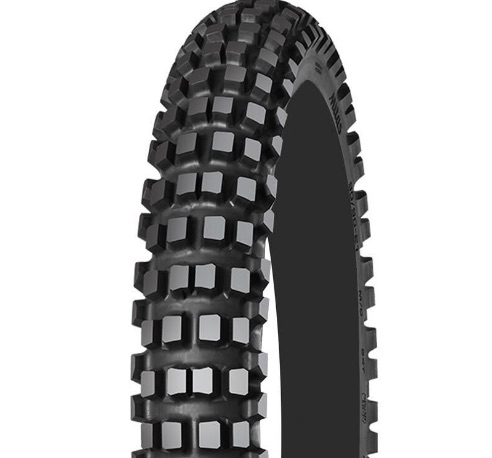
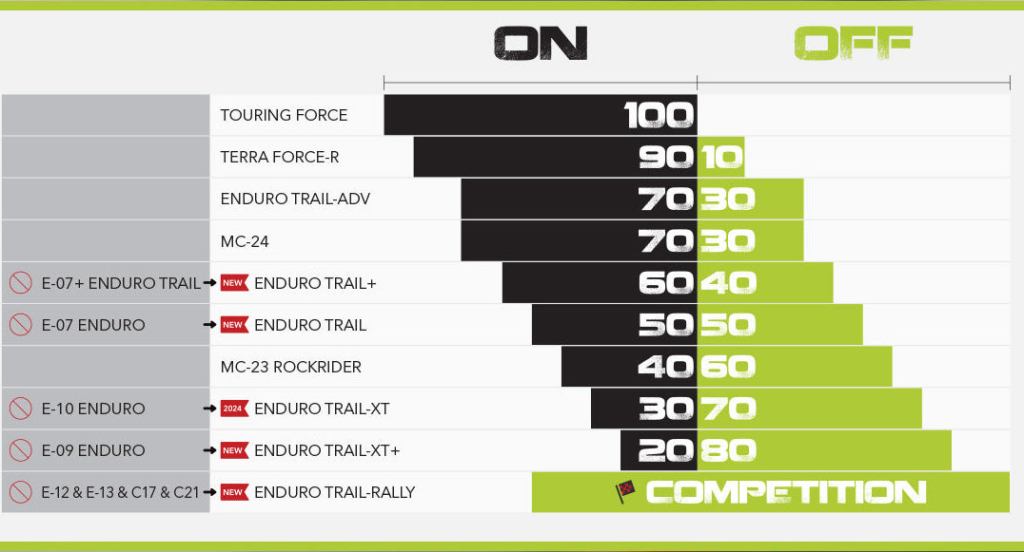
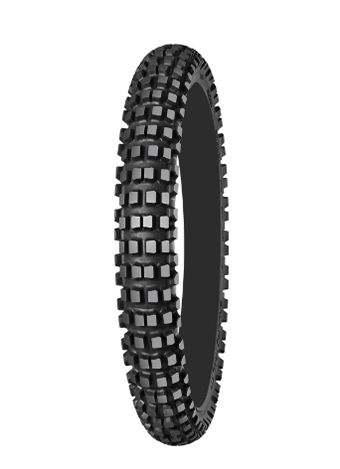
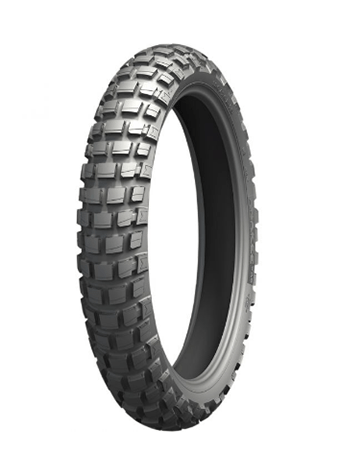
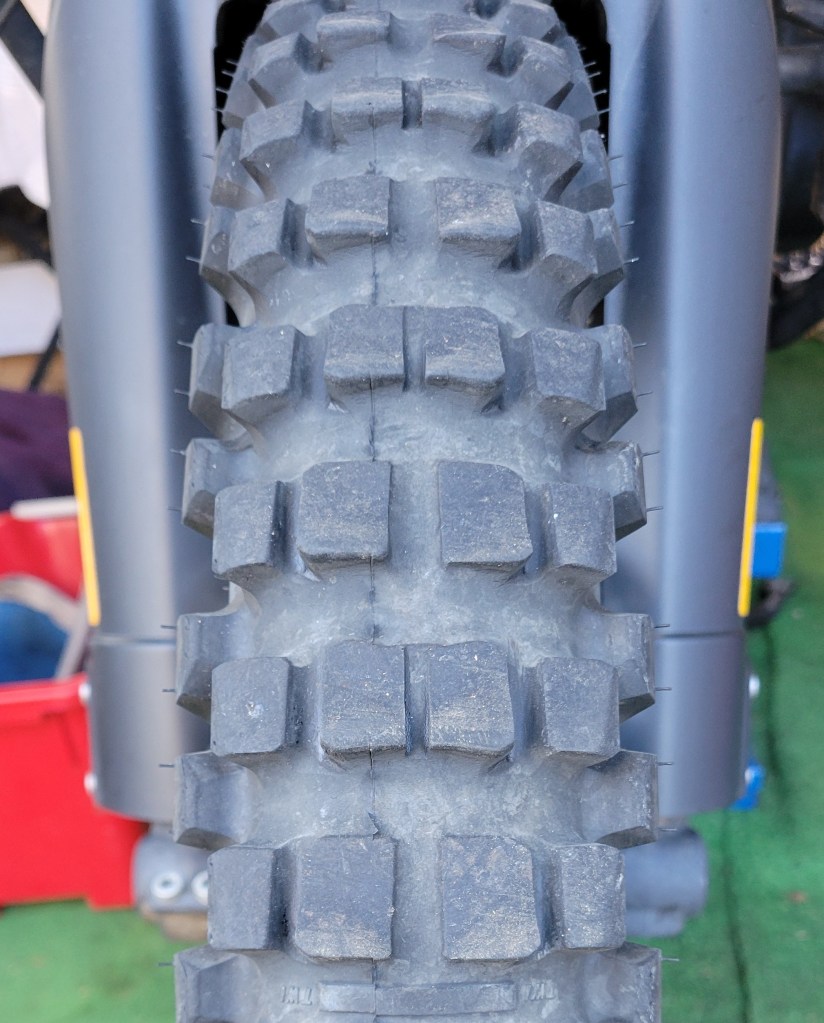
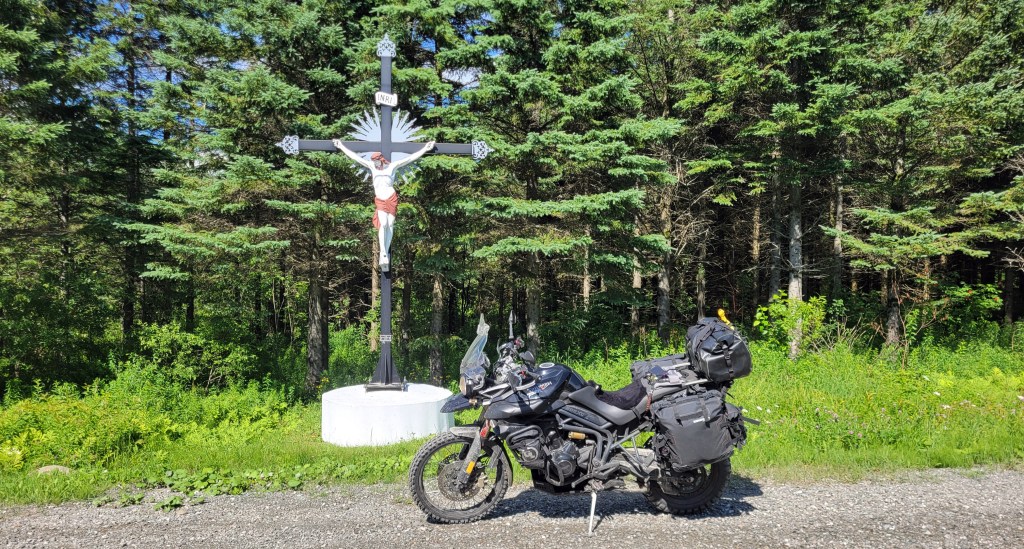
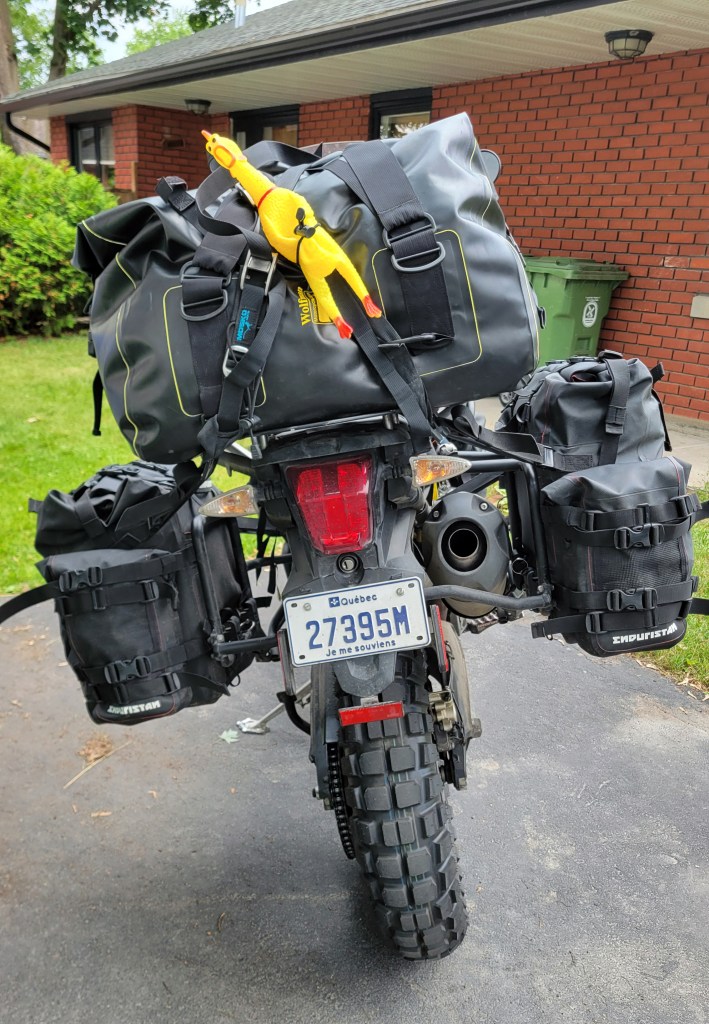

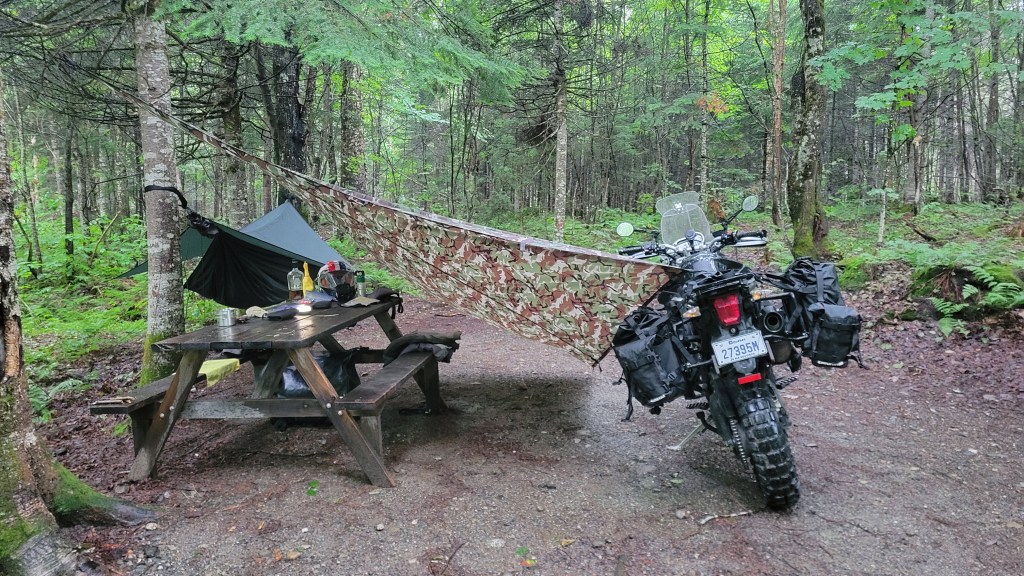
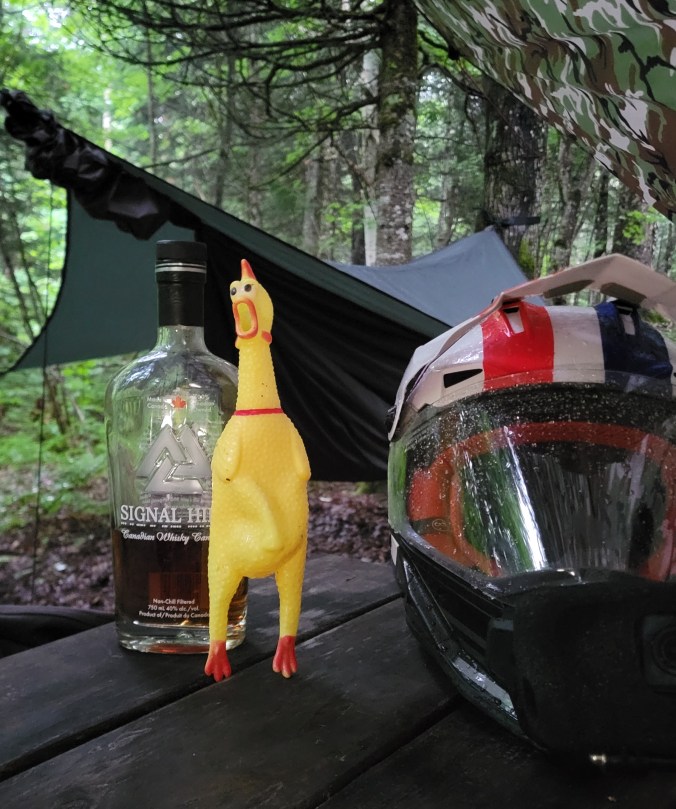
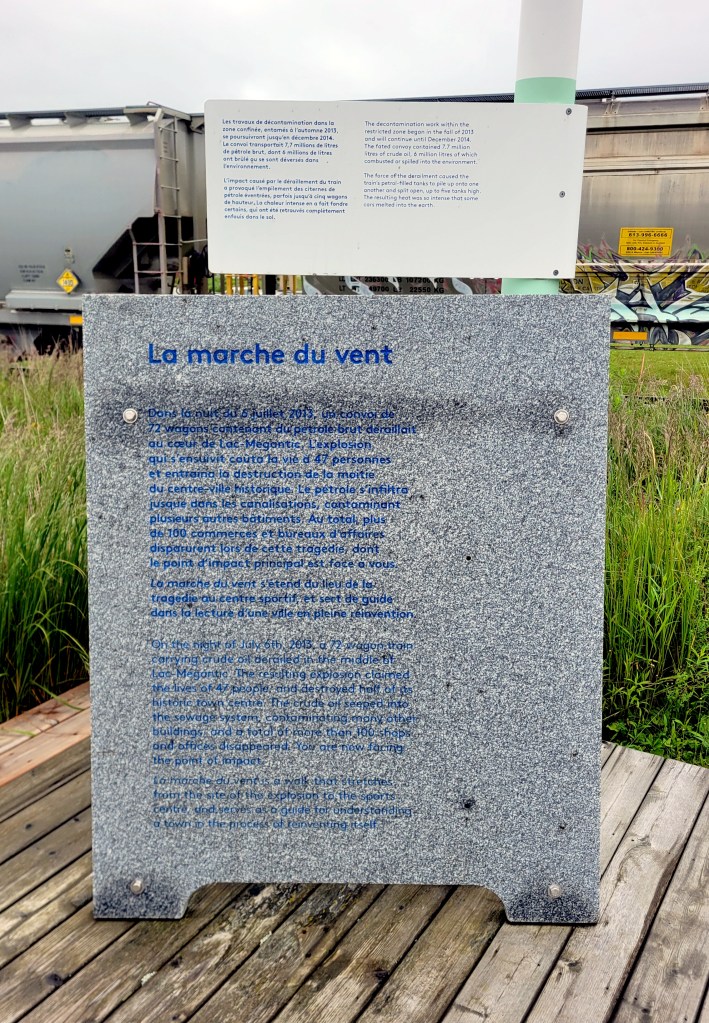
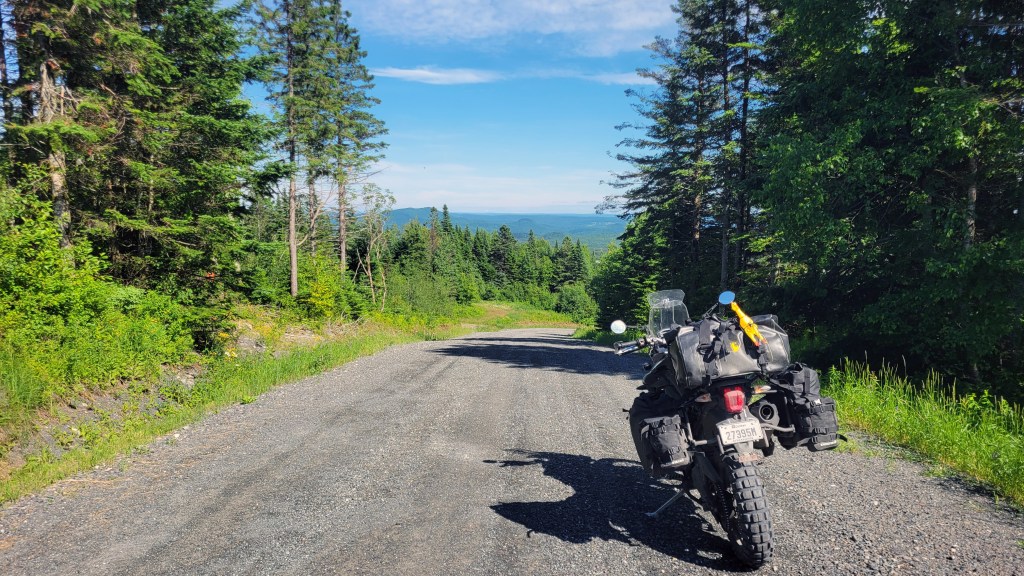
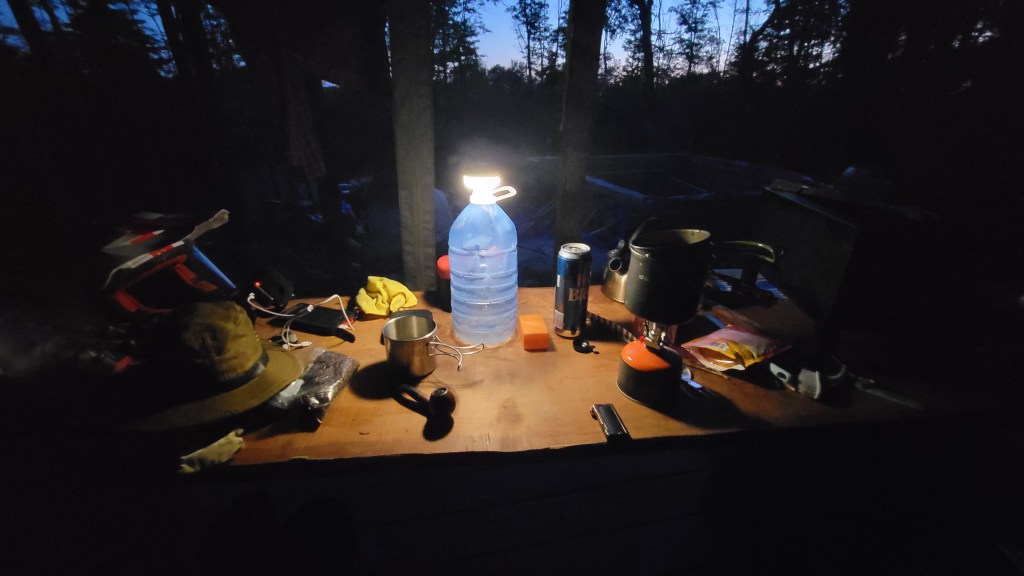
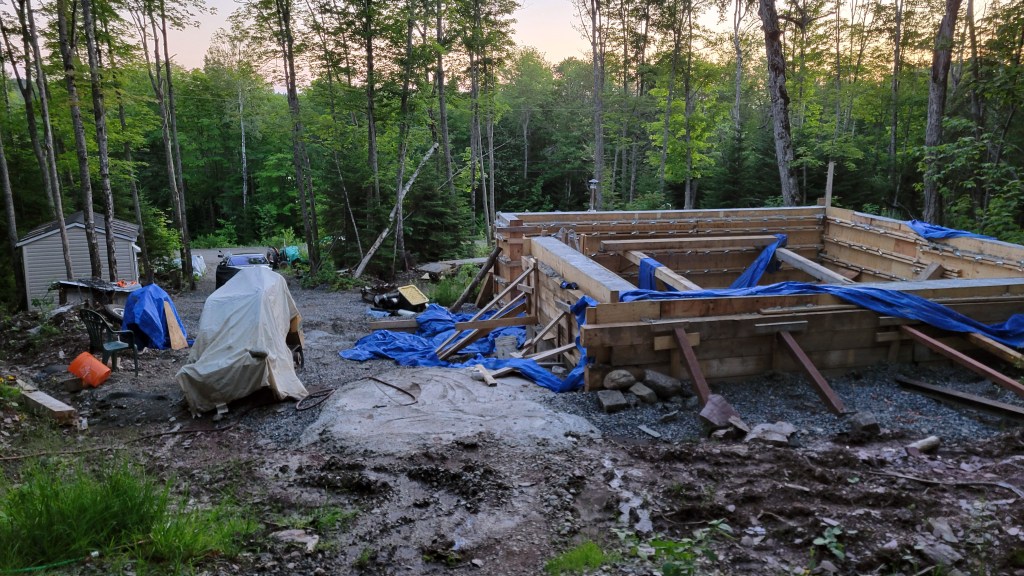
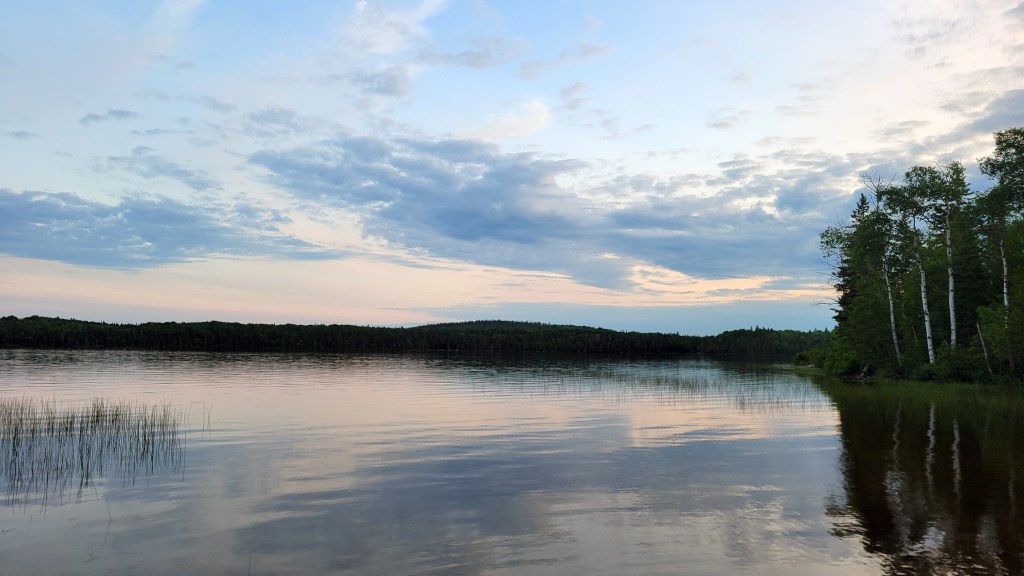
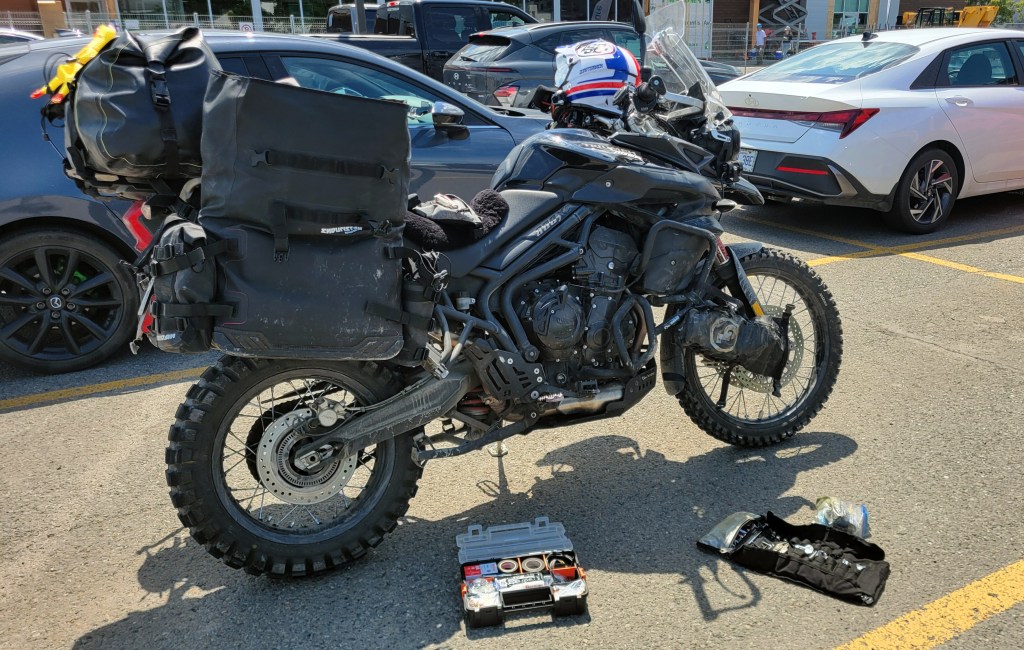
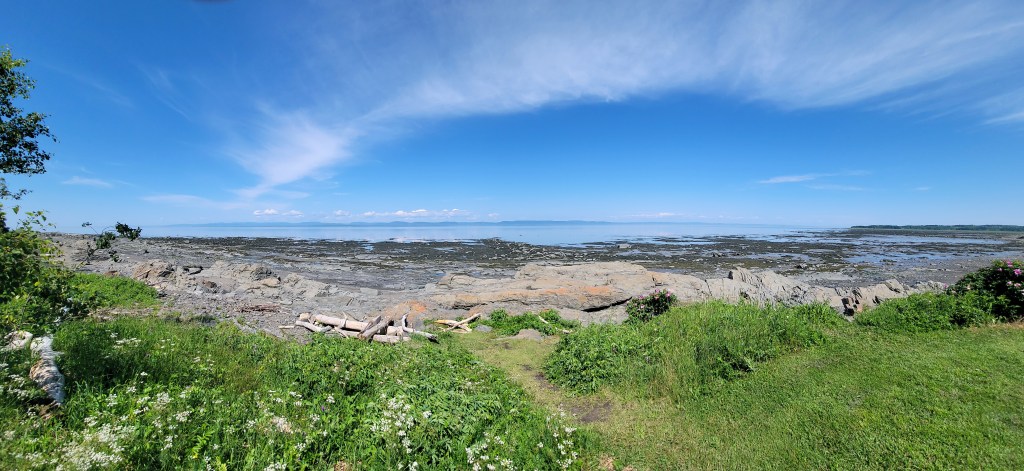
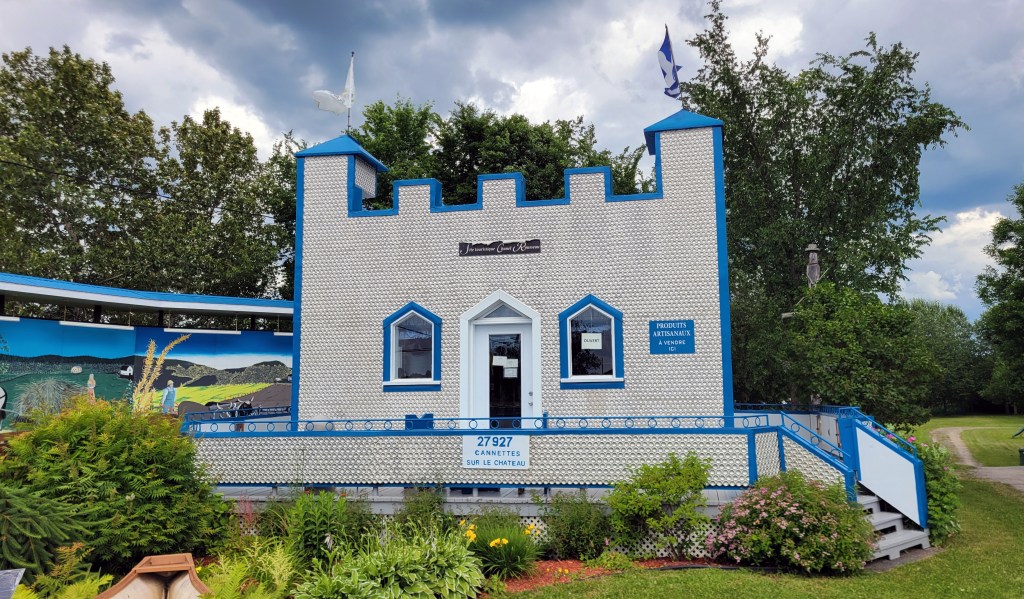
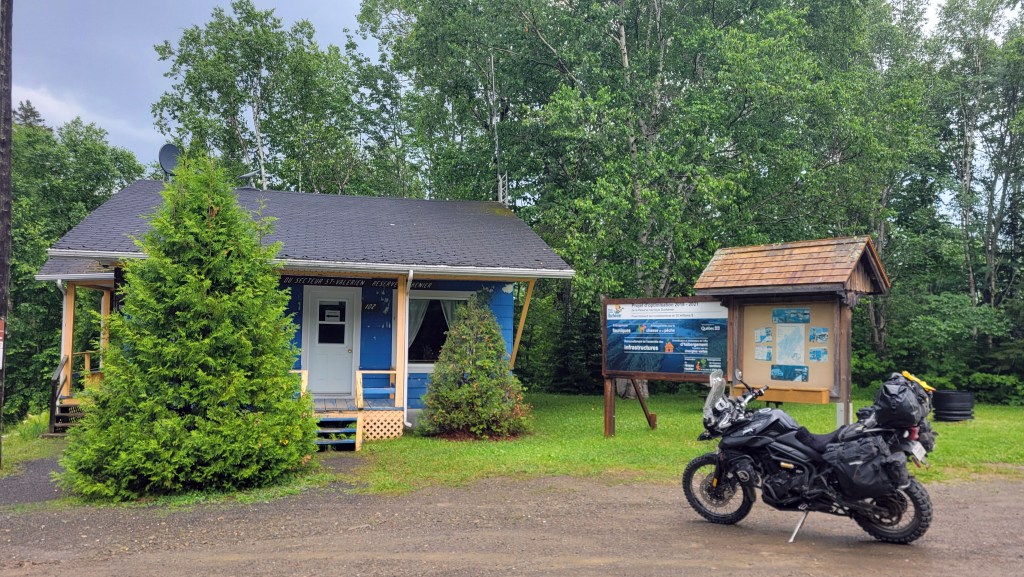
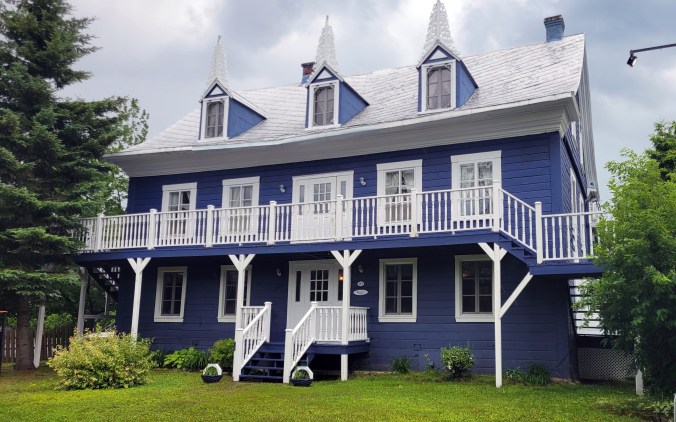
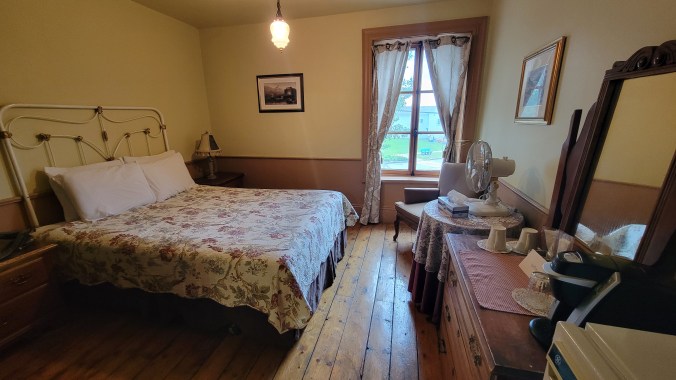
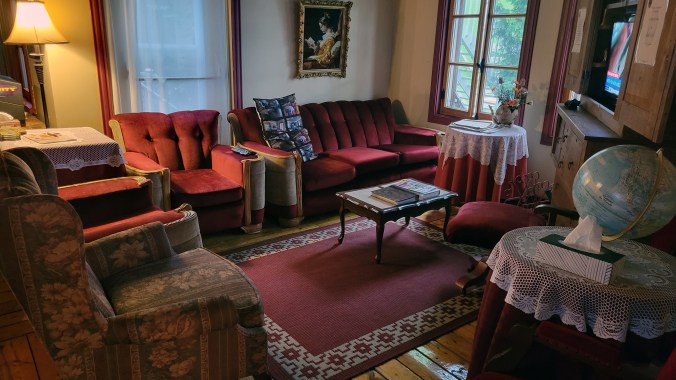
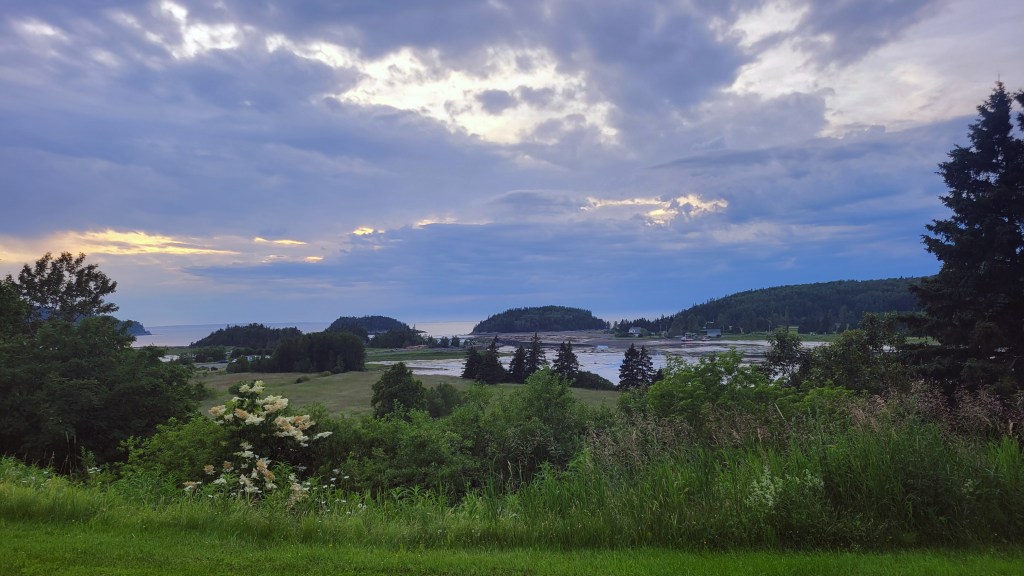
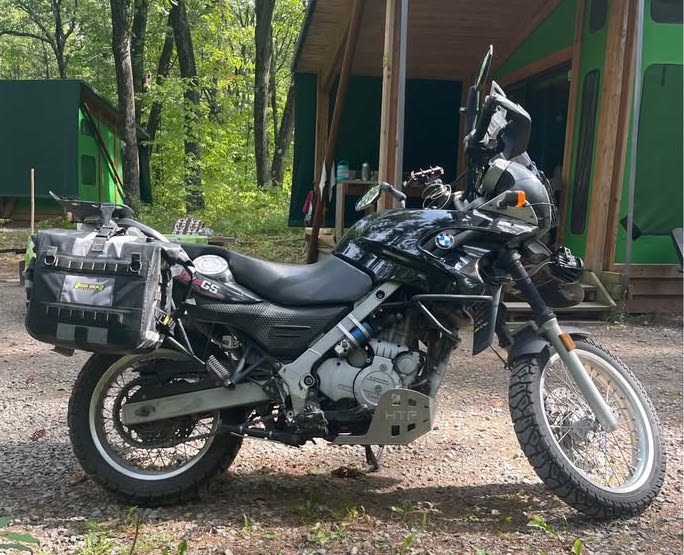


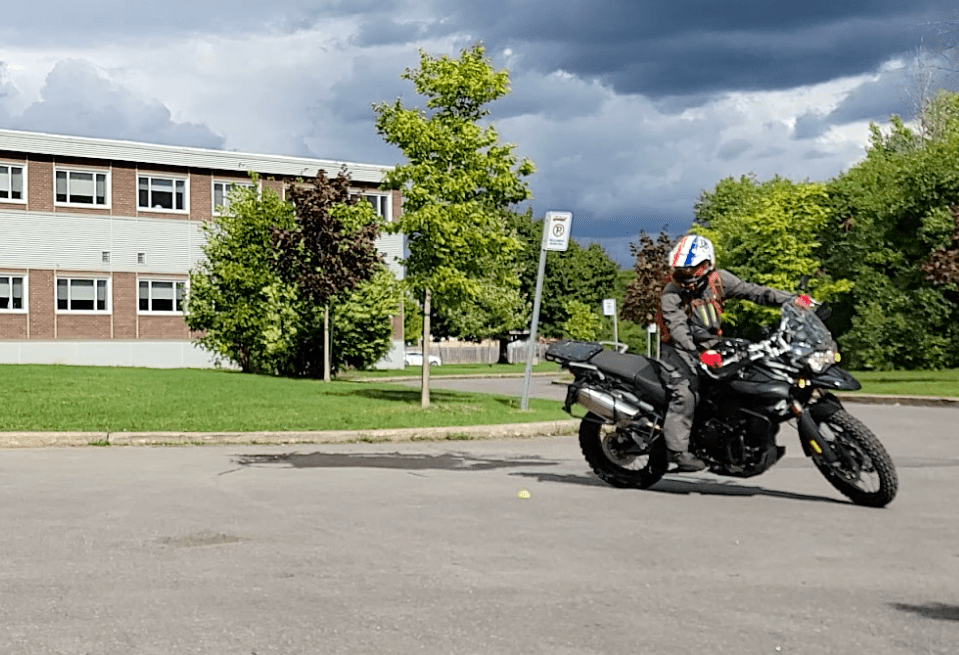


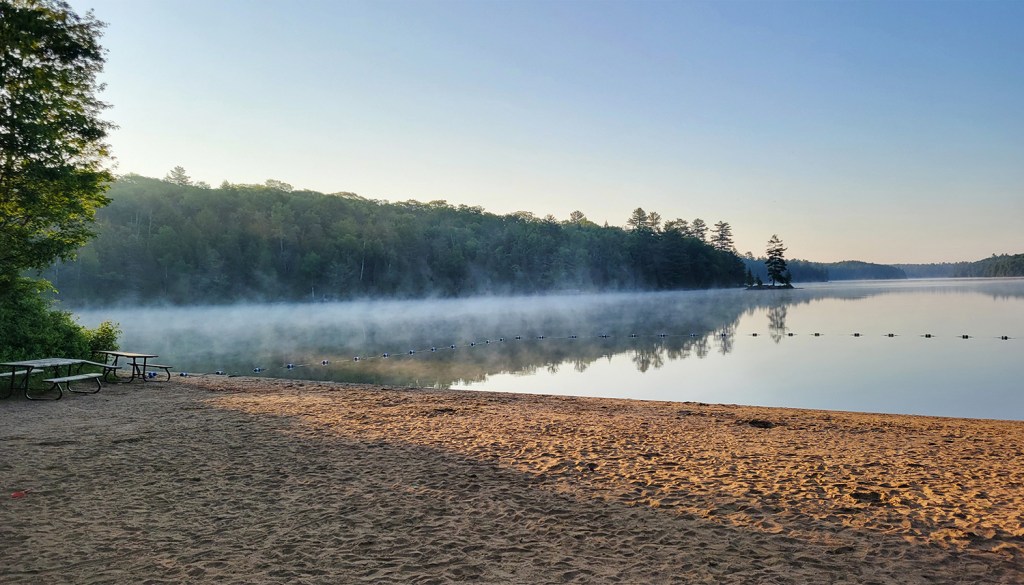


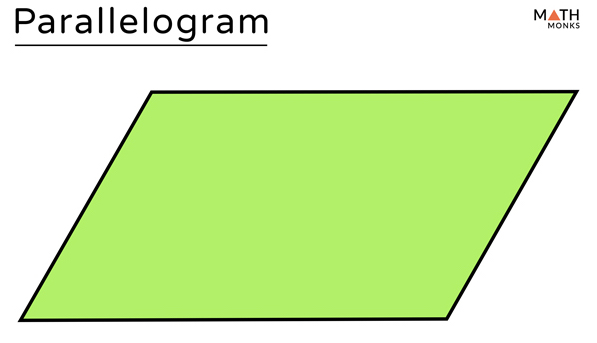


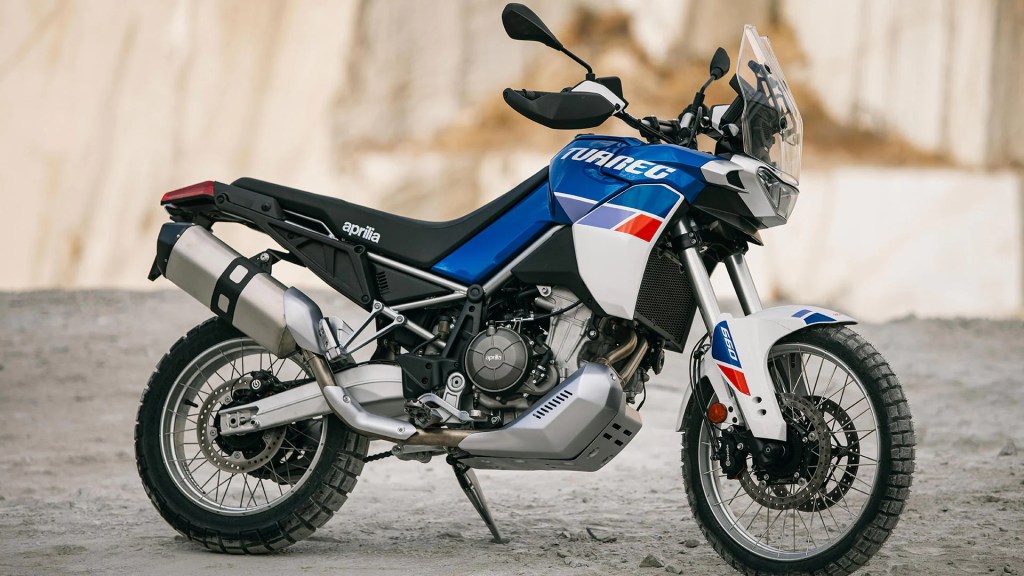


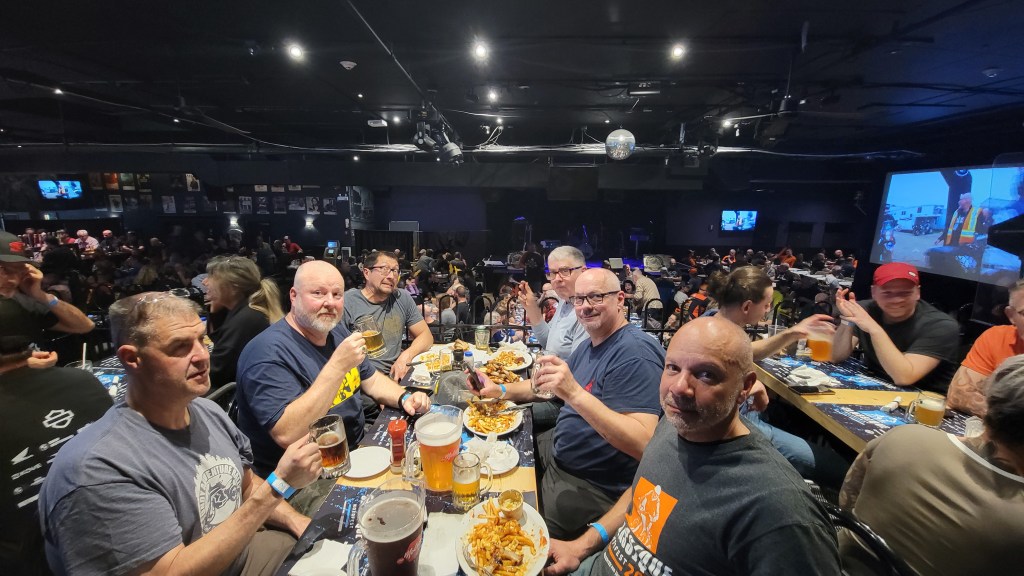
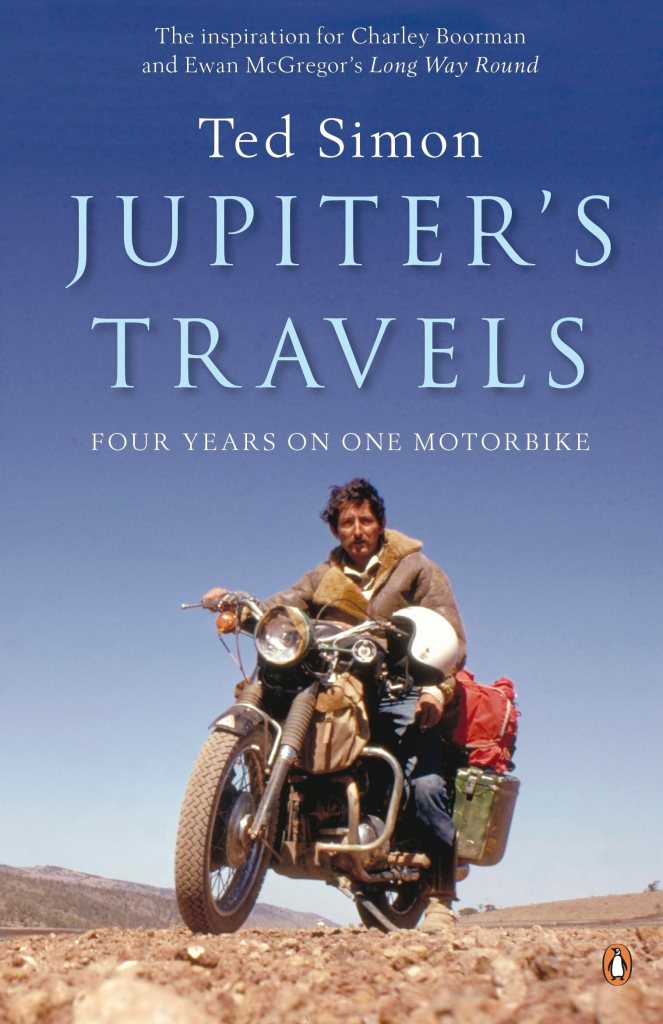
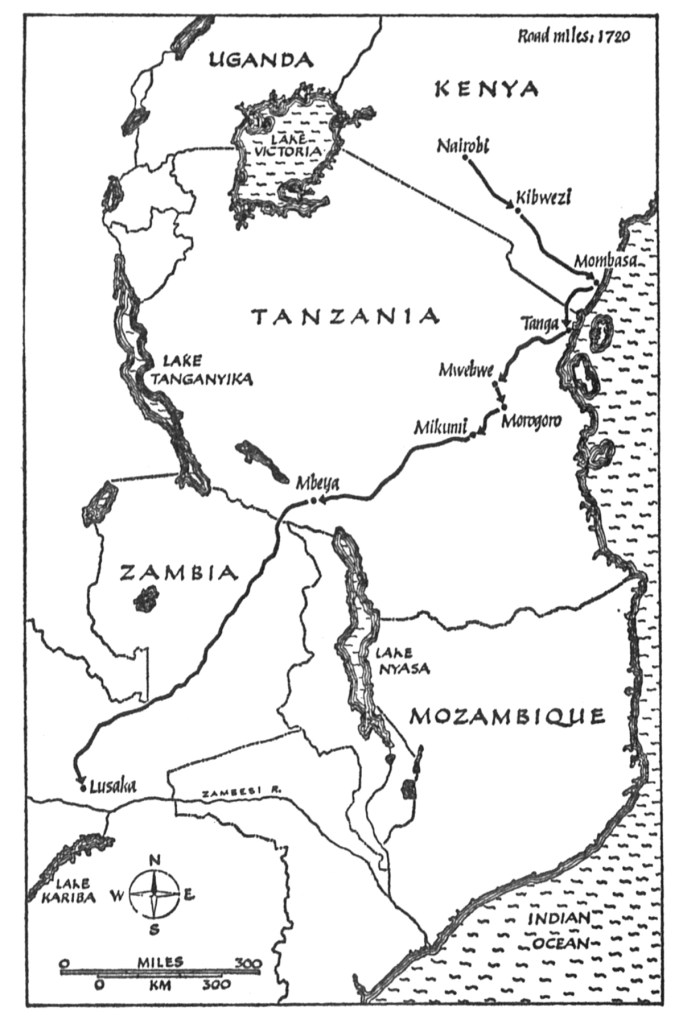


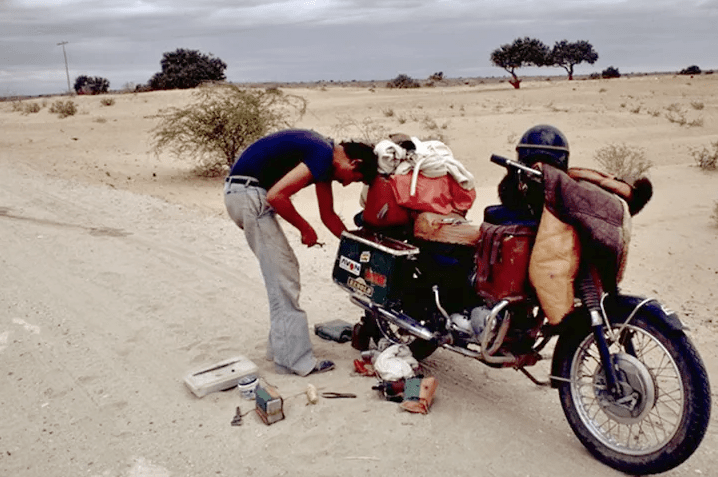




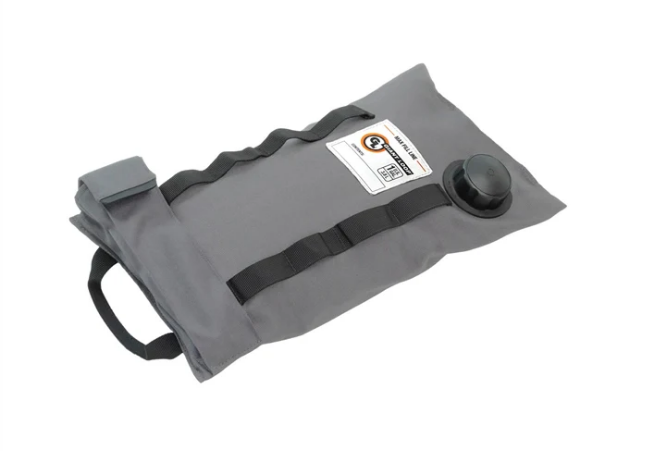




 650thumper